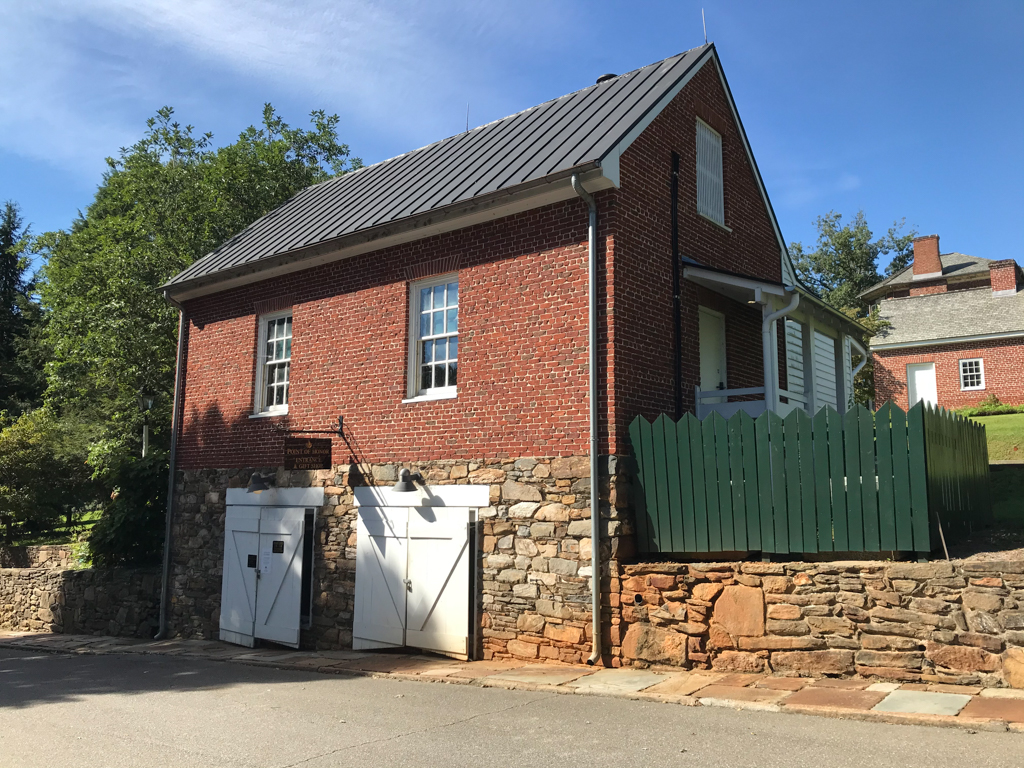
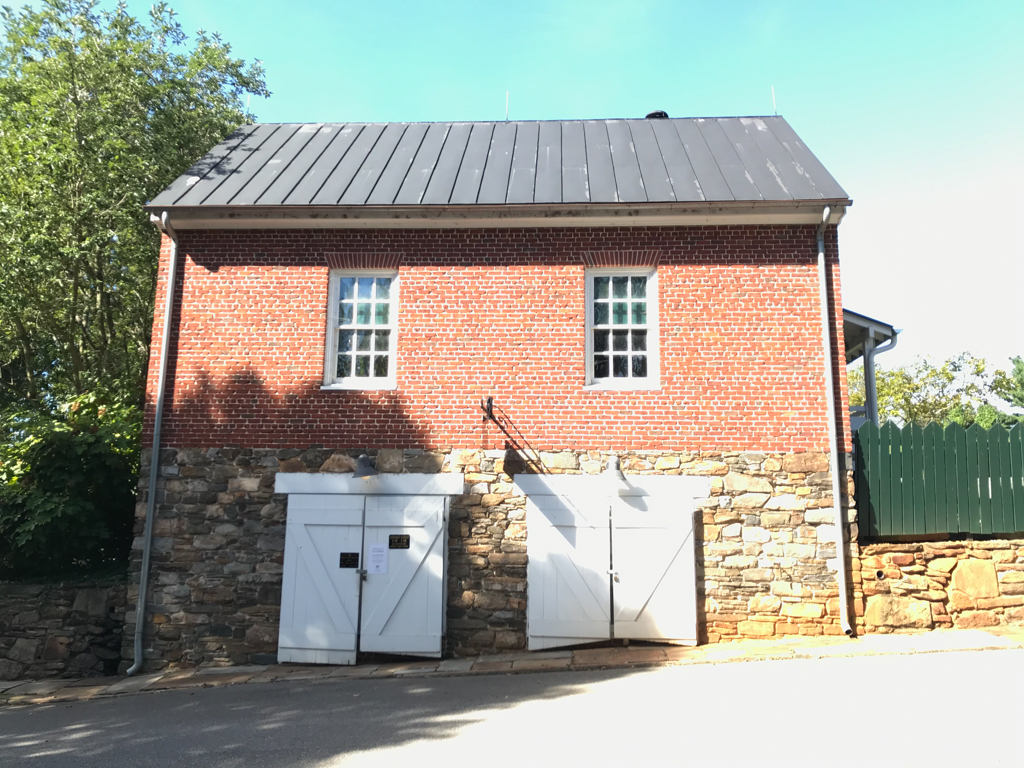
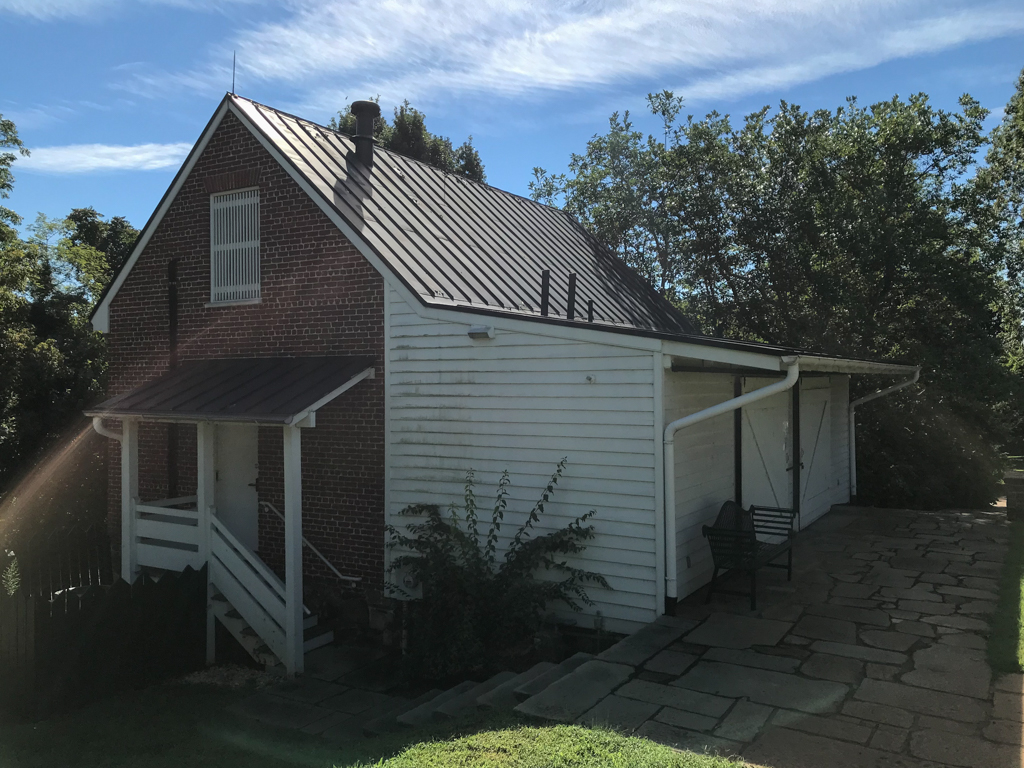
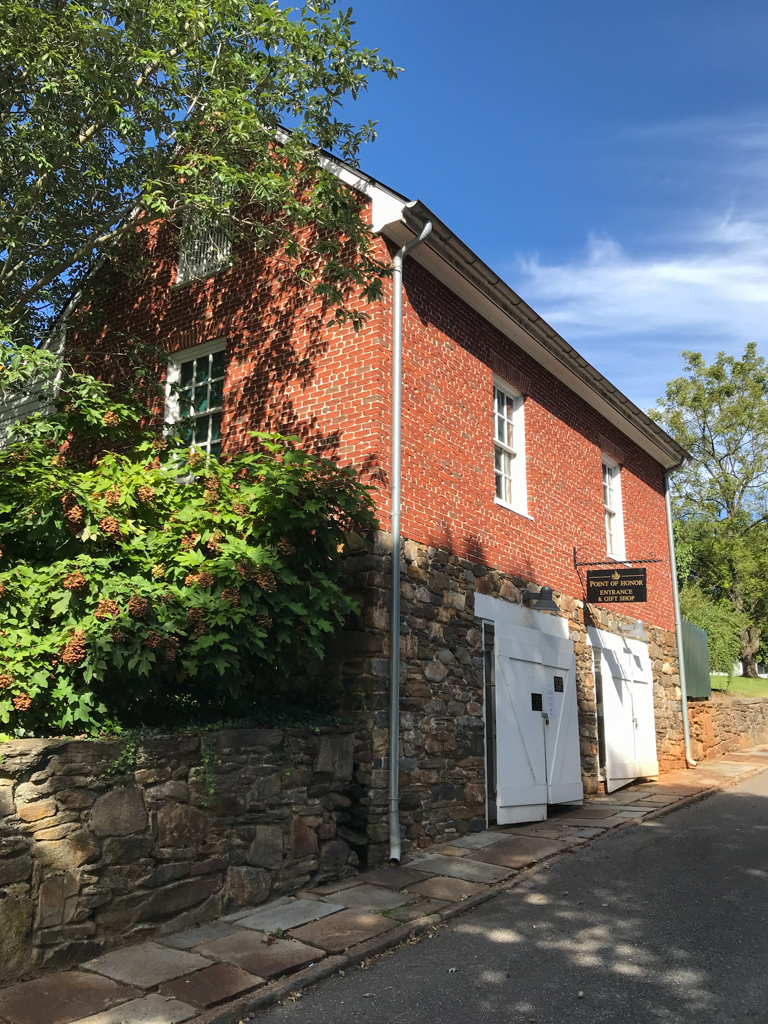
Built to contain an orientation space, gift shop, meeting room, and restrooms, this contemporary visitors' center was designed to echo the stable/carriage house that was known, through archaeological investigation, to have been on the site. Using surviving examples of the type and relying on historical documentation, the architect produced a multipurpose building of stone on the ground floor and brick above that combines a nineteenth-century appearance with twentieth-century conveniences.

