

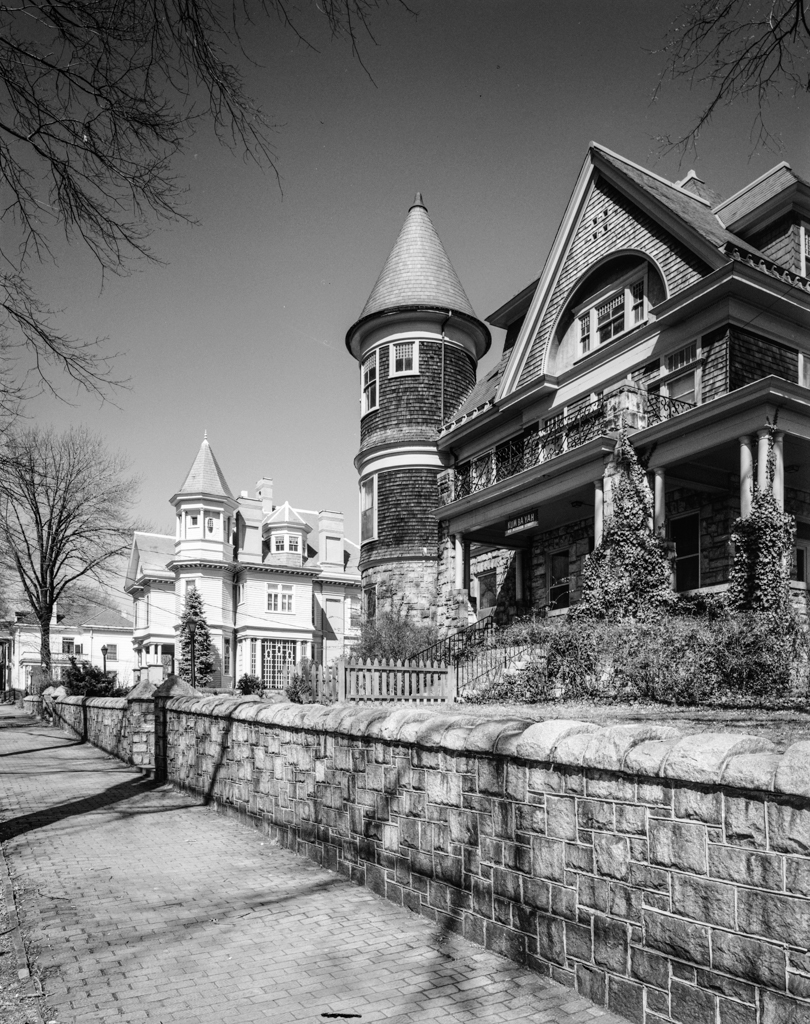
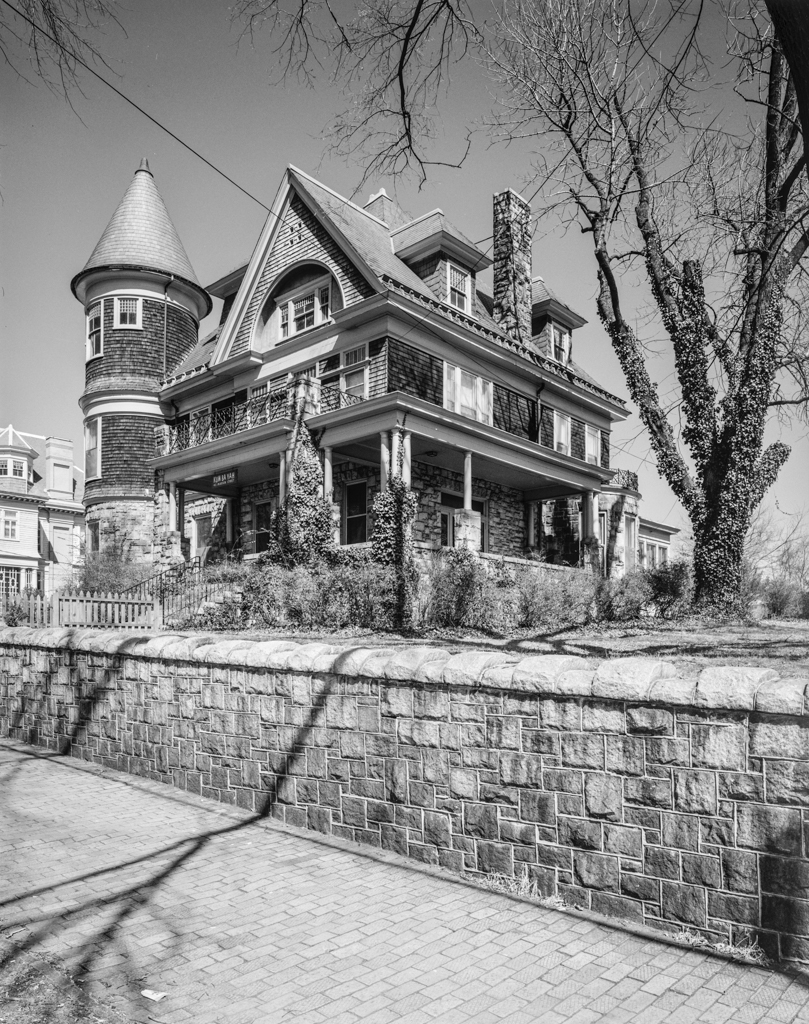
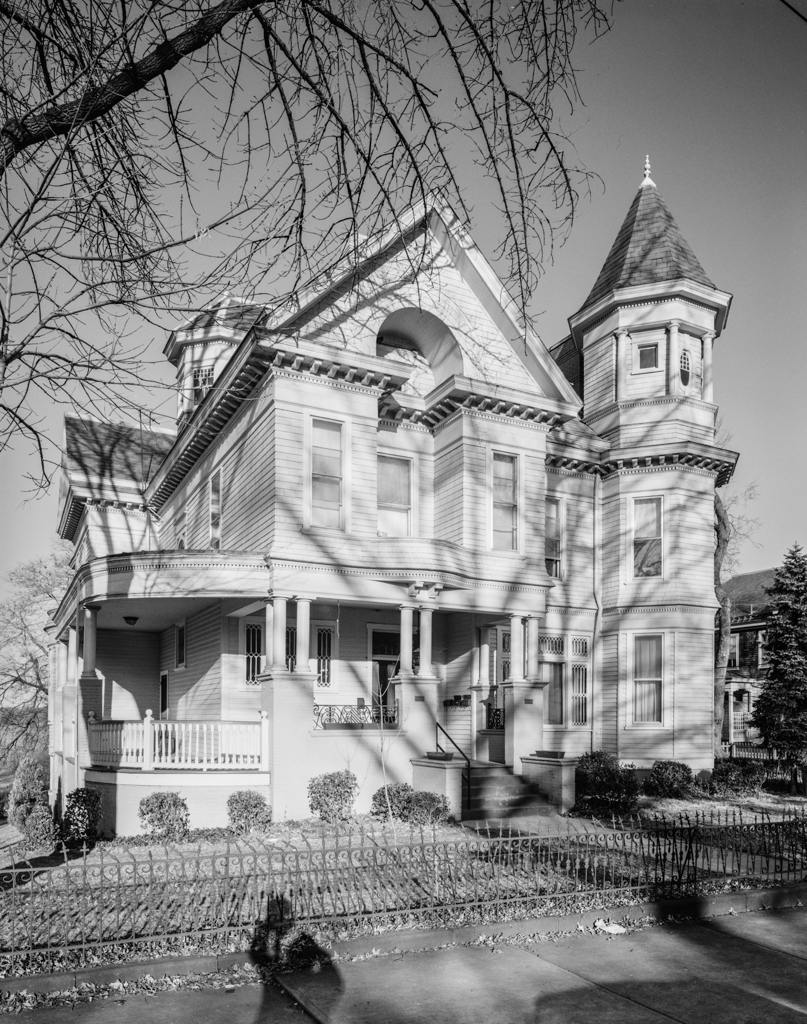
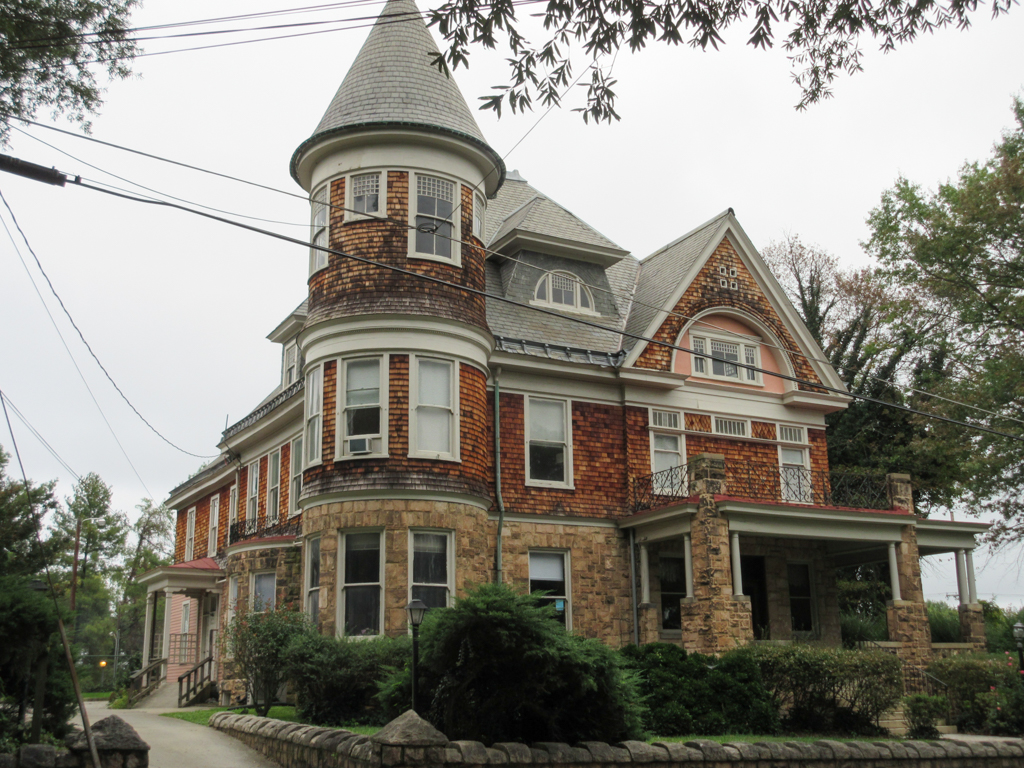
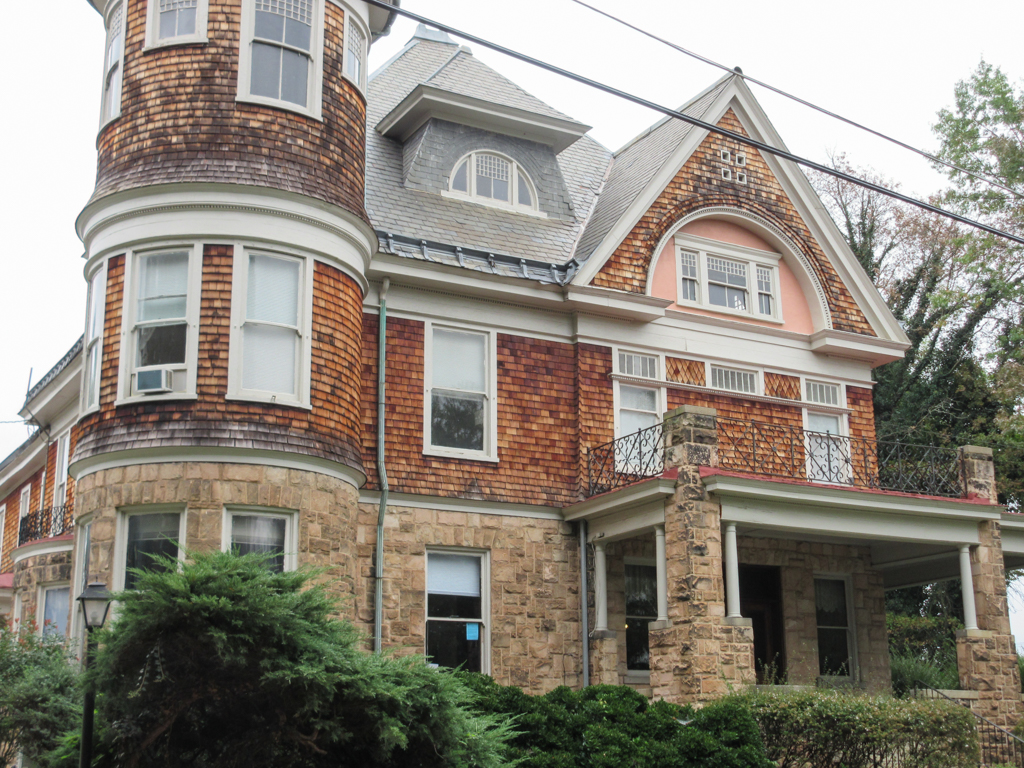
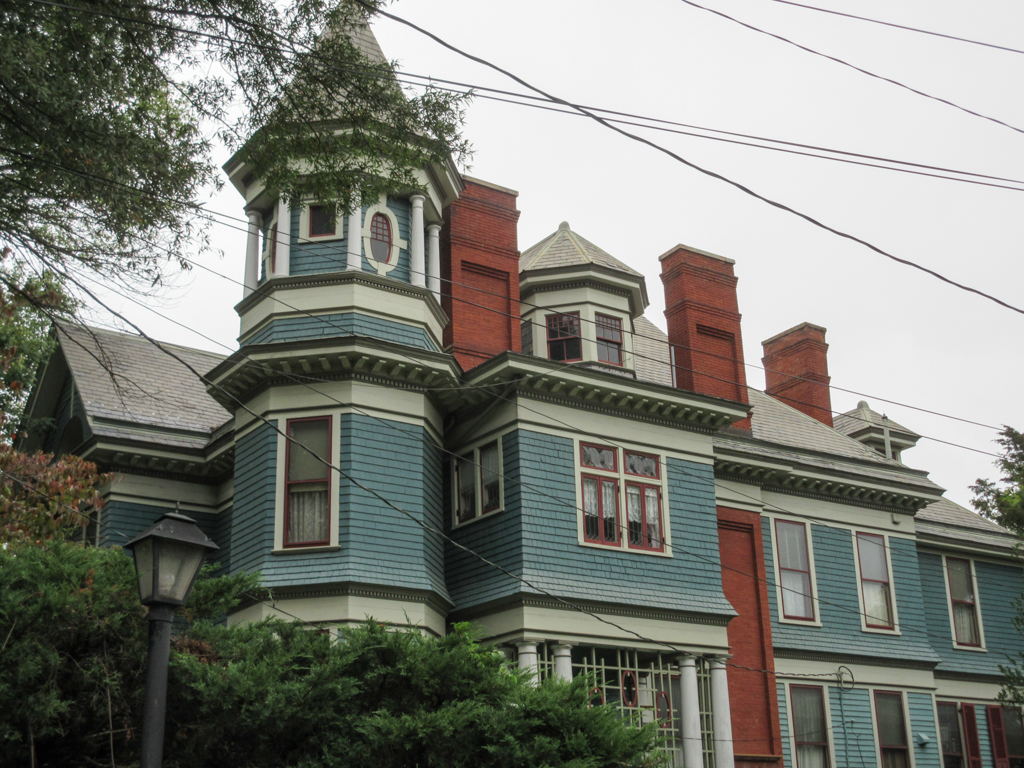
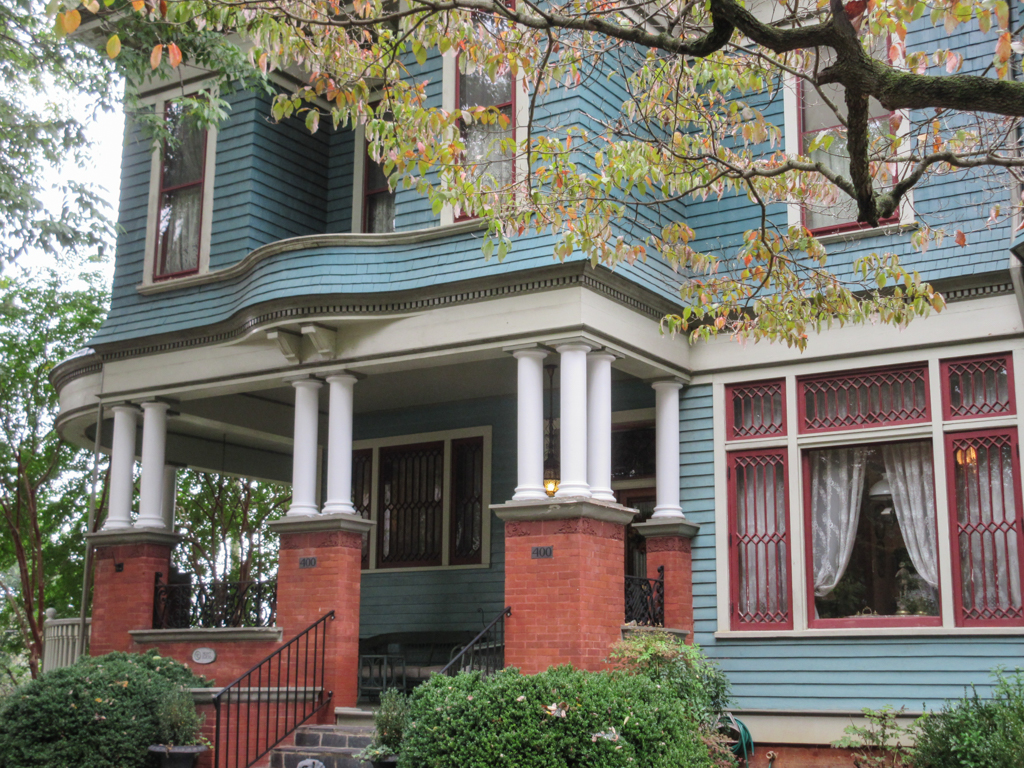
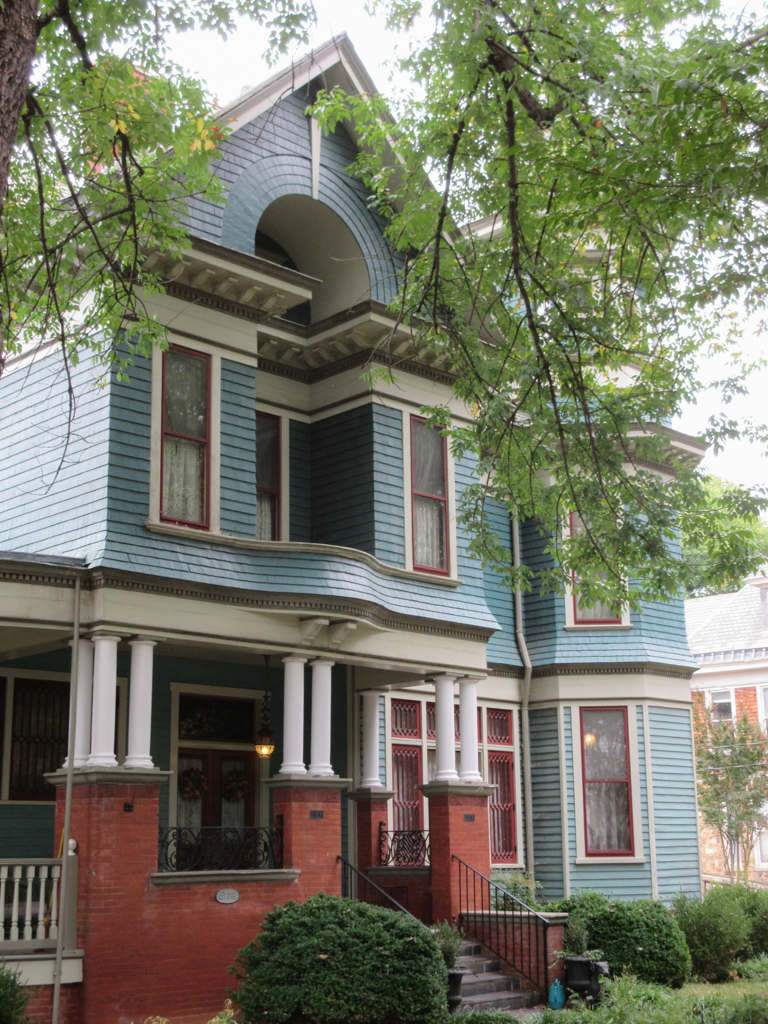
These inseparable twins are variations on Queen Anne, with their towers (rounded on the Christian House, octagonal on the Watkins) obviously engaged in some sort of architectural tête-à-tête. The Christian House, sheathed in stone on the first floor and with shingled walls above, has a touch of Romanesque Revival, whereas the all-frame Watkins House, with its dentiled and modillioned cornice, leans toward Colonial Revival. In addition to their dialogue with each other, the pair tells just what turn-of-the-twentieth-century Garland Hill was about. Christian, the city's commonwealth attorney, invested heavily and wisely in West Virginia coalfields, while Watkins was a pioneer in Lynchburg's burgeoning shoe industry and also invested in West Virginia coal.
Twin Houses
1897 Frank P. Christian House and 1898 George P. Watkins House, Edward G. Frye. 412 and 400 Madison St.