

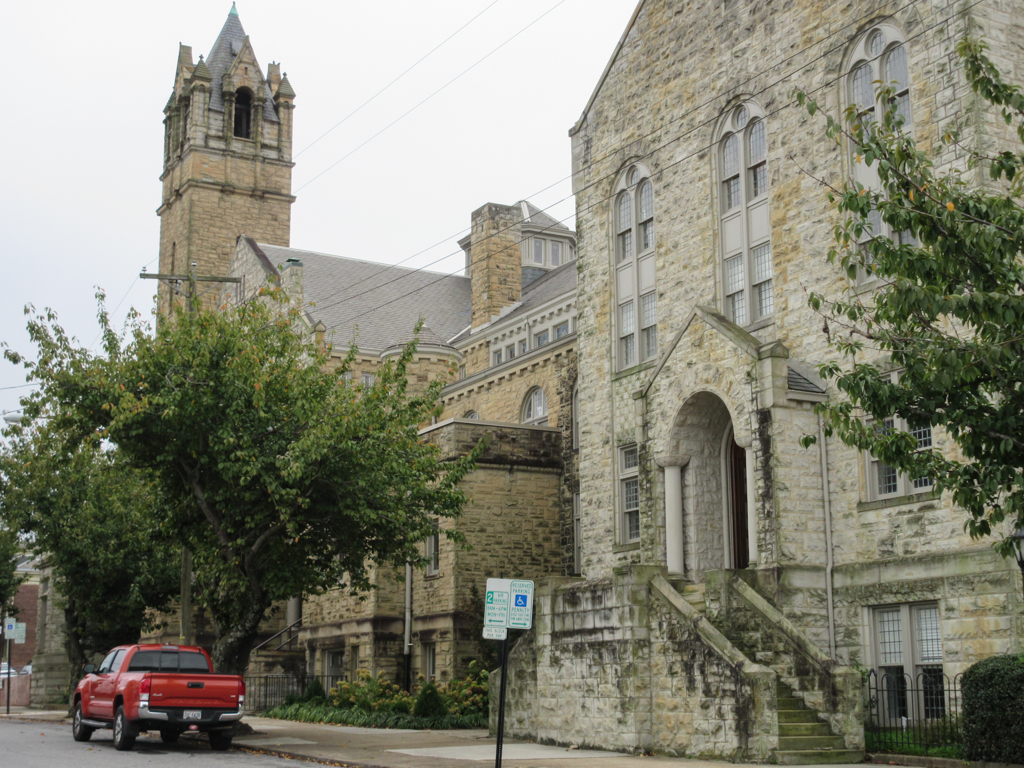
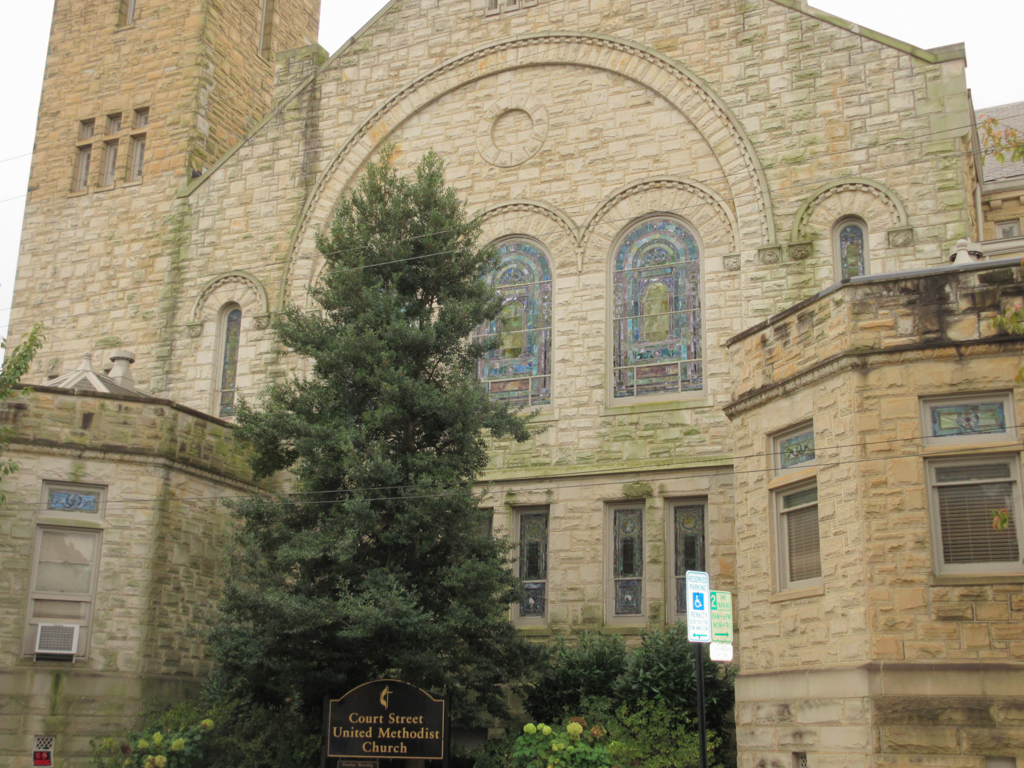
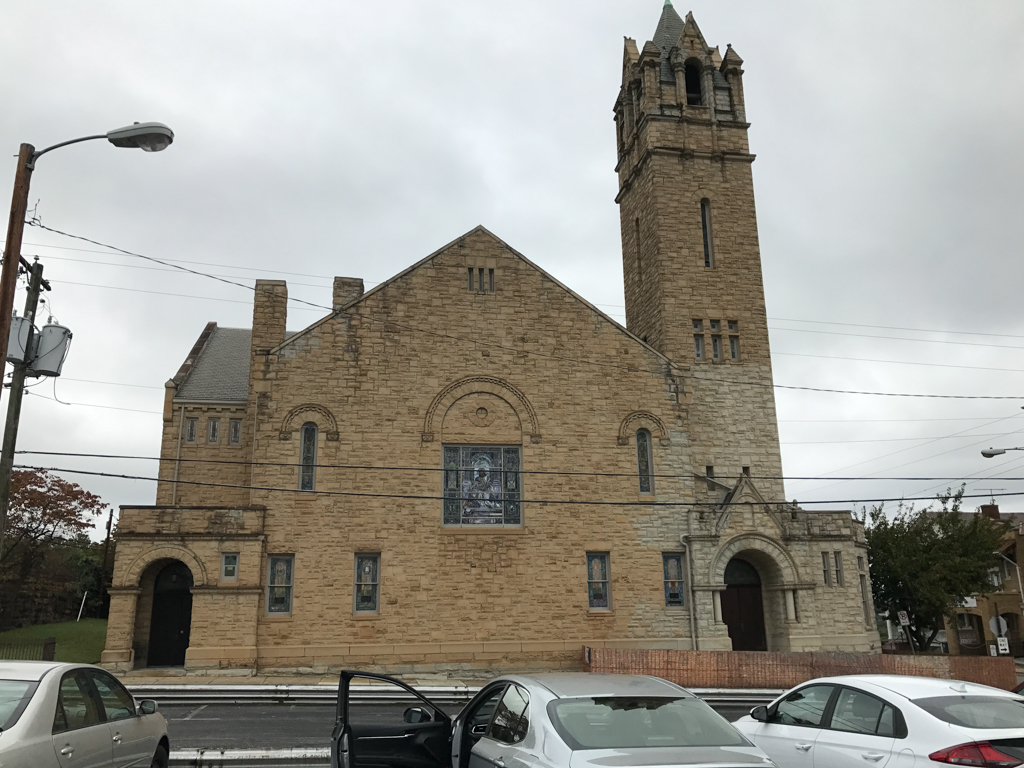
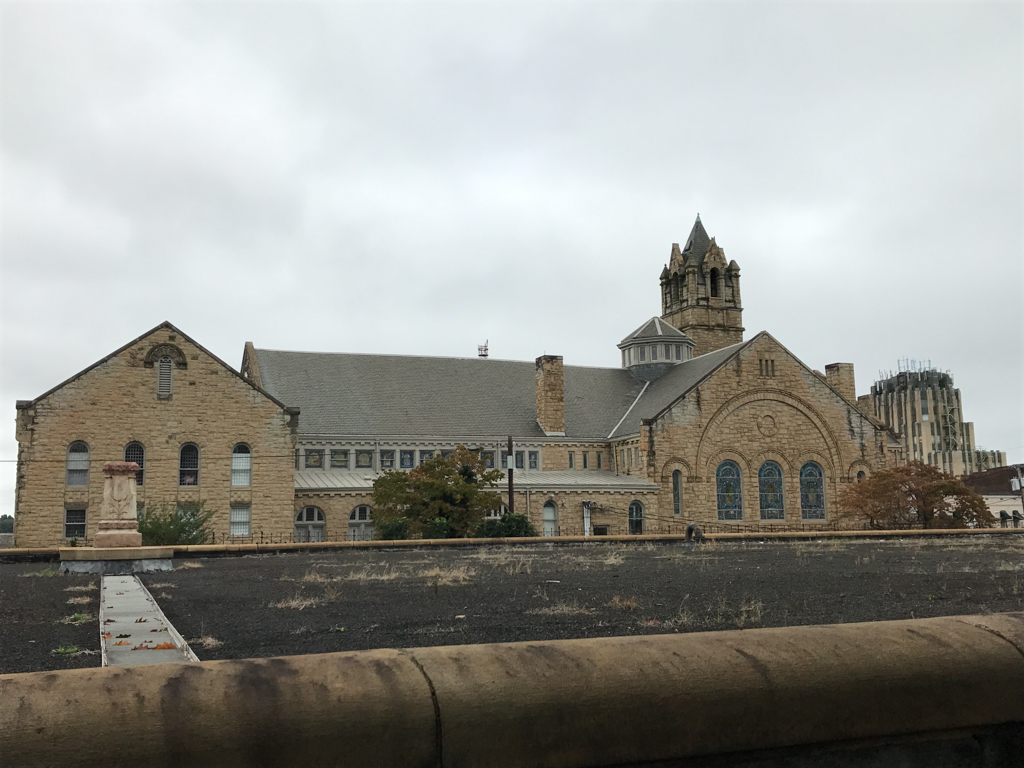
Frye's design was selected in an architectural competition that drew entries from Lynchburg, Chattanooga, Cincinnati, Baltimore, New York, and Boston. An austere Romanesque Revival mass, this is the largest of the churches that form Lynchburg's ecclesiastical center. Rock-faced “Kentucky free stone, the color of which seems to blend with the tints of the atmosphere” (as a newspaper account described it when the building was completed), clads the exterior. In recent years, after having absorbed all too much atmosphere, the walls were cleaned. The tall corner tower, whose top stage is indebted to H. H. Richardson's Trinity Episcopal Church in Boston, is the focal point. In 1926, Johnson, who had prepared Frye's original working drawings, designed a Sunday school addition that harmonizes well with the earlier work. The large sanctuary has impressive fluted columns modeled on the Roman Corinthian order of the Baths of Caracalla.
Court Street United Methodist Church
1899–1902, Edward G. Frye; 1926, Stanhope S. Johnson. Court St. at 7th St.