

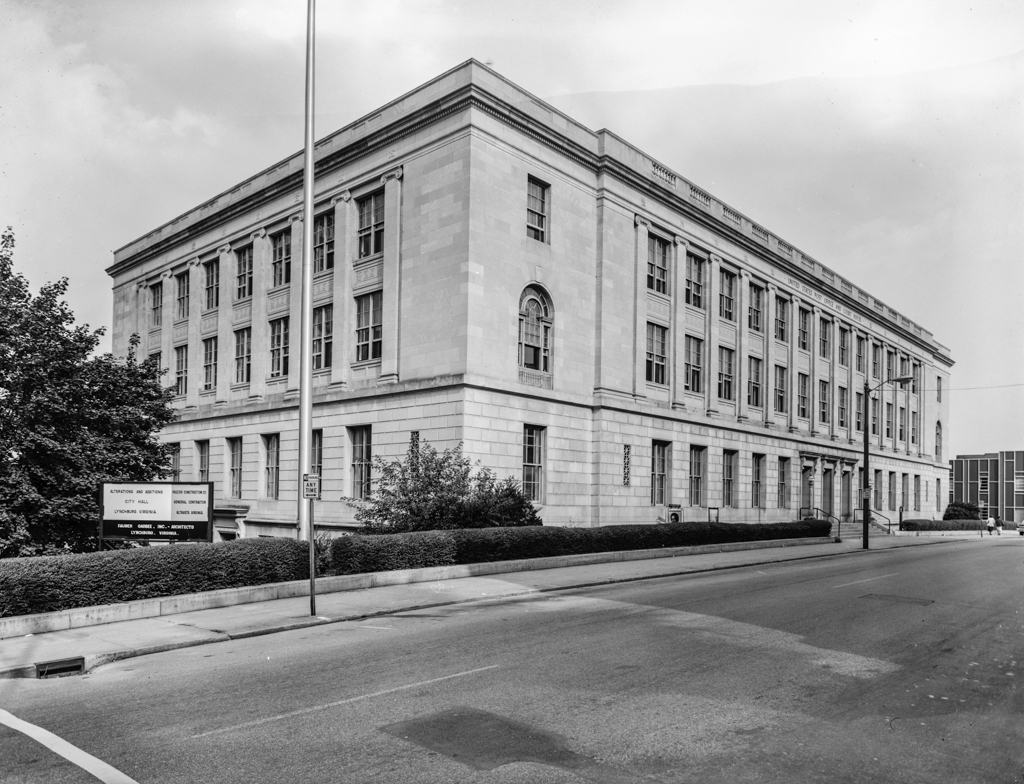
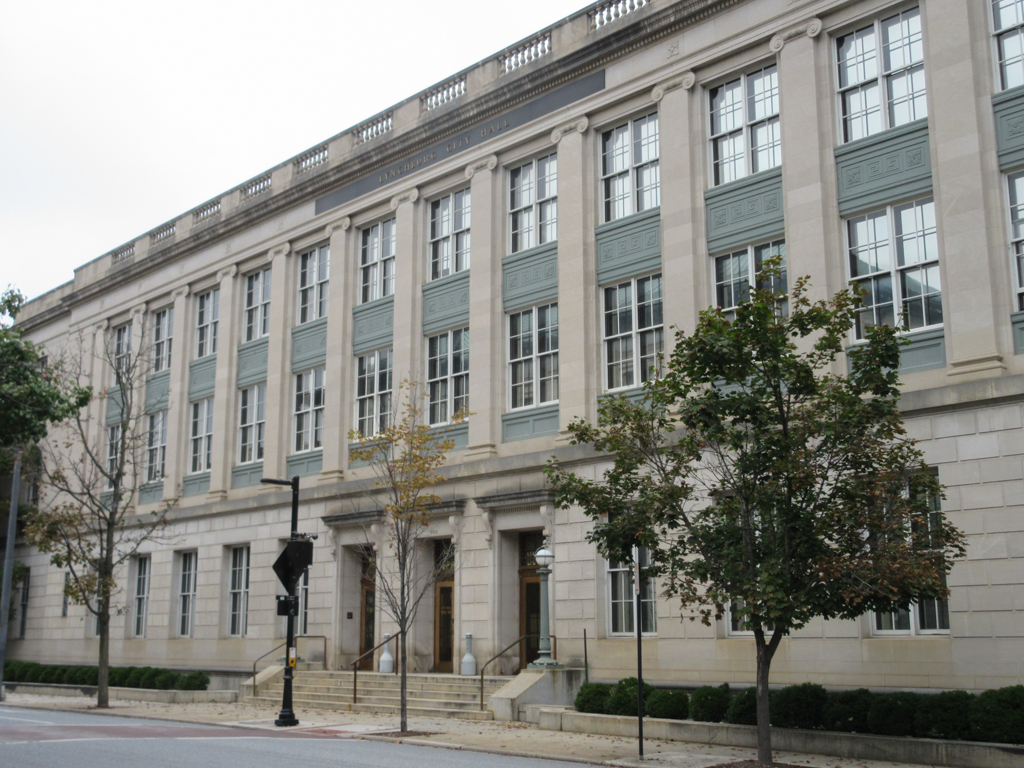
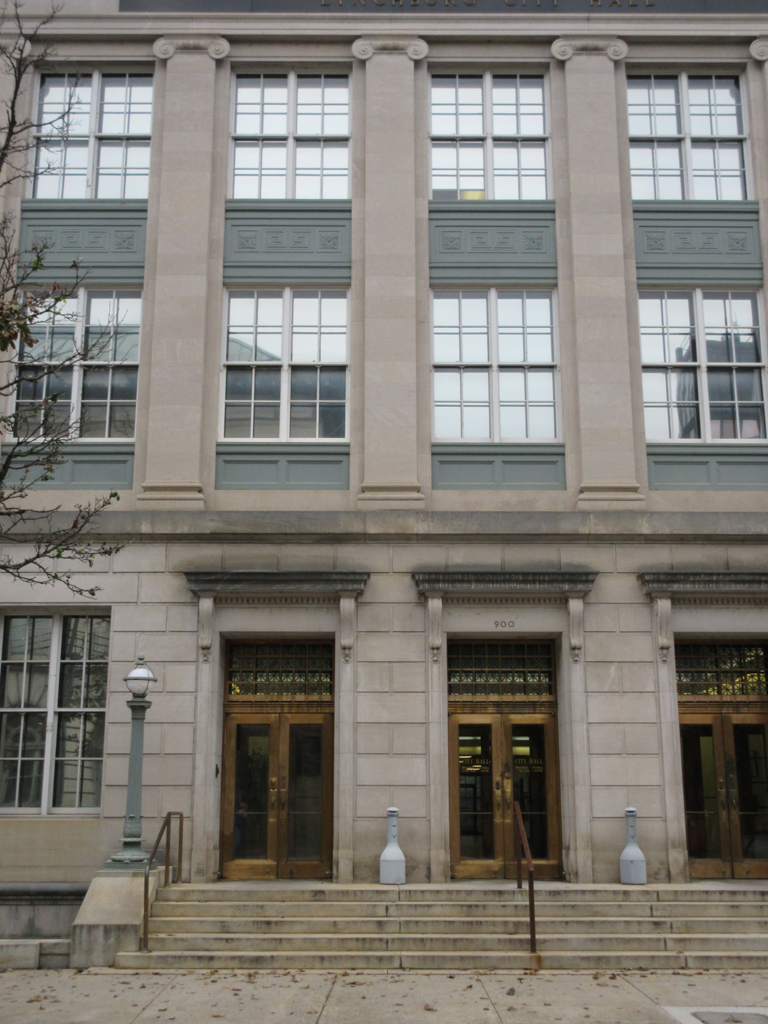
Lynchburg seems to have a penchant for transforming former federal buildings into city halls. Like its predecessor (BD33), this limestone-clad building has a rusticated first story, here serving as the visual base for a shallow, two-story Ionic screen extending thirteen bays that project slightly from single bays at each end of the facade. Unlike its more florid predecessor, this structure displays the sparer classicism typical of Great Depression
–
era federal construction. The surge of federally sponsored construction often resulted in collaborations between the office of the Supervising Architect of the U.S. Treasury and local architects. The building was purchased by the city in 1978 and renovated for use as a city hall.
Lynchburg City Hall (U.S. Post Office and Court House)
1932–1933, James A. Wetmore, Supervising Architect of the U.S. Treasury, and Stanhope S. Johnson; 1982 renovations, Fauber Garbee. 900 Church St.