

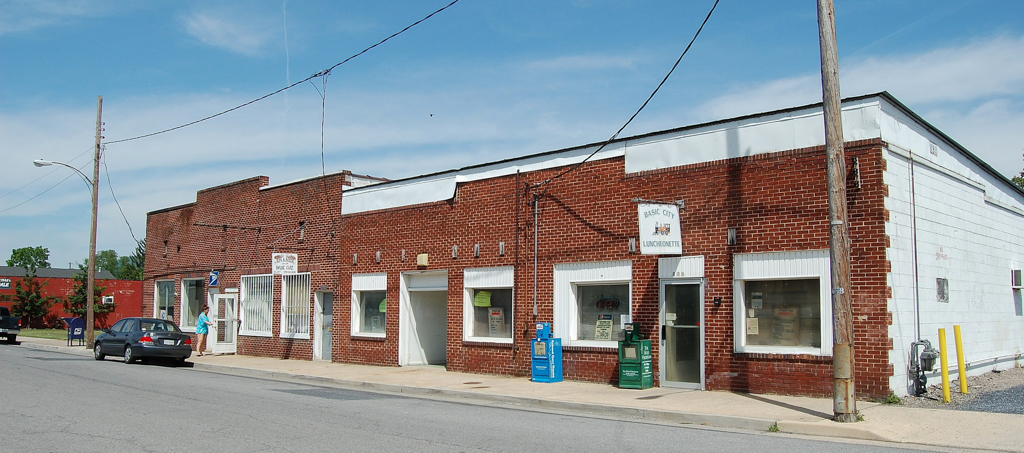
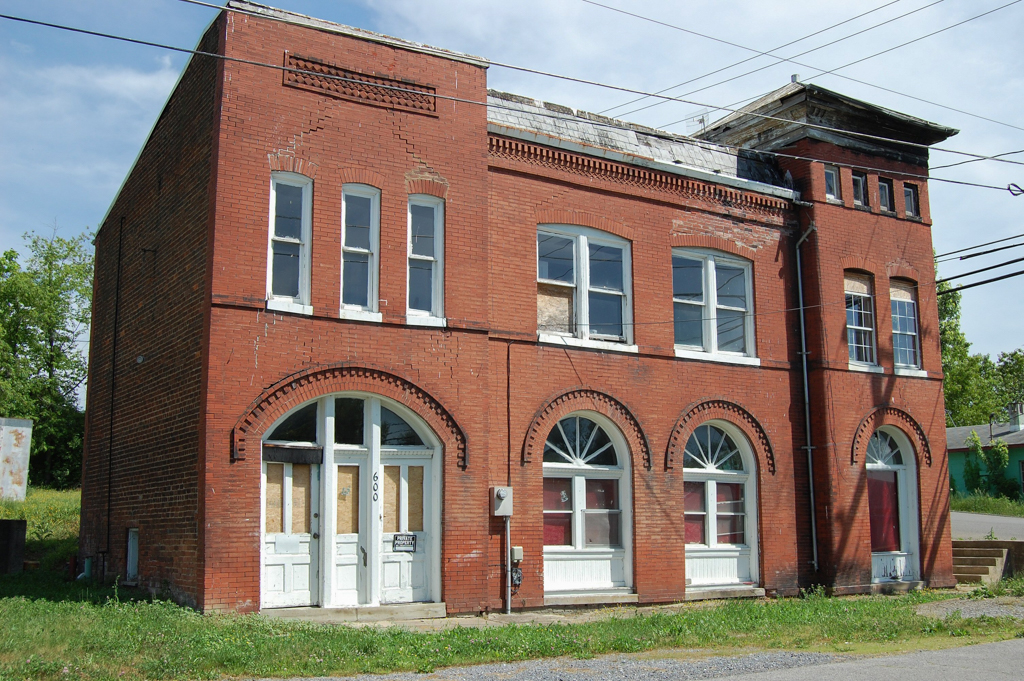
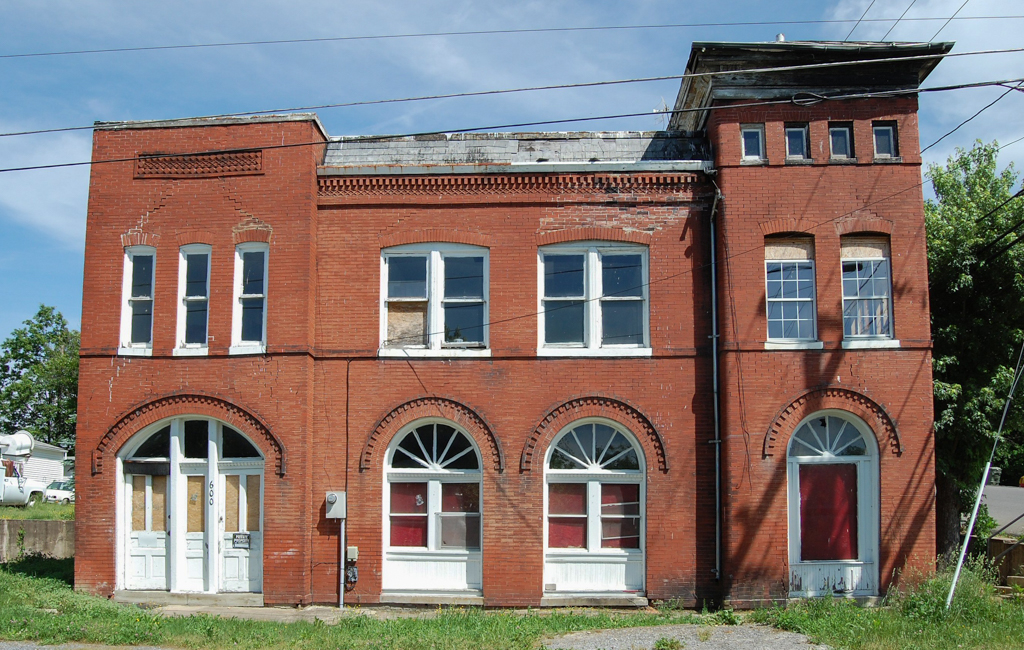
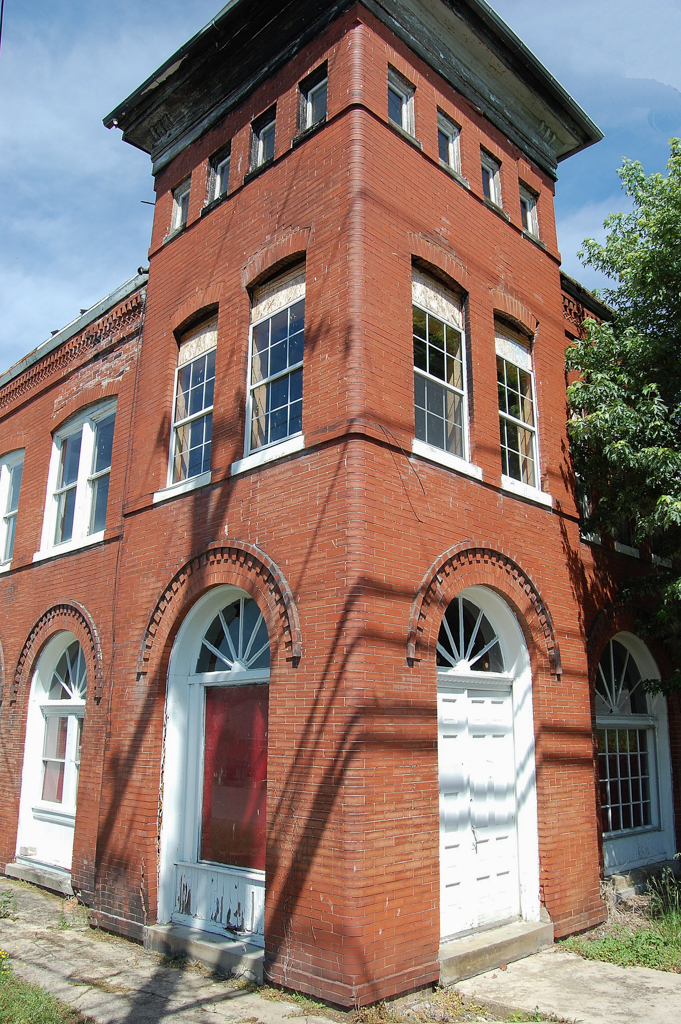
Known as one of the “lost towns” of Virginia, Basic City was laid out in 1890 in a grid plan on twenty-two hundred acres. In 1923 it was consolidated with Waynesboro. Basic City is one of the best examples of the many Valley boomtowns created in the late nineteenth century along the Norfolk and Western Railroad. The railroad completed its line about a mile east of Waynesboro in 1881, and nine years later, the Basic City Mining and Manufacturing Company chartered the town at the crossing of the new line and an older east-west railroad. Local residents often referred to it as the “City of the Iron Cross.” Commerce Street runs through the middle of the development, with the industrial area to the west and the residential area to the east in the foothills of the Blue Ridge Mountains. Within eight months after the initial sale of lots in May 1890, Basic City had grown from two buildings to include a population of 1,000. The Basic City Car Works, Basic City School Furniture Company, and Basic City Iron Works, as well as a paper mill, publishing company, millworks, and other industries established manufacturing facilities here. The city's boom quickly subsided with the financial panic of 1893, and Basic City failed to meet initial expectations. Many of the late-nineteenth- and early-twentieth-century buildings survive, suggesting the character of a turn-of-the-century industrial boomtown.
Basic City
1890 founded. North of the intersection of E. Main and Commerce sts.