

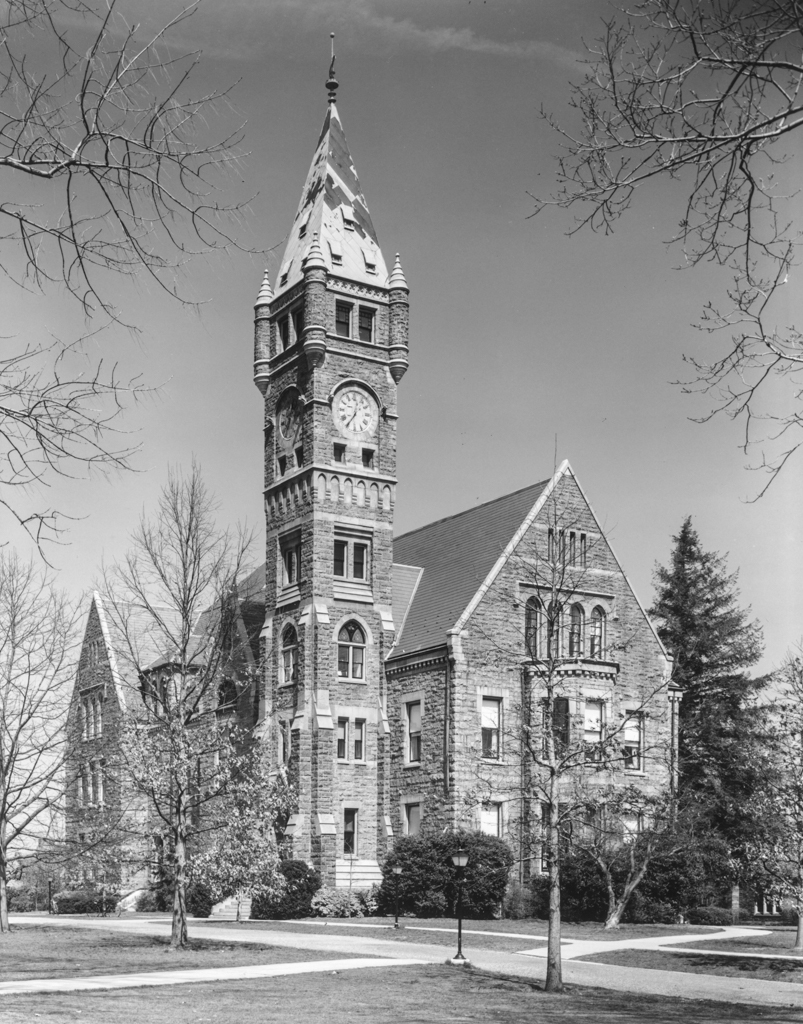
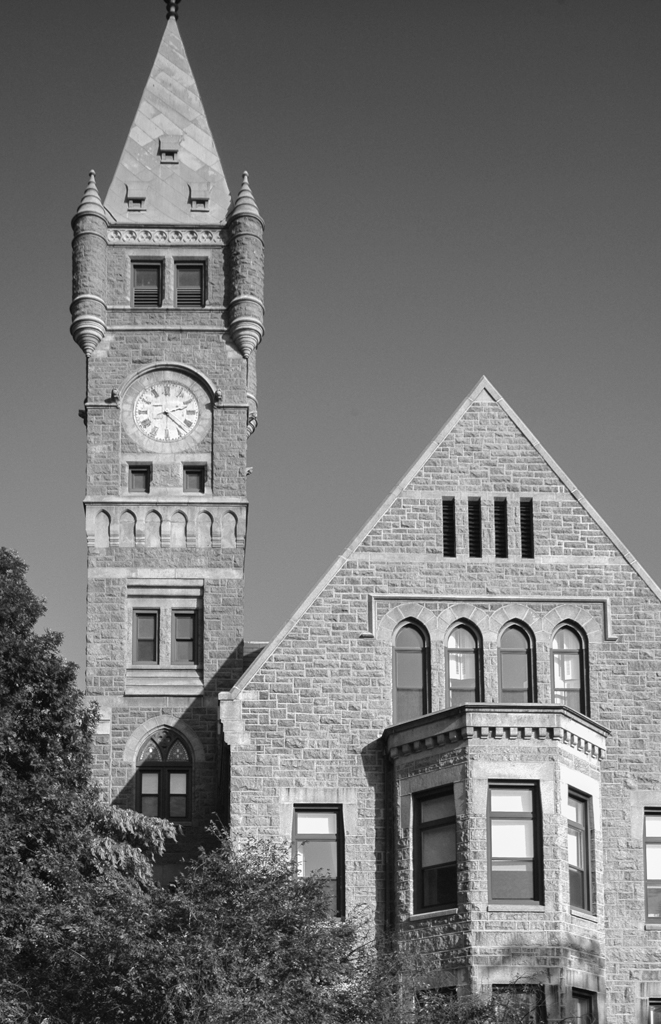
When Quaker philanthropist Joseph Taylor decided to found a college to serve the women of the Society of Friends, he charged his architect that the buildings should have the restrained air of a properly attired Quaker lady in her grays and satins with the goal of eliciting the response, “Just right.” His architect, the patriarch of Quaker designers, perhaps took him too literally, producing a scheme whose gray and white color scheme is a caricature of Quaker plain style. Like most new American colleges, the first building contained all of the college functions, including a gymnasium on the third floor, and the library, classrooms, and the president's office. These different functions are expressed by architectural volumes and window sizes and types in a
Taylor Hall
1884–1885, Addison Hutton