

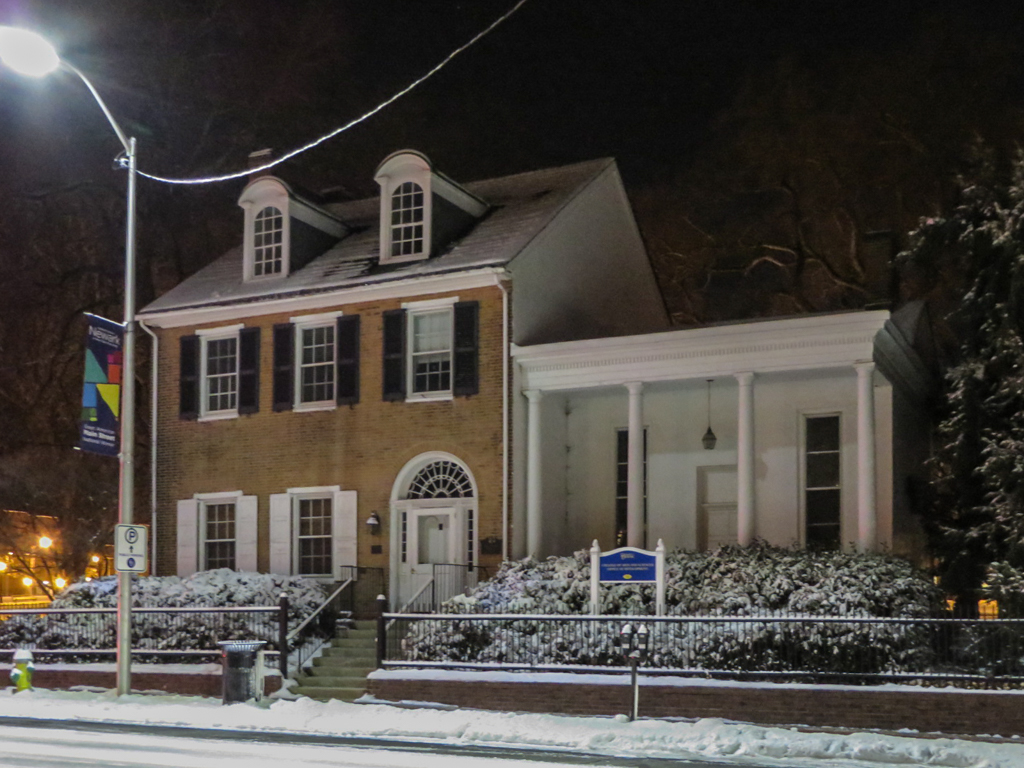
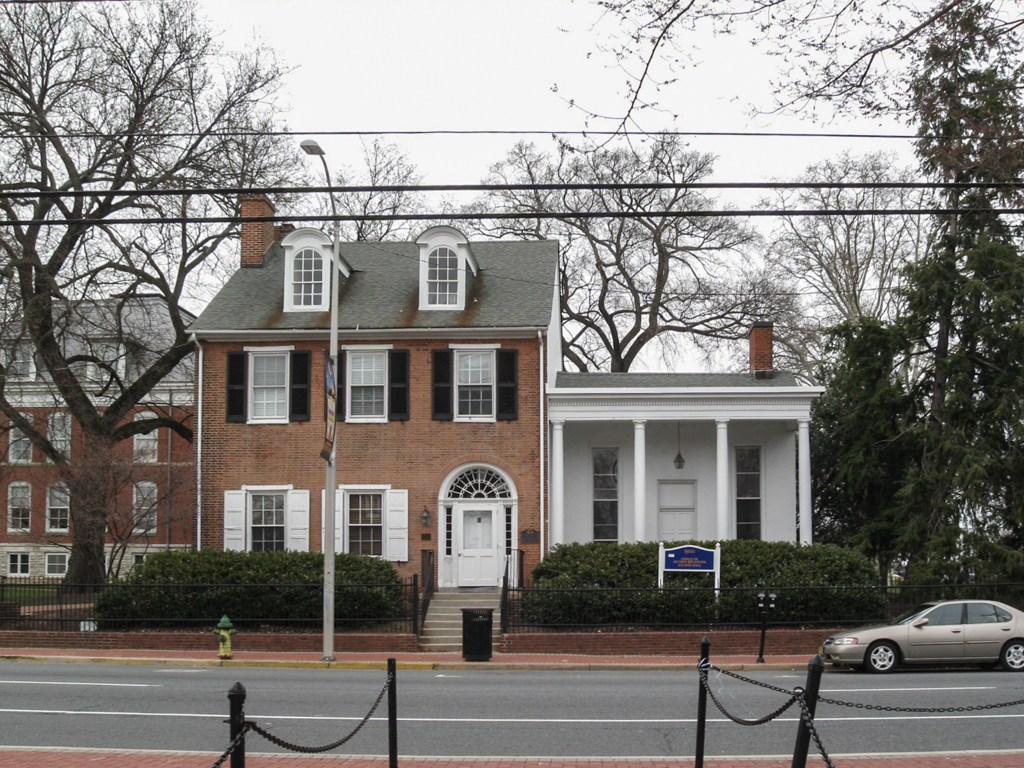
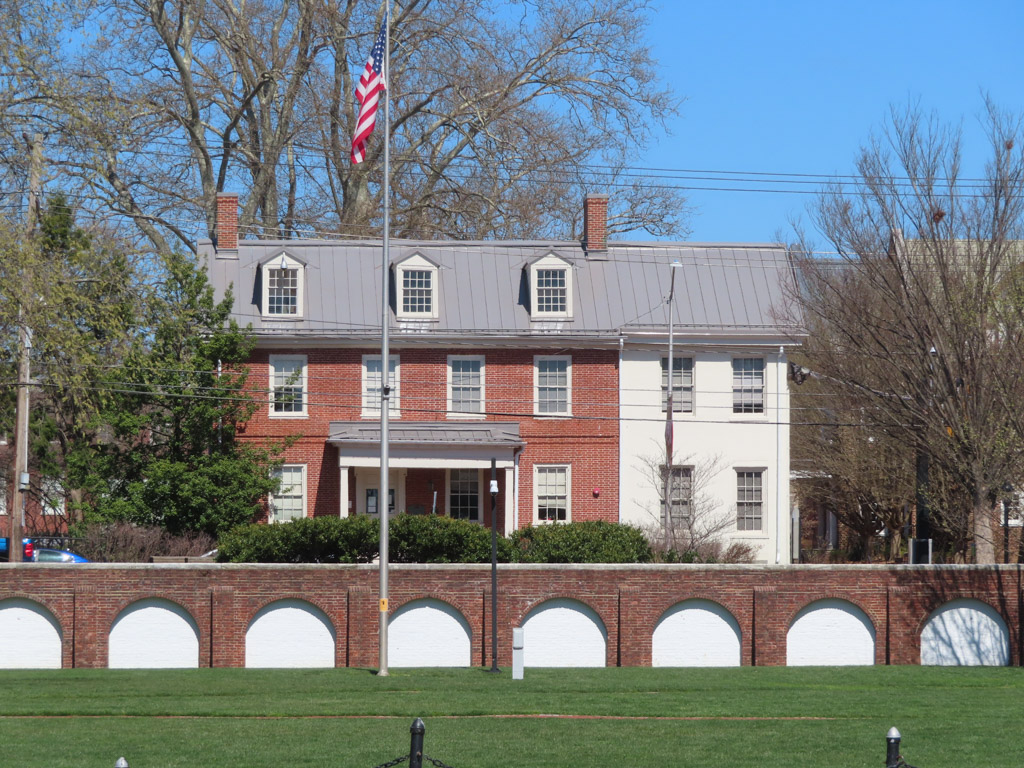
Long a private home, this university building is one of Newark's few colonial survivors. To historian Harold D. Eberlein, the pediment formed by running a pent eave across the bottom of the gable suggested Chester County, Pennsylvania, practice. The lighter brick of the nineteenth-century eastern extension is said to have come from the George Evans brickyard on Elkton Road. The enlarged building housed the town's post office and drugstore before the place was bought for the university in 1915. To the west stands fanlighted, side-passage Alumni Hall, formerly Purnell or Evans House (1809), a private residence until purchased by the college in 1903 and put to use as the library (1909–1916) and then, later, as a World War I county draft board. Day and Klauder's campus plans called for the demolition of these historic buildings, but by 1936, the decision had been made to keep them. Elliott Hall has been renovated and enlarged (1993–1994, Homsey Architects).
Elliott Hall
1760–1780 period. Mid-19th century, with additions