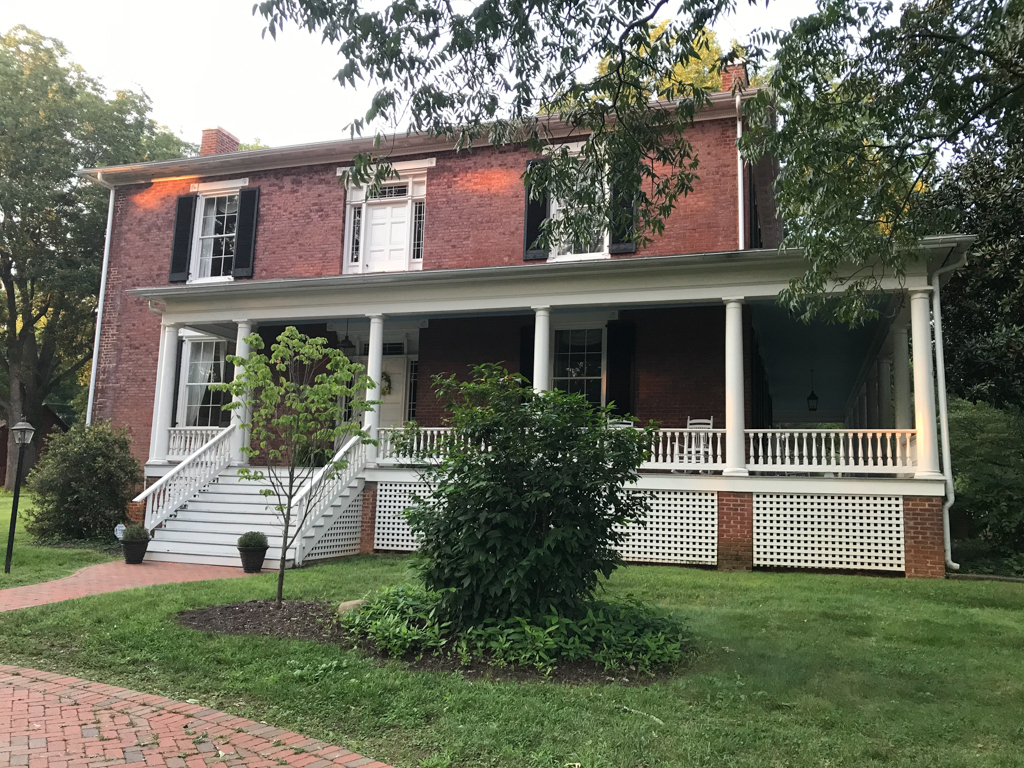
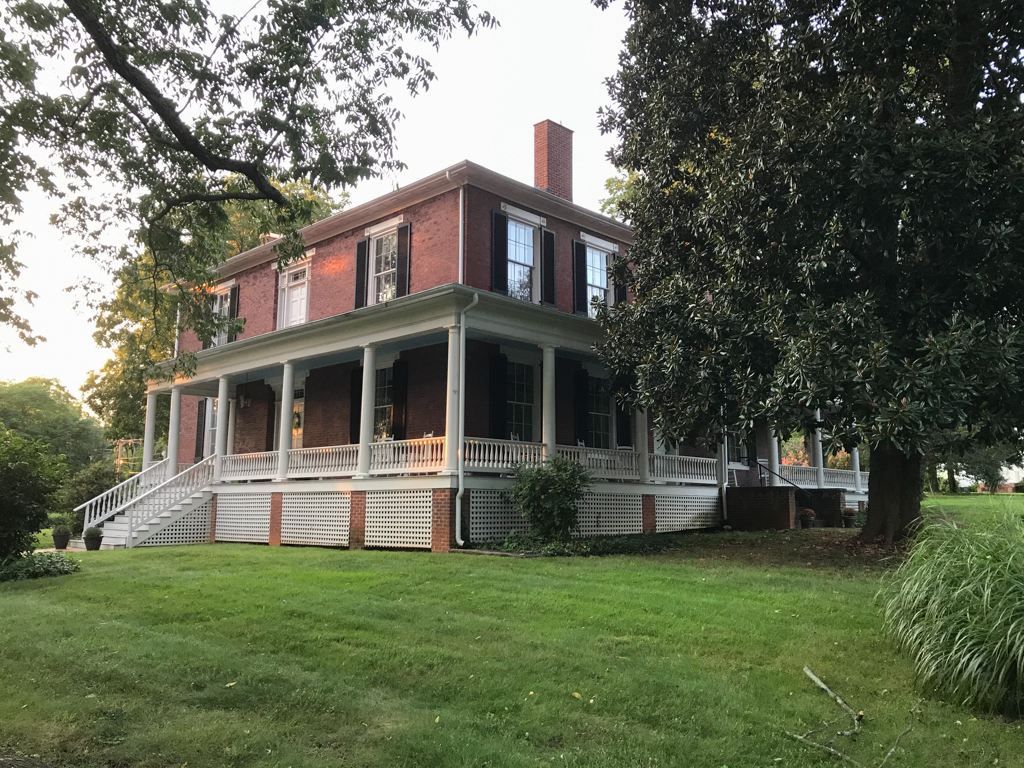
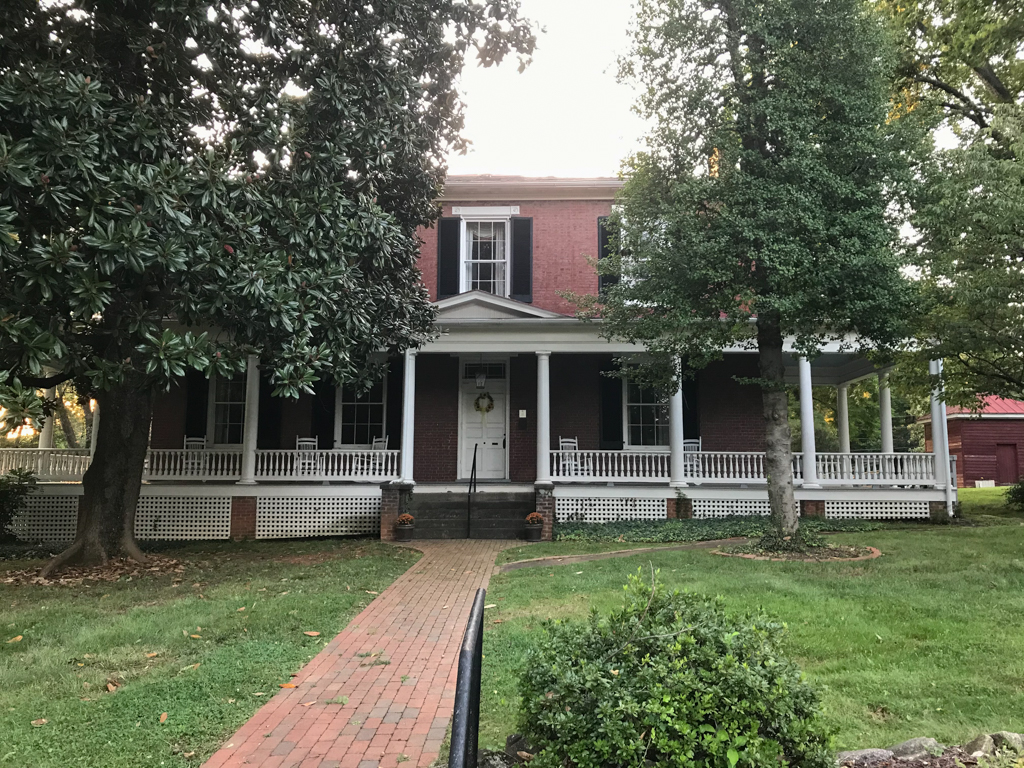
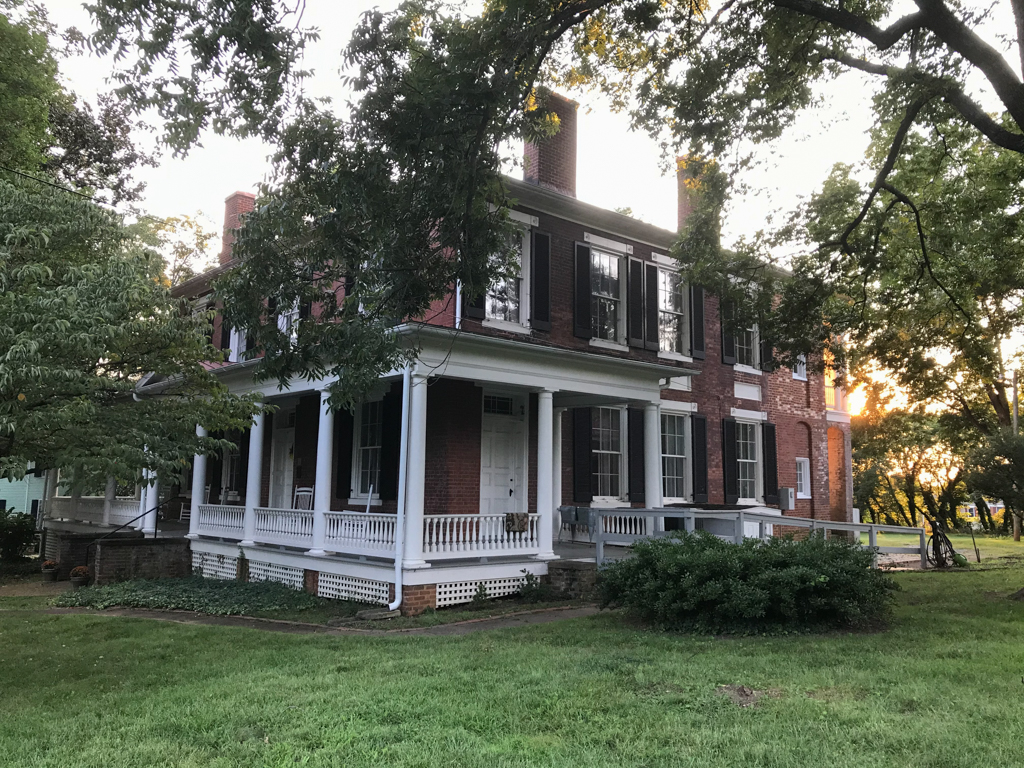
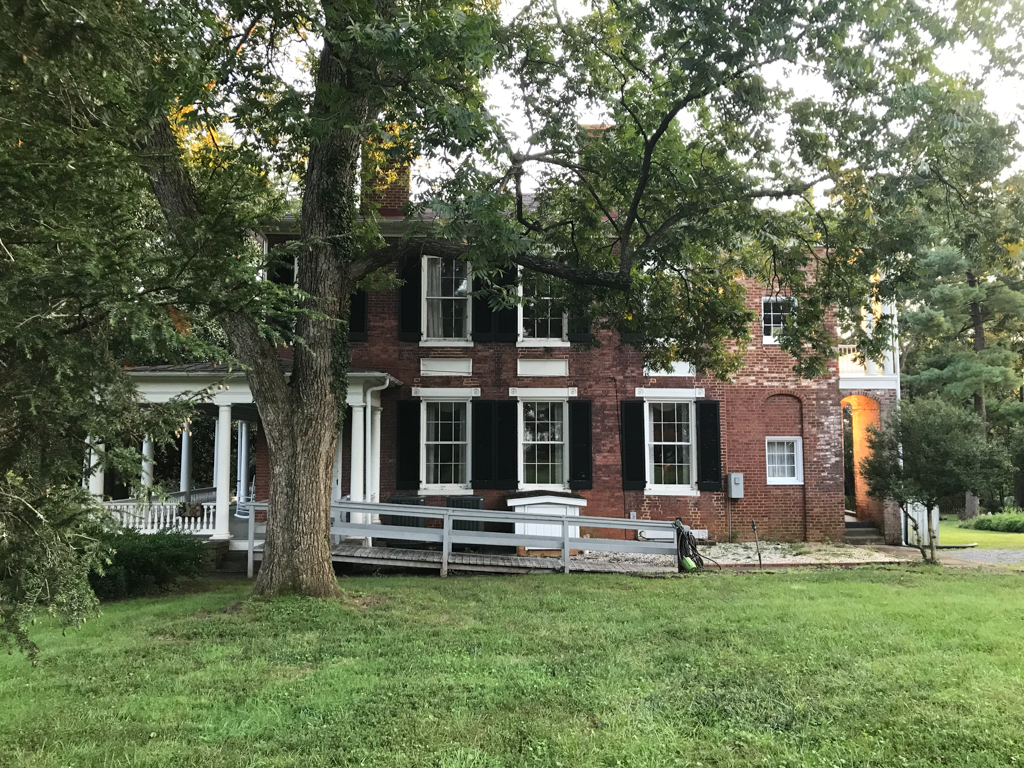
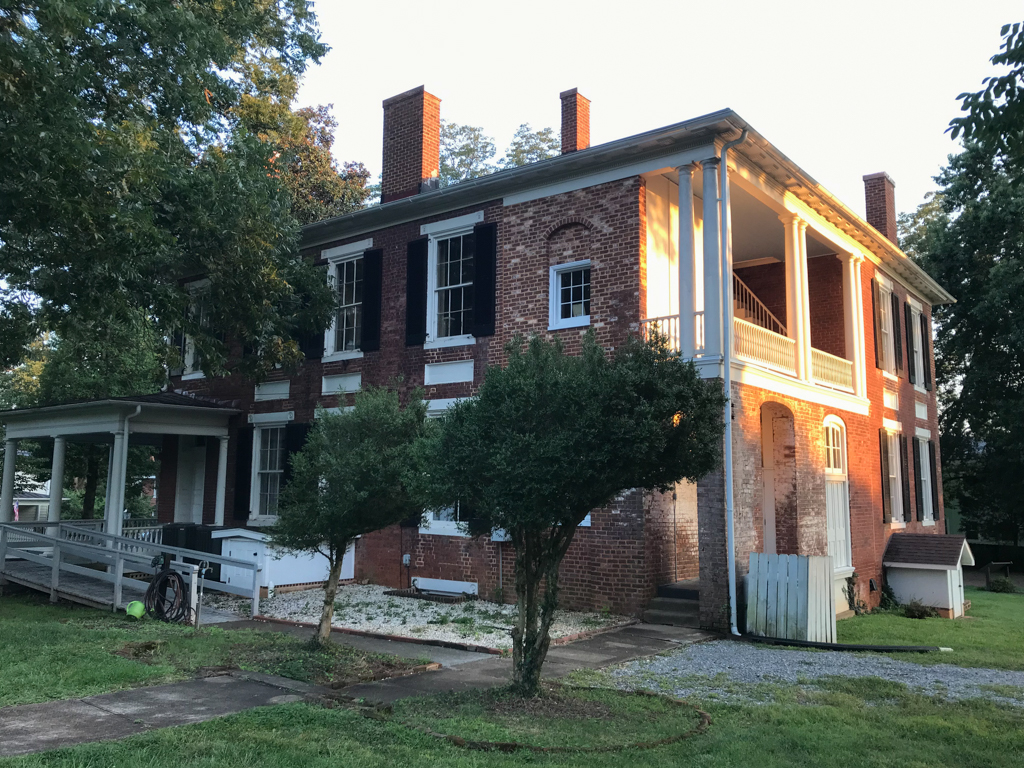
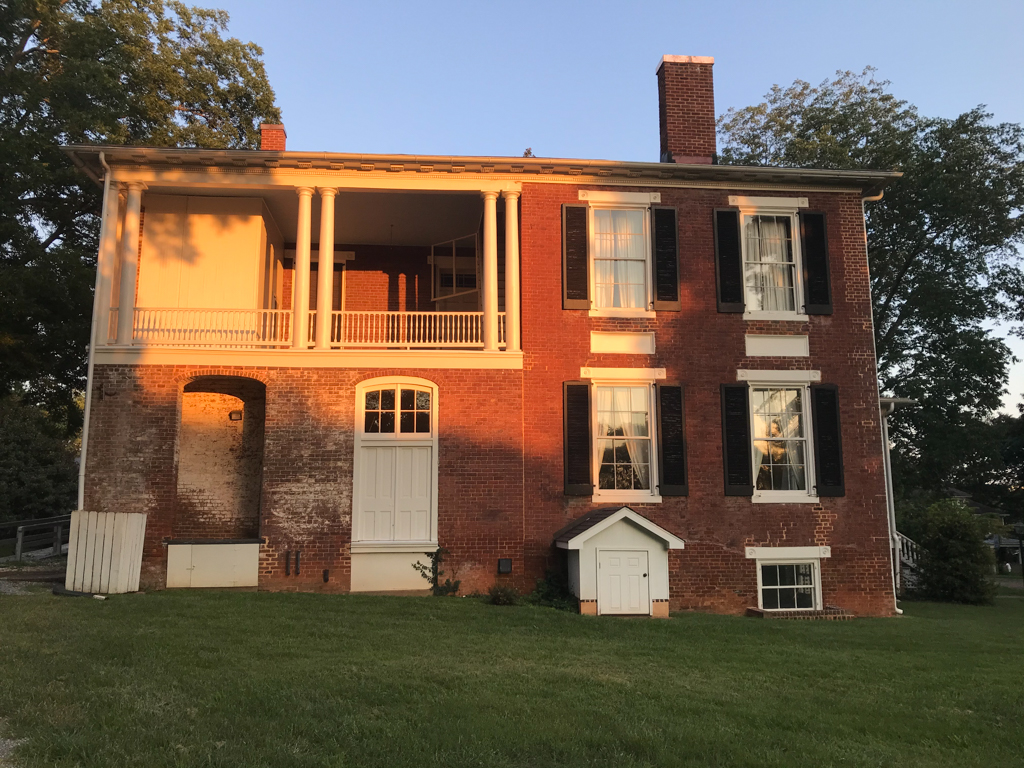
Originally part of a farm on the outskirts of town, this large red brick house is now a house museum. It was constructed for Frances Steptoe Burwell and her husband, William M. Burwell, a political and social leader and the son of William A. Burwell, secretary to Thomas Jefferson. The house has two stories over a raised basement, a low hipped roof, wooden panels between the first and second stories, and a recessed loggia set in the house's northwest corner. All are unusually elaborate features for a Virginia Piedmont house. An early-twentieth-century one-story wraparound porch is an uneasy attempt to link the main and side entrances. On the interior the house is divided into two equal sections, each with a formal stairway. Like Otterburn (BD20) and Three Otters (BD19), the interior draws heavily from Asher Benjamin's pattern book The Practical House Carpenter (1830).

