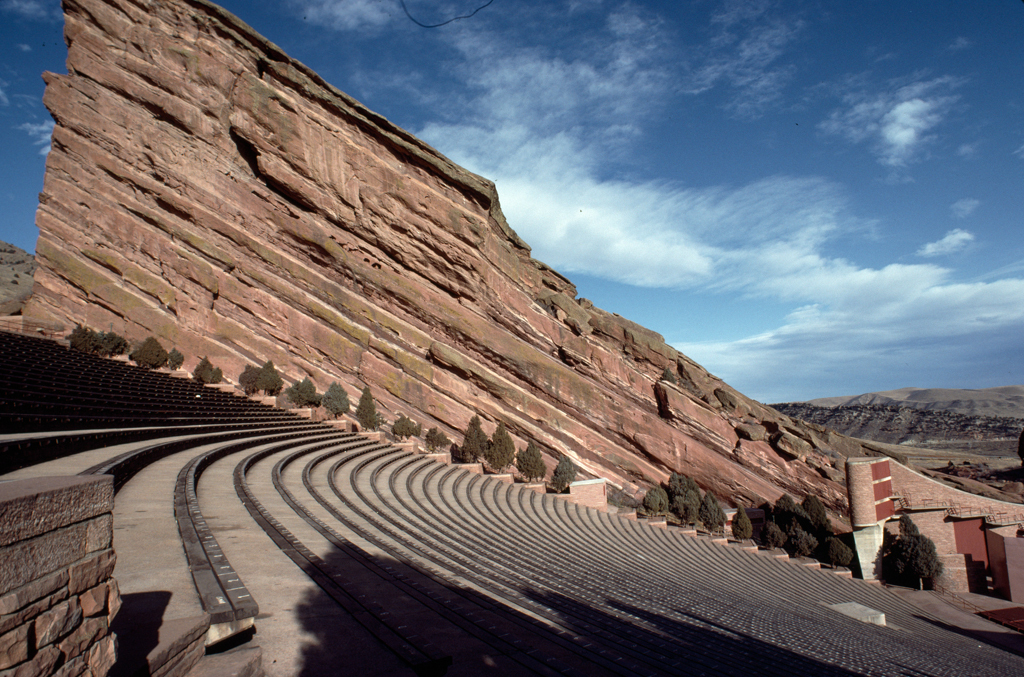
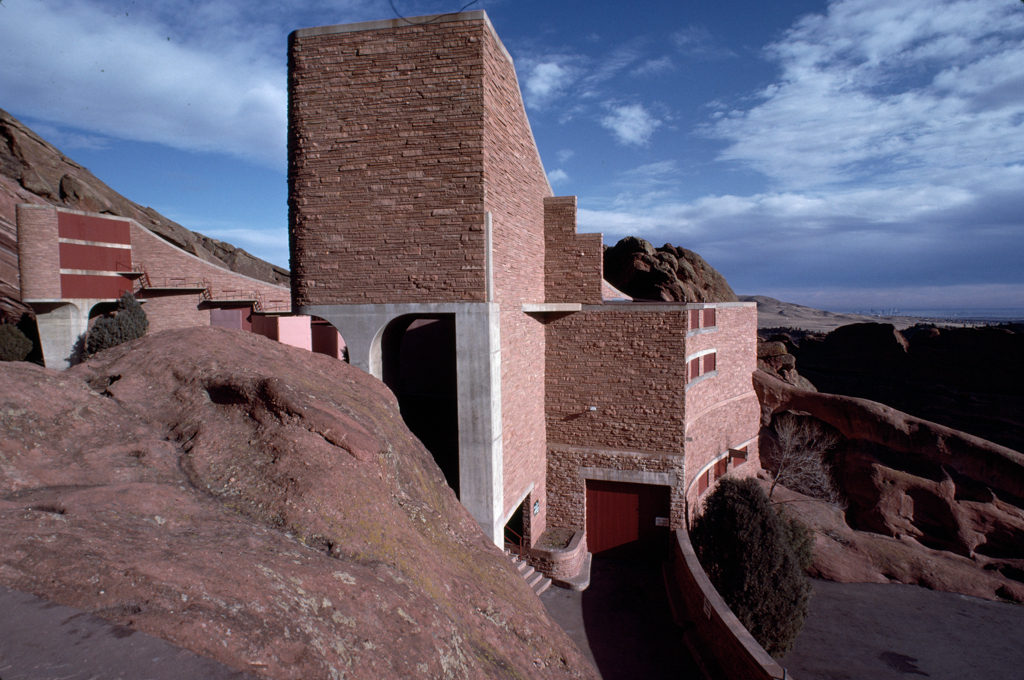
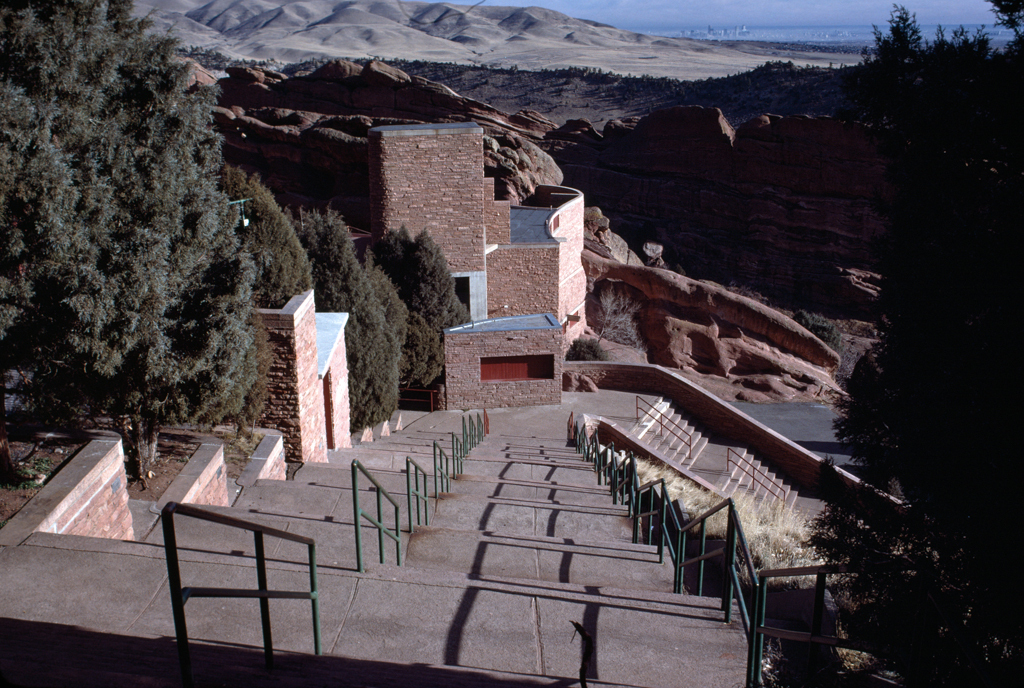
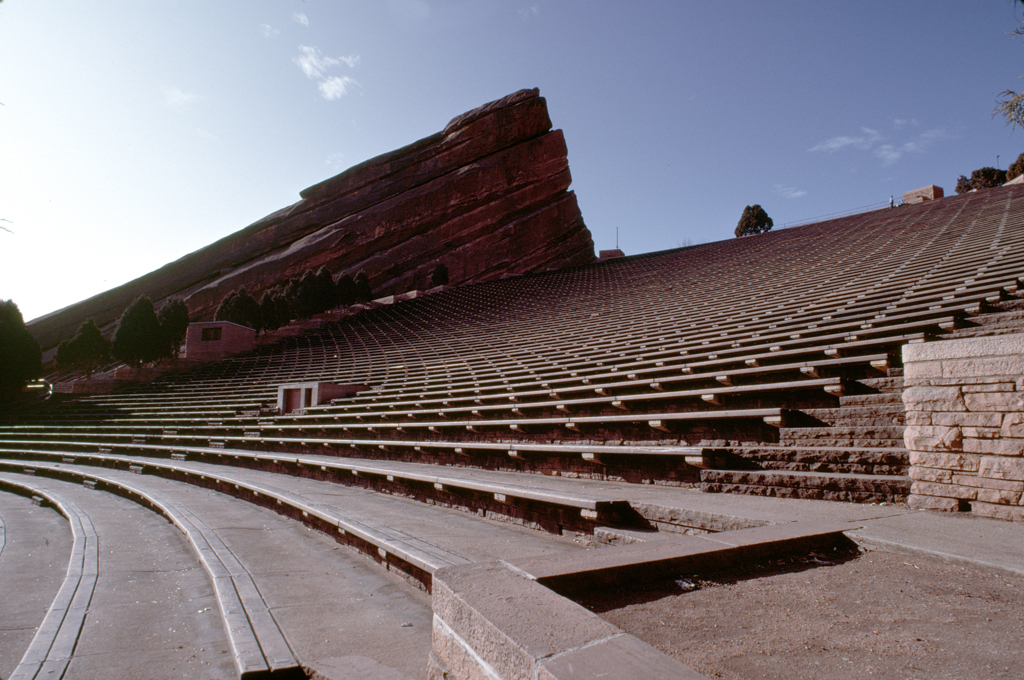
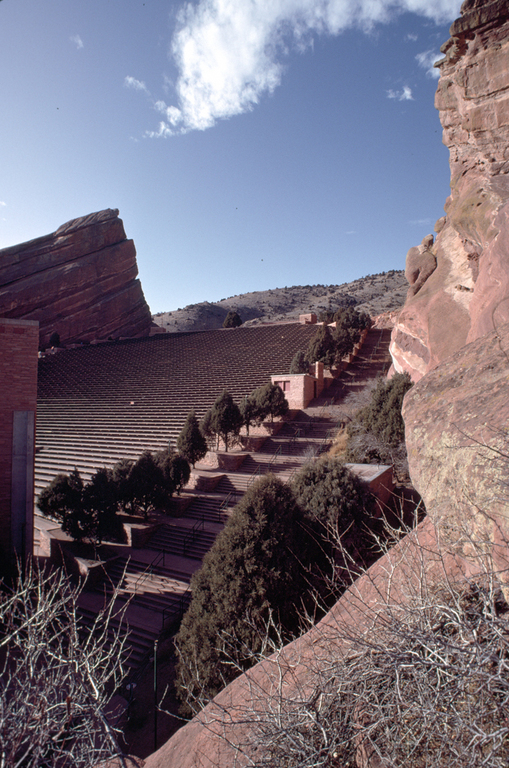
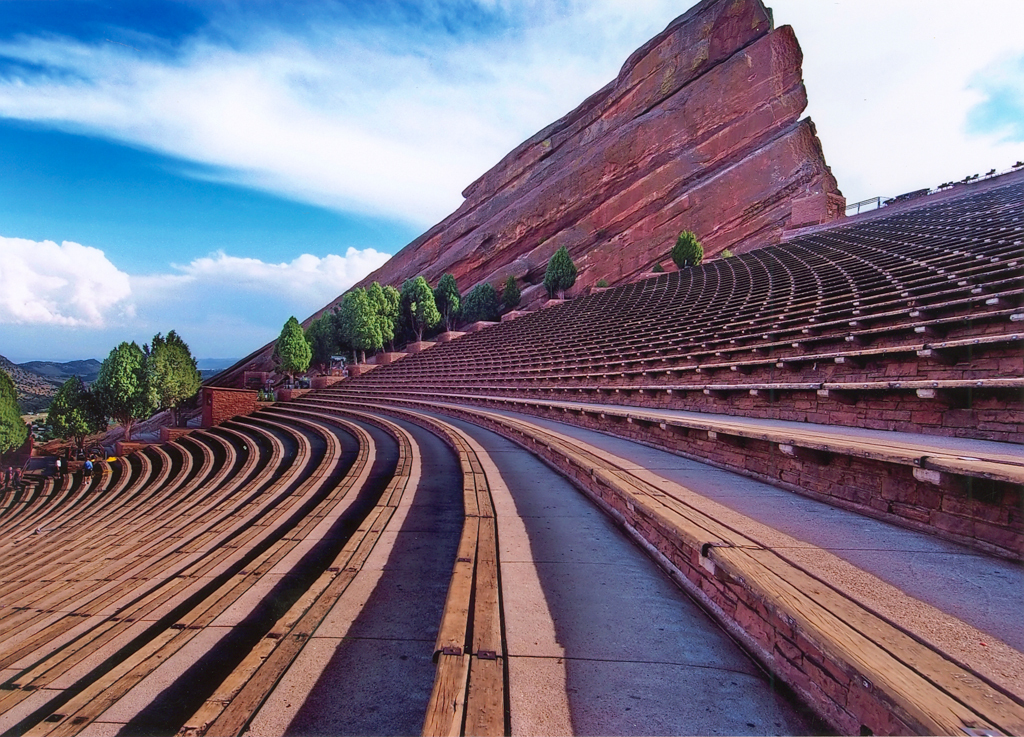
The ultimate beauty of this acoustically superb outdoor theater is the natural setting of massive sandstone and metamorphic rocks tilted upward by volcanic action. The May 1945 Architectural Forum praised “the admirable restraint with which architect Burnham Hoyt has preserved the original flavor of a majestic setting.” Collaborating with nature, Hoyt used the local juniper tree as landscaping and native red sandstone for the drainage and ledgelike outdoor seating. The wonderful simplicity of this design has been marred by a few subsequent additions such as a stage covering which partially blocks the view of Denver and the High Plains. The surrounding 1,640-acre Red Rocks Park also offers hiking trails and the Pueblo Concession House (1931, W. R. Rosche), a two-story structure mixing a Mission Revival parapet and Pueblo Revival vigas on the facade of a visitors' center, cafe, and museum. The AIA selected Red Rocks as the Colorado entry for its centennial exhibition at the National Gallery of Art in 1957.