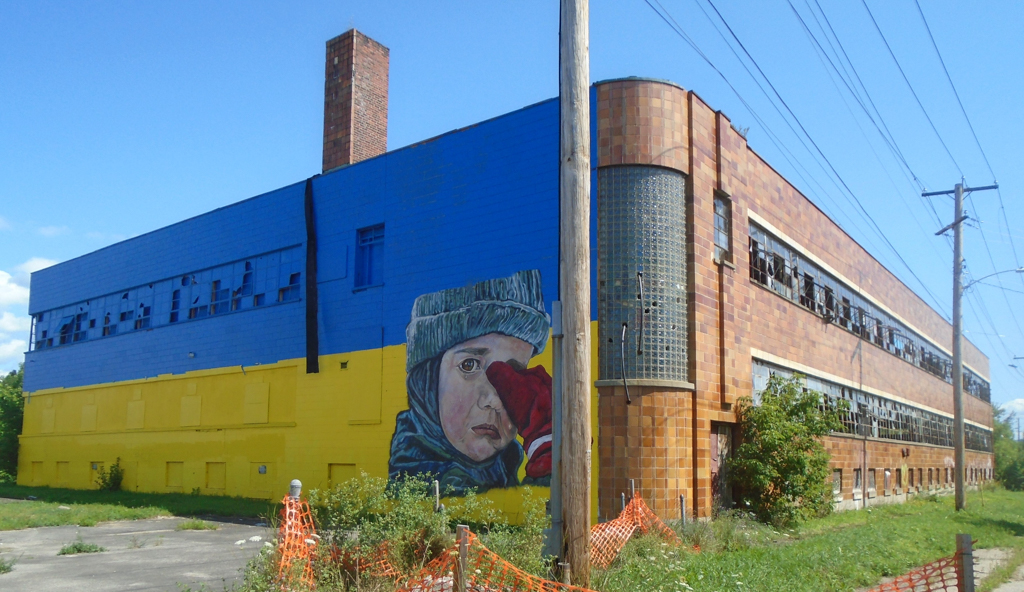
With few exceptions, the modernist formal imagery that symbolized future prosperity during the economic turmoil of the Great Depression did not appear in Vermont until after World War II. This sleek and shiny two-story industrial building is an excellent case in point with its orange ceramic-faced block walls, ribbon windows, and rounded glass-block-filled corner, which lights the interior stair tower. The dress factory of Albert Rosenblatt and Company is an outstanding example of Streamline Moderne styling applied to industrial architecture. In contrast, the wood-frame Tauber-Lipton Shirt Company factory connected at the rear still has the look of a nineteenth-century mill although it was built in 1920. The Rosenblatt building is among the last sizeable clothing manufactories built in the state and was a speculative project financed by Rutland businessmen whose civic-minded goal was to attract a clothing manufacturer to stimulate economic recovery. Many New York clothing manufacturers expanded from the Hudson River Valley into southwestern Vermont in the early twentieth century, employing the wives and daughters of slate and marble workers. The Rosenblatt factory operated for several years before succumbing to Southern competition, which led to the closing of most clothing mills throughout the state in the early 1950s. The building is currently empty.

