

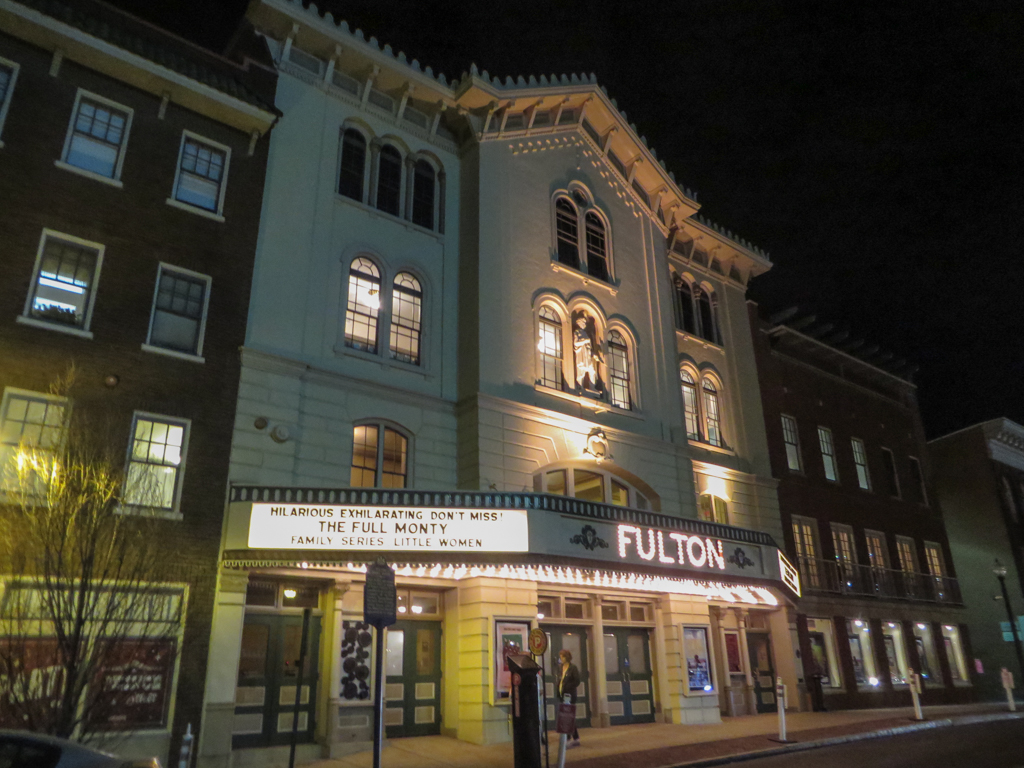
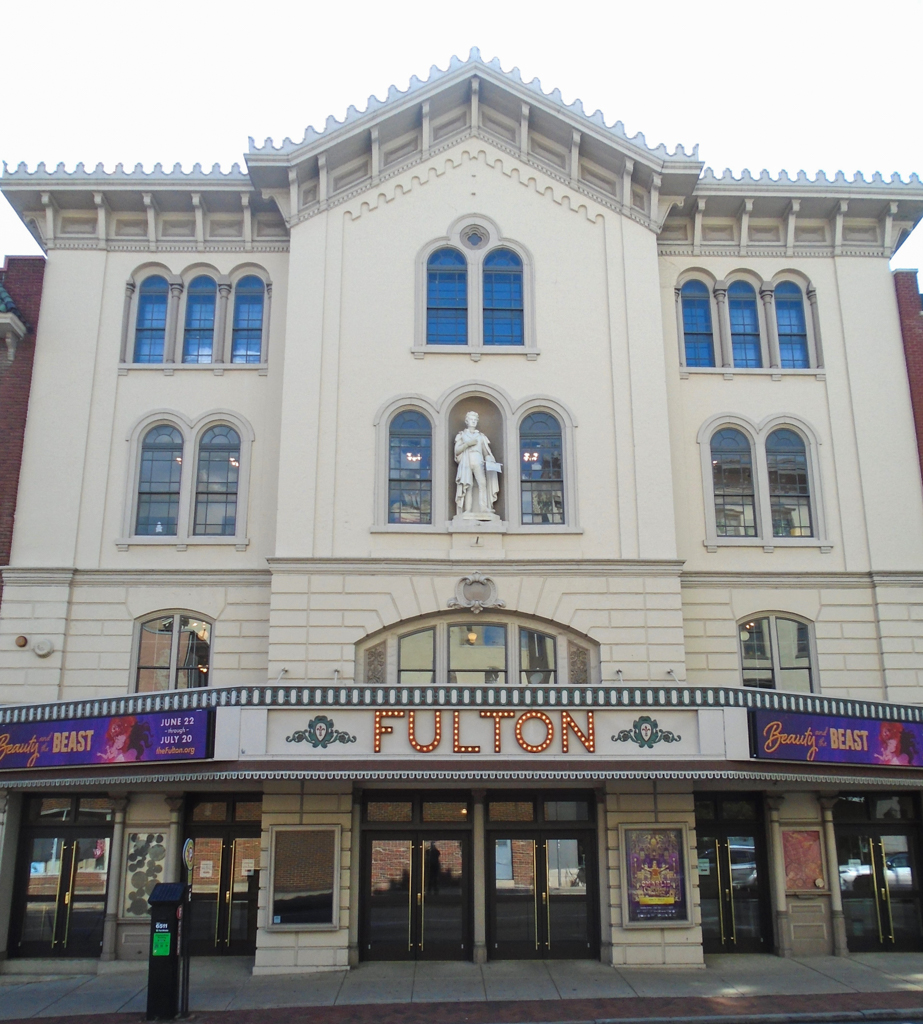
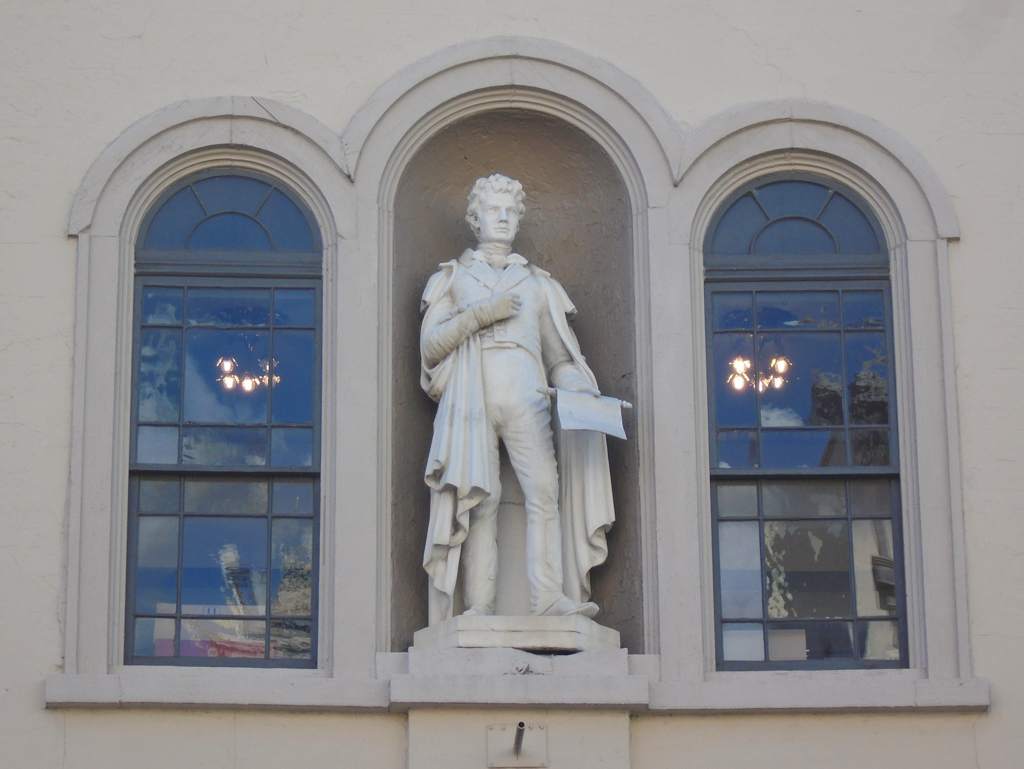
When John Haviland's new jail (LA6) was completed on the east side of the city in 1850, local boosters built a public hall for lectures and entertainment on this former prison site. Their architects chose the Italianate that was appearing in fashionable city clubs and houses in New York and Philadelphia. In a typical act of boosterism, it was named for the city's illustrious inventor Robert Fulton, who was commemorated with a statue by Philadelphia sculptor Hugh Cannon that stands in the central niche of the facade. The hall served as the county courthouse in 1853 and 1854 during the construction of the new one (LA15). In 1873, the building was extensively remodeled by Durang to serve as an opera house. His father, a Lancaster native, was a well-known actor who named his son for the great American tragedian Edwin Forrest. Urban remodeled the lobbies in the 1890s and redesigned the main hall in 1905, adding a second balcony and enlarging the proscenium. By the 1930s the building had been adapted as a movie theater. At that time the original lower facade was replaced with a contemporary movie marquee and box office. Much of this was undone beginning in the 1960s when the
Fulton Opera House (Fulton Hall)
1852, Sloan and Stewart; 1873, Edwin Forrest Durang; 1905, C. Emlen Urban; 1995, Kessler Associates and Levengood Kautter. 12 N. Prince St.