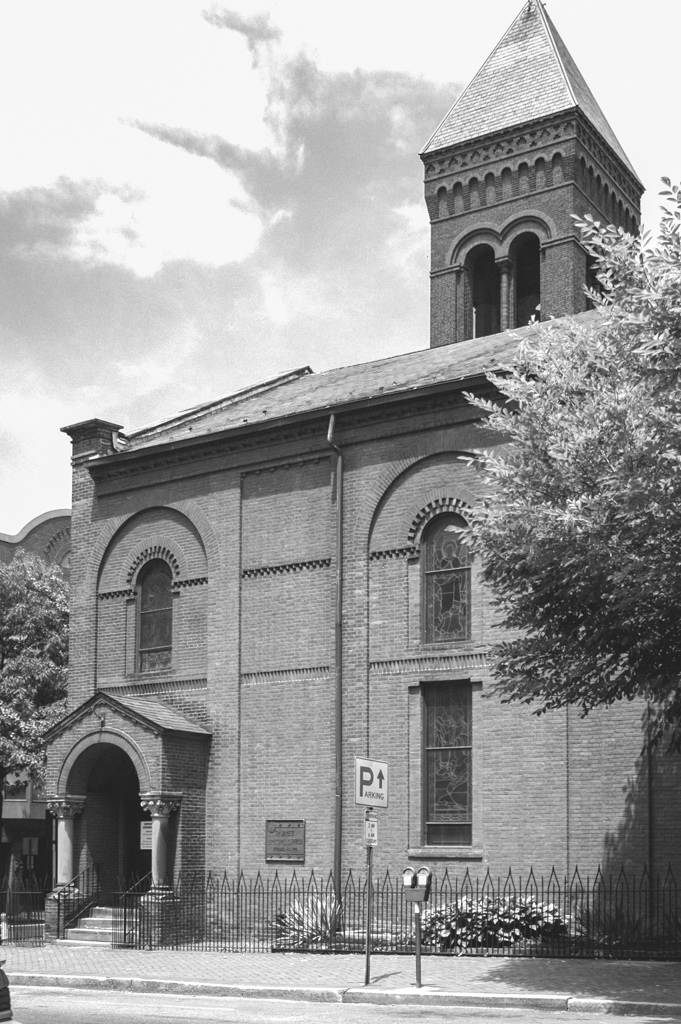
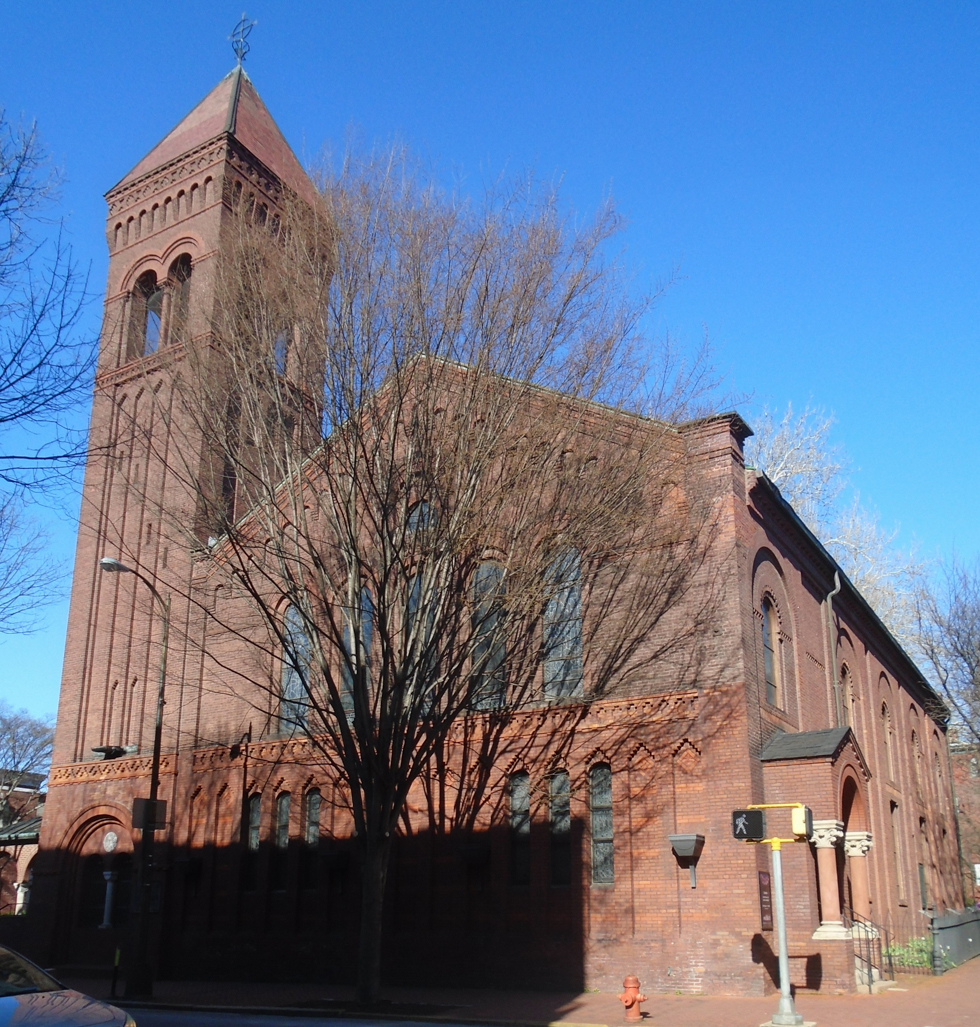
The odd proportions of St. James’ church are a carryover from the underlying colonial building that Burns enlarged beginning in 1871 with the addition of a robustly detailed brick apse; two decades later he wrapped the church in an Italian Romanesque mantle. In the early twentieth century, spectacular Mercer tile floors were added, perhaps under the supervision of C. Emlen Urban, who designed the handsome adjacent Colonial Revival St. James’ house in 1903.

