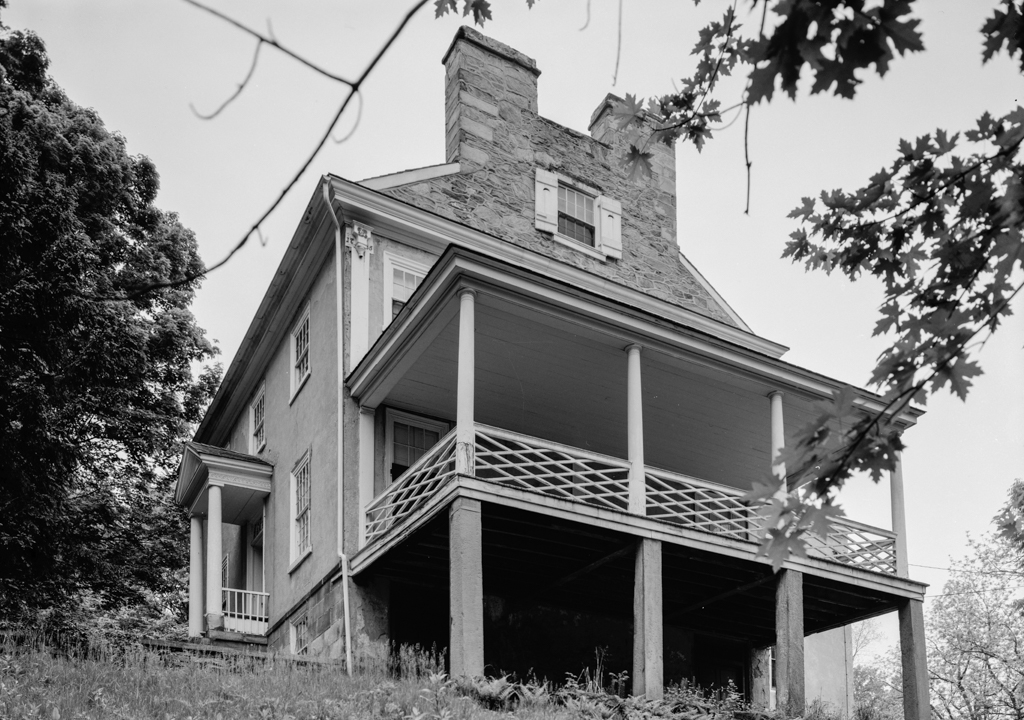
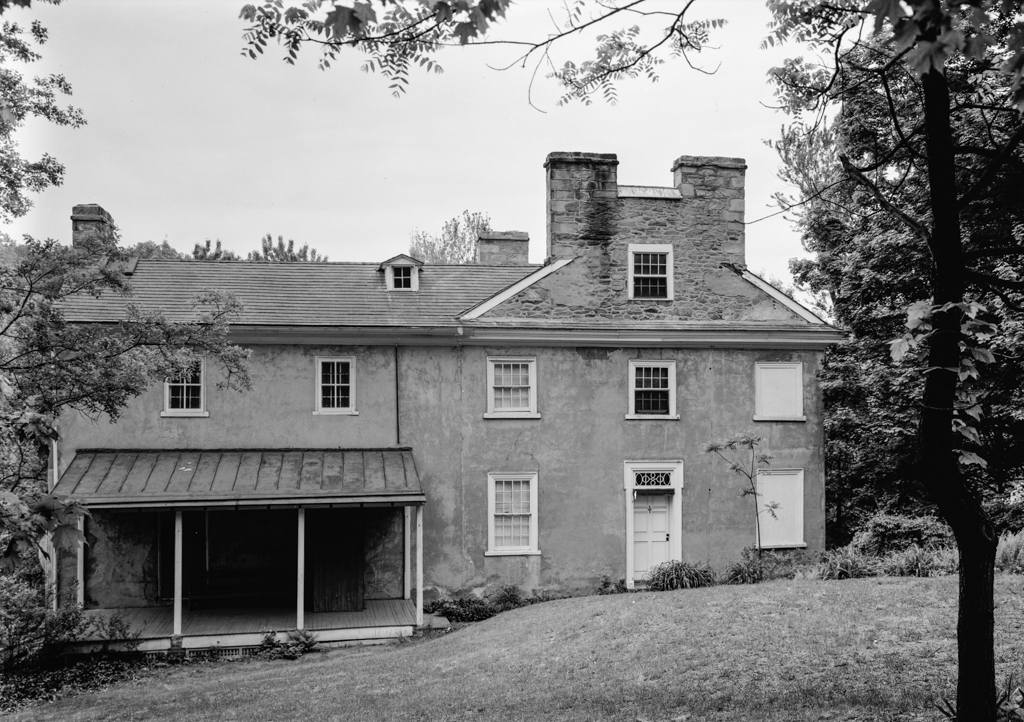
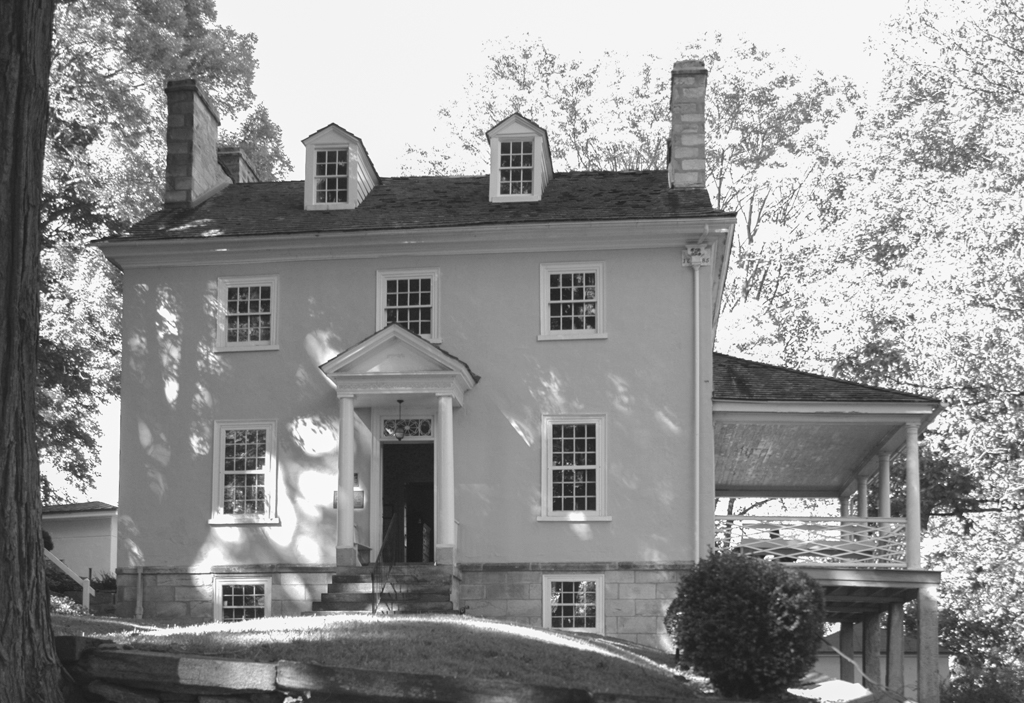
In 1791 the Pennsylvania Direct Tax valued Thomas Leiper's property at $10,477—the highest valuation in the new county. The inventory stated: “House was 36.5 feet by 30 feet made of stone 2 stories high, 22 windows, 408 lights in the windows and in good repair.” If there is such a thing as a Scots Georgian design, this is it in its frugal stuccoed masonry and large windows. Just as remarkable was Leiper's array of outbuildings: a kitchen “30 by 17 feet of stone two stories high”; a springhouse; a stone barn 41 × 31 feet; a stone wagon house, 31 × 19 feet; another stone barn 43 × 39 feet; two stone snuff mills “in good repair and on a strong stream”; a stone drying house; and two log buildings, one housing a smith shop. Later additions included a safe building with slit windows that served as a private bank to handle the payroll at his various enterprises. Leiper's hometown in Lanark, Scotland, was one of the birthplaces of the Industrial Revolution and led to his enterprises in the Philadelphia suburbs, where he first made a fortune processing tobacco, then applied his acumen to a stone quarry that he operated with what is generally regarded as the first railroad in the new nation.