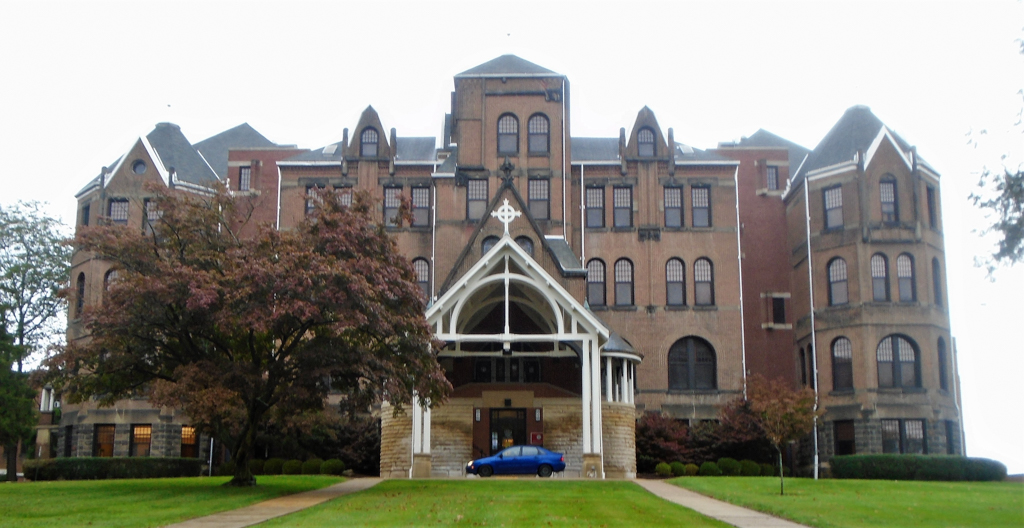
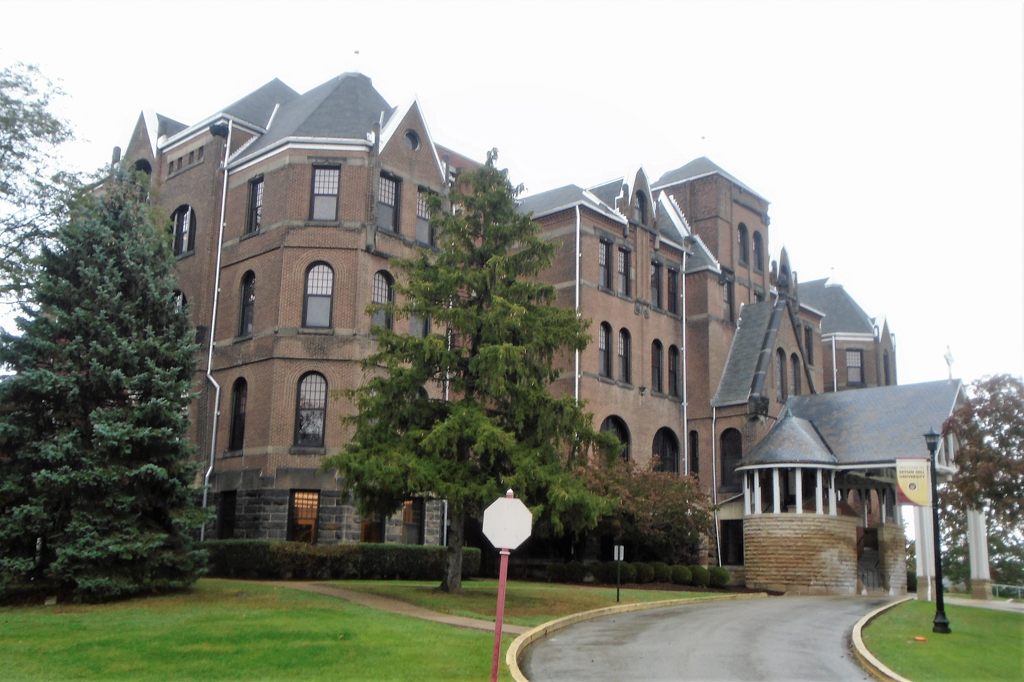
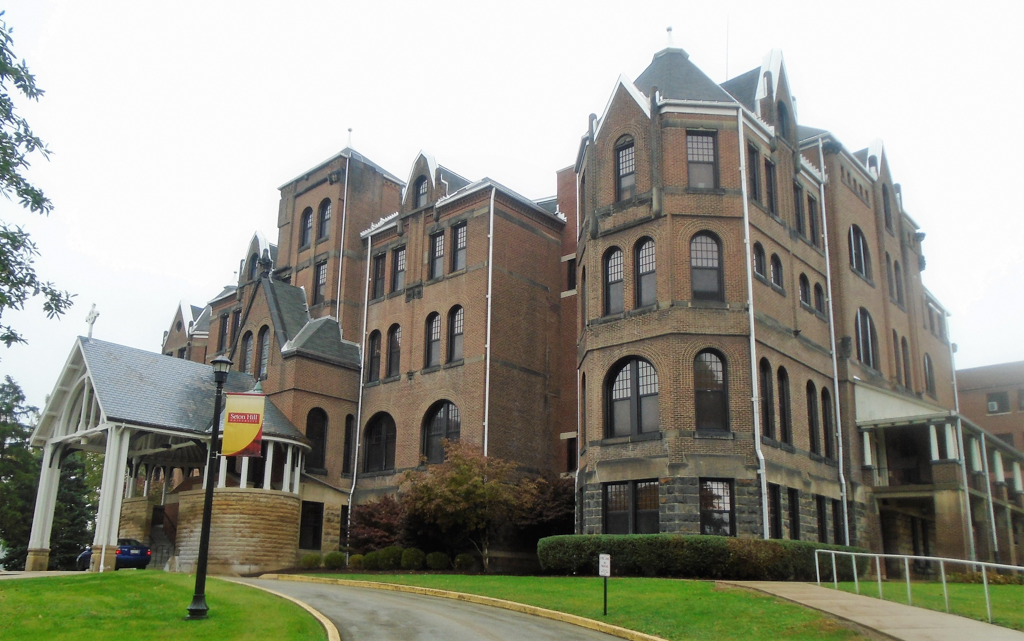
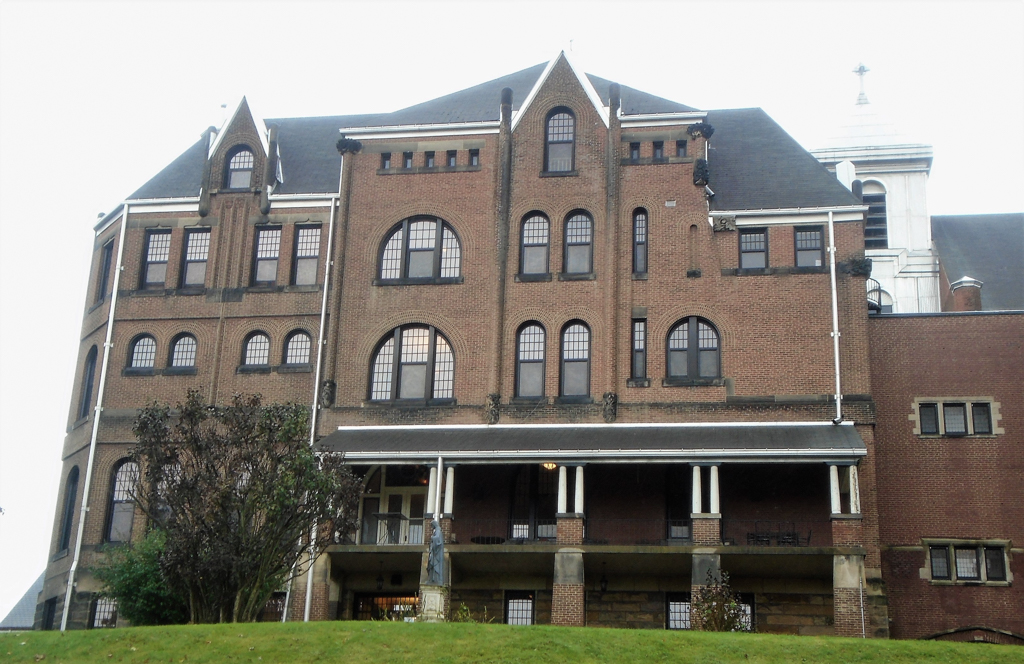
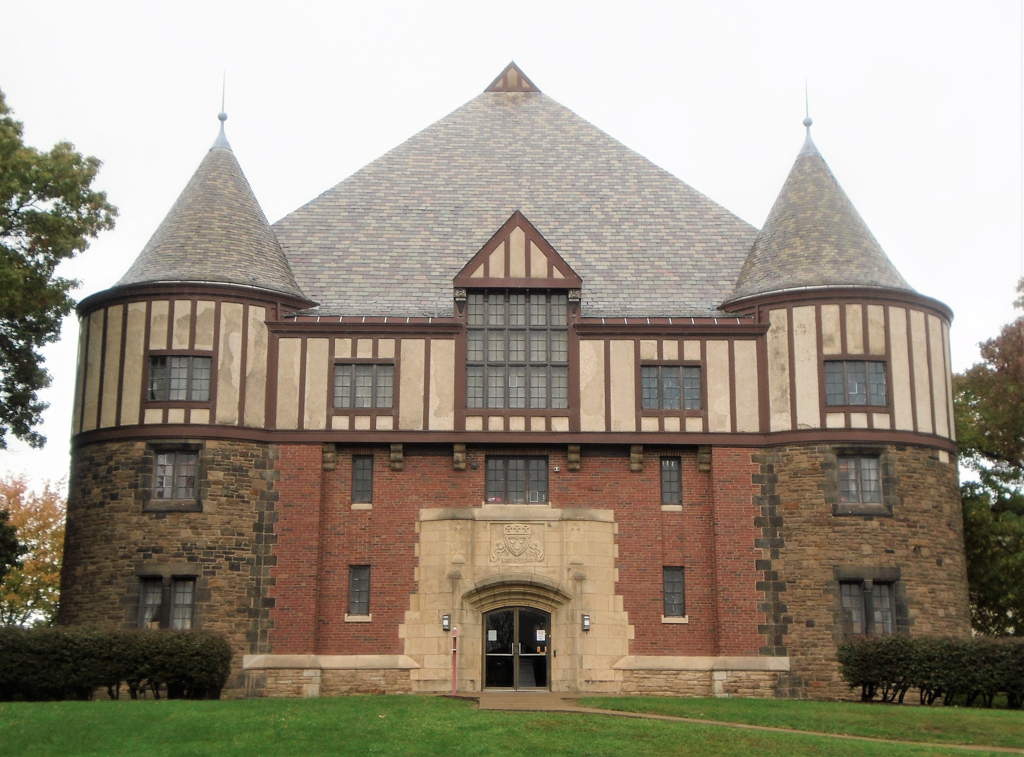
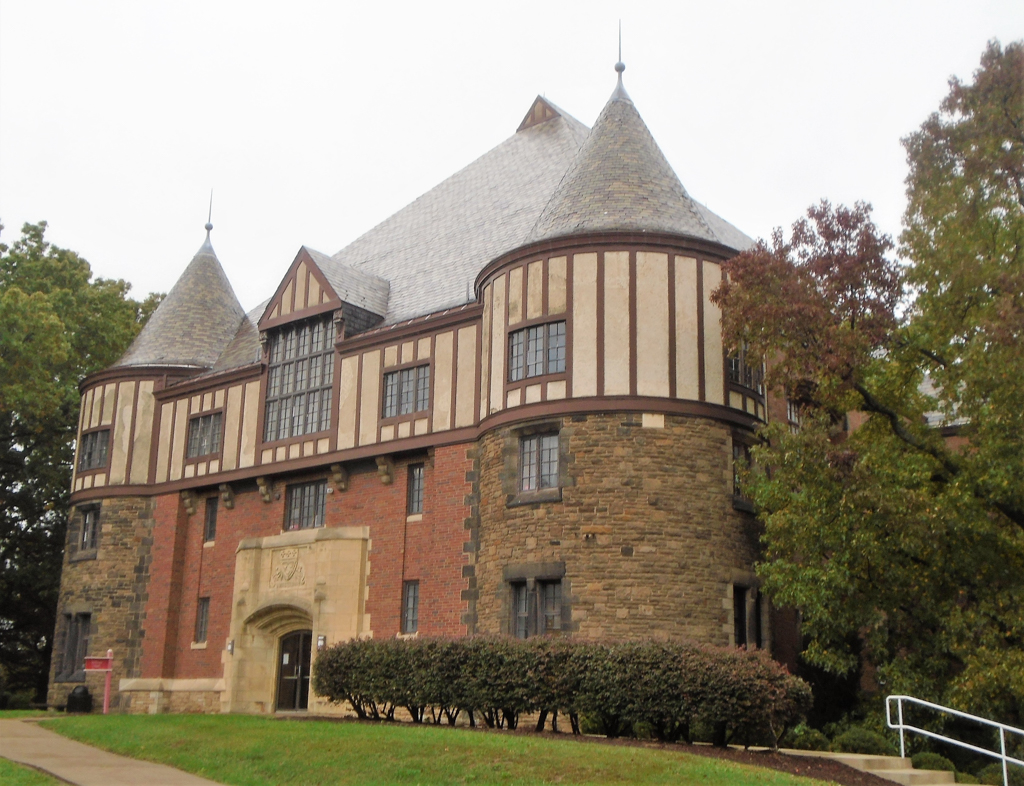
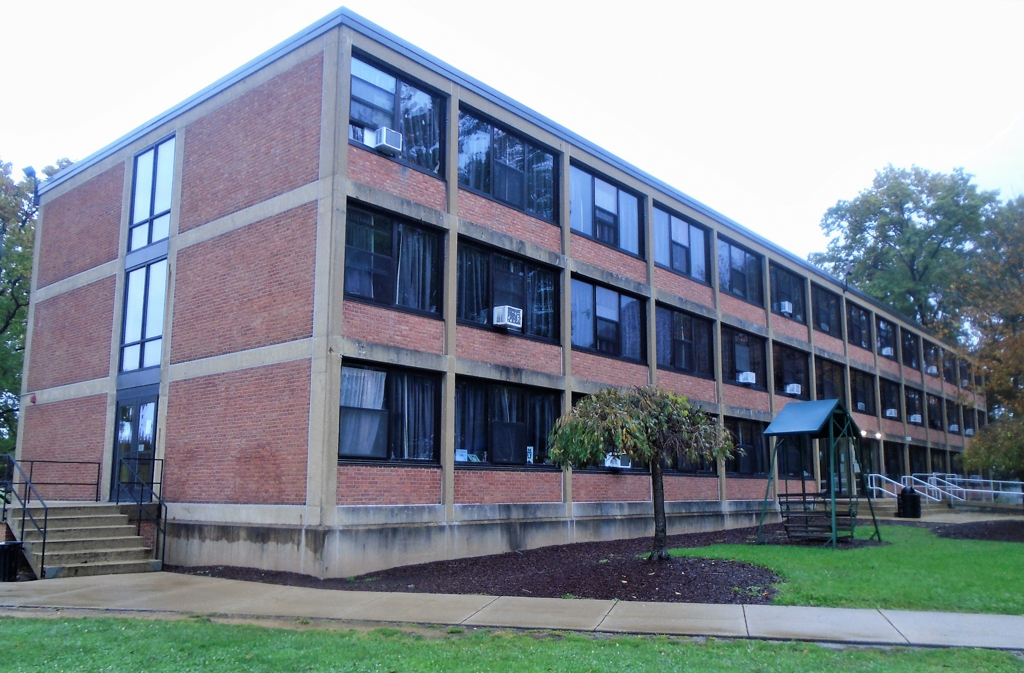
Founded in 1883 by the Sisters of Charity and named for St. Elizabeth Ann Seton, Seton Hill University evolved from a private academy to a four-year degree-granting college in 1918, and, finally, a university in 2002. A large, rambling brick Romanesque Revival administration building designed by Joseph Stillburg and built between 1886 and 1889 crowns the hilltop campus overlooking Greensburg. A series of additions over the years allowed the building to house a variety of functions, from dormitory to chapel. North of the administration building are three two- to four-story-high brick buildings designed by Carlton Strong of Pittsburgh, which were added as enrollment increased. Outstanding among them is the Tudor Revival gymnasium, Sullivan Hall (1928), with stone and half-timbered corner towers and a steeply pitched slate roof. In the early 1950s, then president Monsignor William Granger Ryan, advised by Strong's successor firm and his friends Dominique and Jean de Menil (patrons of Philip Johnson), consulted Johnson in the building of a new library, and ultimately had his firm design Havey Hall, a three-story concrete-frame dormitory with brick infill. Greensburg architect Francis O'Connor Church acted as supervising architect. Johnson was commissioned again in 1990 to design an art quadrangle, but the plans were never realized. The college purchased two former mansions in the 1970s, along Mt. Thor Road (
WE11).