

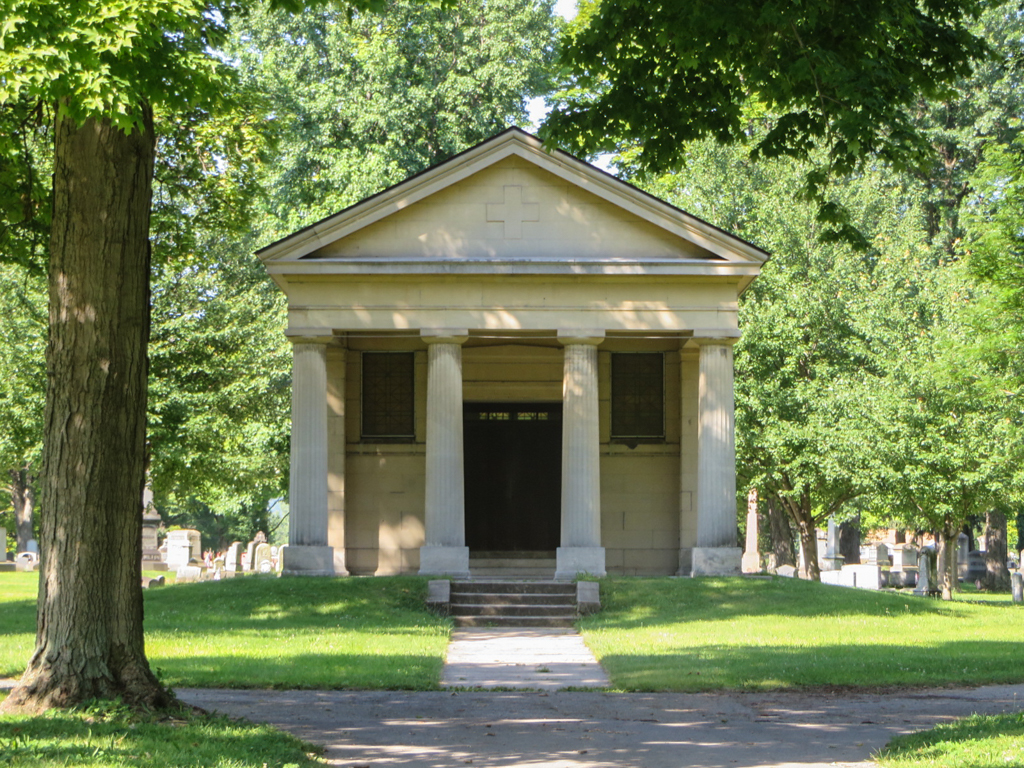
Beaver Cemetery was incorporated in June 1865, two months after the conclusion of the Civil War, when the town's existing cemetery was nearing capacity. Intended to emulate the rural cemeteries of the 1830s and 1840s, its plan is one of picturesque informality
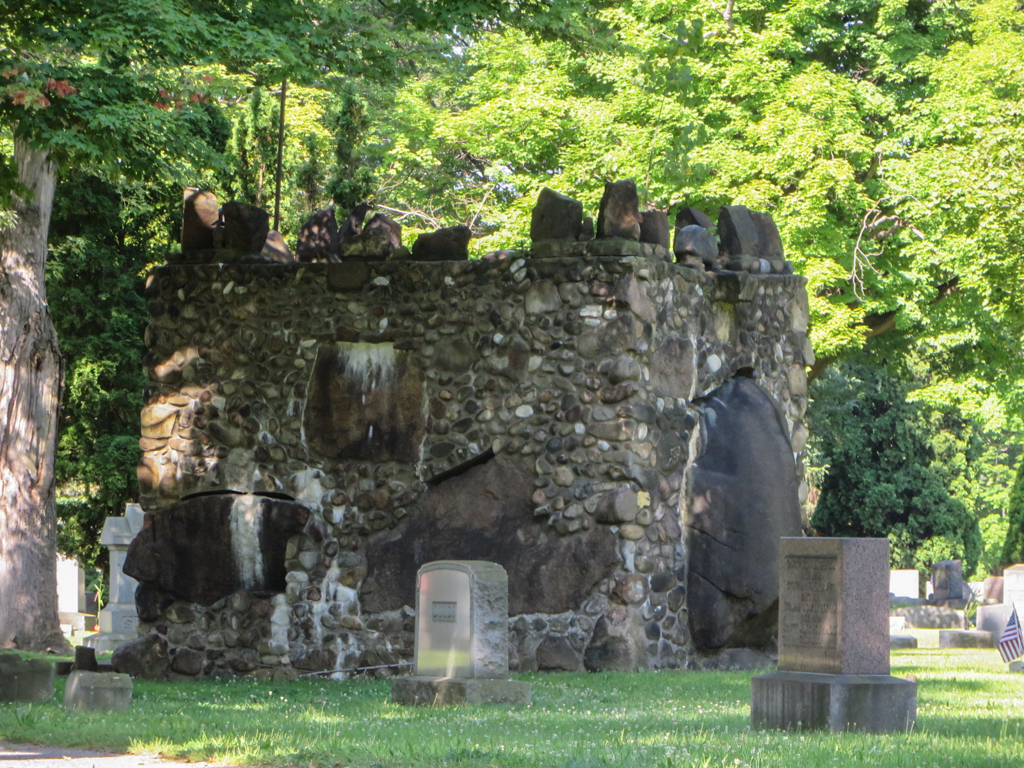
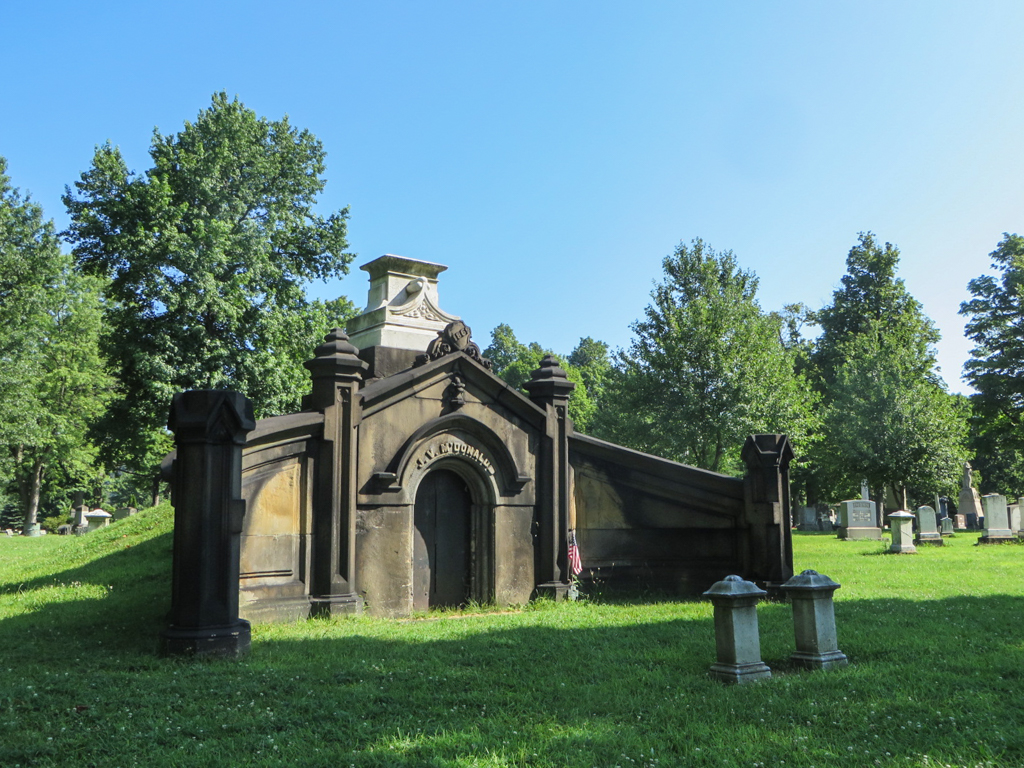
Two formal and traditional monuments include J. V. McDonald's Classical Revival brownstone tomb of 1869 built into a small hillock and with two wings projecting from a central round-arched entrance, and the tomb of c. 1884 for lawyer Lewis Taylor. The latter, one of the tallest in the cemetery, is crowned with a statue of a Roman goddess atop an eighteen-foot-high granite plinth; a bas-relief portrait of Taylor adorns the side of the shaft. One of the most interesting family mausoleums is that of engineer Colonel James P. Leaf designed in 1949 by Frank Polrio of Beaver Falls. Constructed of random stones, the rectangular fortresslike memorial's entrance is covered with a boulder that appears to have moved just enough to allow for the resurrection of the deceased. Colonel Leaf's antler trophy above the vaults is visible through portholes on the side walls.