

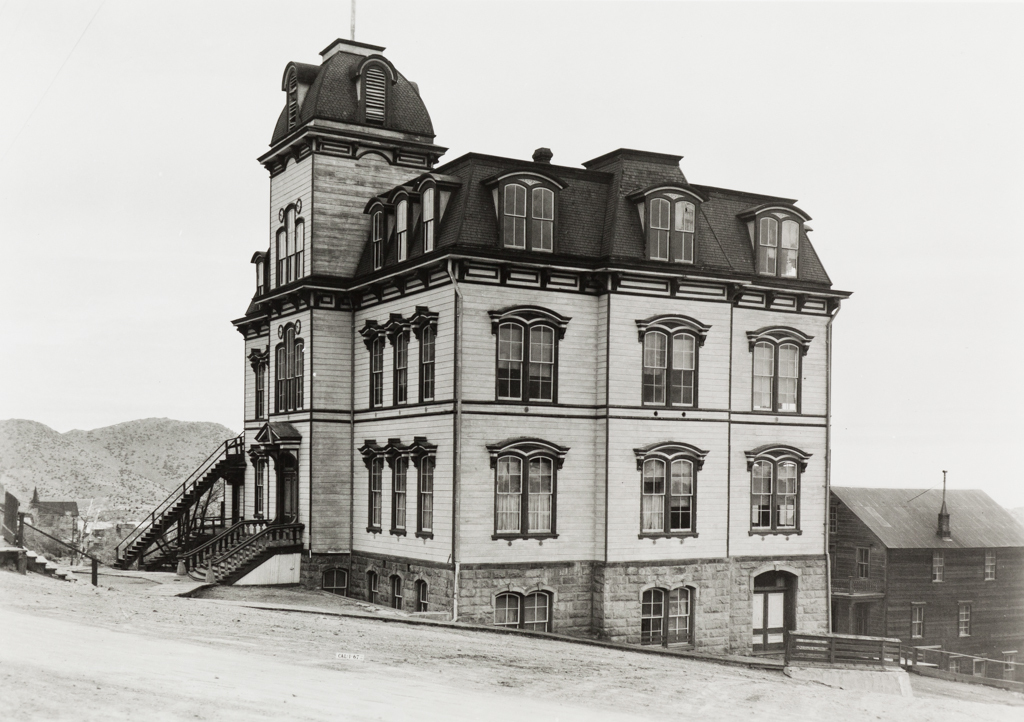
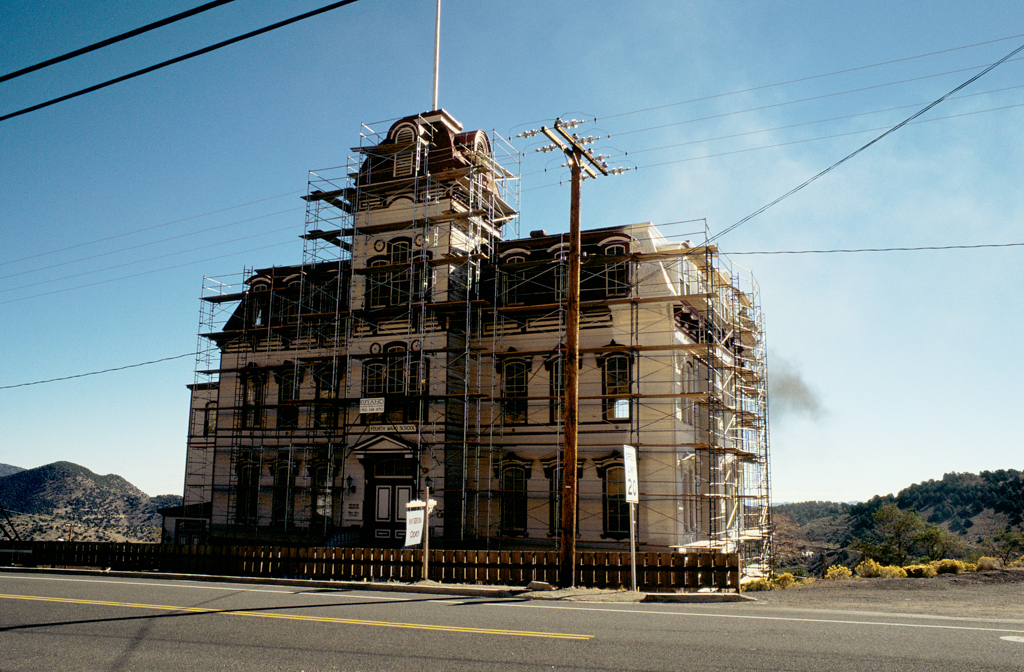
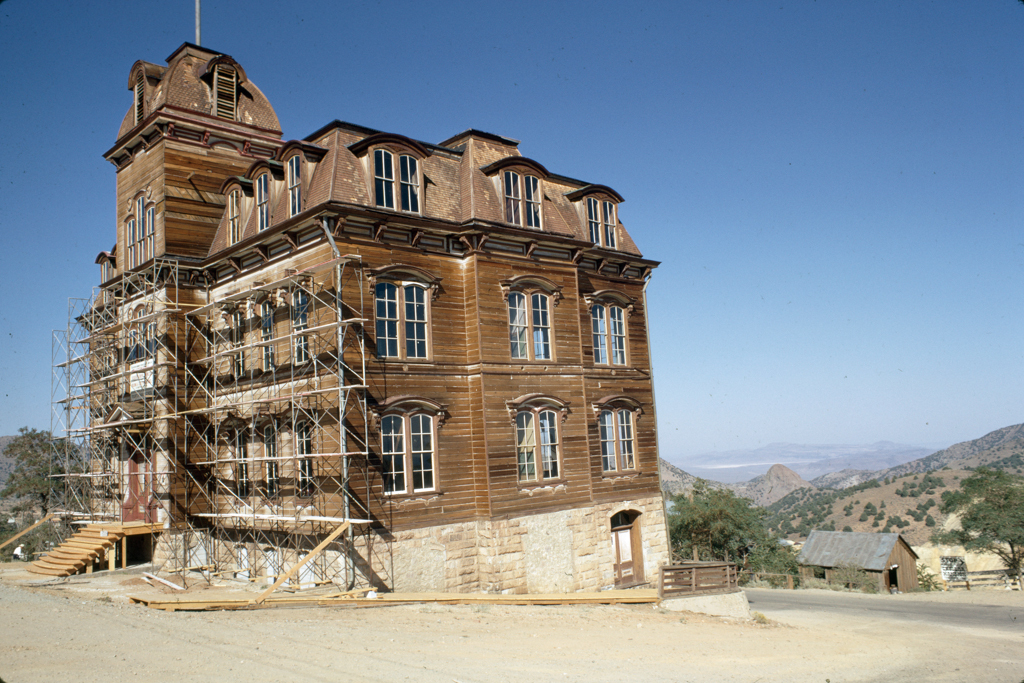
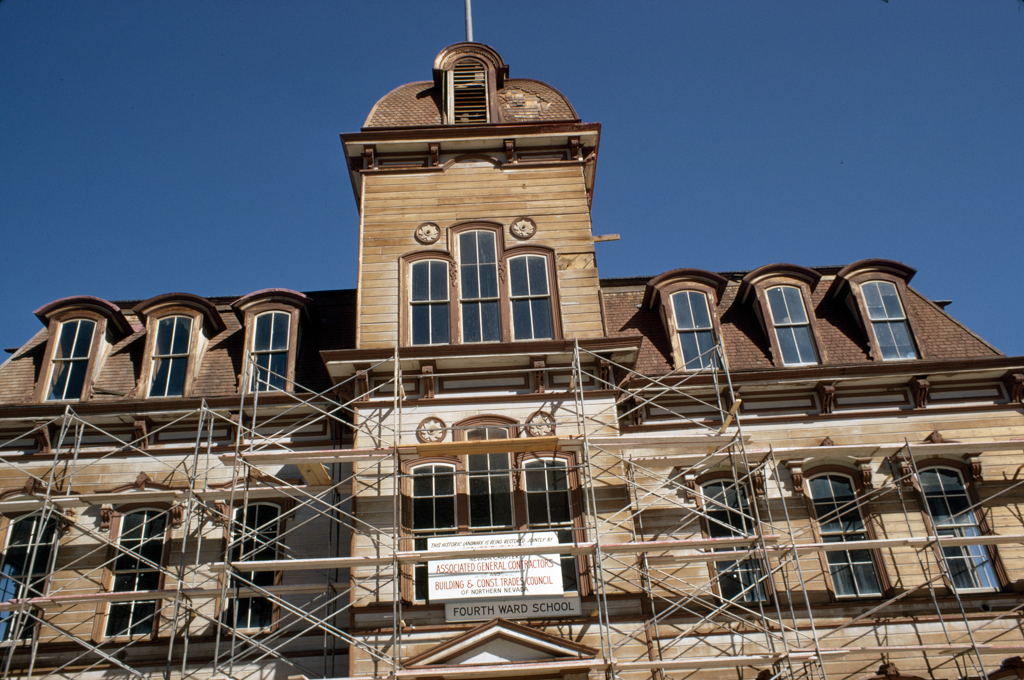
The Fourth Ward School is an imposing, four-story Second Empire structure with a clock
The old school rises on a coursed stone foundation and has drop siding. Each of the three main floors has a central hallway and staircase with two rooms on either side. The school included such innovations as central heating, indoor running water, and plumbed toilets attached to the north side of the structure. An all-purpose room on the third floor had sliding pocket doors that allowed it to serve either as a large space or as two separate classrooms. The school district never finished the fourth floor, which contained space for the school newspaper and gym classes; gymnasts' rings and basketball hoops remain in the northeast room on the top floor. The basement housed a cafeteria and general storage area. Although the school was built for 1,000 students and became the only public school in Storey County after the turn of the century, it never served many children because of the mining district's declining population.
The Fourth Ward School is the last surviving nineteenth-century school in Storey County. Under construction during the Great Fire of 1875, the building escaped the flames because of its location at the south end of Virginia City. The school admitted its first class in 1877 and closed its doors in 1936. After remaining empty for fifty years, it reopened as a local museum in 1986.