

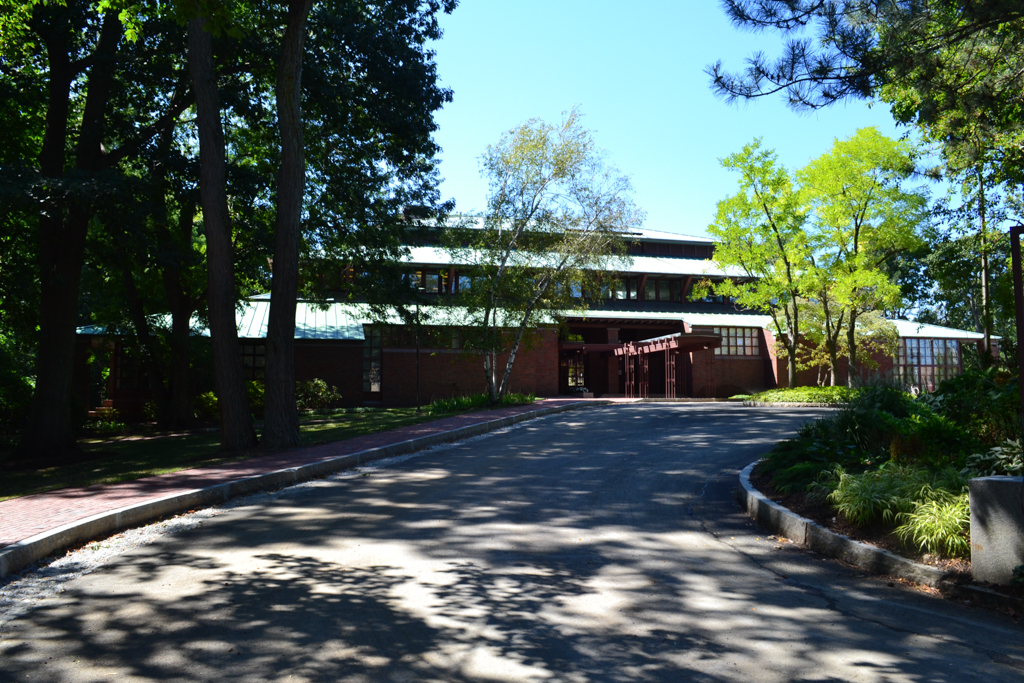
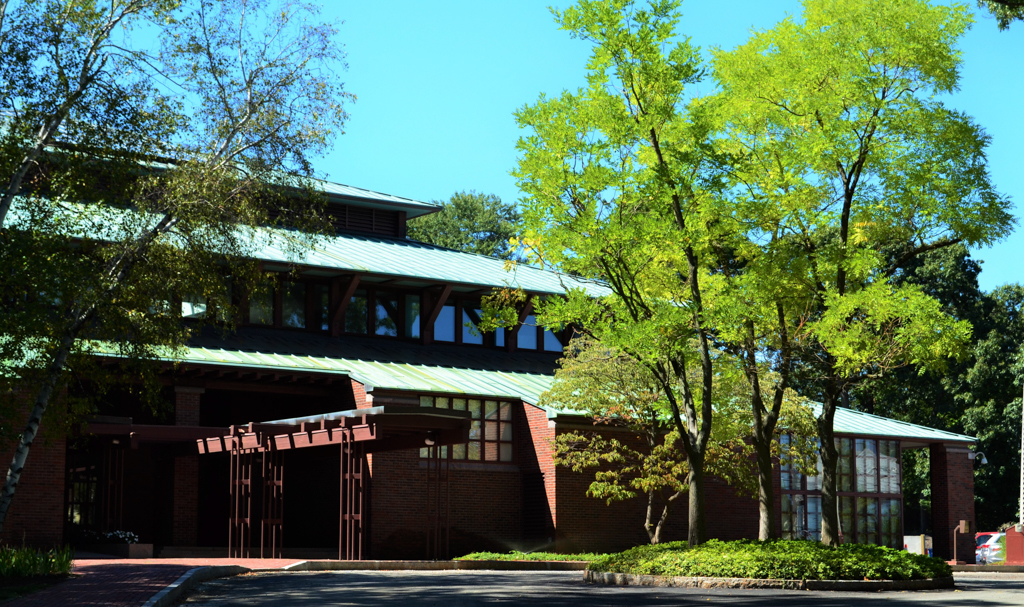
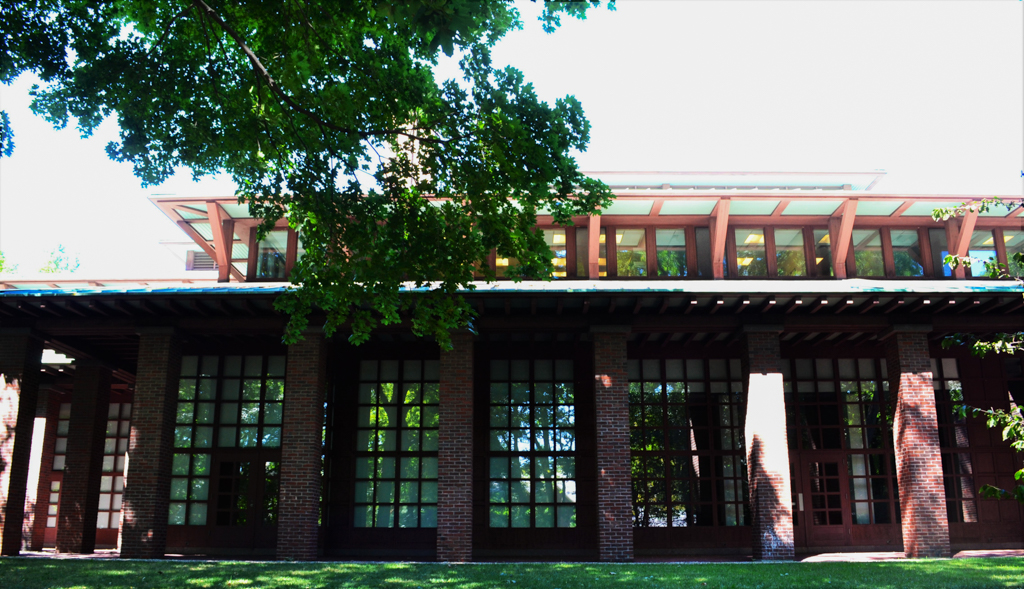
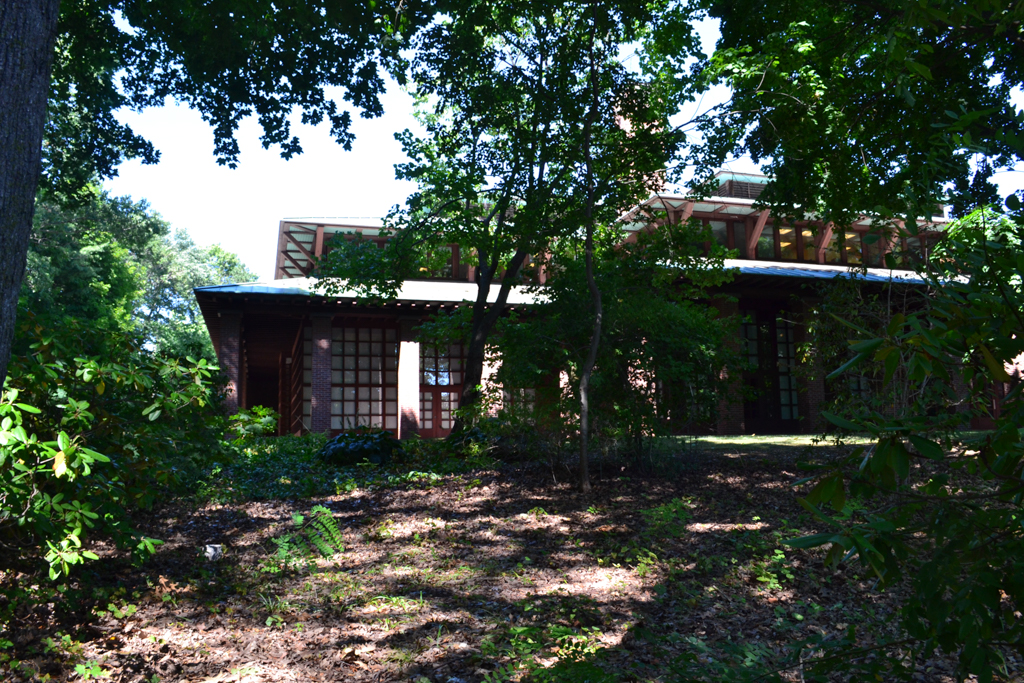
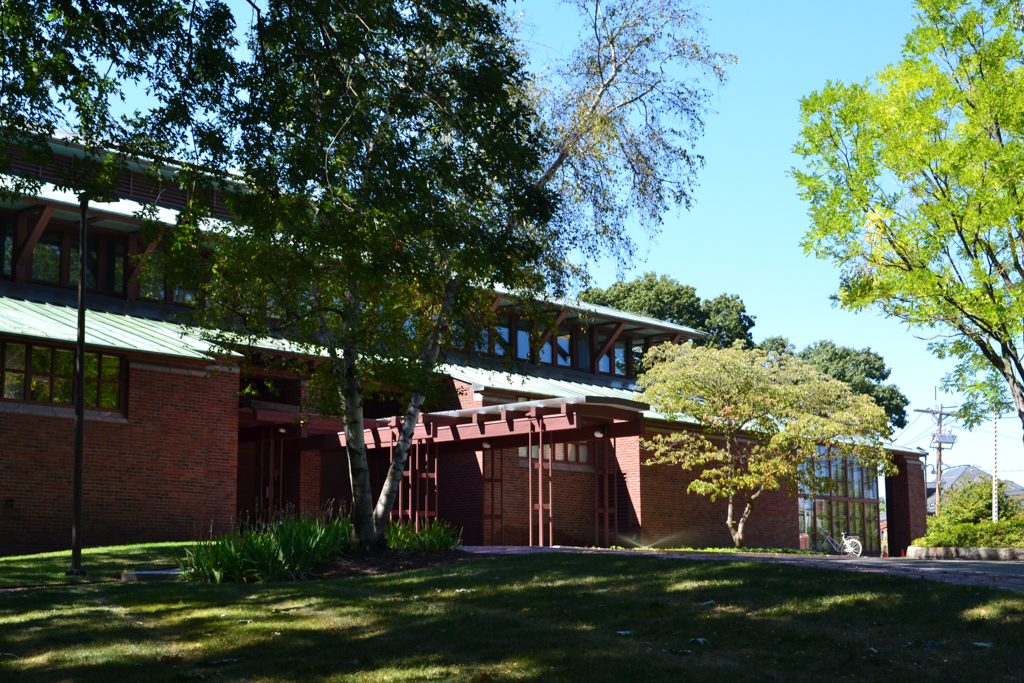
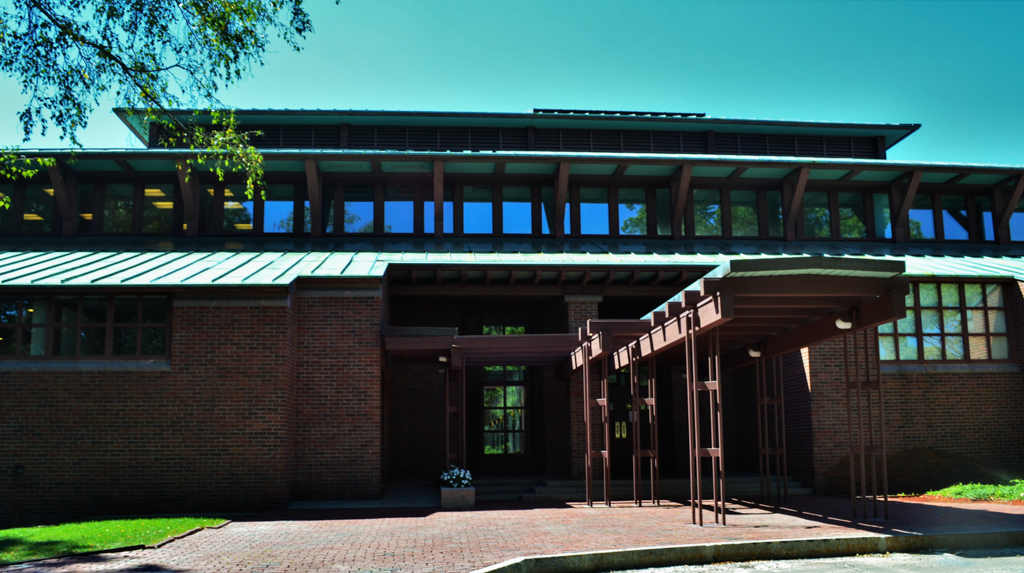
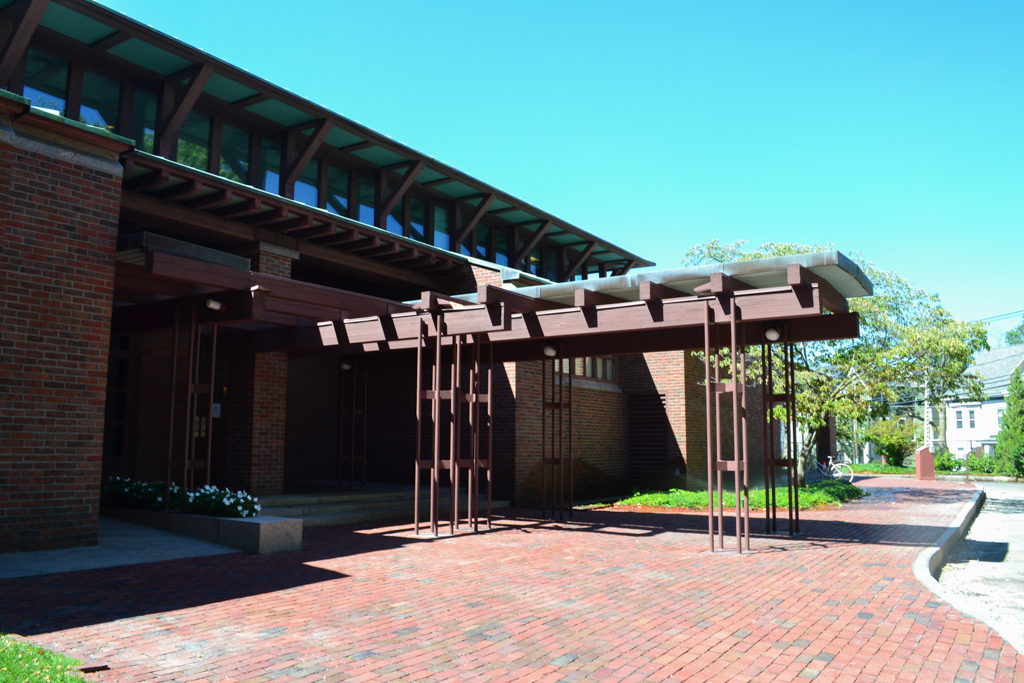
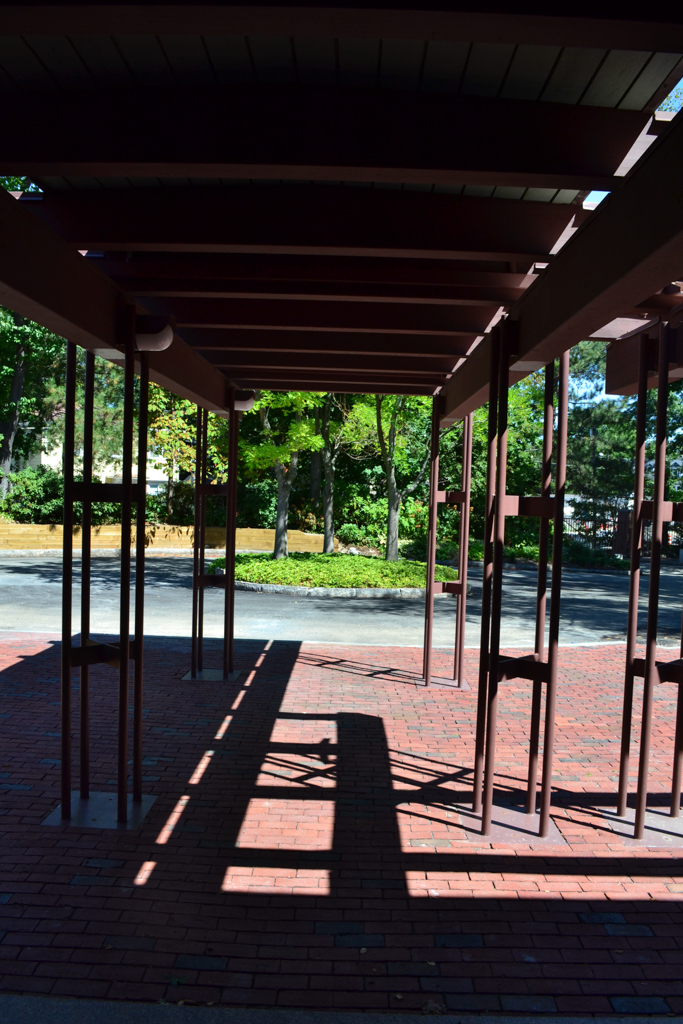
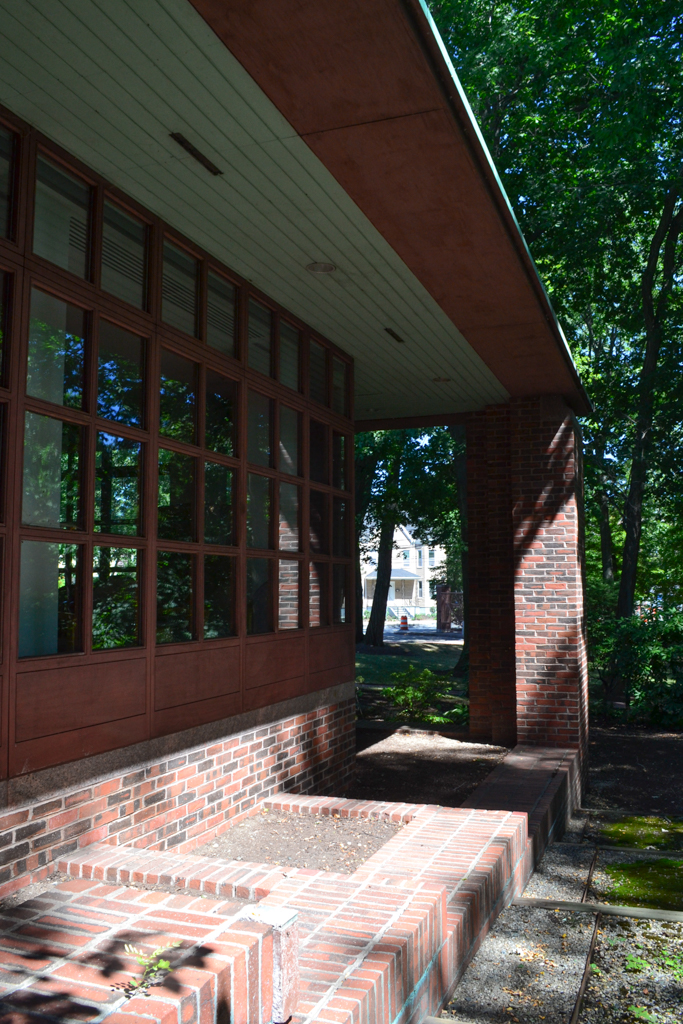
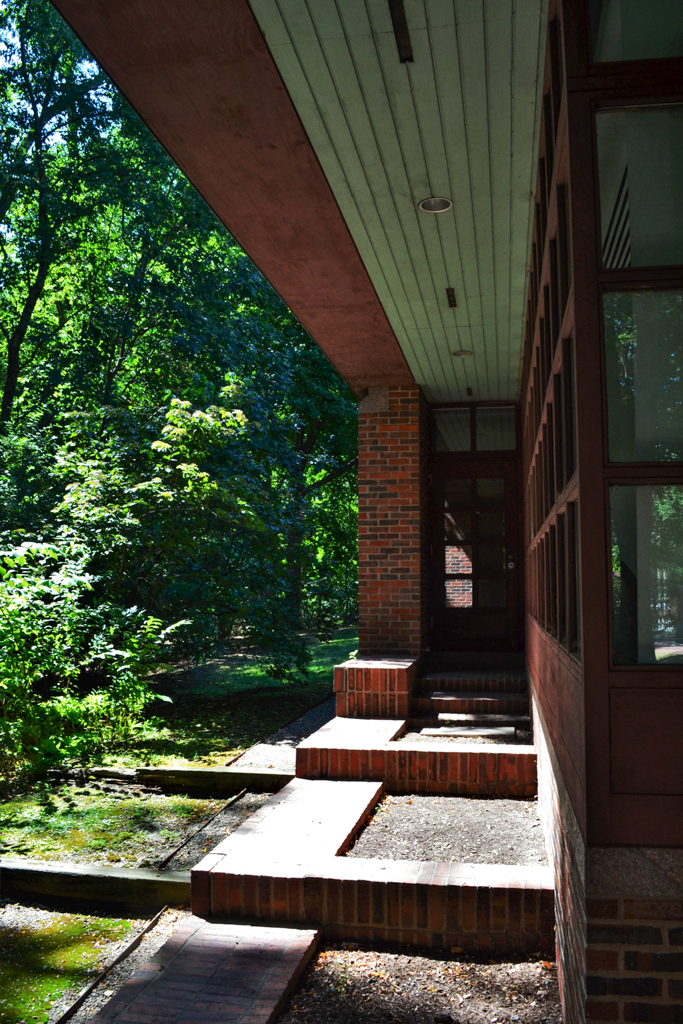
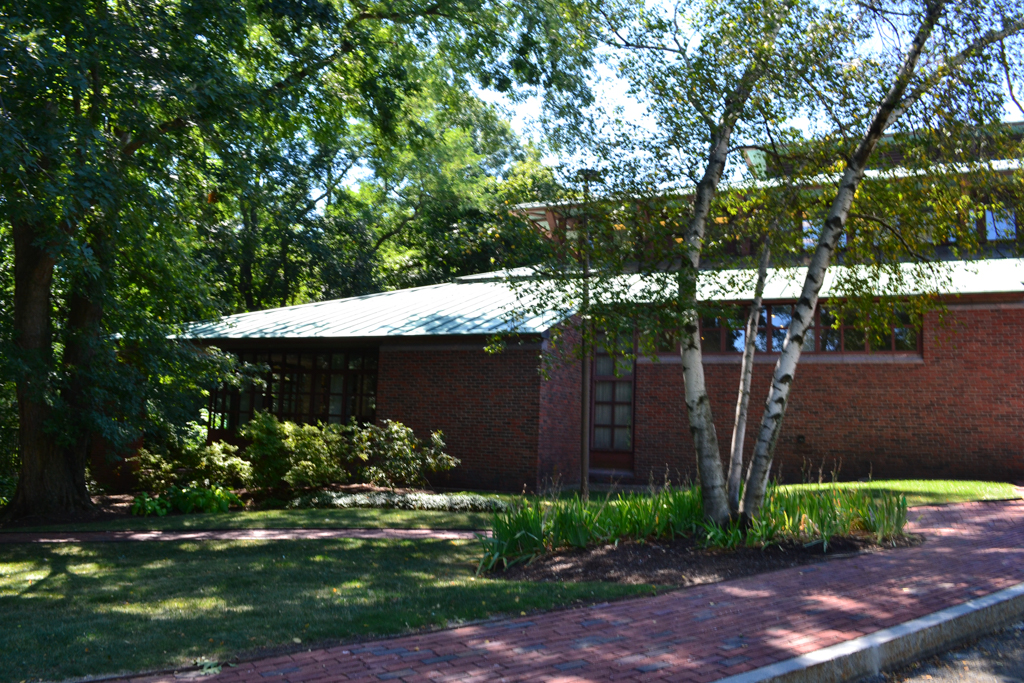
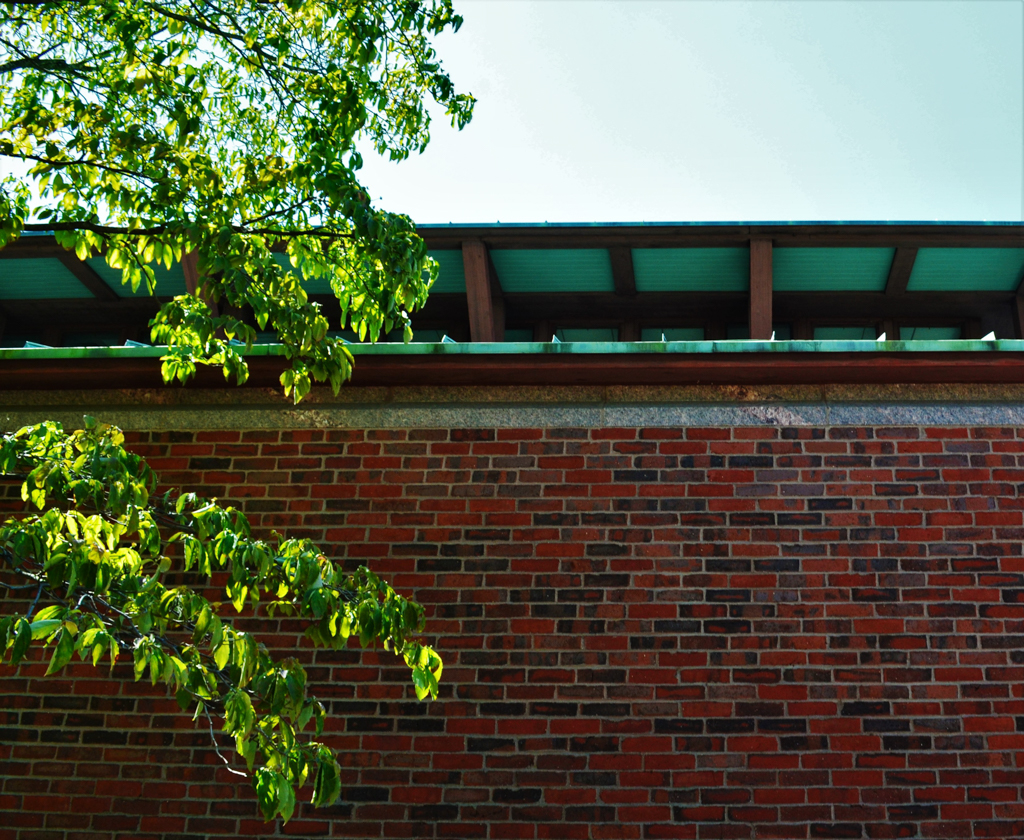
Considering the renown of the architects' aesthetic employed in Boston's City Hall (GC16) and the nearby Boston Five Cents Savings Bank (now Borders; see BD13), the academy's new home came as a surprise. Following a program formulated by some members of the academy, the oldest scholarly institution in the United States, the architects created a building neither in the modern mode nor in harmony with local surroundings. The wooded setting lends a rustic atmosphere, reinforced by the brick piers on which a series of overhanging eaves bear traces of a variety of sources, namely, English Arts and Crafts, Frank Lloyd Wright, and Greene and Greene. The atrium, marked by a skylit terrace and a flight of stairs on one side, leads to conference rooms, reading areas, and administrative offices. Furnishings are rich, even lavish, and patrons seem to have thought about aspects of the Platonic academy of antiquity, that is, the creation of an atmosphere that fosters ongoing conversations among members and visitors. To this end, ample space is given to the auditorium and to meeting and dining areas.
American Academy of Arts and Sciences
1977–1981, Kallman, McKinnell and Wood; Carol Johnson and Associates, landscape. 136 Irving St.