

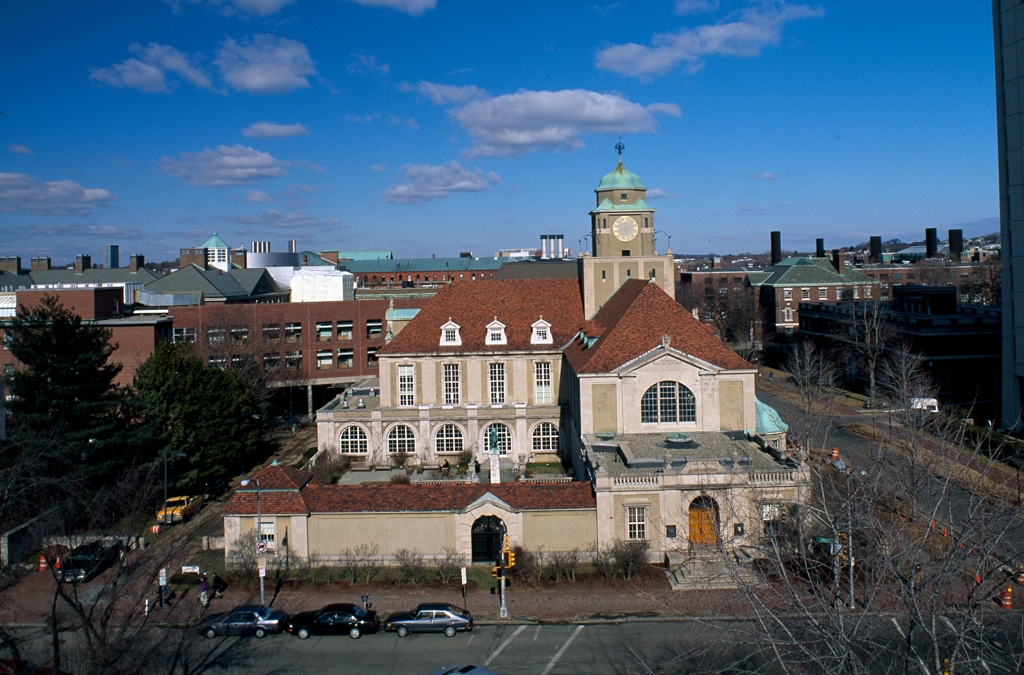
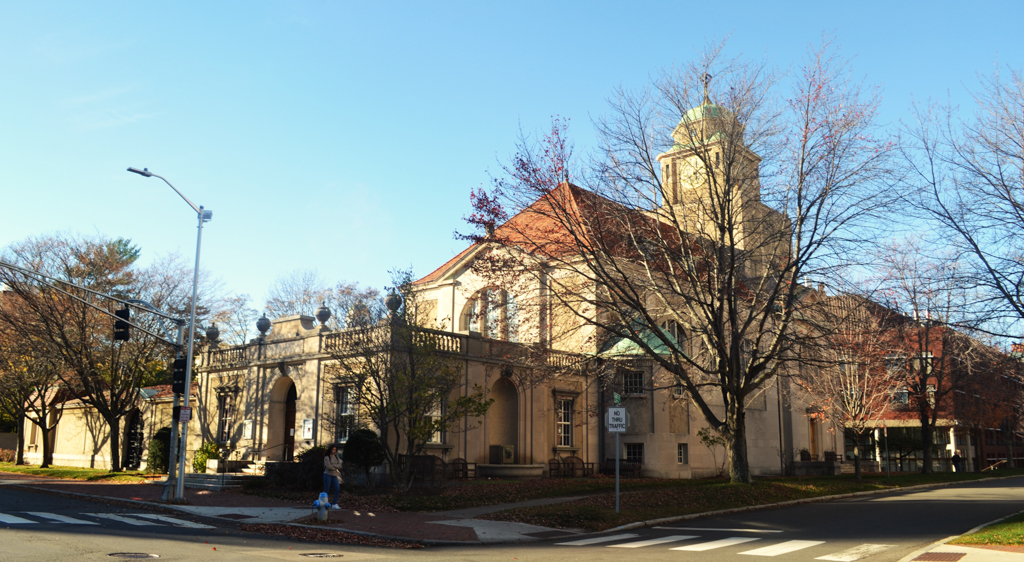
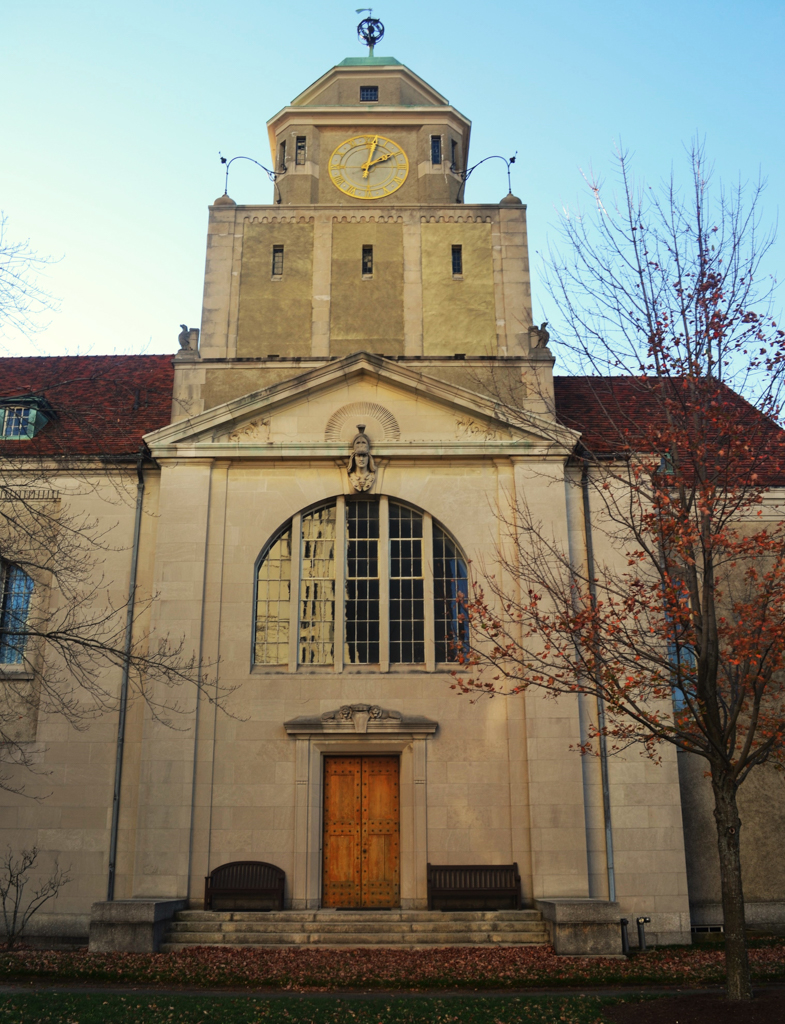
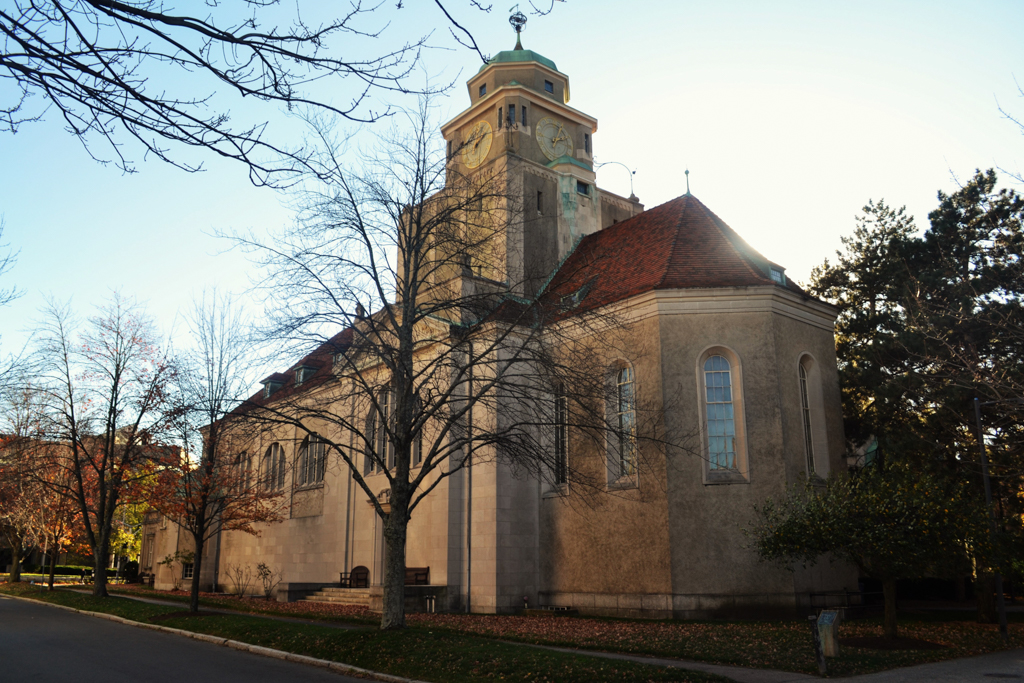
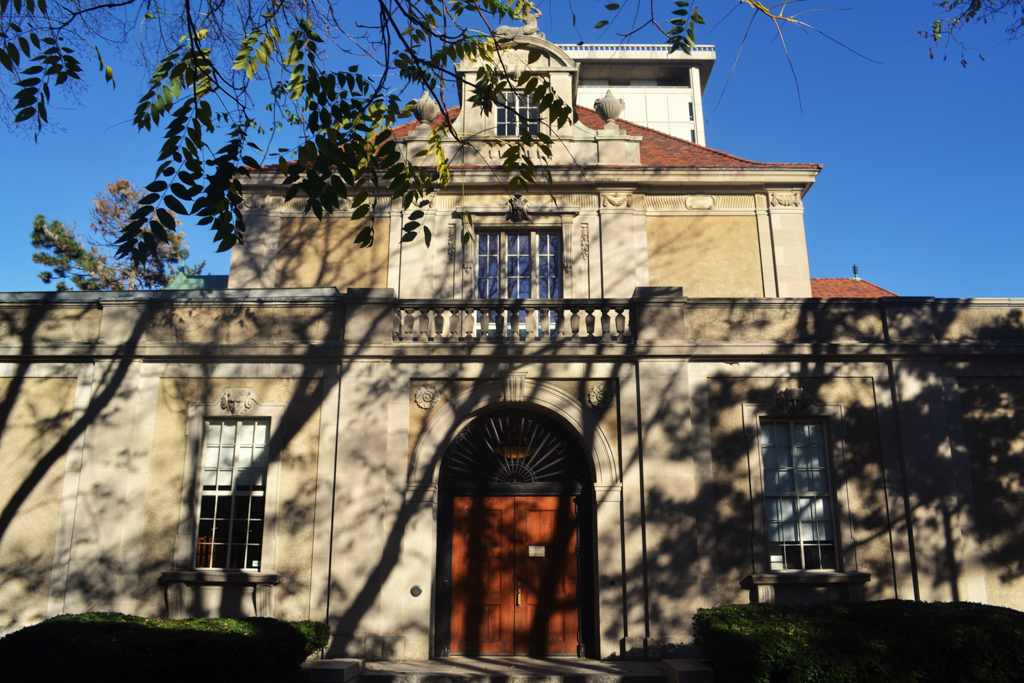
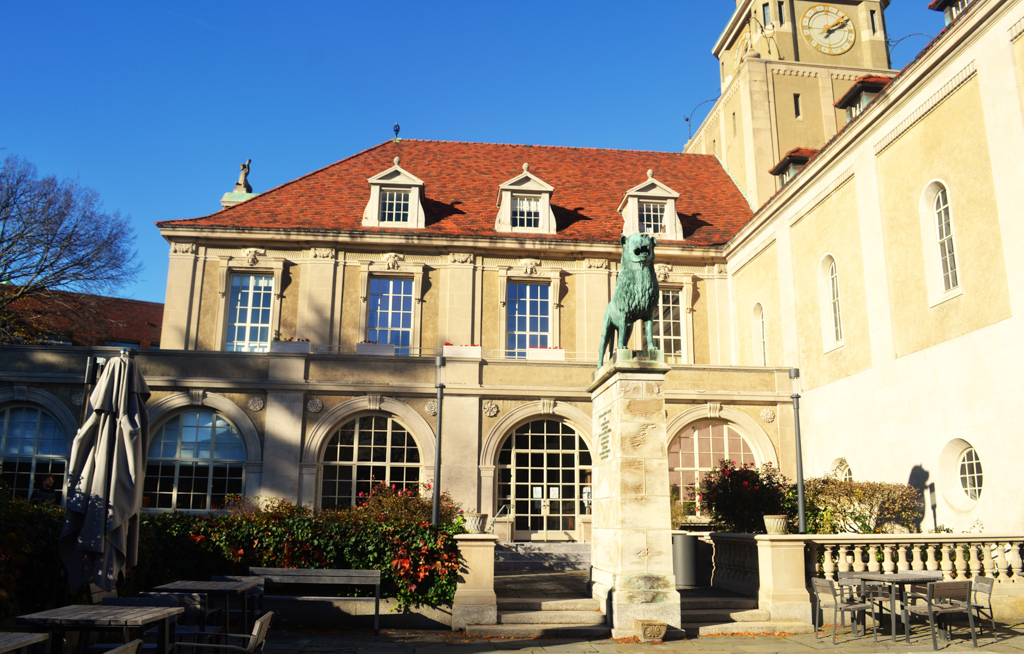
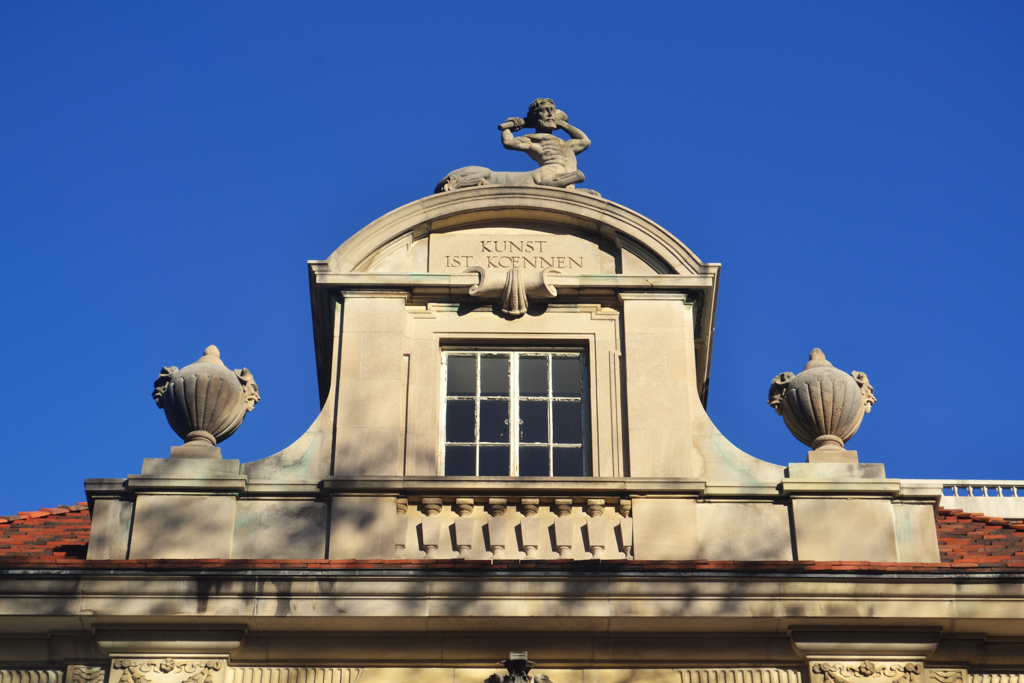
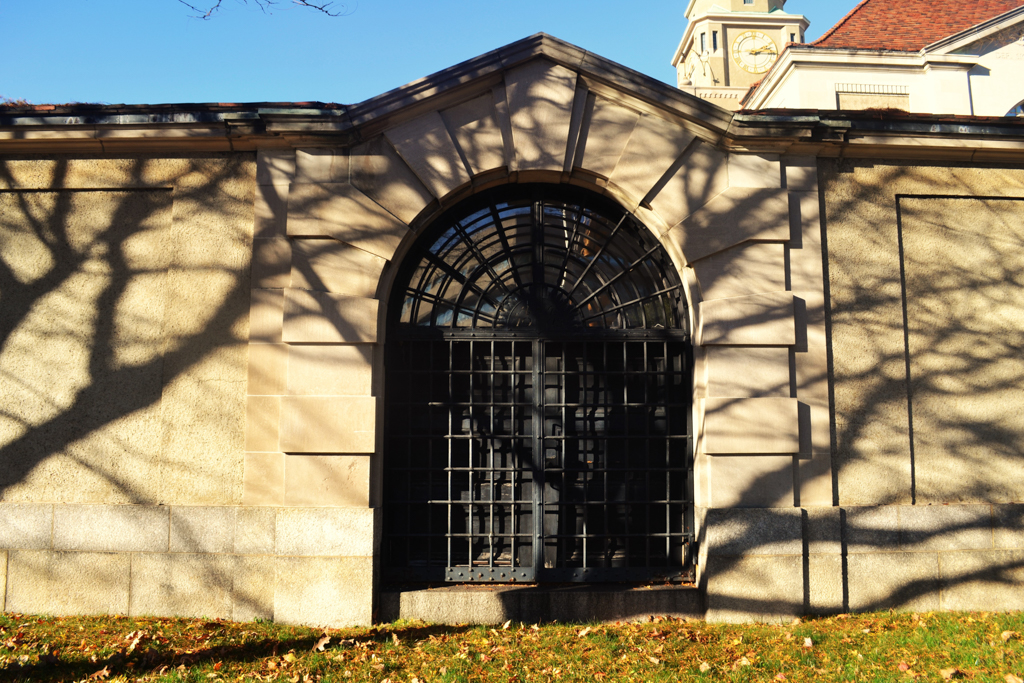
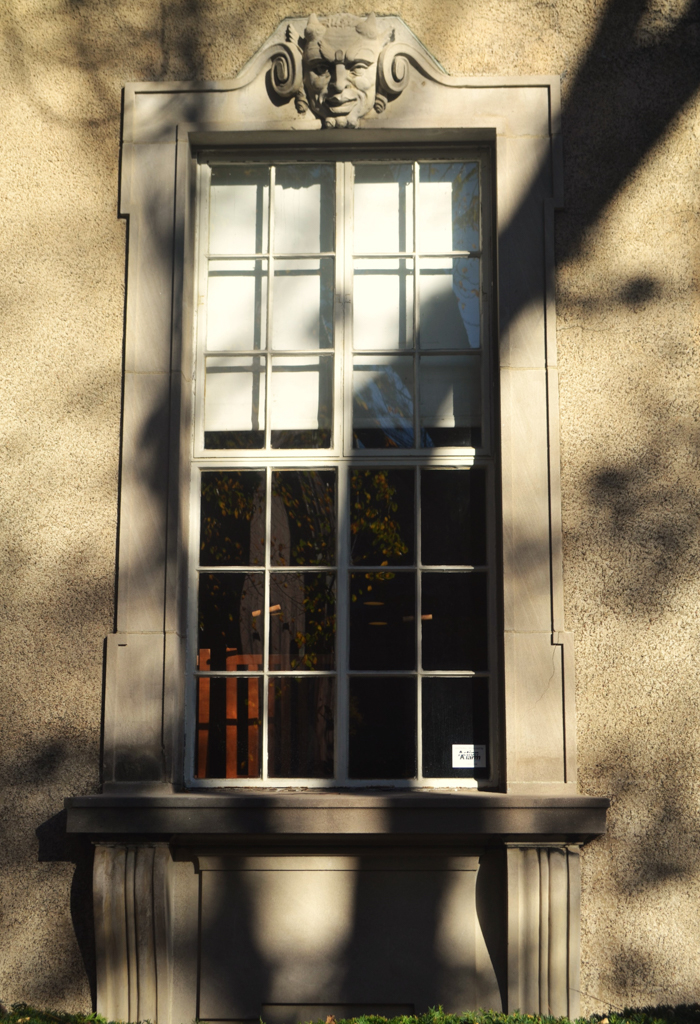
Teaching museums captured the interest of Harvard's leaders and donors at the turn of the twentieth century, the Germanic Museum, located in Adolphus Busch Hall, being an excellent example. Kuno Francke, a Harvard German professor, conceived the idea of a museum that would celebrate the art of Germanic peoples, following the precedent of the nearby Semitic Museum (NY18; 1900–1902). Harvard invited the Munich-based architect to design a conspicuously Germanic building, its L-shaped plan sheltering a walled garden. Bestelmeyer chose stuccoed walls, a high tiled and hipped roof, Baroque-ornamented windows and dormers, and a multistaged copper-domed tower at the corner. H. Langford Warren, dean of Harvard's School of Architecture, prepared the construction drawings and supervised construction. The president of the Society of Arts and Crafts from 1903 to 1917, Warren incorporated leading American craftsmen in the project: tile maker Henry Chapman Mercer, ironworker Frank Koralewsky, and sculptors John Kirchmayer and Roger Noble Burnham. An important feature of the Germanic Museum was a collection of plaster casts, which remain in Busch Hall to this day. In 1990, the Minda de Gunzburg Center for European Studies acquired this building and the Busch-Reisinger Collection moved to Werner Otto Hall, an addition to the rear of the Fogg Art Museum (HY15). Werner Otto Hall will be demolished as part of the renovation and expansion at the Fogg Museum planned by Renzo Piano in 2008–2013.
Adolphus Busch Hall, Minda de Gunzburg Center for European Studies
 Peter Vanderwarker or Antonina Smith
Adolphus Busch Hall, Minda de Gunzburg Center for European Studies (Busch-Reisinger Museum)
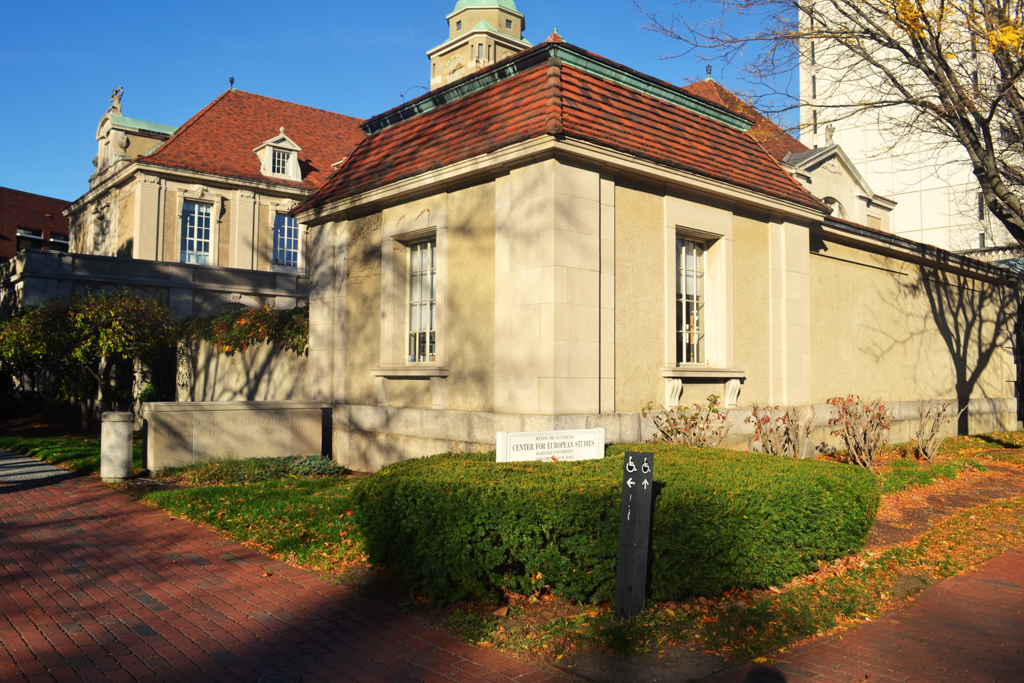
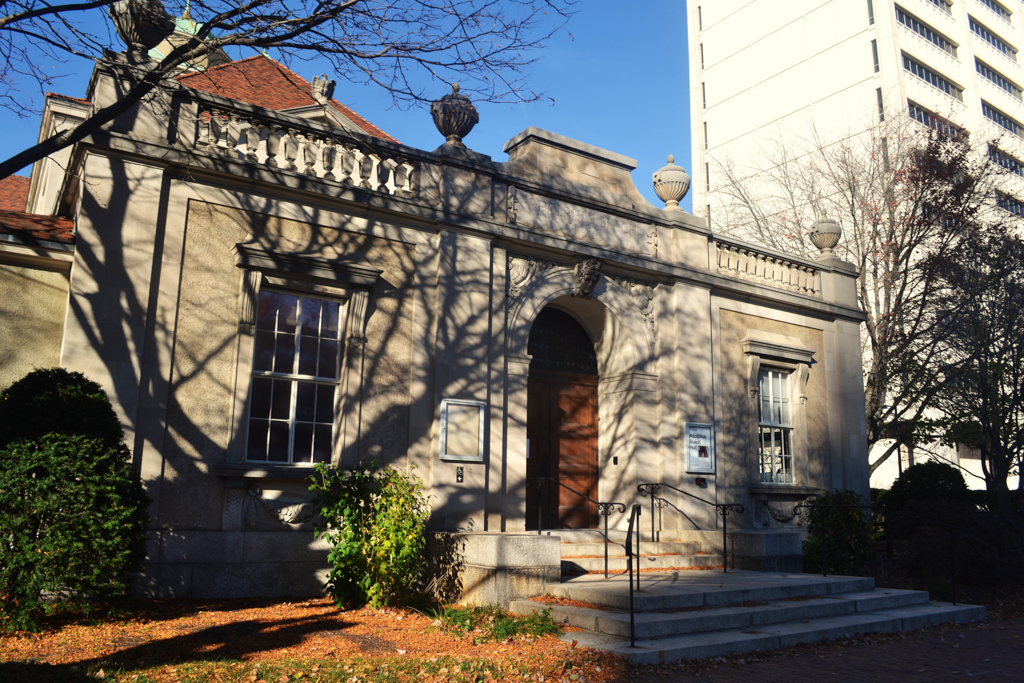
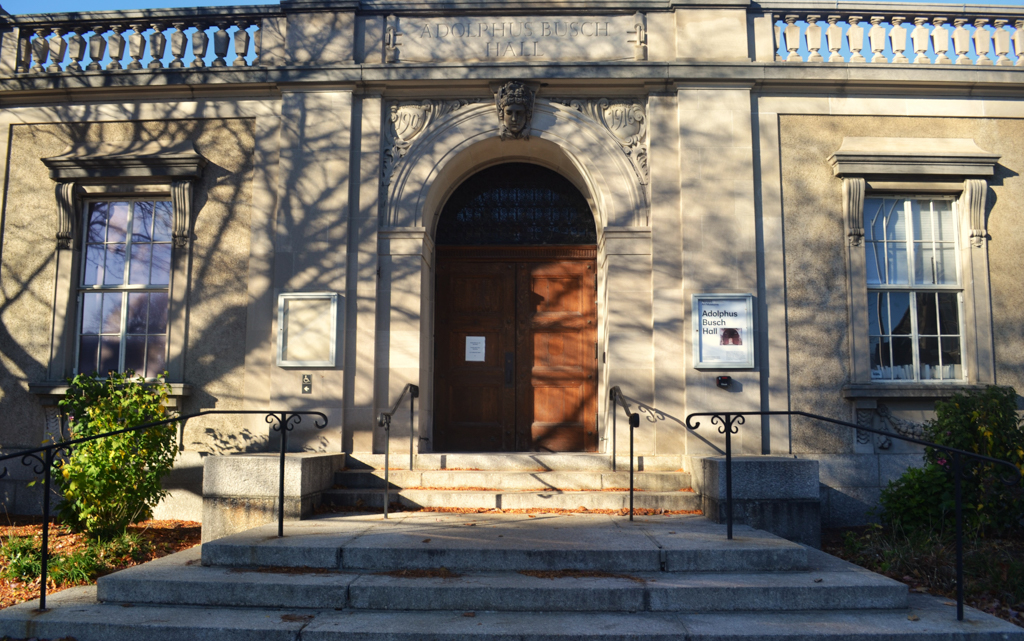
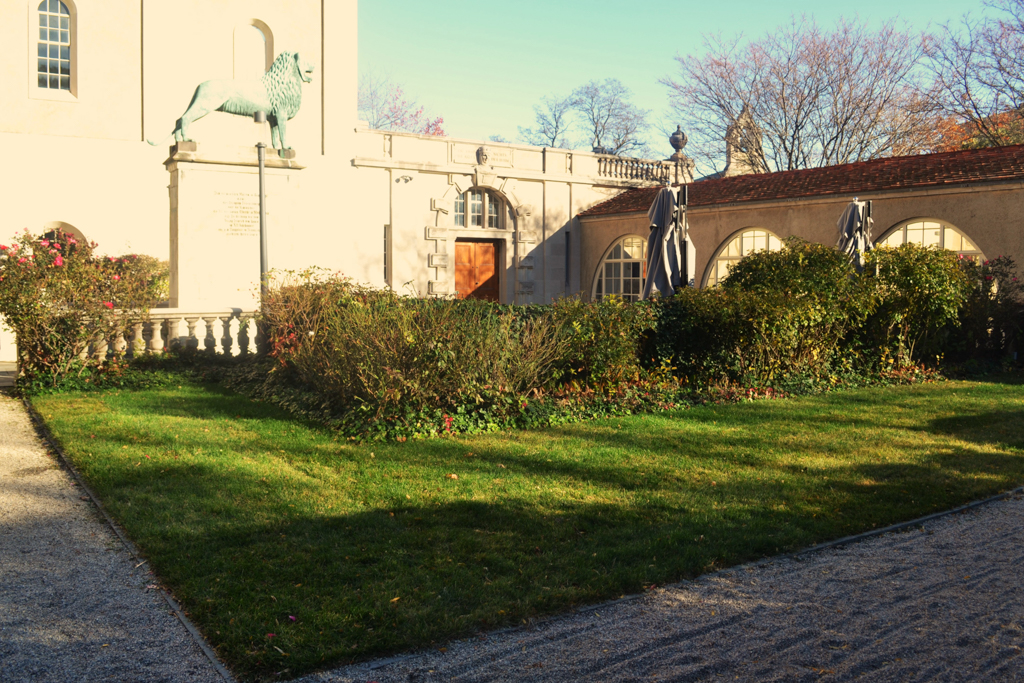
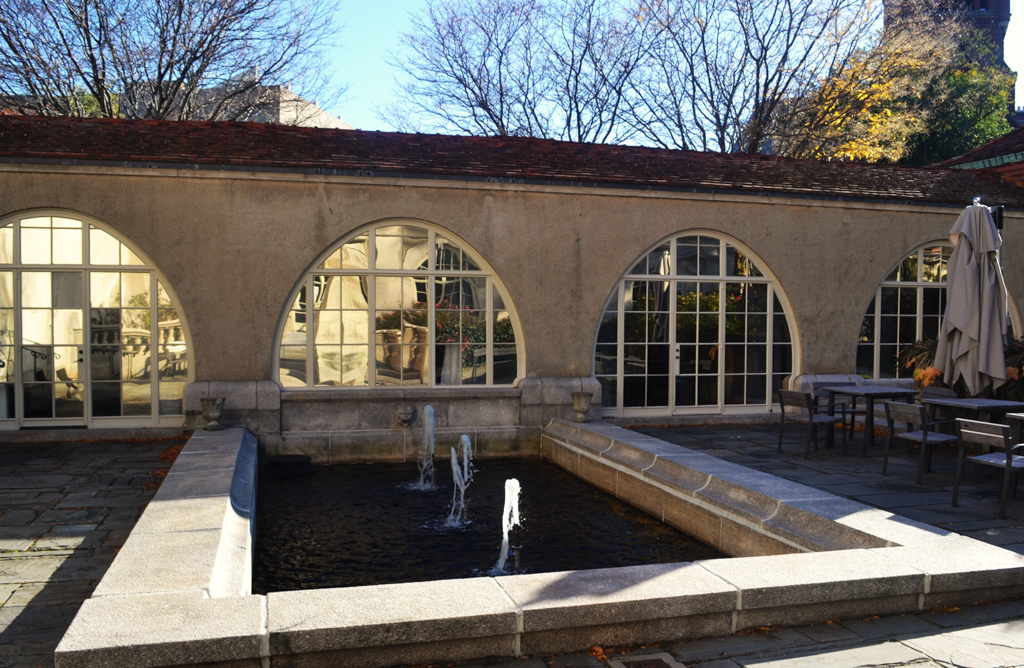
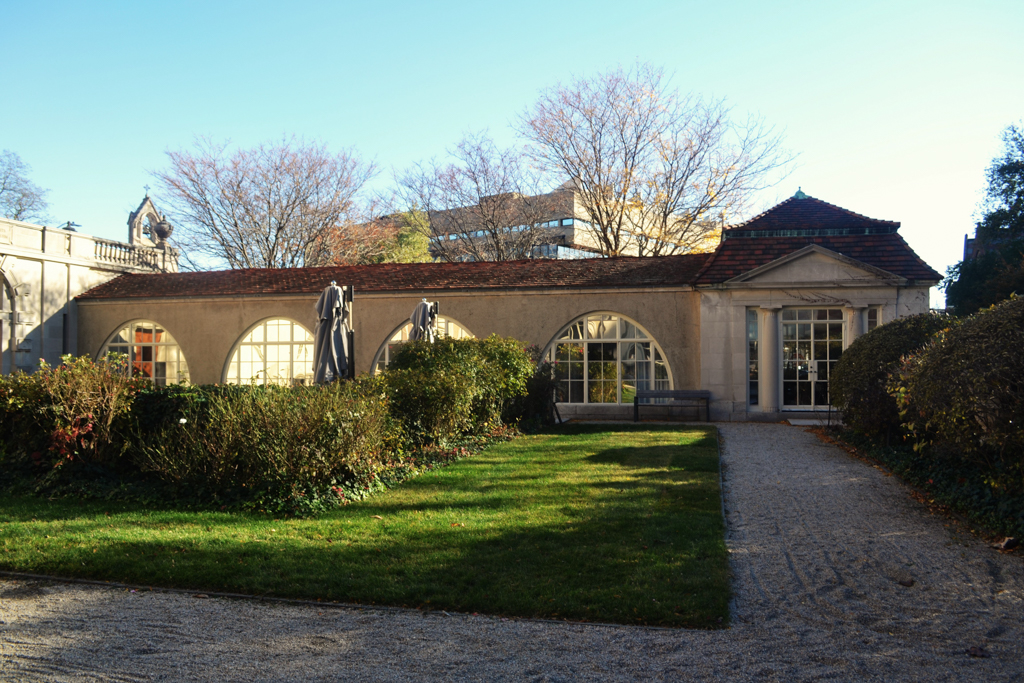
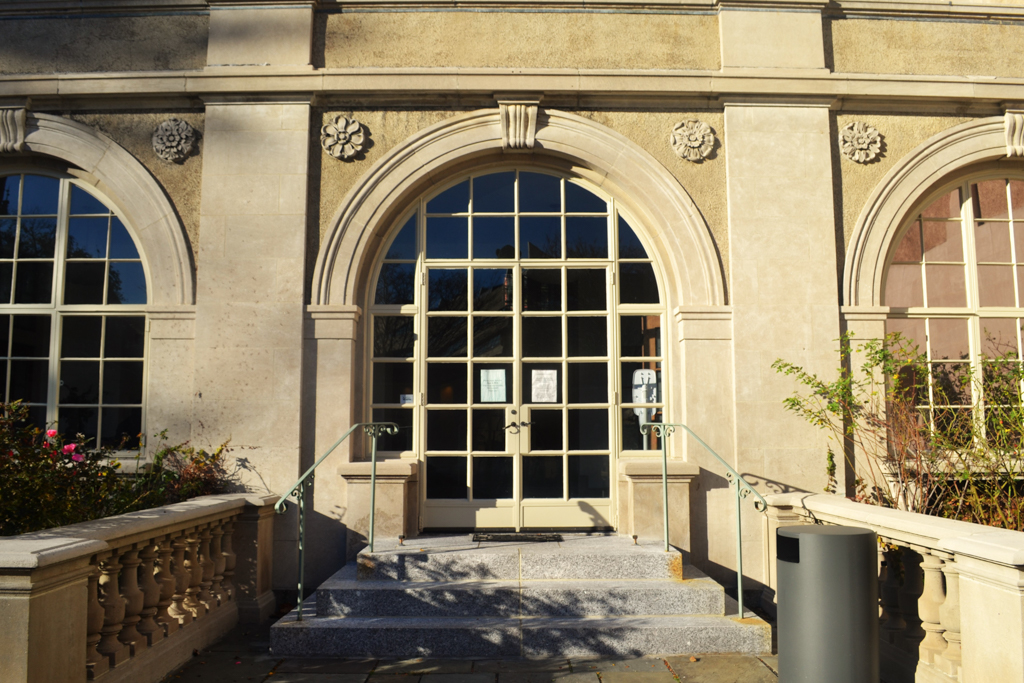
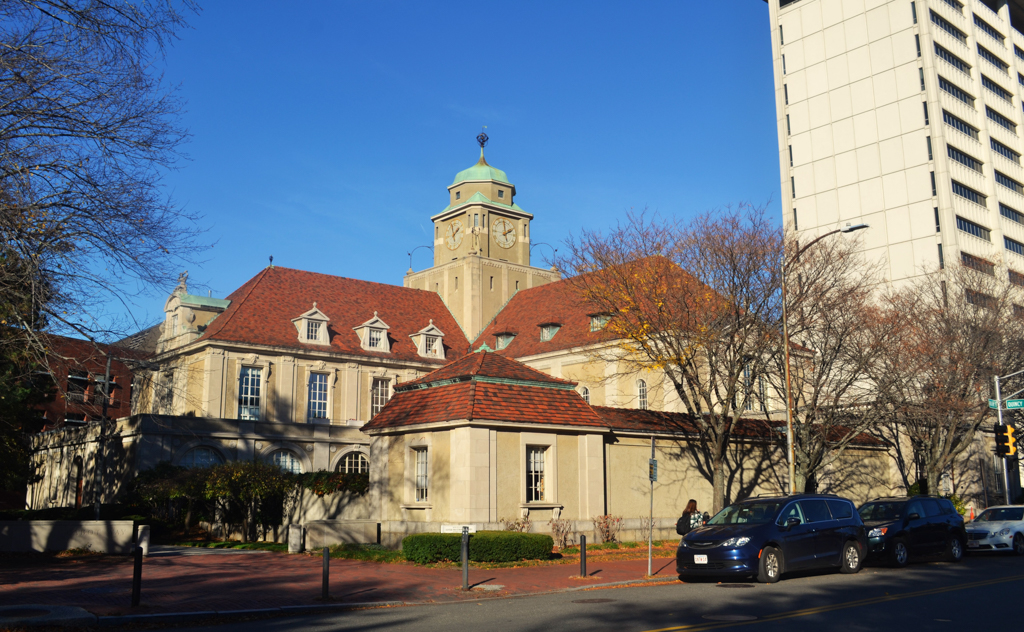
1914–1917, German Bestelmeyer with Warren and Smith; 1989, Goody, Clancy and Associates. 27 Kirkland St.