

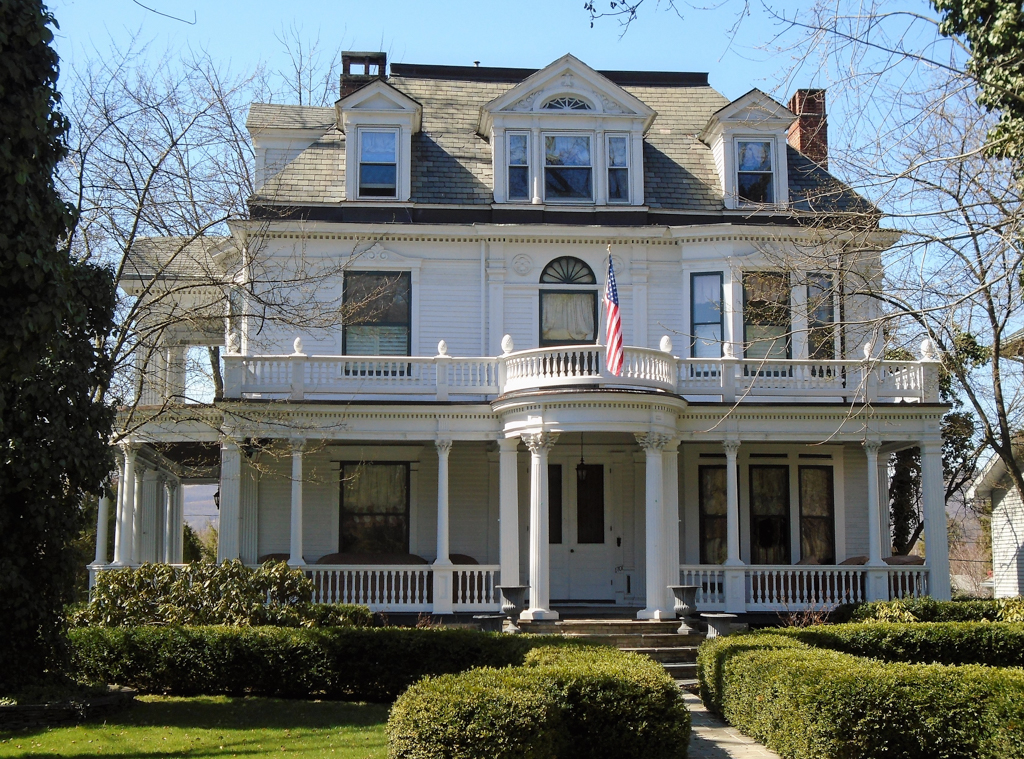
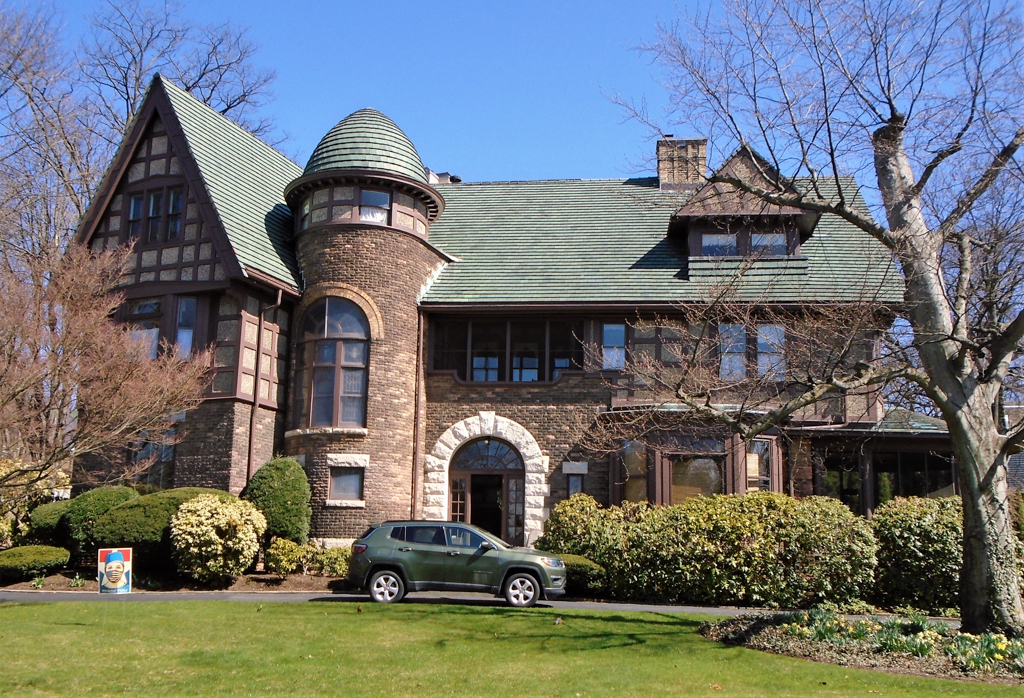
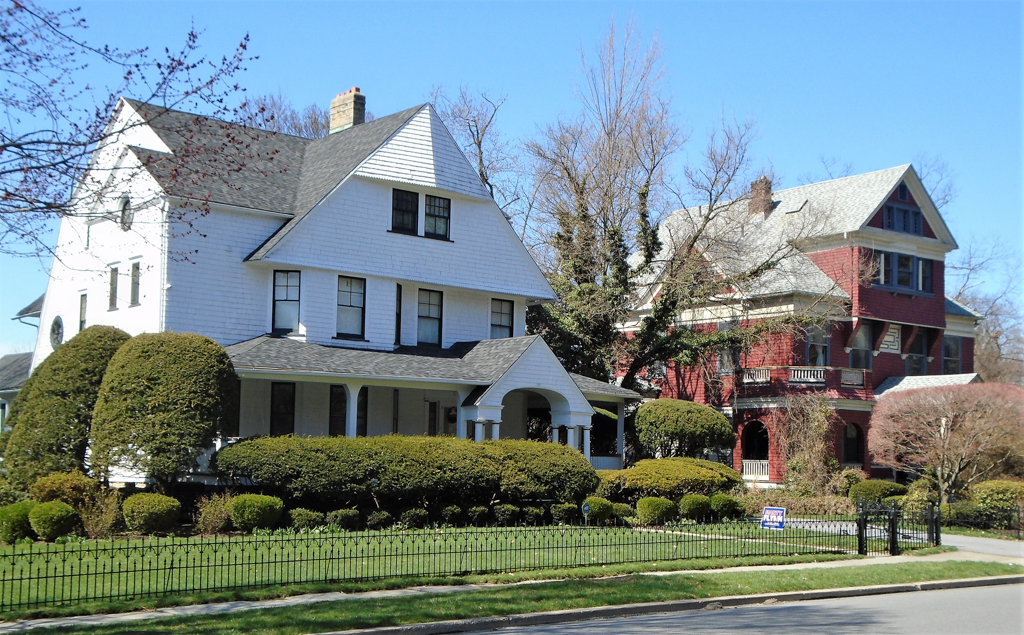
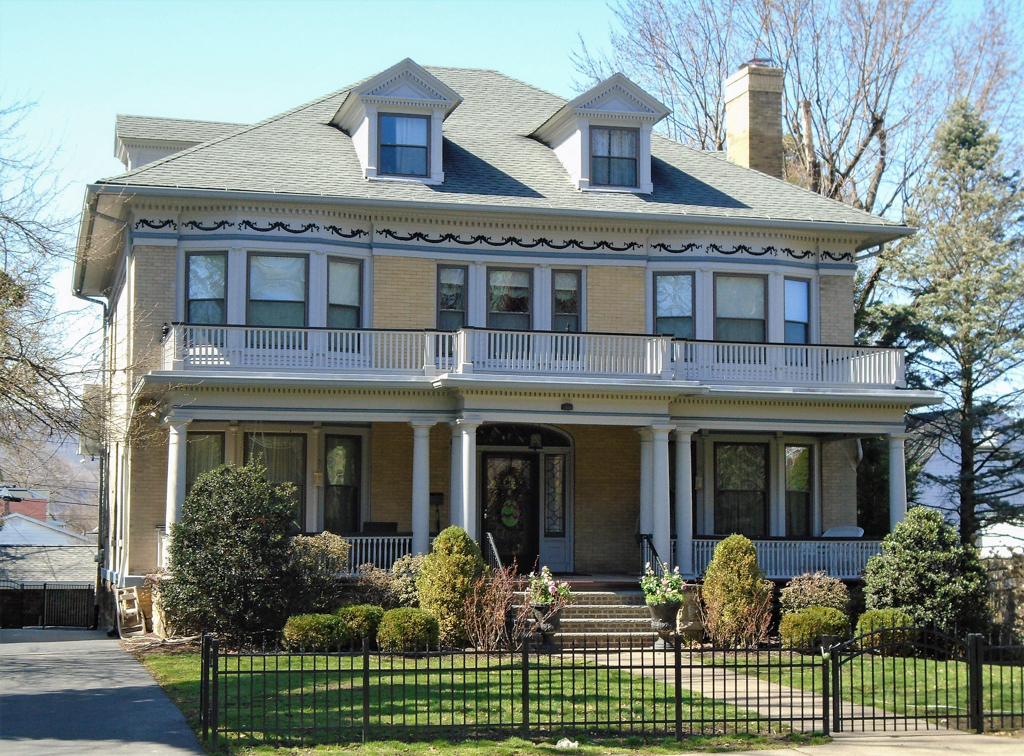
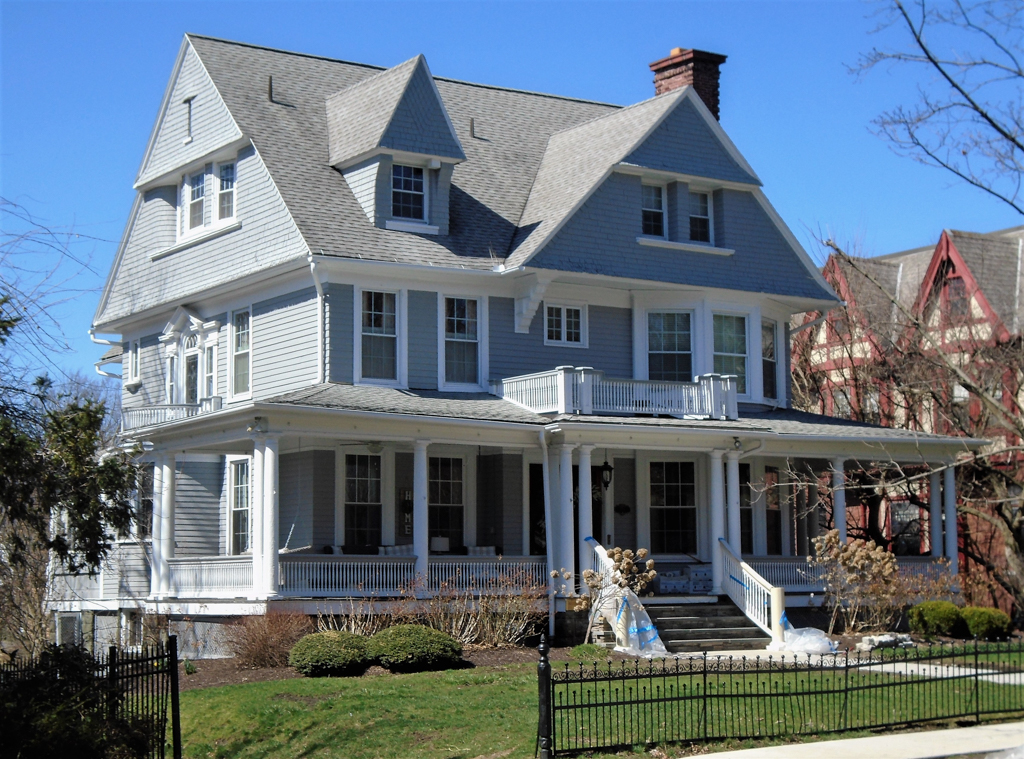
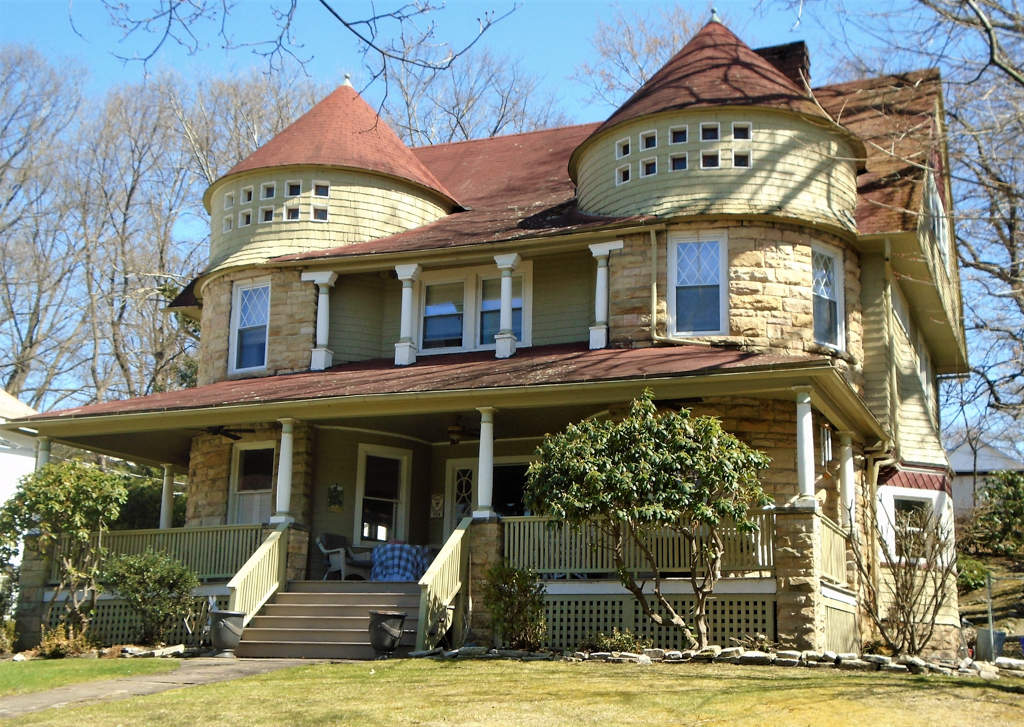
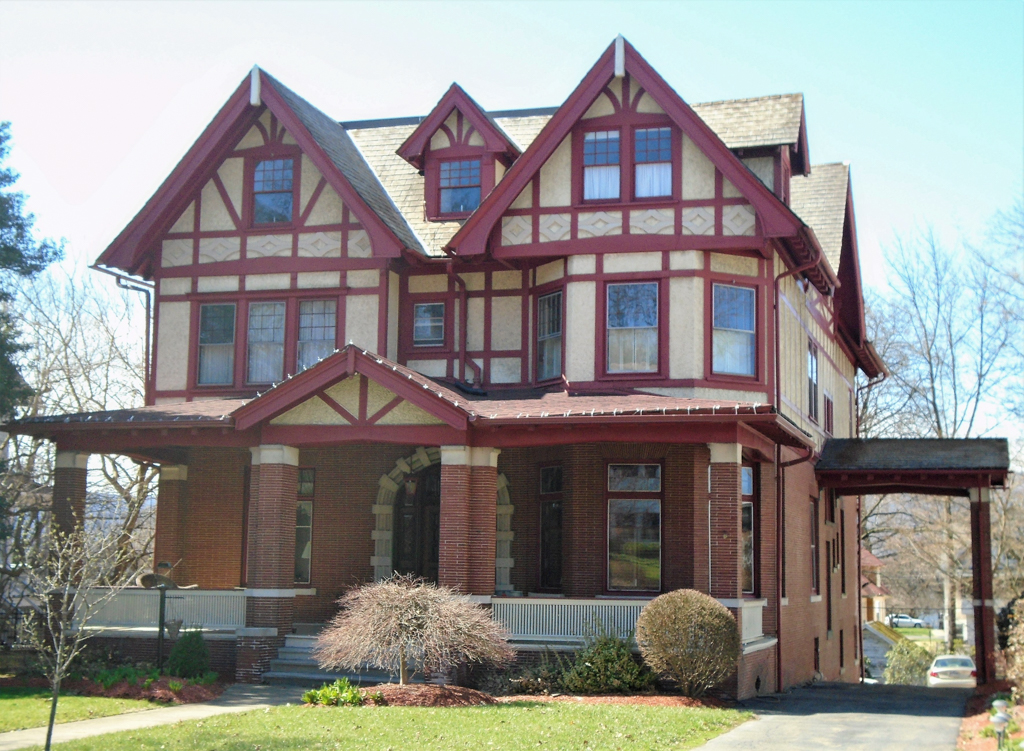
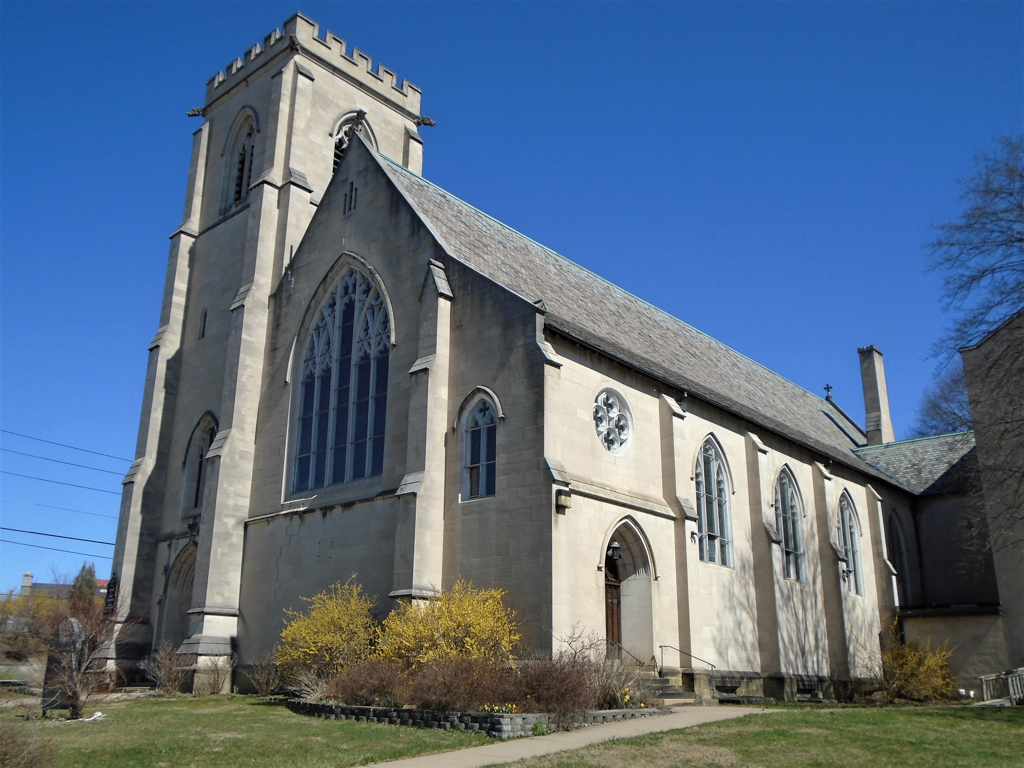
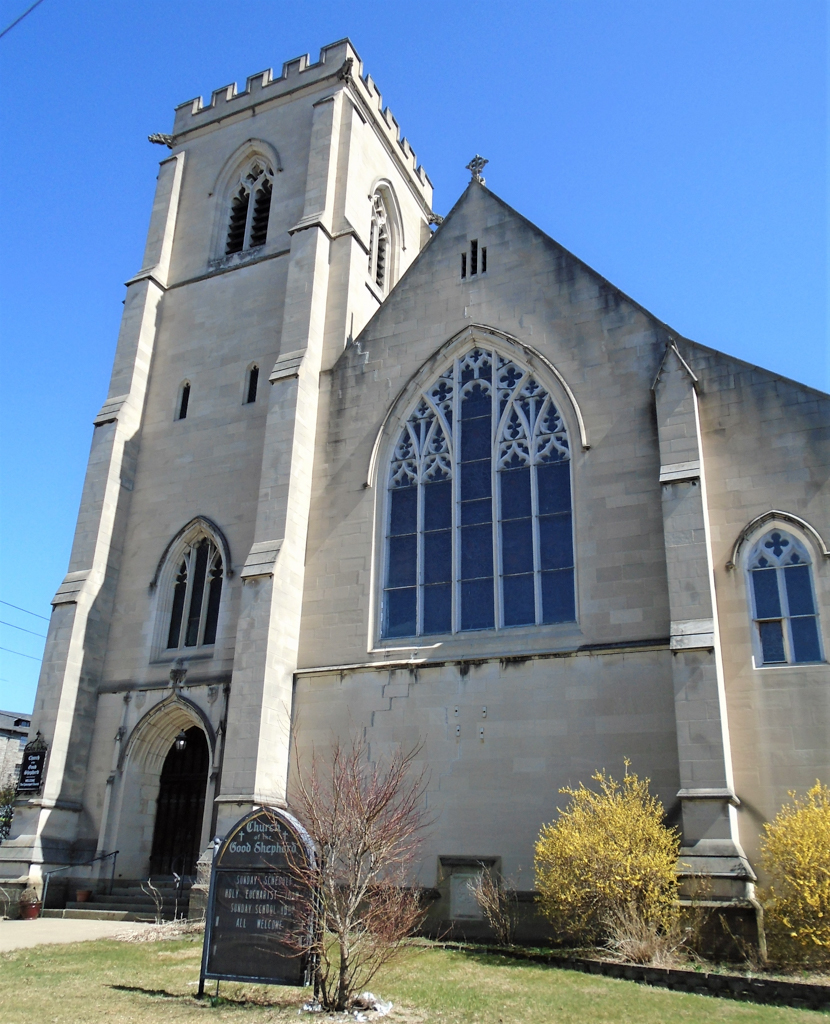
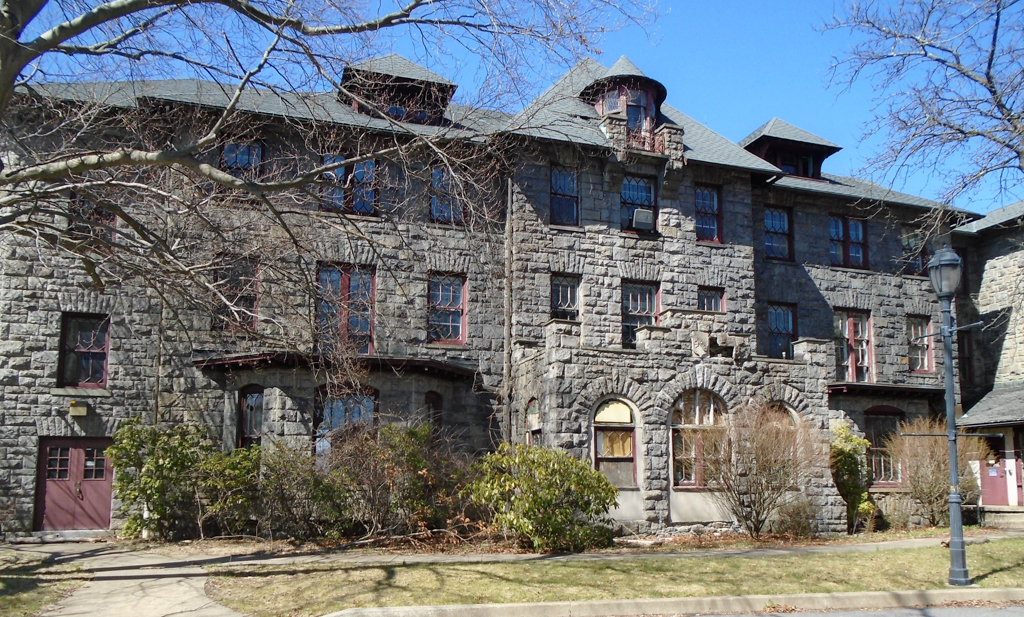
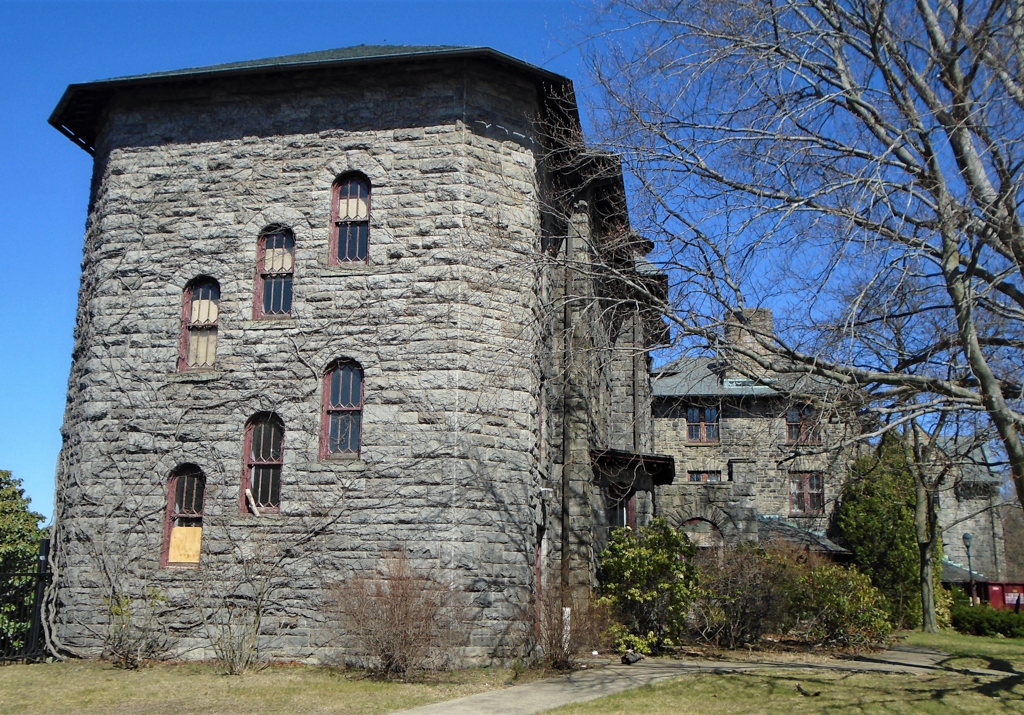
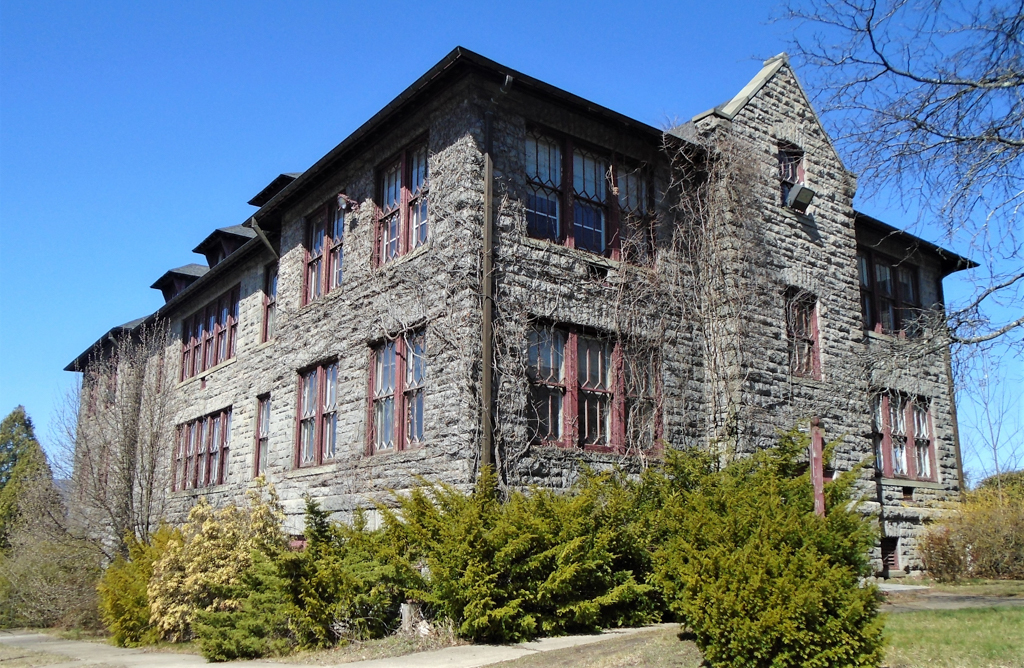
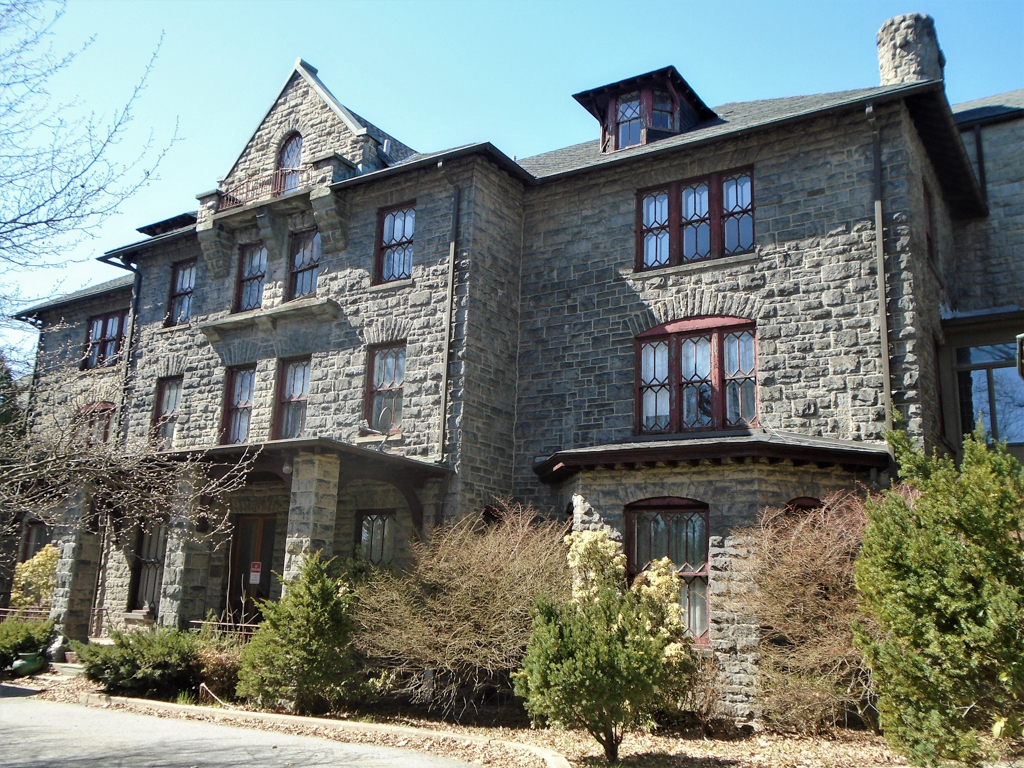
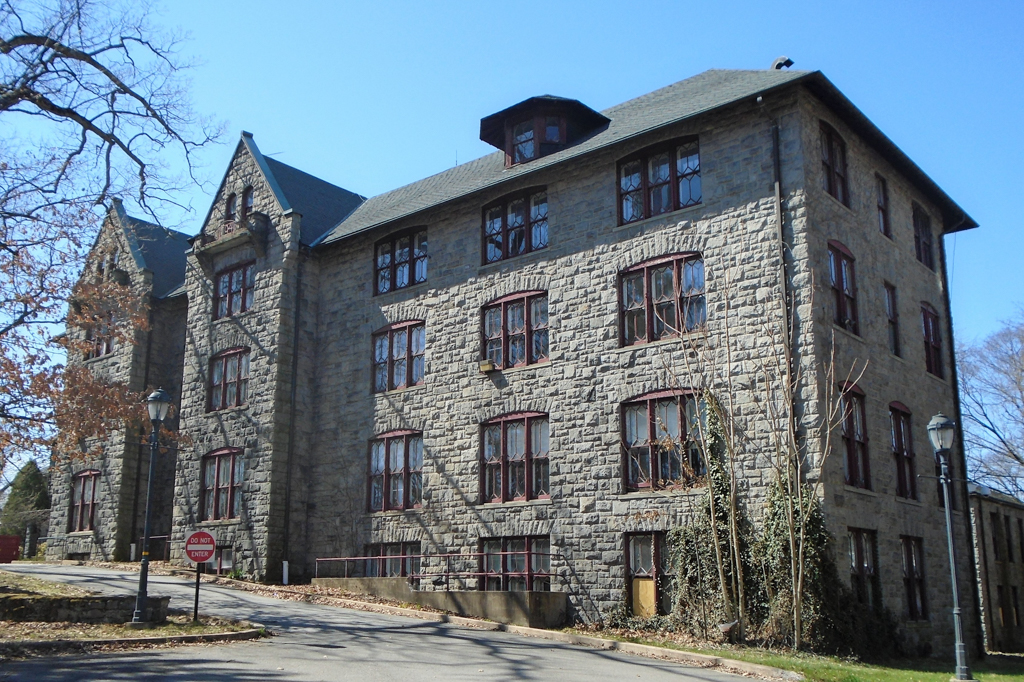
North Washington Avenue was the epicenter of Green Ridge's emergence as the city's elite streetcar suburb during the late nineteenth century. The 1700 block offers an example of the neighborhood's flavor, with structures such as the Aaron Goldsmith house (1896) at 1701 N. Washington Avenue, an elaborate frame Colonial Revival mansion, facing the Raymond J. Bennell house (1896) at number 1708, an eclectic L-shaped house incorporating a half-timber facade and a picturesque corner tower. Two institutional monuments mark N. Washington Avenue's intersection with Electric Street: Henry Vaughan's Gothic Revival Good Shepherd Episcopal Church (1911) and the campus of the Scranton School for the Deaf, whose earliest buildings brought Little and O’Connor to Scranton from New York. A walk westward down Electric Street is equally rewarding. The landscape plan of this subdivision was originally designed by the firm of Frederick Law Olmsted and the district features rambling houses set along streets that curve gently downhill past mature trees and landscaped traffic islands.
North Washington Avenue in Green Ridge
c. 1890–c. 1912. N. Washington Ave. between Delaware and Electric sts.