

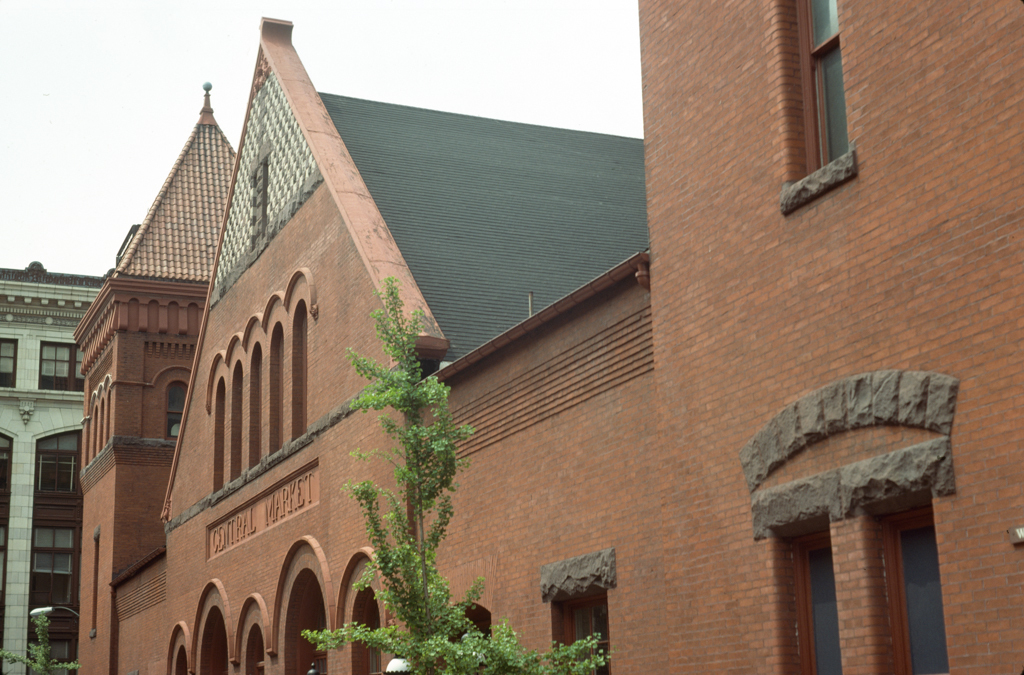
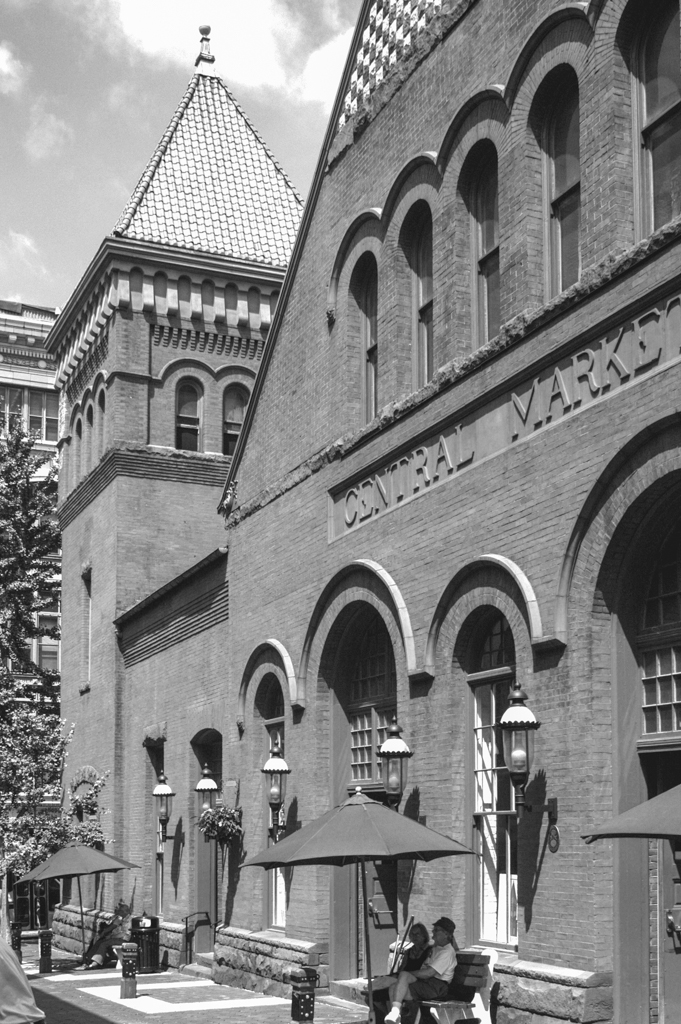
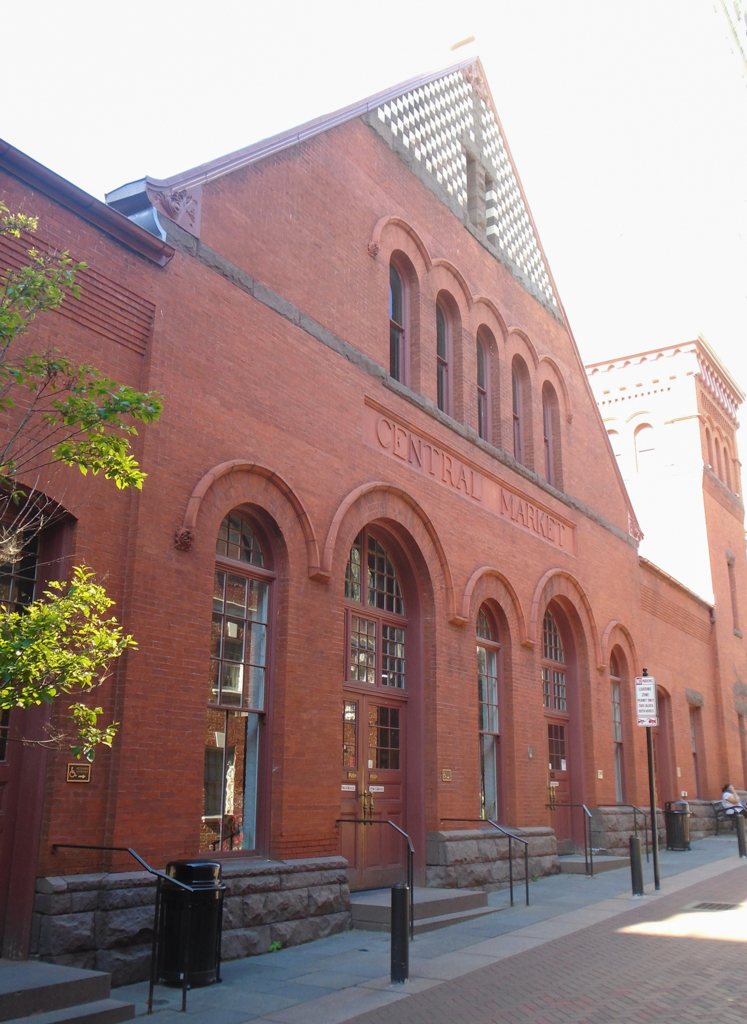
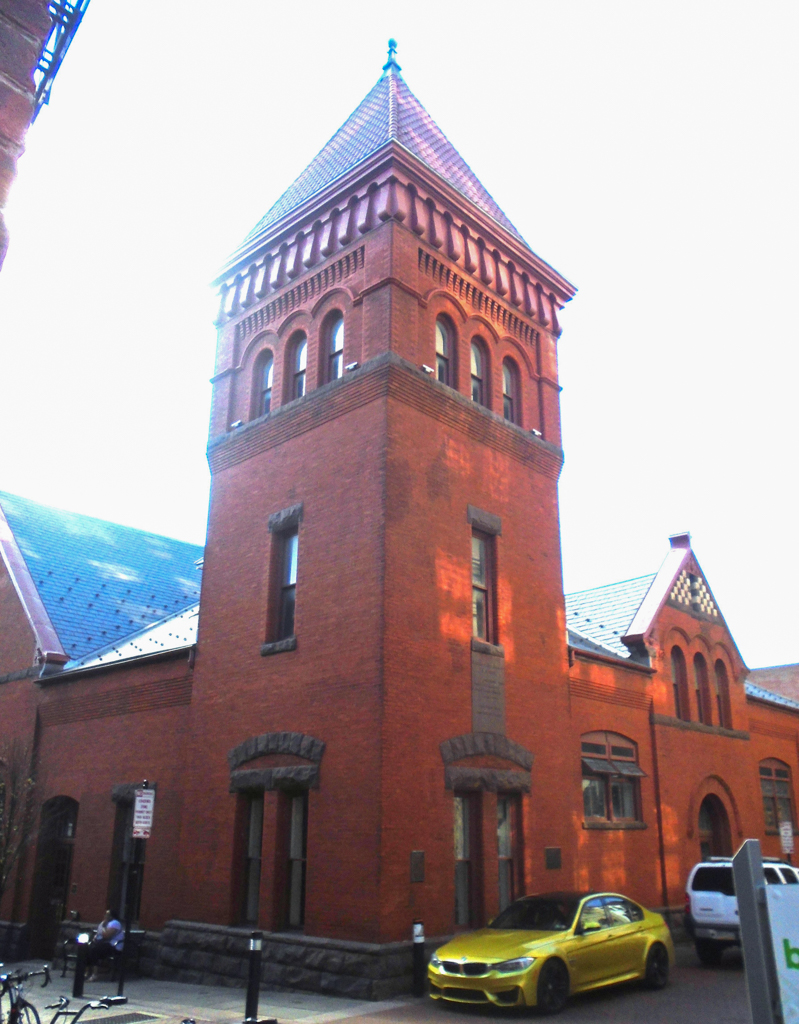
The eighteenth-century markets of Lancaster began on a lot conveyed by Andrew Hamilton to four Englishmen “for erecting, keeping or holding a market within the Town of Lancaster for the ease and conveniency of the inhabitants thereof and others having occasion to resort thither.” King George II ratified the market in 1742 and the first structure was built on the site in 1757. Various additions were made including space for a fire engine, and in 1798, air rights above the King Street portion were made available to the Masons for the construction of their building which still stands. The present market was constructed in 1889 from designs of Warner, a little-known regional designer who was later engaged to enlarge the courthouse (
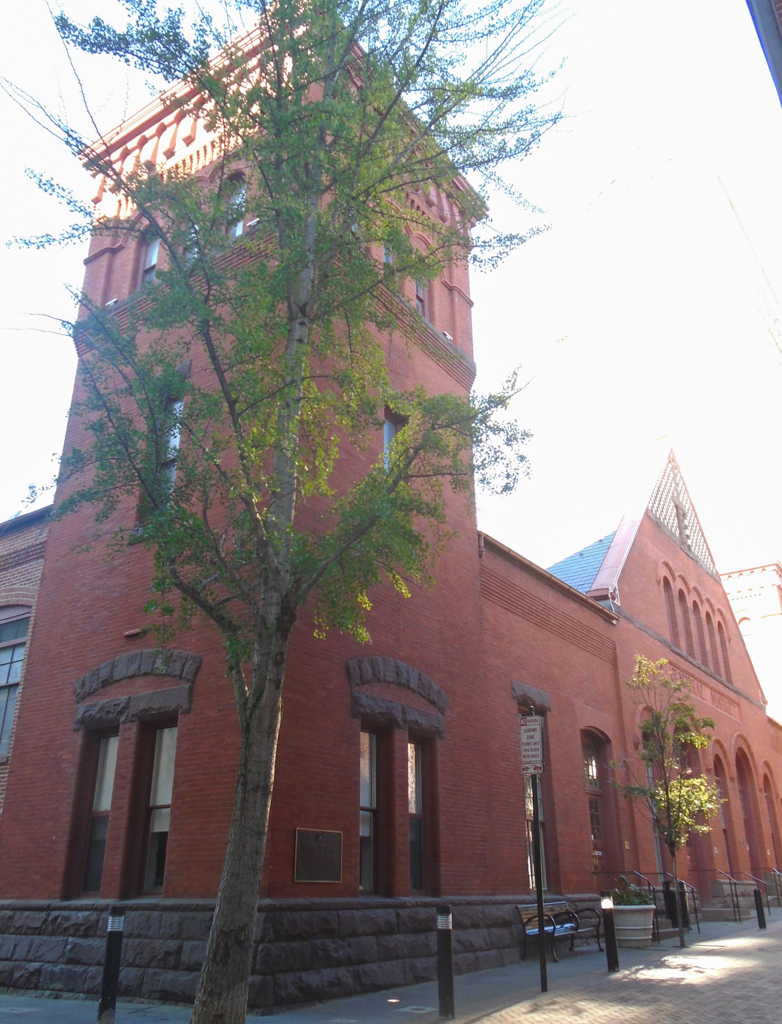
LA15) and who competed for the state capitol building. Warner designed a utilitarian hall spanned by Howe trusses supported on columns and screened by brick perimeter walls detailed in the then fashionable Richardsonian Romanesque. Massive corner towers frame the great south gable that enlivens the principal facade toward the city. Within, the market is the mixing bowl of Lancaster and like Philadelphia's Reading Terminal Market (
PH45) connects the civic life of the ancient city to the present. It is graced by the works of the “Plain people,” whose enterprise is reflected in a host of foods and crafts unique to southeastern Pennsylvania. A datestone on the east tower records the architect, builder, and civic leaders who commissioned the building.
Central Market
1889, James H. Warner. 23 N. Market St.