

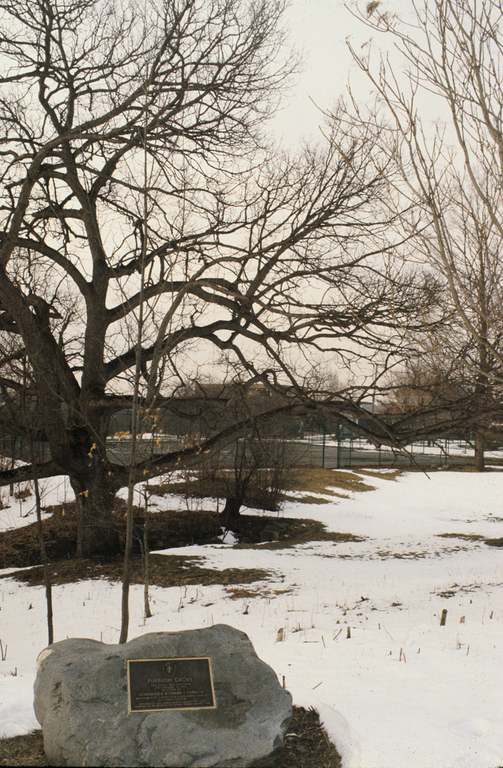
Notable as the first site of and inspiration for the Boston Metropolitan Park Commission, Beaver Brook/Waverley Oaks is an area rich in industrial and artistic history. The current fifty-eight-acre park, spanning Belmont and Waltham along the course of Beaver Brook, is composed of a steep, wooded northern section and a broader, more level southern section, noted in the nineteenth century for a magnificent stand of aboriginal oak trees. Beaver Brook was the site of mills from the seventeenth century on. Two millponds and their dams survive in the northern section of the property. In the early 1830s, a Greek Revival cottage, later expanded with a mansarded wing, was built near the lower pond at 66 Mill Street. In 1857, landscape gardener Robert Morris Copeland bought the house and wrote his influential book Country Life (1859) while residing here. Copeland maintained a partnership with Horace William Shaler Cleveland from 1853 to approximately 1860, advising on landscape schemes such as the laying out of the Back Bay in Boston. This area also drew the attention of another young landscape architect, Charles Eliot, who published an article in 1890 in Garden and Forest entitled, “The Waverley Oaks, A Plan for Their Preservation for the People,” which contained the first statement of his ideas for a metropolitan park system for Greater Boston. After the creation of the Metropolitan Park Commission in 1893, Beaver Brook appropriately became the first acquisition for the park system. As such, it is a nationally significant site for the development of regional landscape planning in the United States.
Beaver Brook Reservation
 Keith Morgan
Beaver Brook Reservation
1893, Olmsted, Olmsted and Eliot. Mill St. and Trapelo Rd.