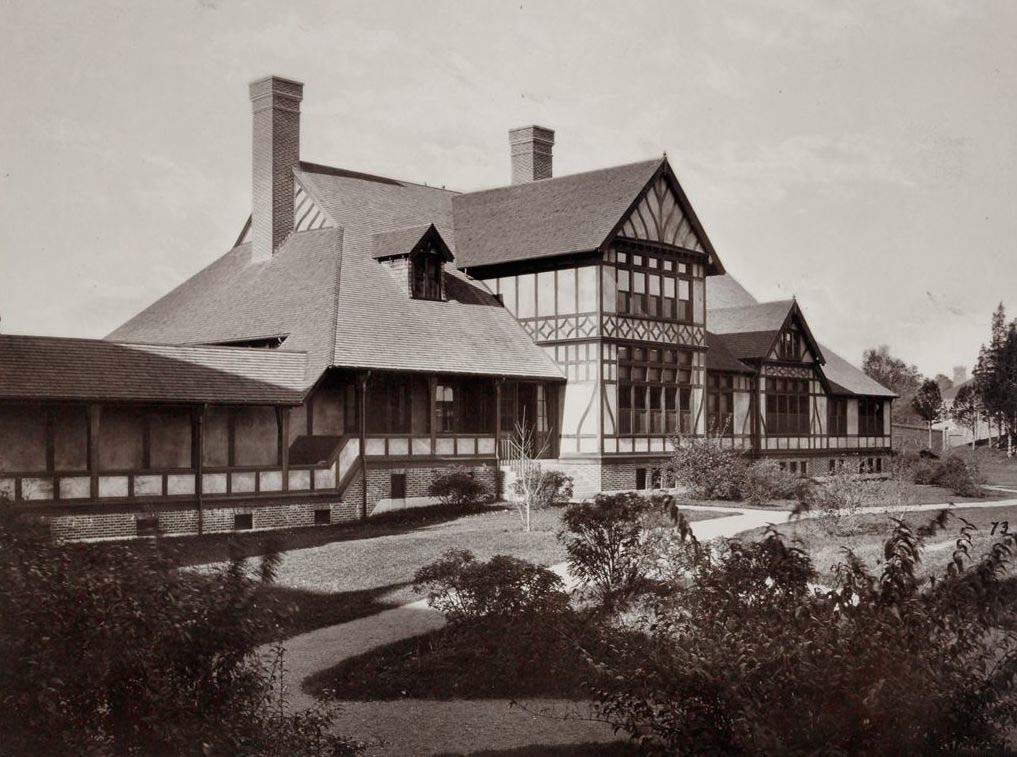
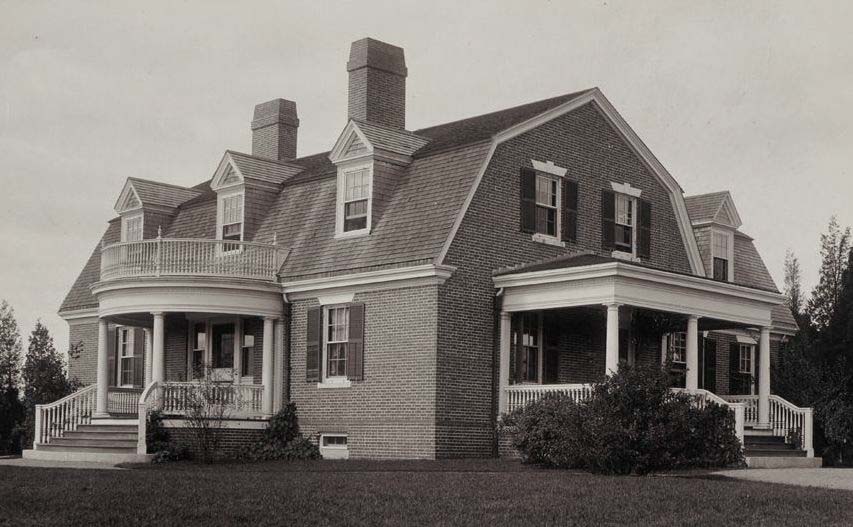
McLean Hospital is the third oldest mental asylum in the country and the earliest built on the cottage or domestic model. Established in conjunction with Massachusetts General Hospital, the first home of the insane asylum was opened in the Joseph Barrell mansion in Somerville, originally designed by Charles Bulfinch in 1792 and modified by him for institutional use in 1818. By the 1870s, the trustees of McLean Asylum began to look for a more rural property for a new hospital, hiring landscape architect Frederick Law Olmsted in 1875 to advise on site selection and landscape development. Olmsted lobbied for a villagelike grouping of cottages in opposition to the pattern of a centralized hospital popularized by Dr. Thomas Kirkbride of Pennsylvania Hospital in the 1850s. Although the trustees endorsed Olmsted's proposed site and general philosophy, they did not hire him to lay out the grounds. Engineer Joseph Curtis assumed those duties, and Carl Fehmer became the first of many significant local architects to work on the project. Despite acquisition of the first 114 acres in 1875, active construction of the buildings did not occur until 1891–1895. These early buildings were commissioned from Fehmer and Page; Shepley, Rutan and Coolidge; Wheelwright and Havens; Shaw and Hunnewell; and William Y. Peters, all well-respected architects of the late nineteenth century. The substantial two- to three-story brick buildings were sited around a central oval and on the irregular hillside, moving into the larger wooded landscape. With rare exceptions, the patterns of scale and materials established in this early building phase continue to inform the character of the architecture. Recent changes in the treatment of mental illness and in the economics of medical care have forced Massachusetts General Hospital to sell sections of the property for development. In 1999, the Town of Belmont acquired substantial property for open space and for cemetery development.