

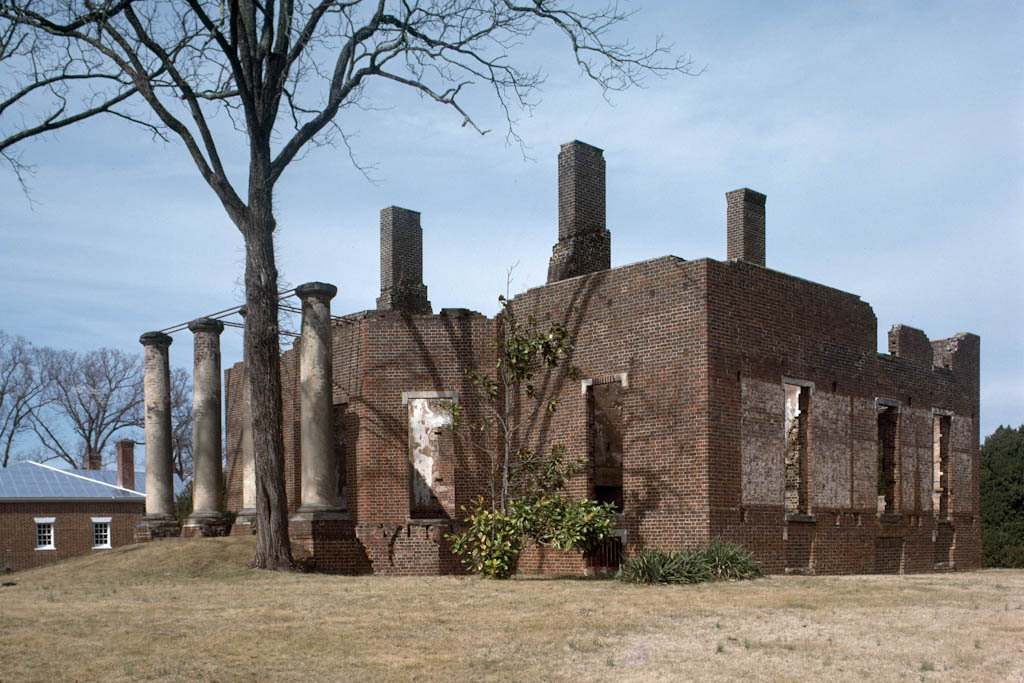
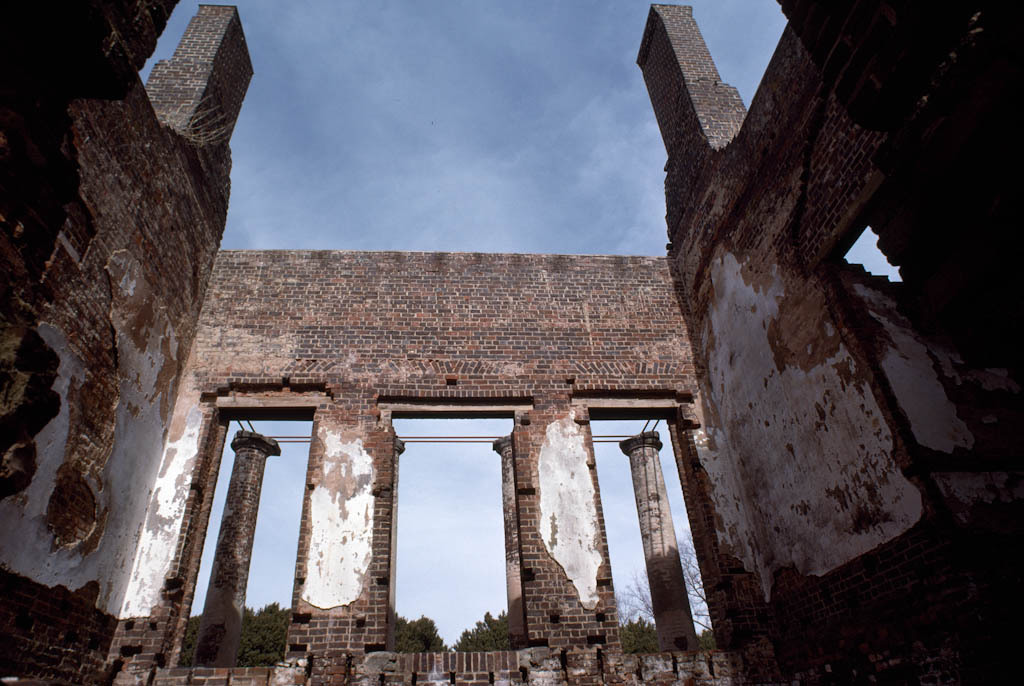
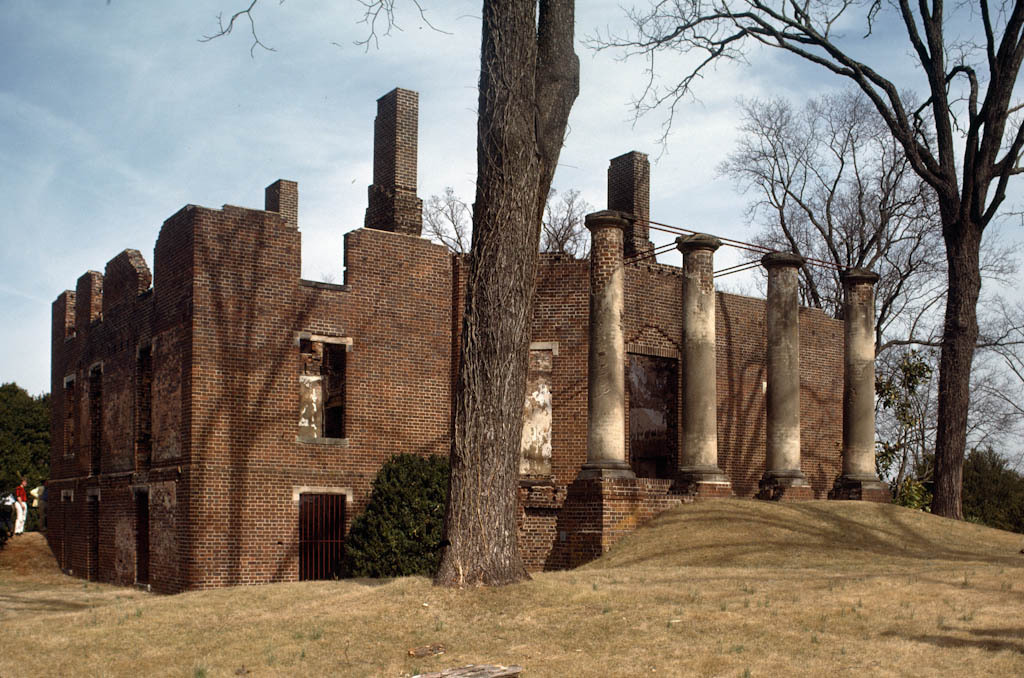
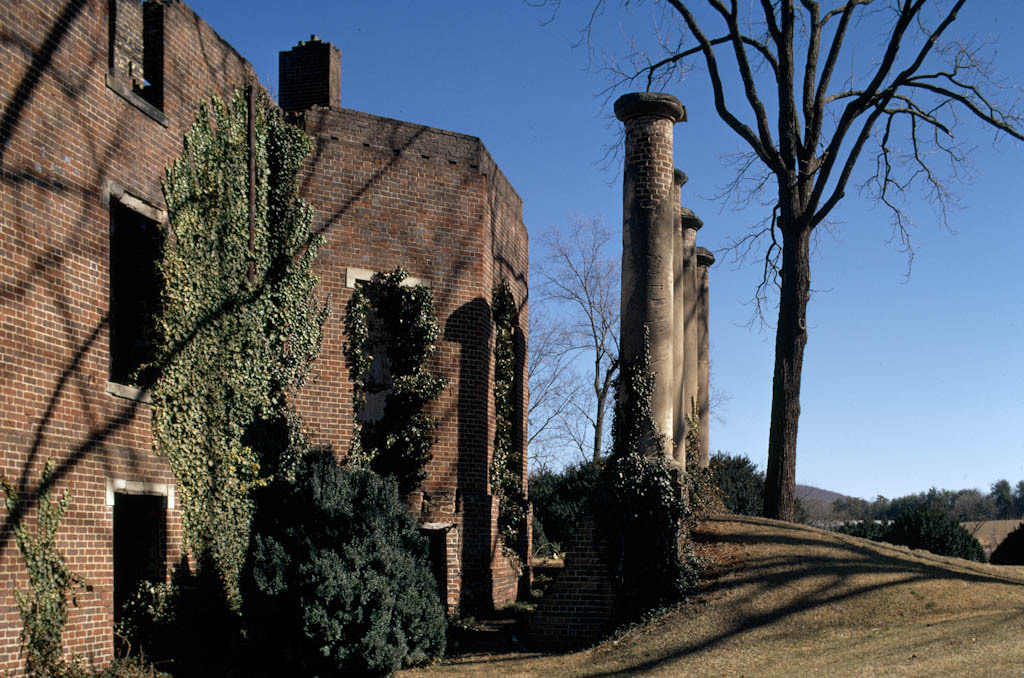
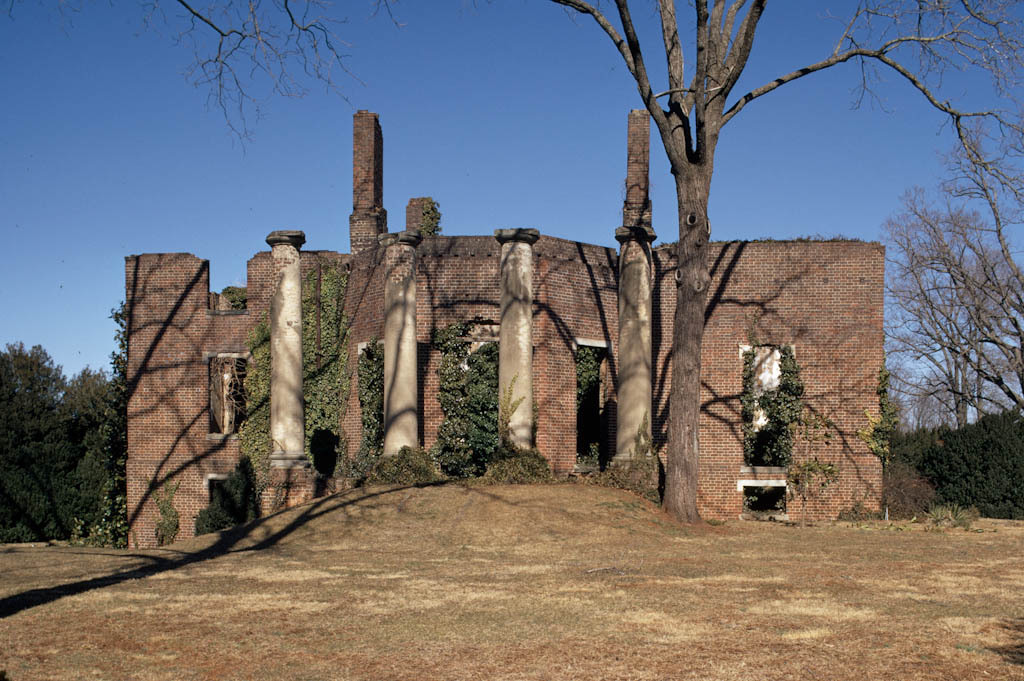
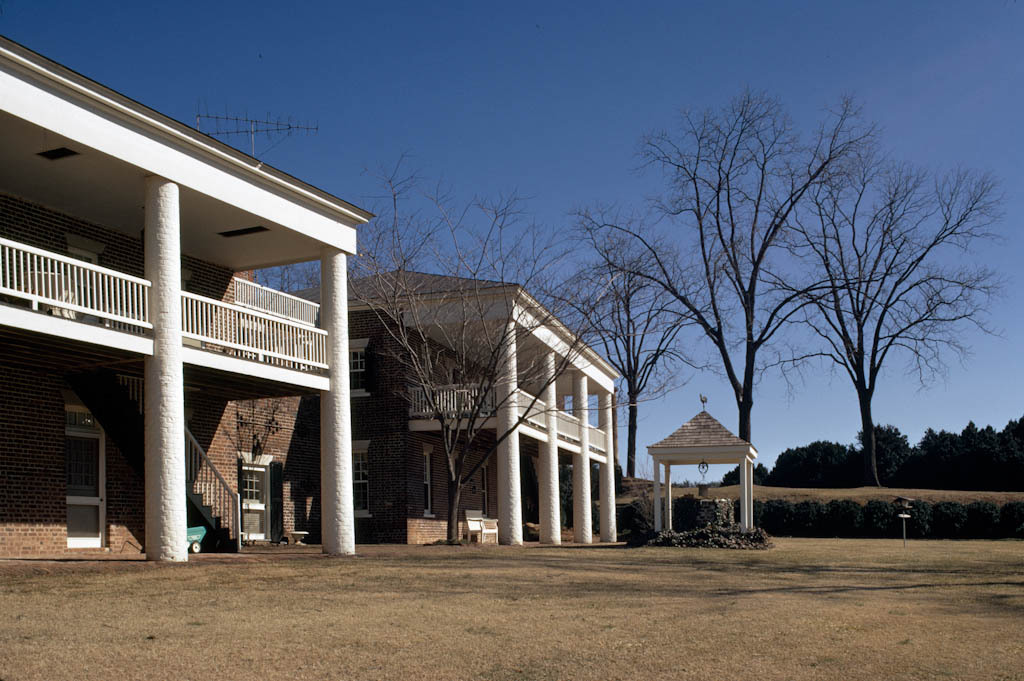
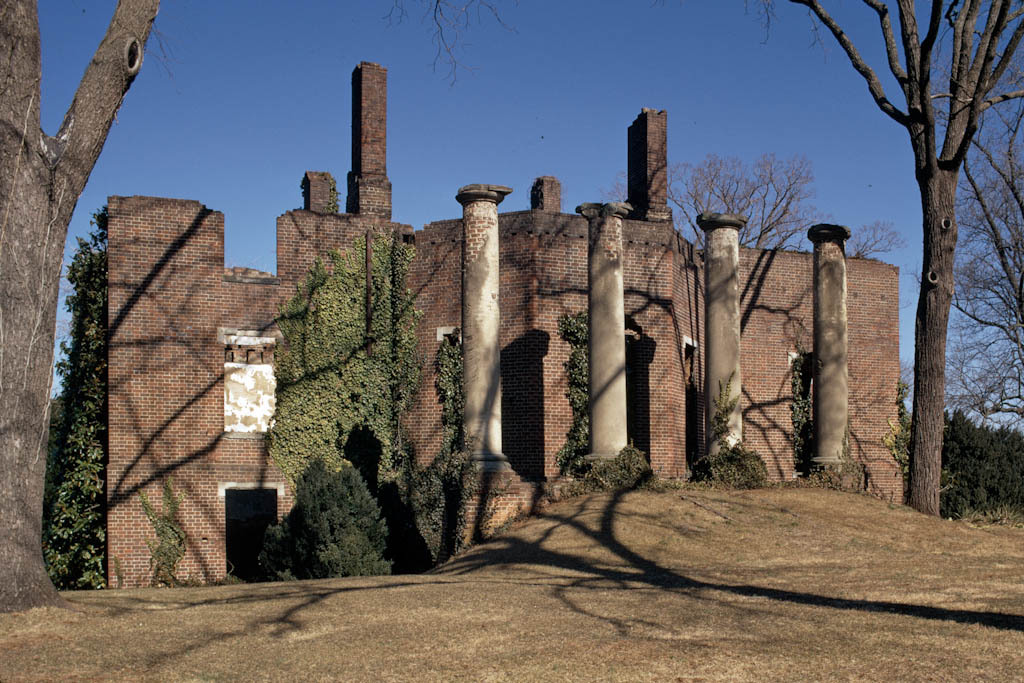
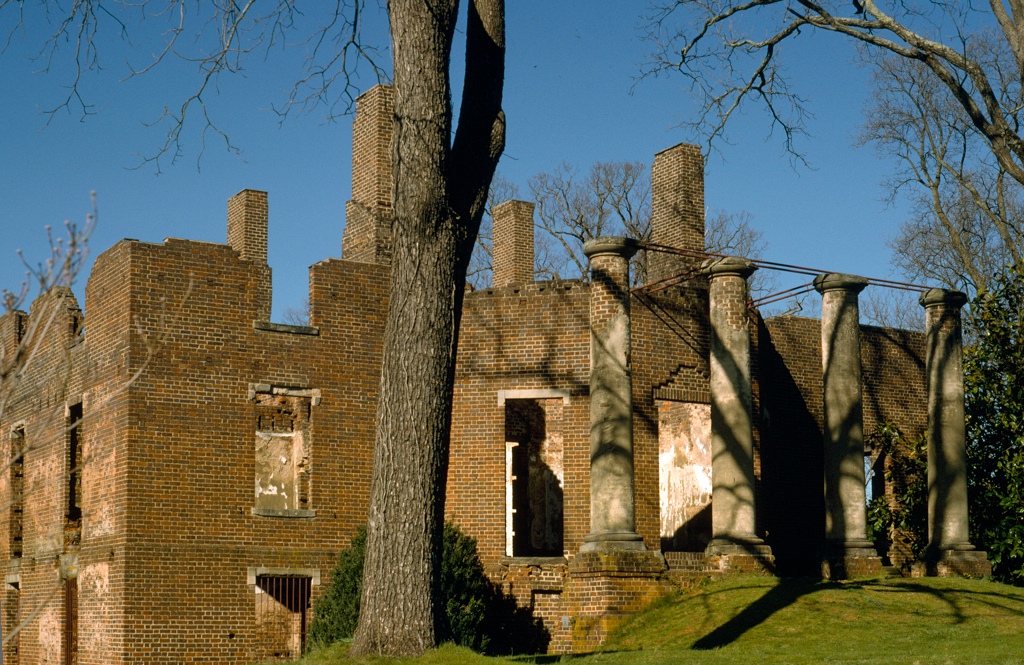
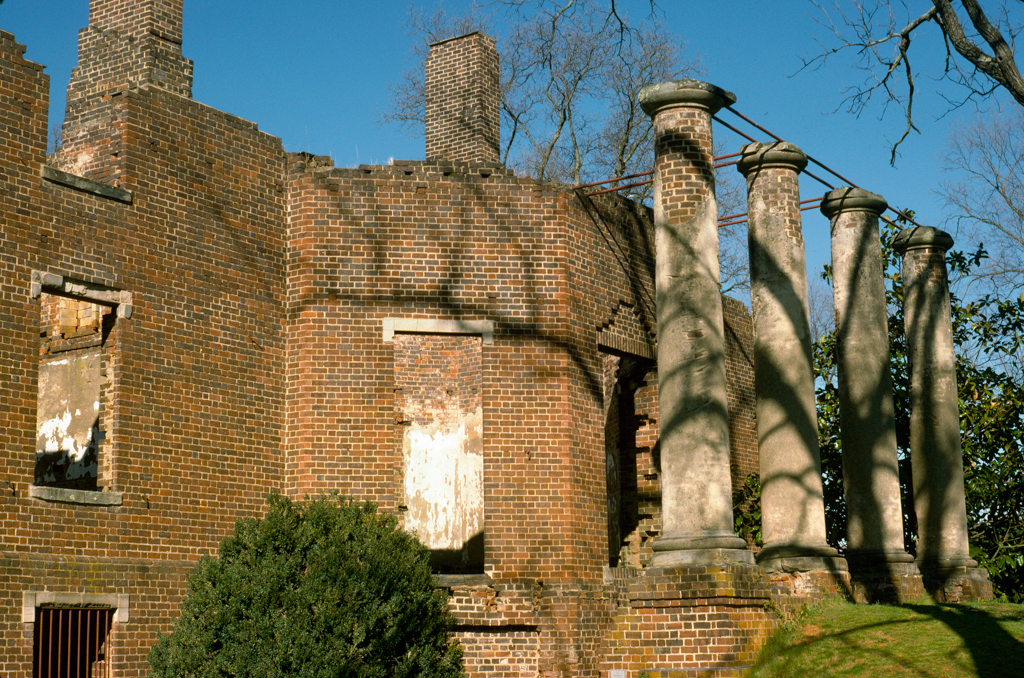
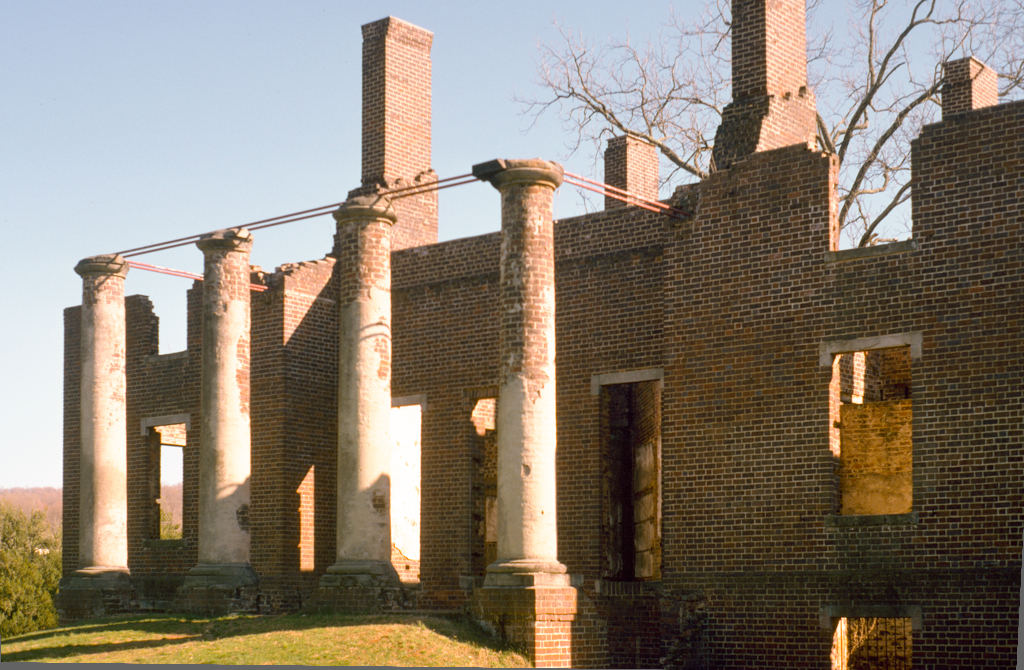
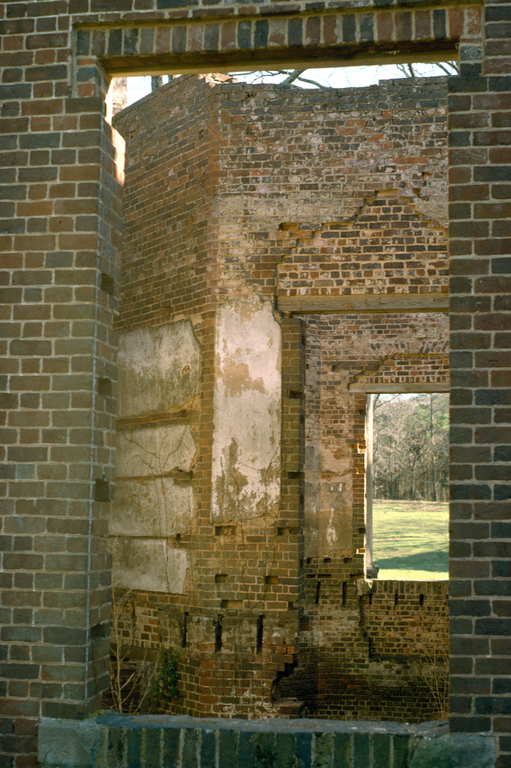
The house burned on Christmas Day, 1884, leaving one of the most romantic and evocative ruins in the country. The visitor, however, can appreciate Jefferson's original scheme for the main house of a large plantation for James Barbour (1775–1842), governor, senator, and minister to the Court of St. James. The drawings, now in the Massachusetts Historical Society, called for an octagonal dome and balustrade that were never built. The north side, which is the approach, has a turf ramp that helps to create the appearance a single-story villa, even though the structure is a large three-story dwelling. The Roman Doric portico (duplicated on the south) gave access to an impressive two-story hexagonal reception room and an octagonal drawing room. University of
Barboursville
c. 1817–1822, Thomas Jefferson. VA 678 (.5 mile east from VA 20). Access via the main office of the winery