The most visible evidence of prehistoric life in the Kanawha valley exhibits characteristics of both Adena (500–200 B.C.) and Hopewell (A.D. 100–700) cultures. After the mound at Moundsville (
MH1), South Charleston's is the second-largest prehistoric construction remaining in West Virginia. It is also one of the few reminders of an elaborate system of earthworks that once covered this part of the valley. In 1883–1885 scientists from the Smithsonian Institution investigated the earthworks and pierced the mound with a shaft. They discovered several skeletons near the top and, near the base, a large log tomb with eleven interments along with copper remnants, beads, and arrowheads. When first recorded, the mound was 40 feet high and 525 feet in circumference. Before the Smithsonian investigations, seven feet of earth had been removed from the top to provide a level base for a bandstand or viewing platform. Later still, a stone-lined bandstand was cut into the side. Today, the mound, approximately 25 feet high, is the focal point of a small park, deeded to the city by Union Carbide Corporation. In 1995–1996 the surroundings were improved, the mound was stabilized to prevent erosion, and limited archaeological testing was undertaken.


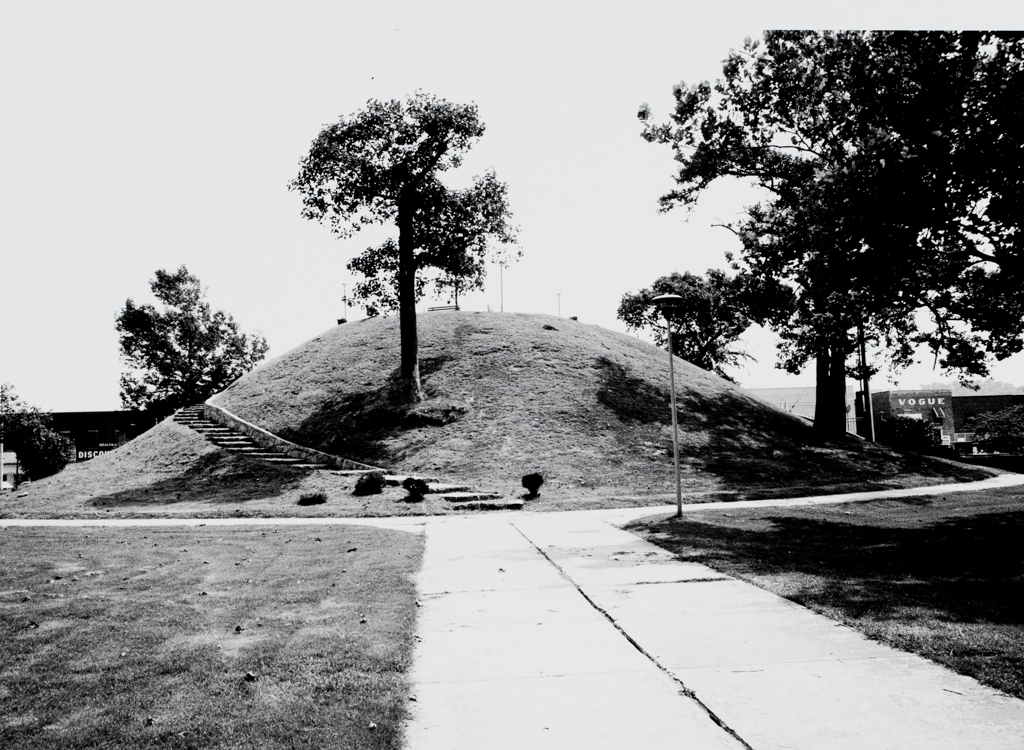 State Historic Preservation Office, West Virginia Division of Culture and History