

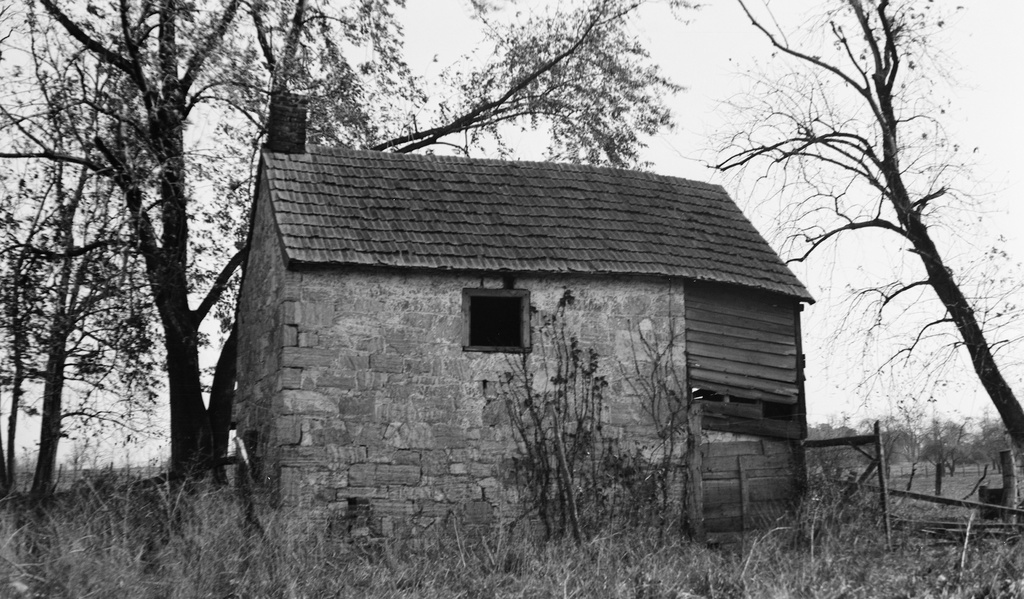
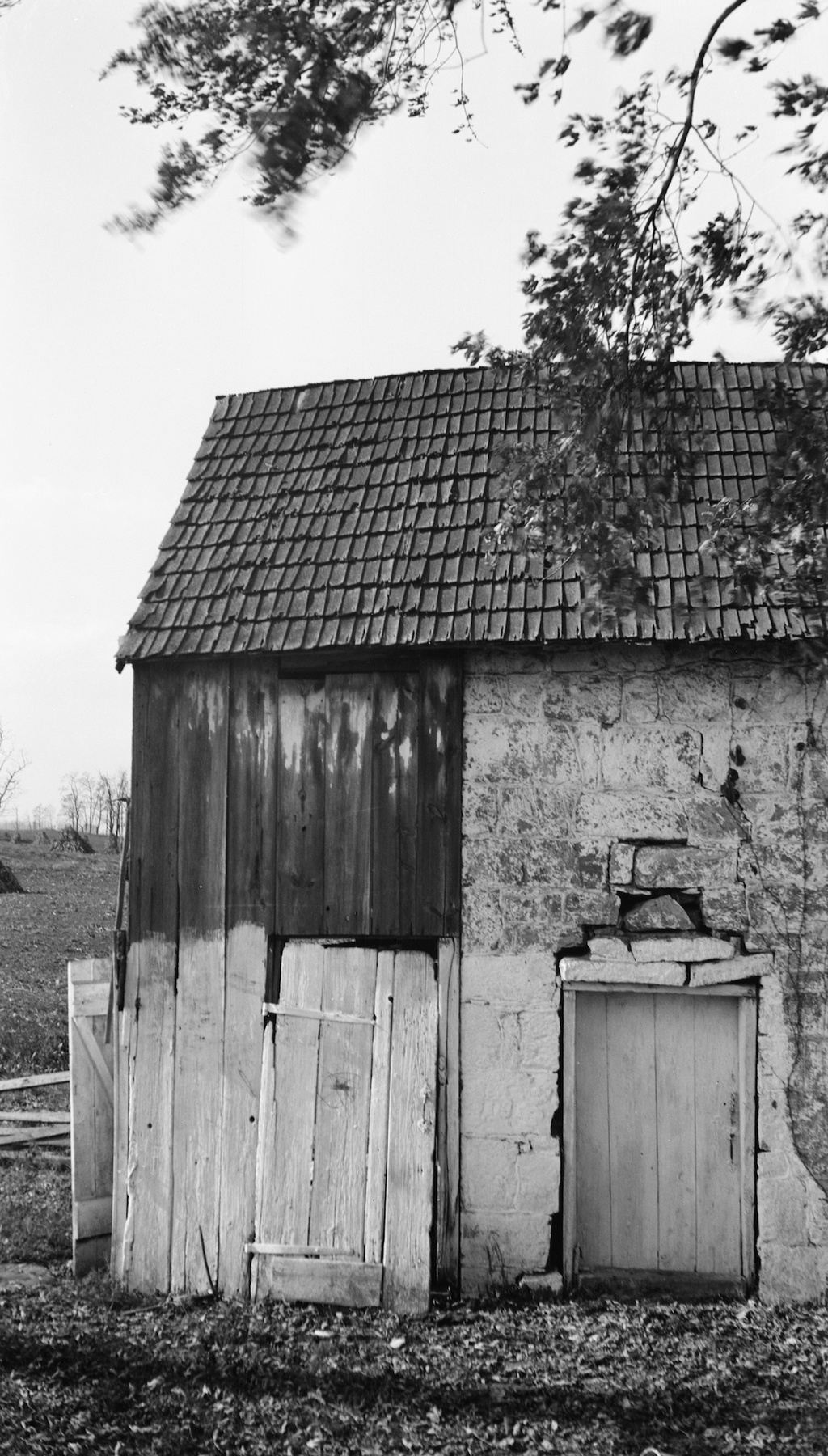
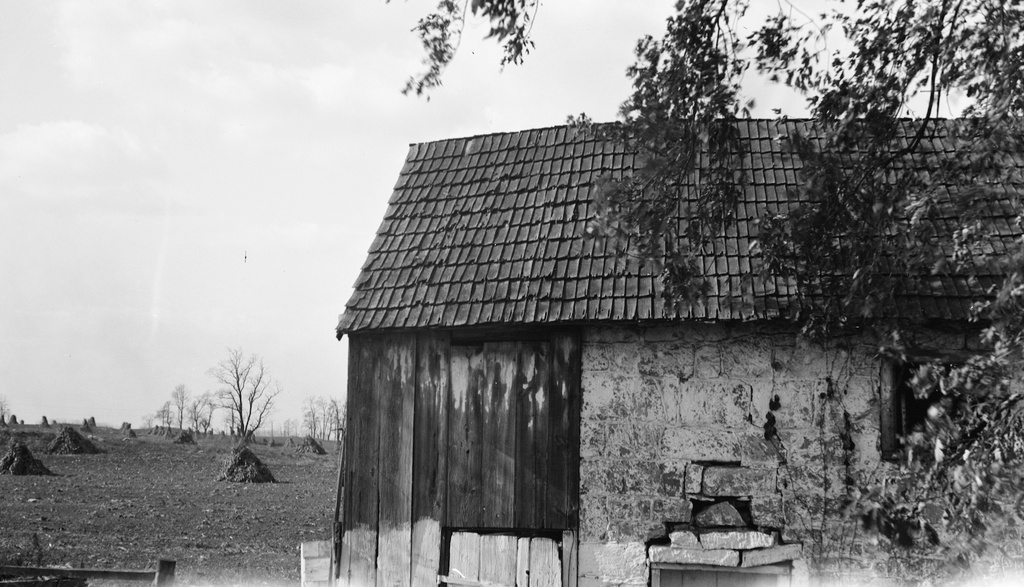
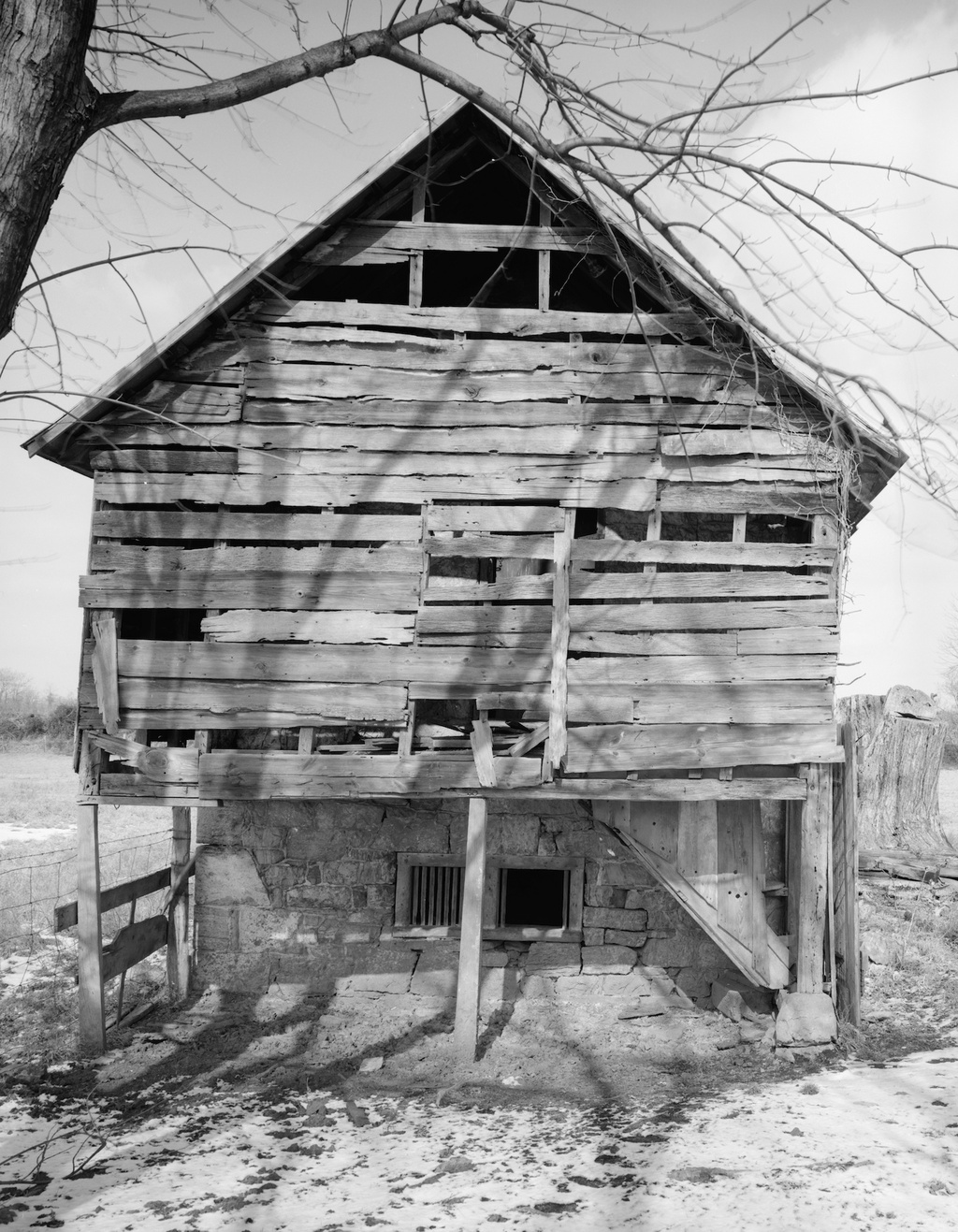
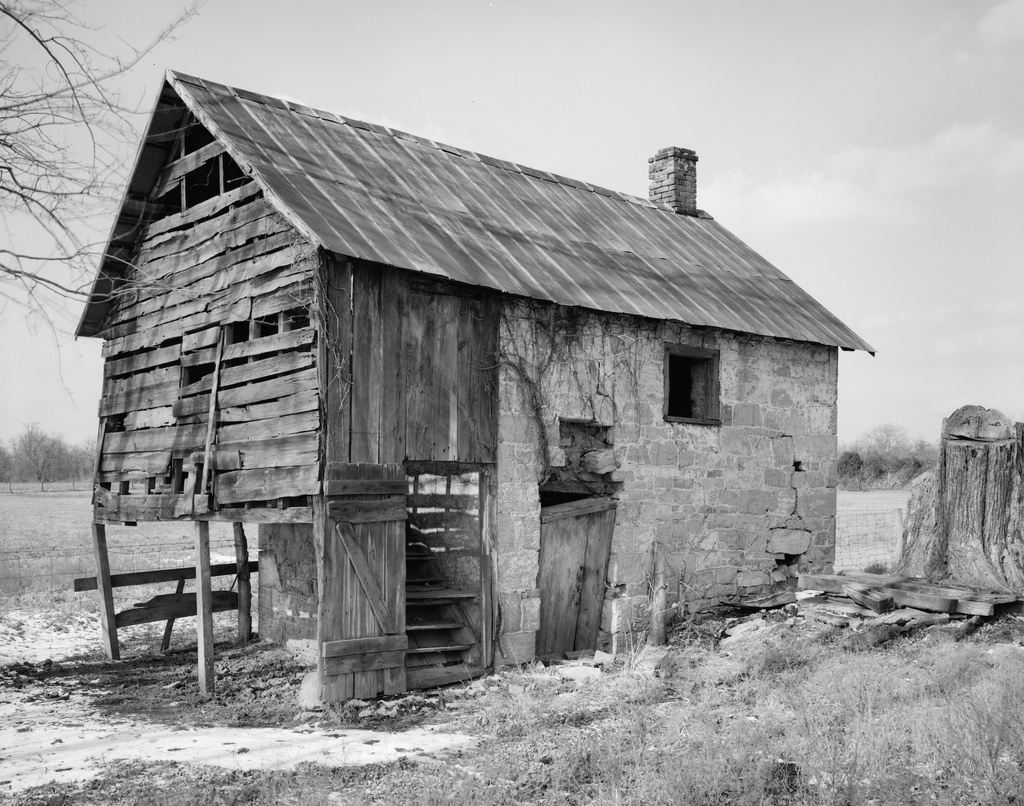
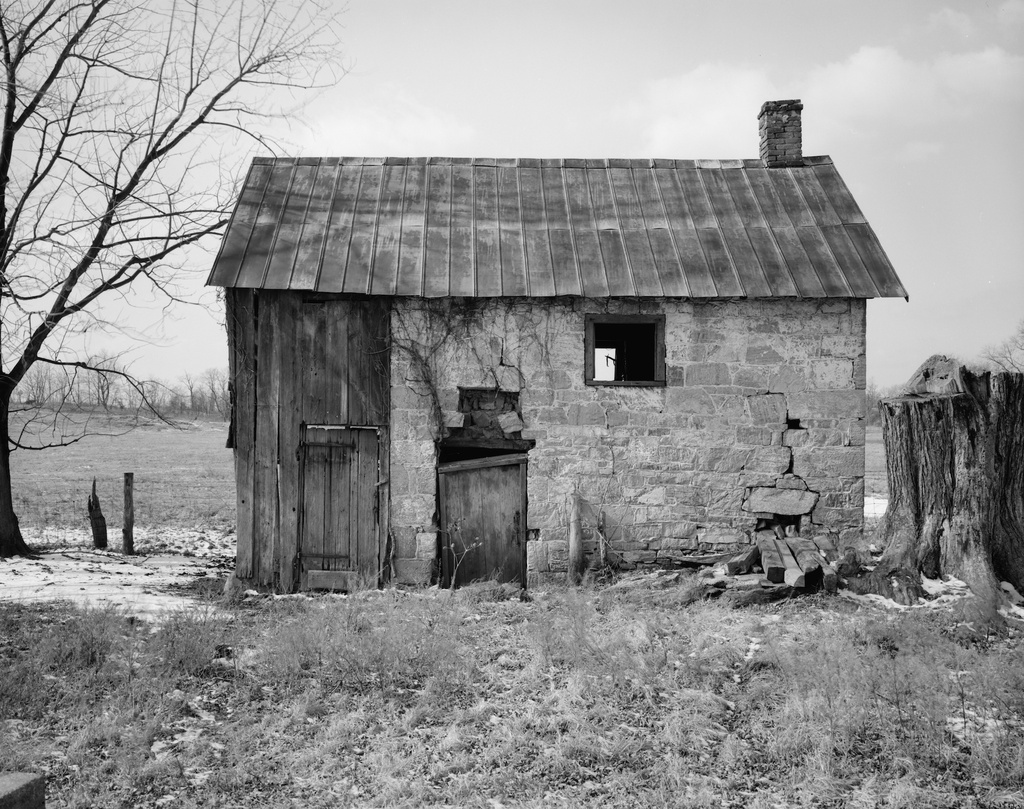
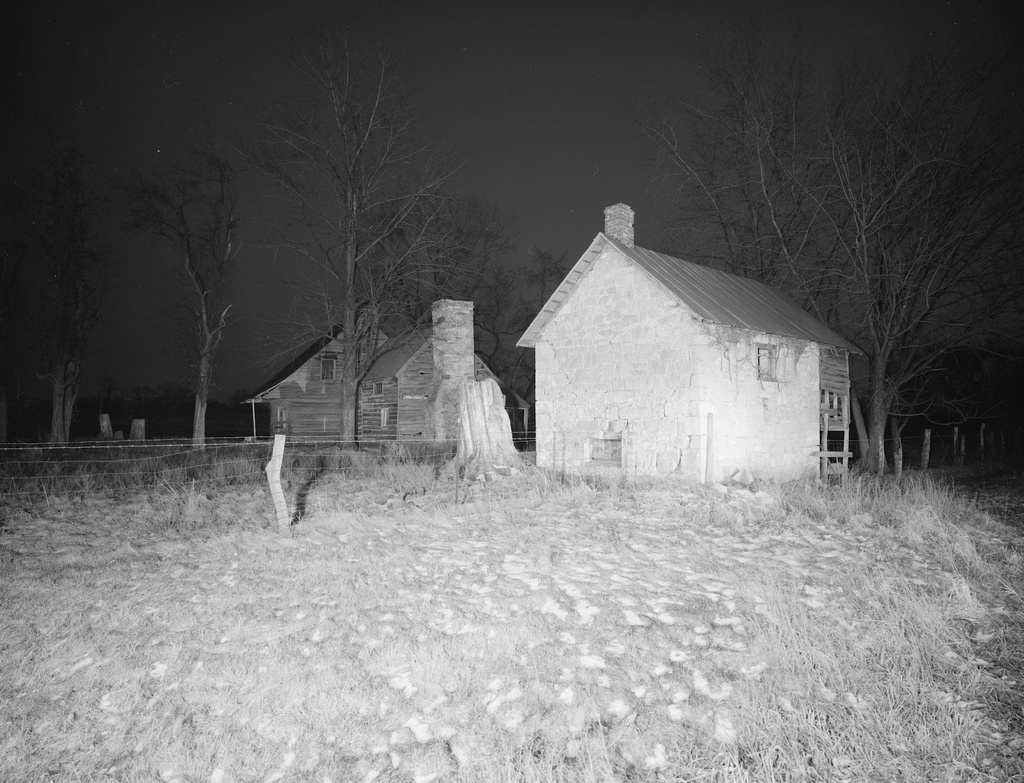
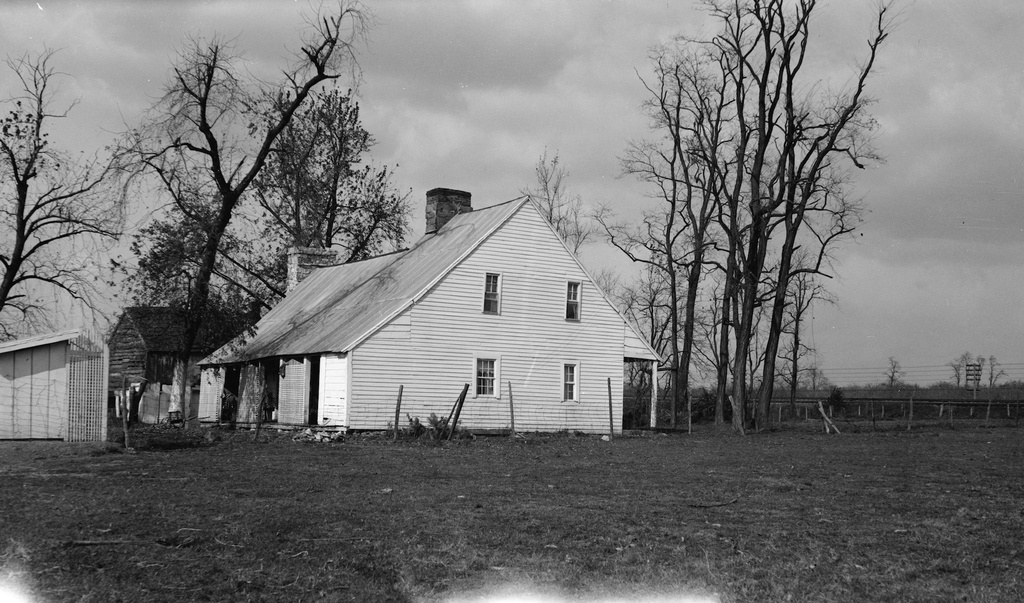
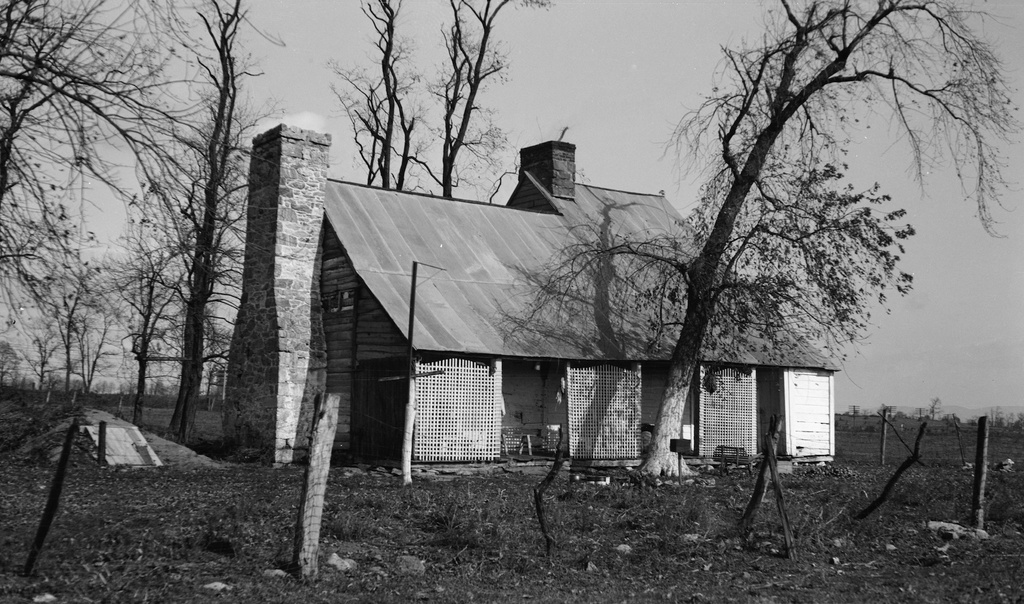
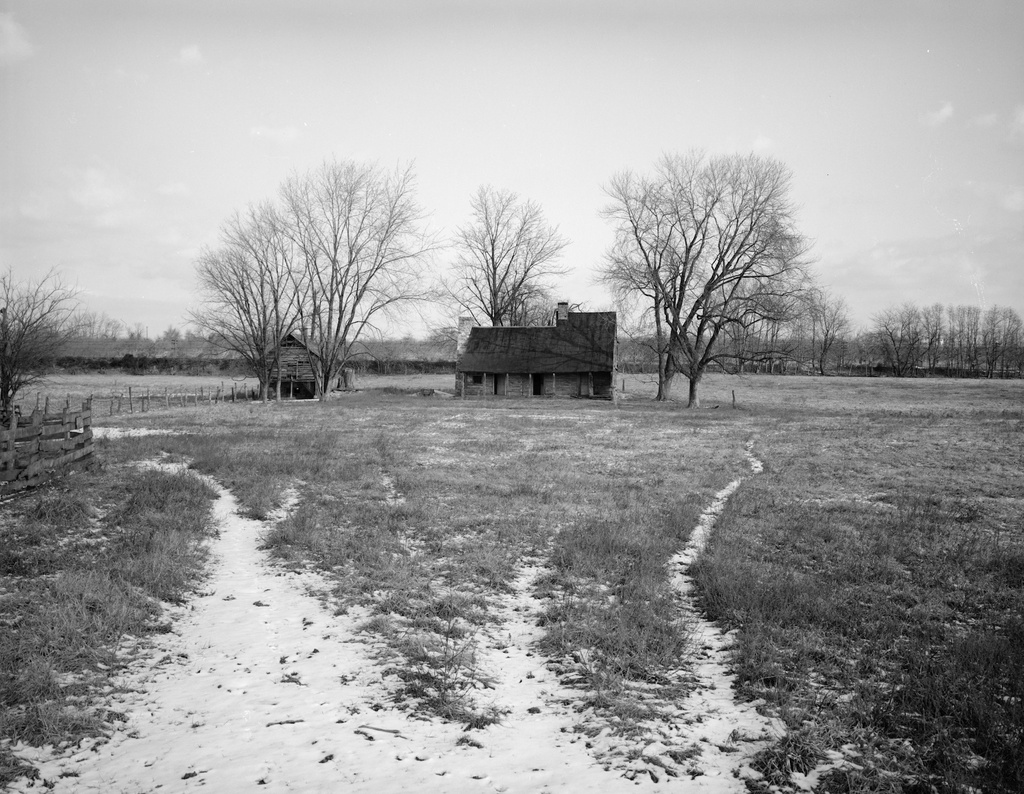
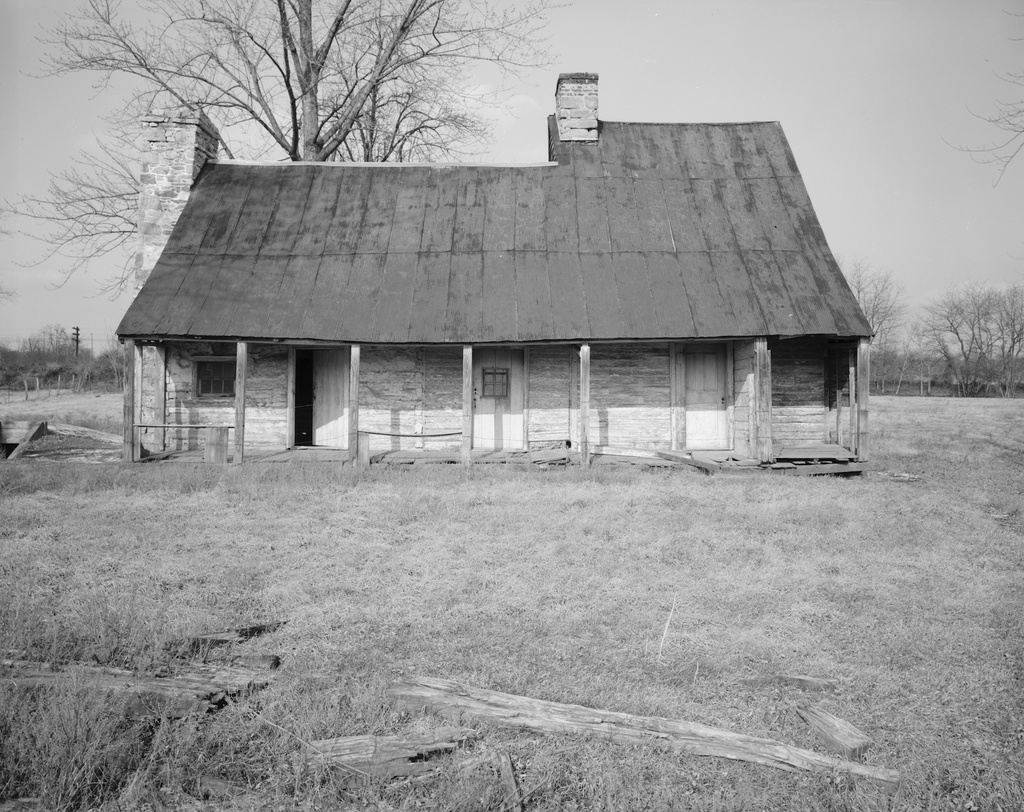
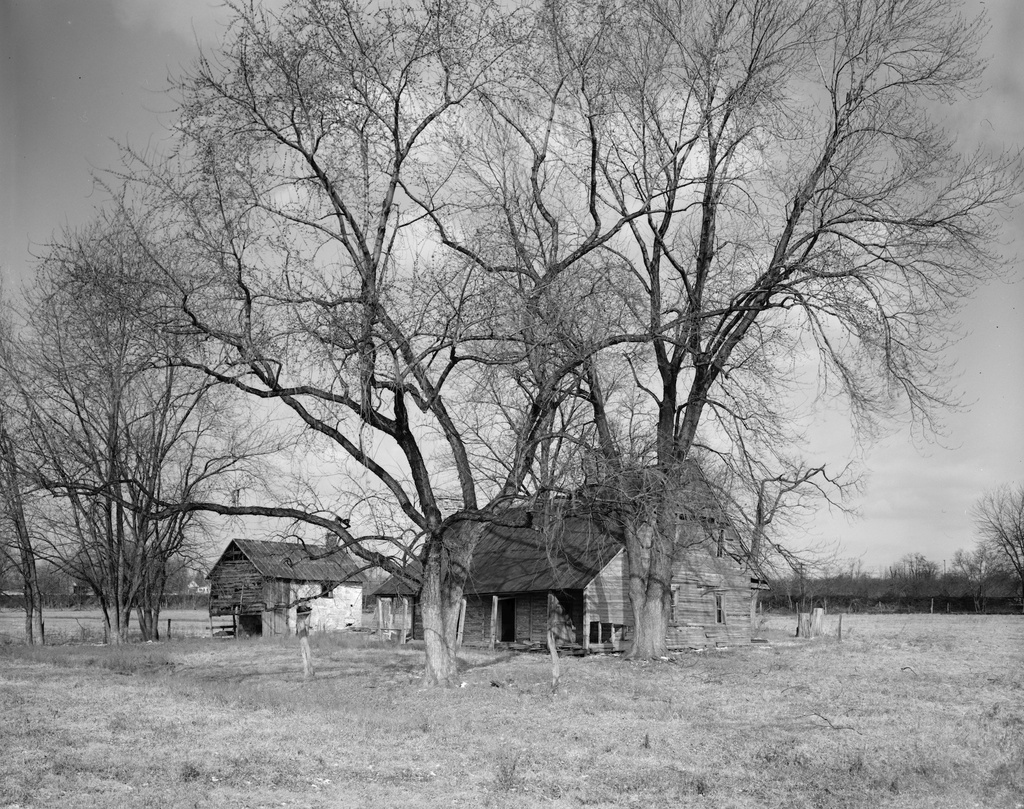
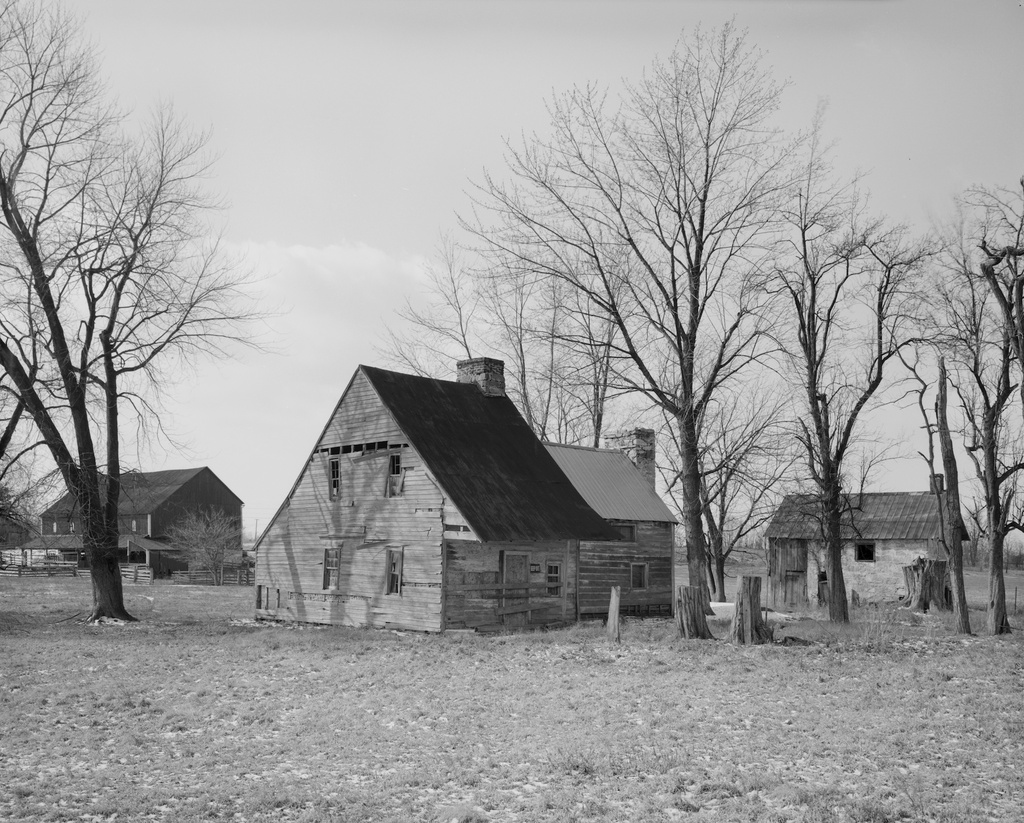
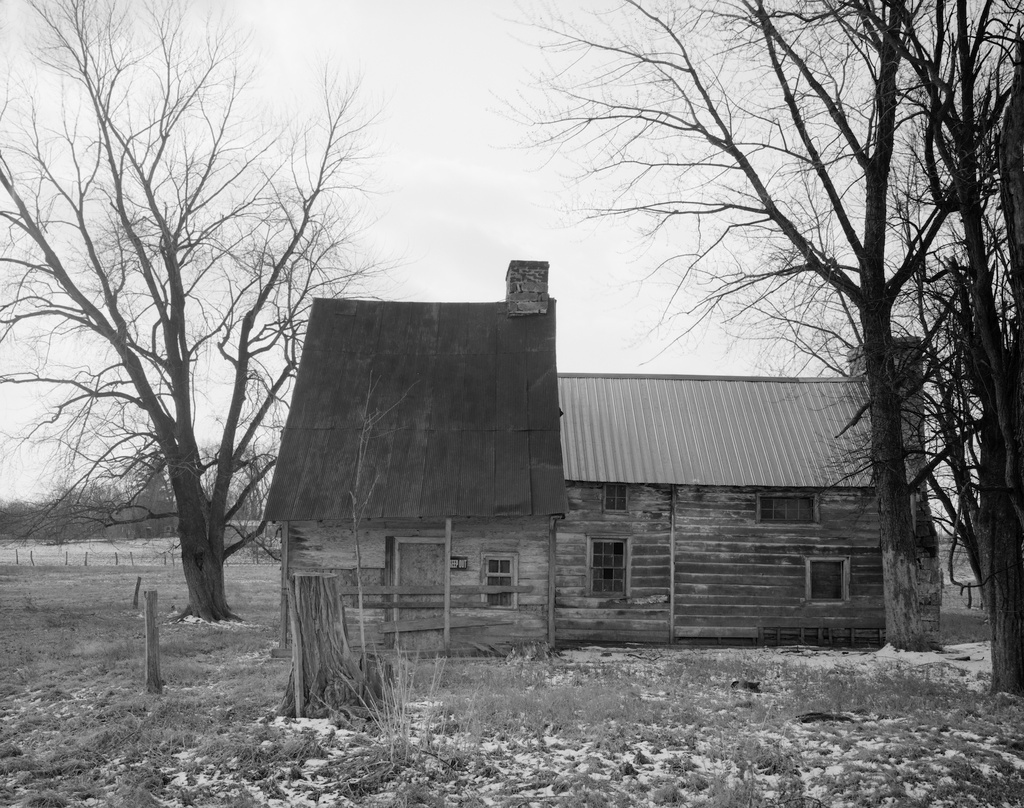
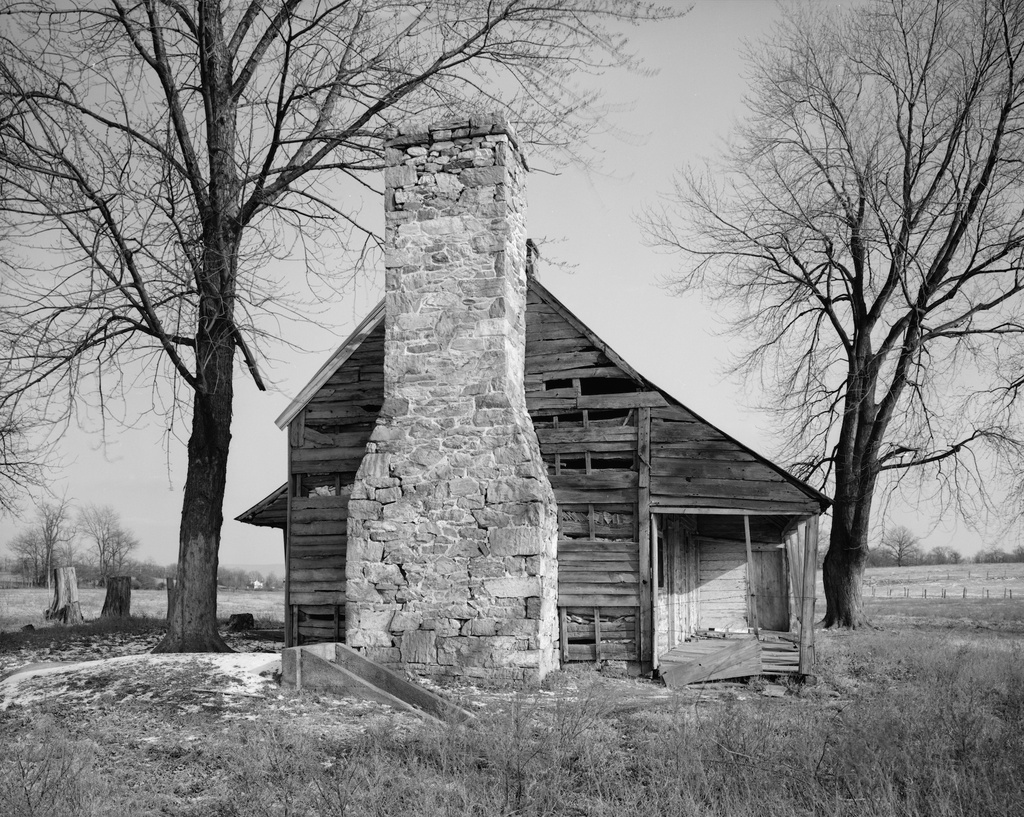
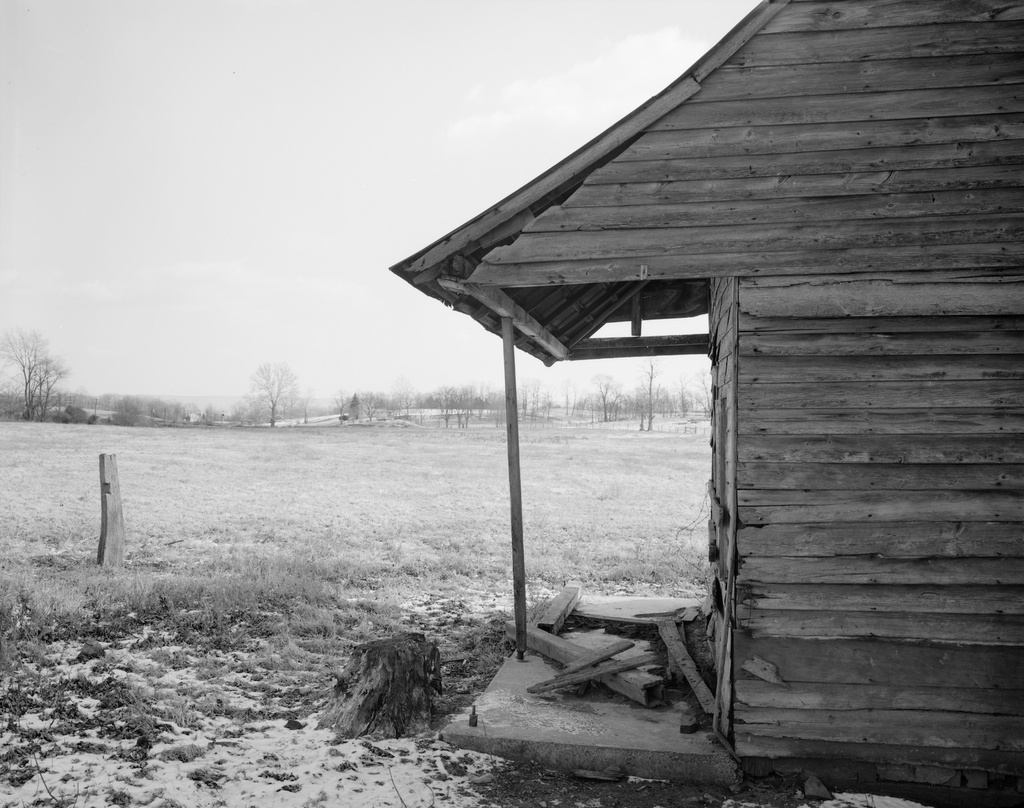
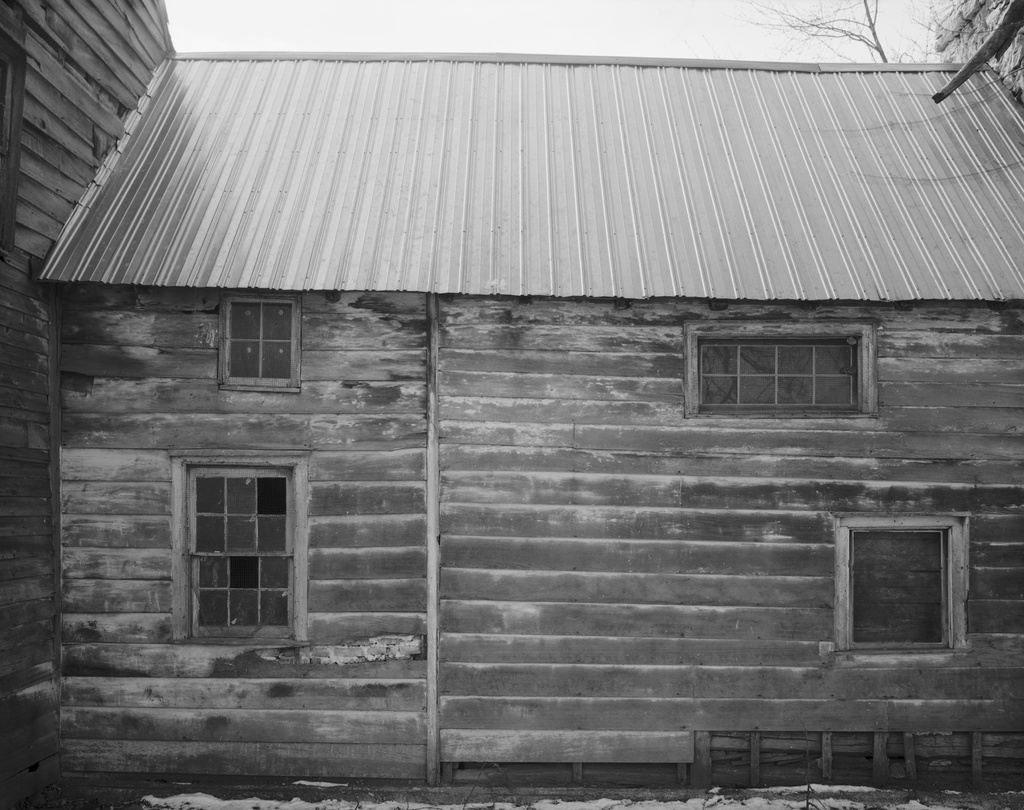
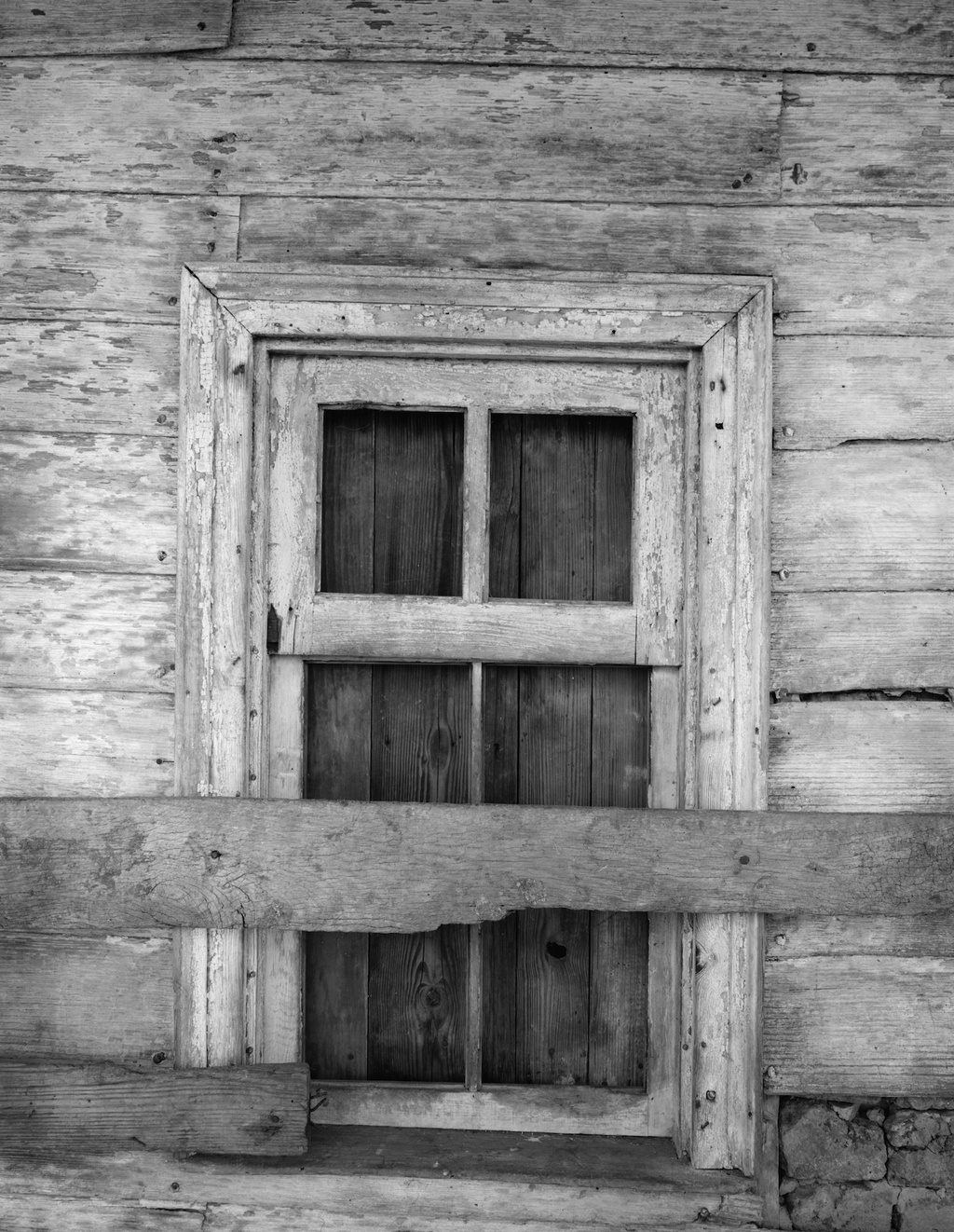
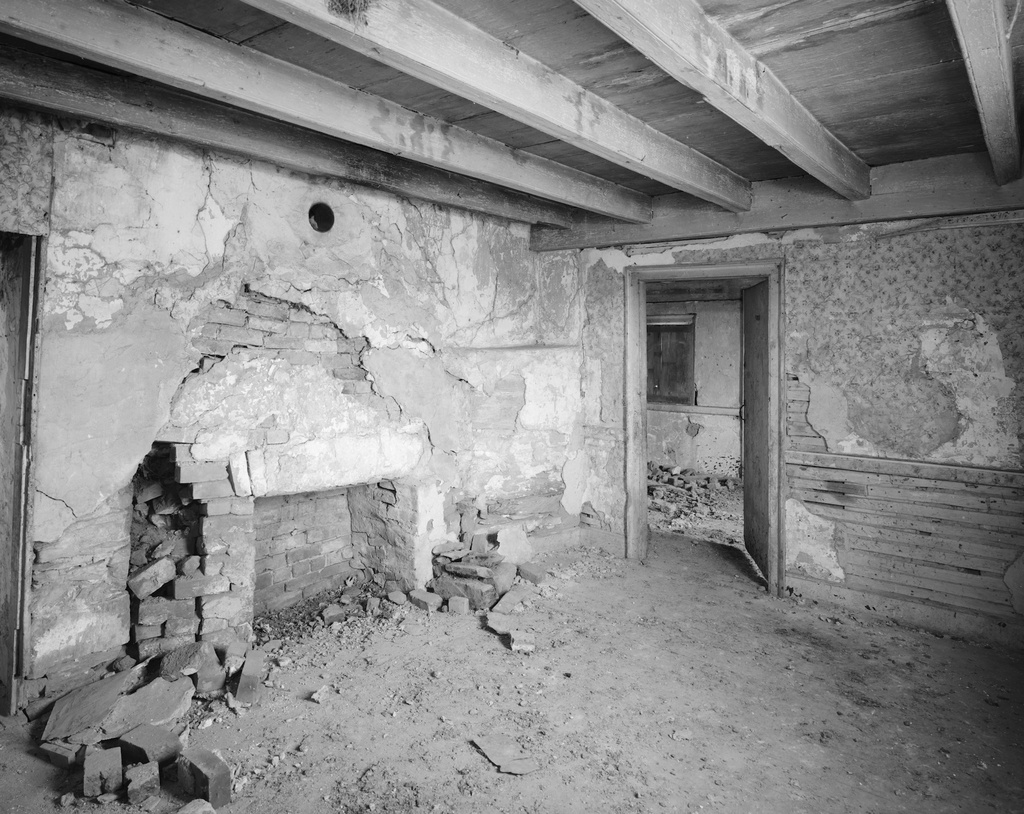
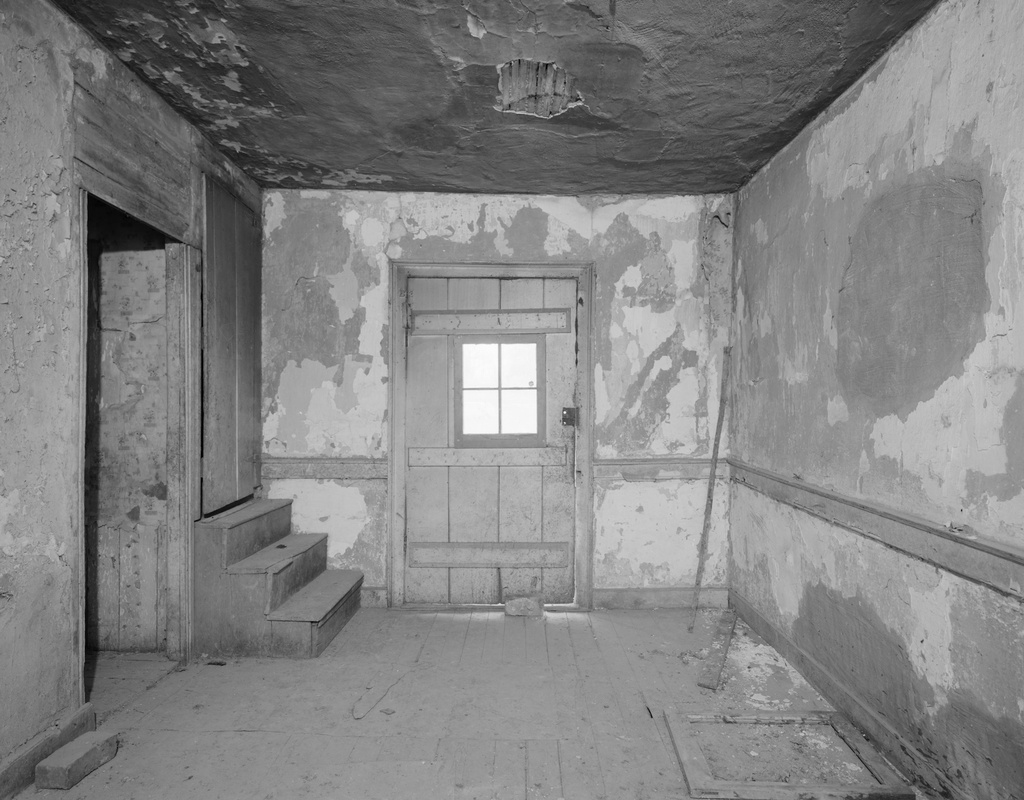
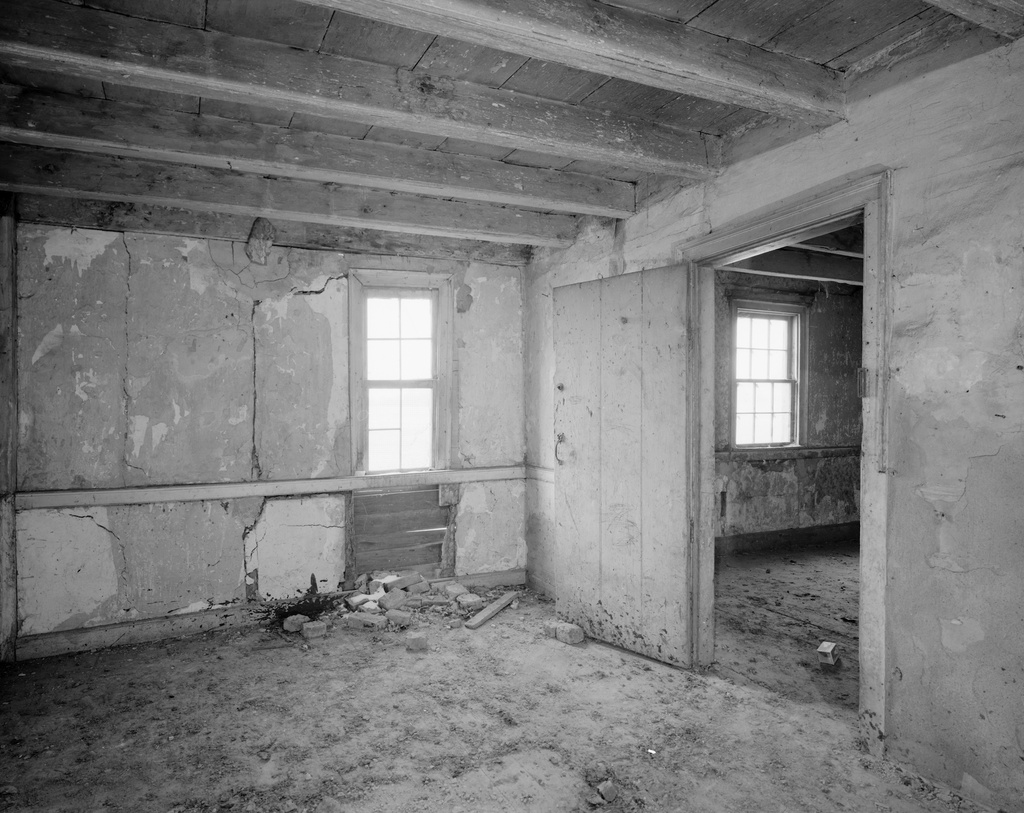
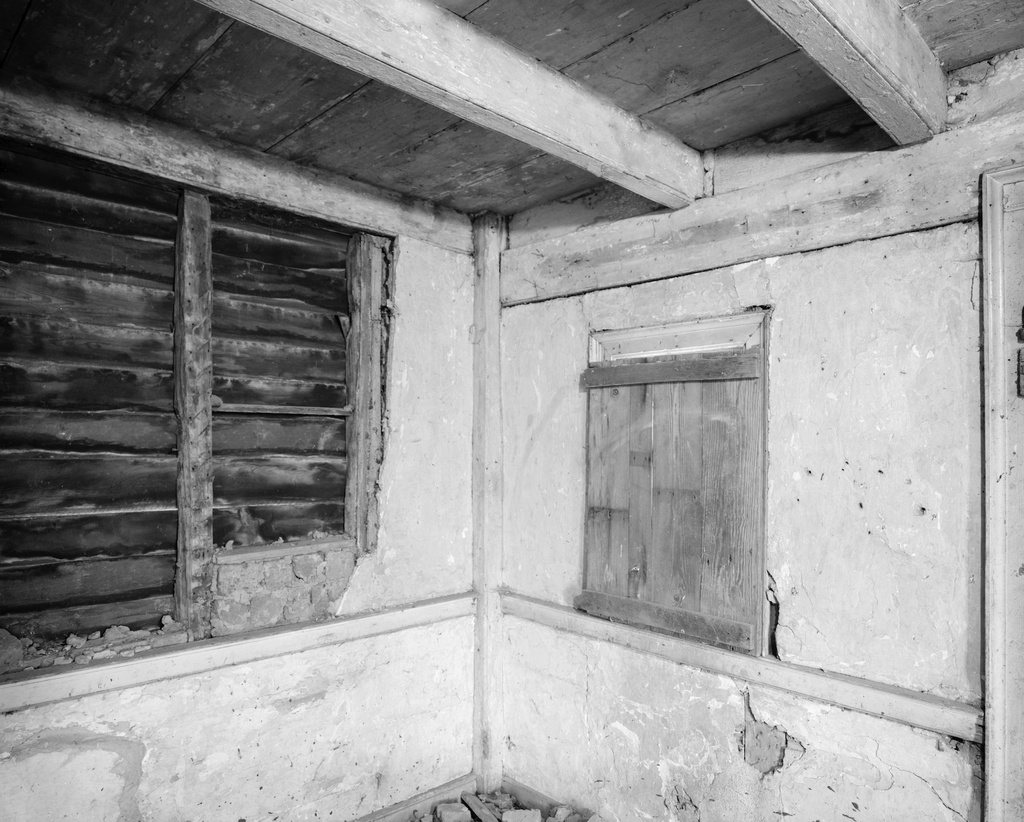
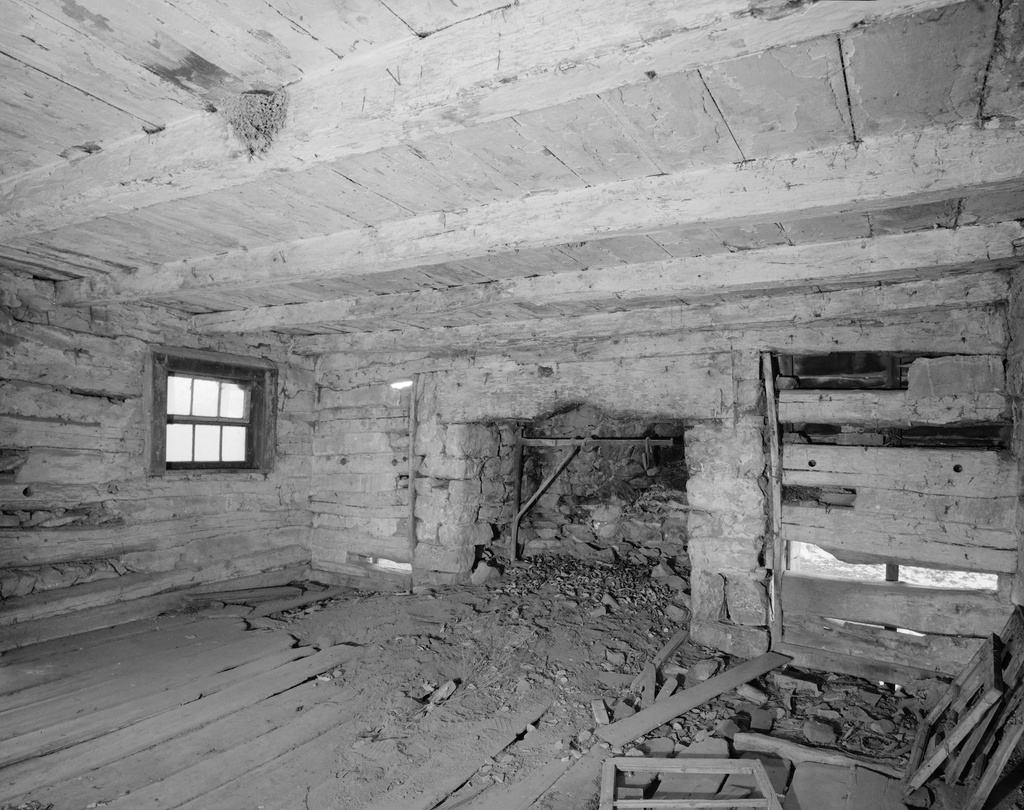
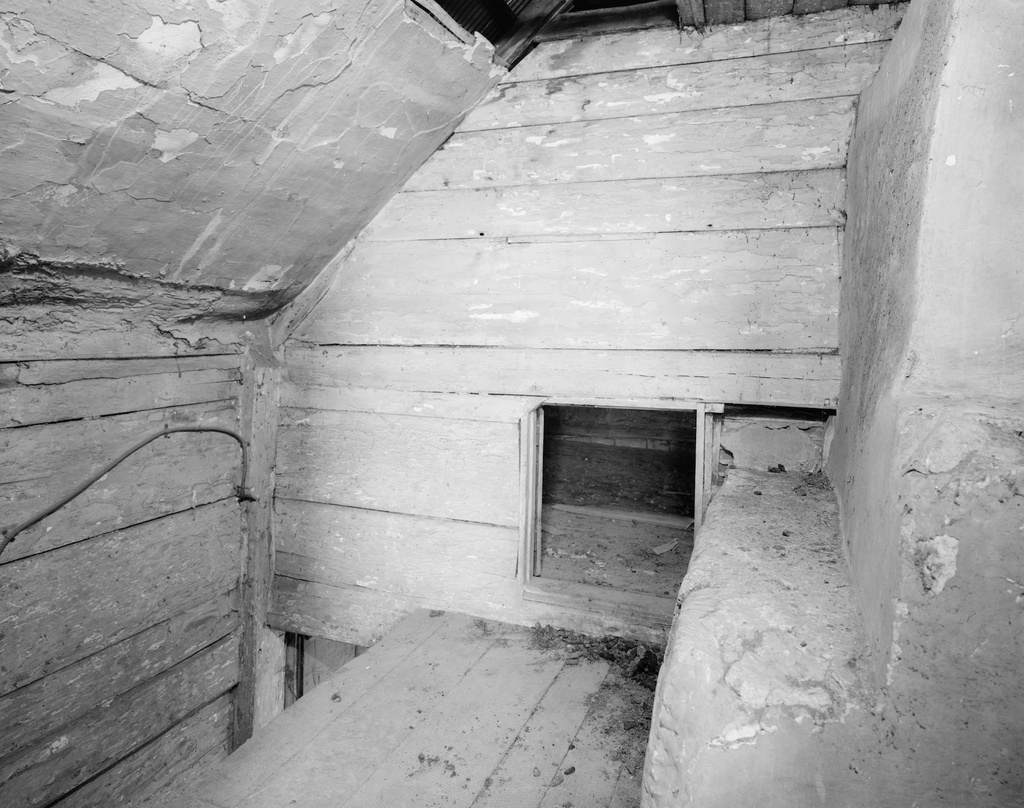
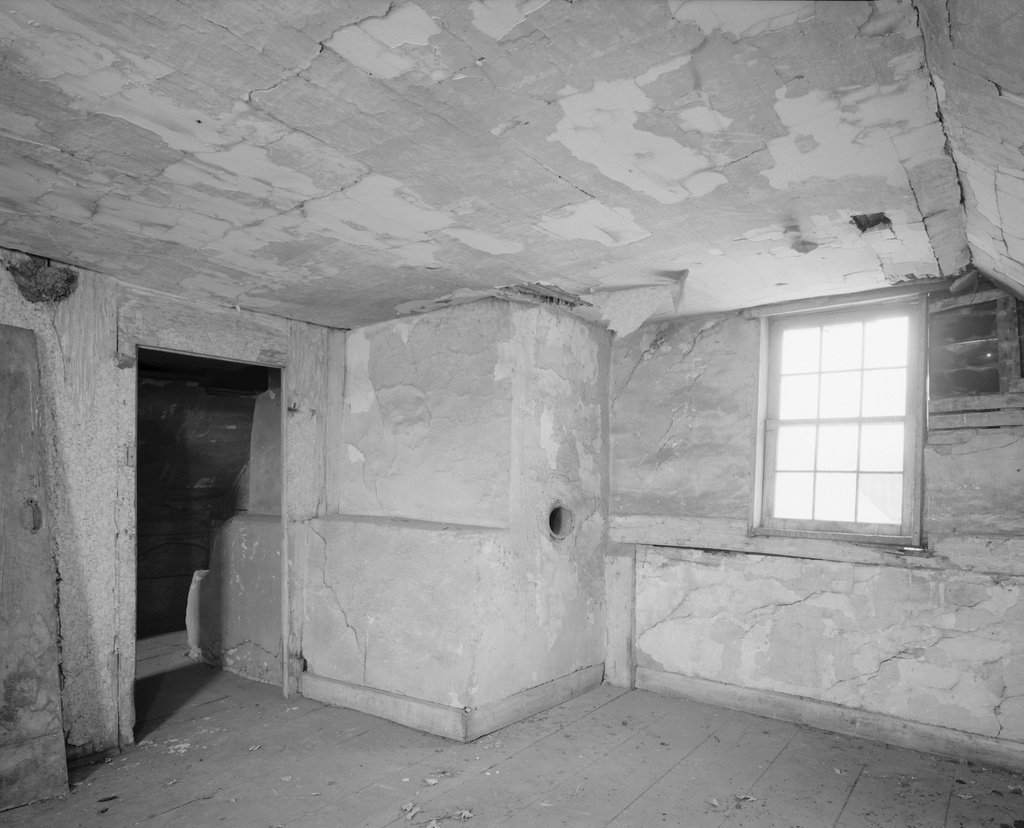
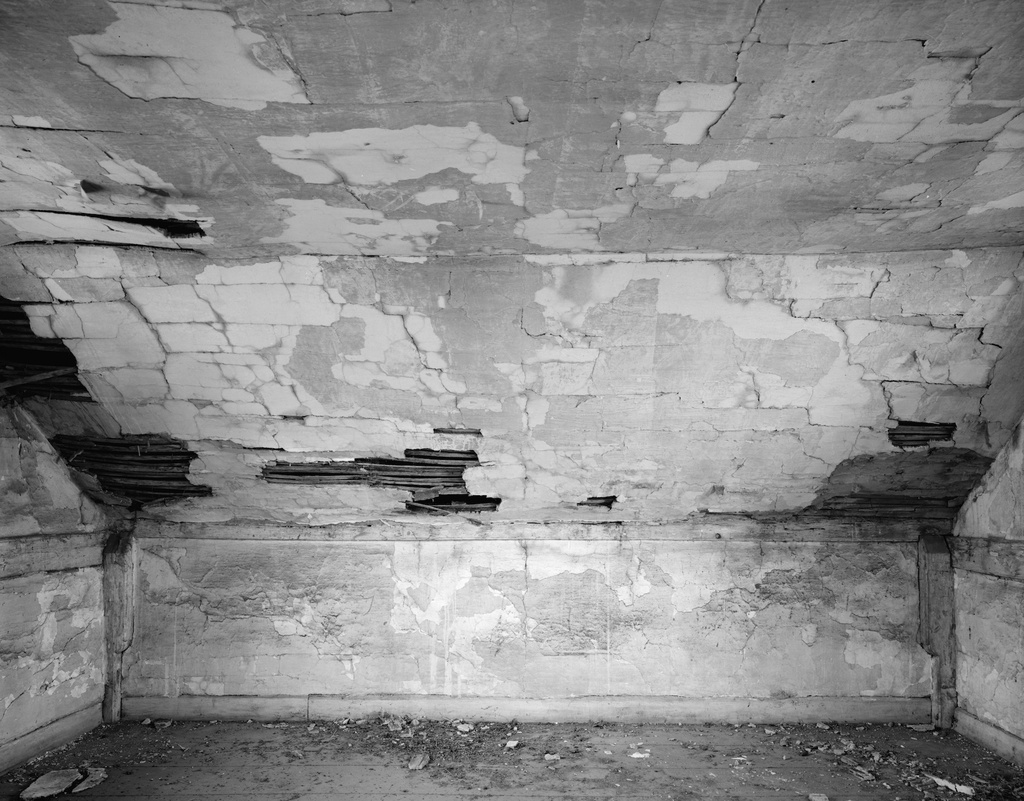
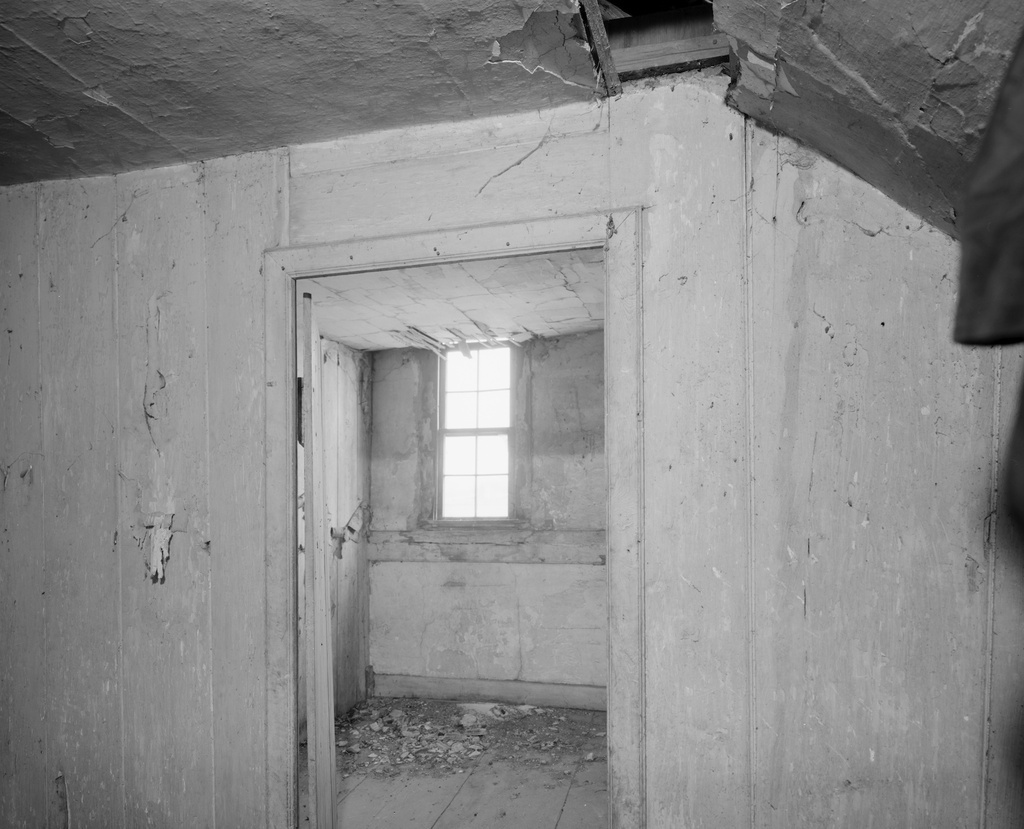
Until the late 1990s, the Peter Burr House stood isolated in a field, its nearest neighbor the all-too-close CSX railroad tracks. Now situated at the end of a cul-de-sac in Peter Burr Industrial Park, another manifestation of Jefferson County's phenomenal recent growth, it is surrounded by new construction. Somehow, it seems just as lonesome now as it ever did.
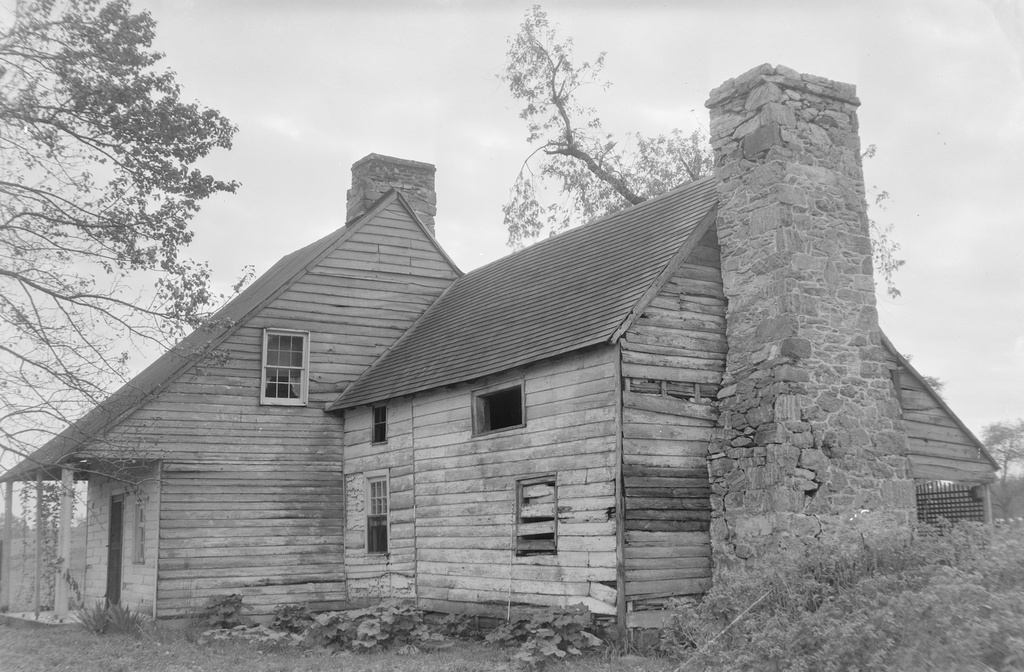
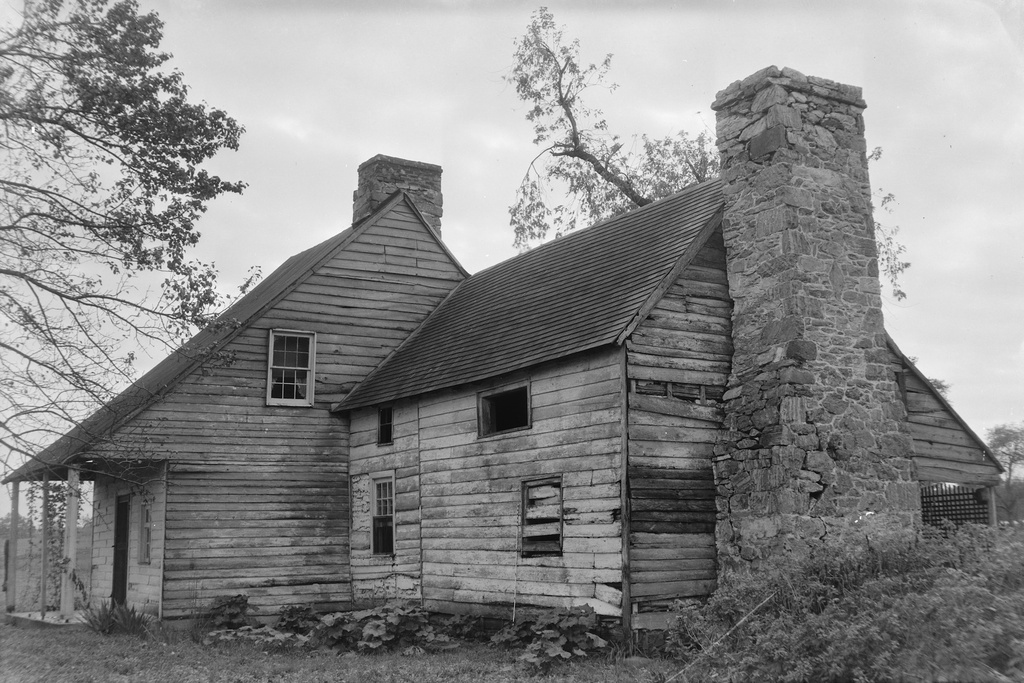
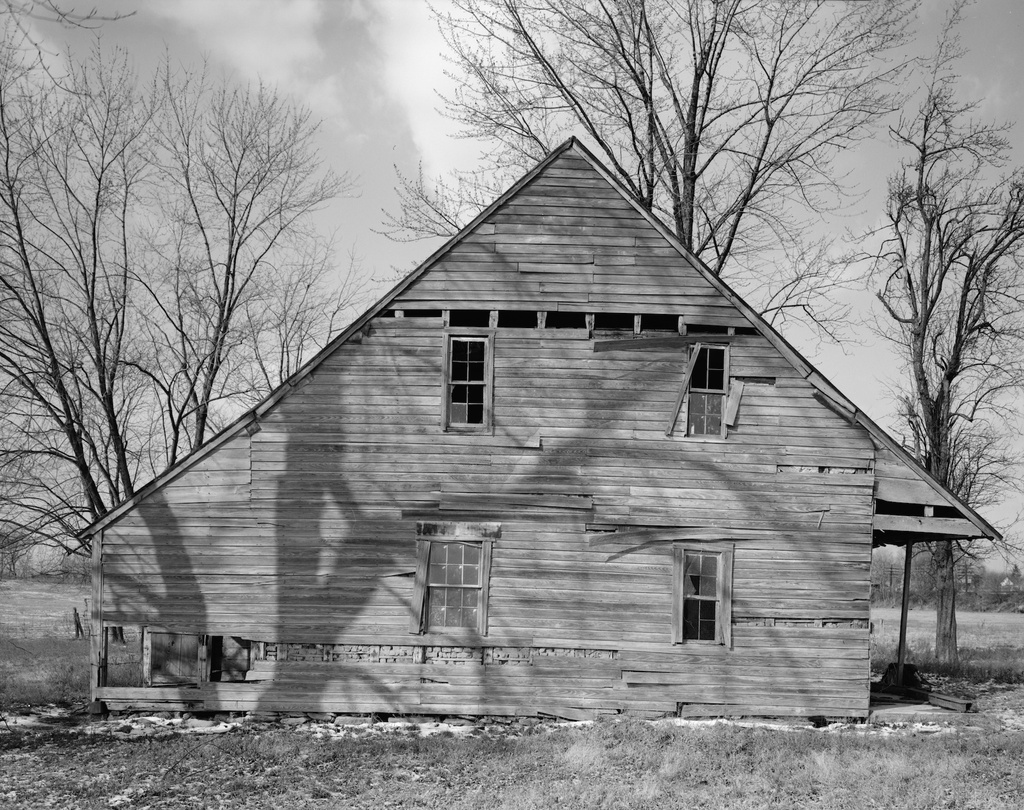
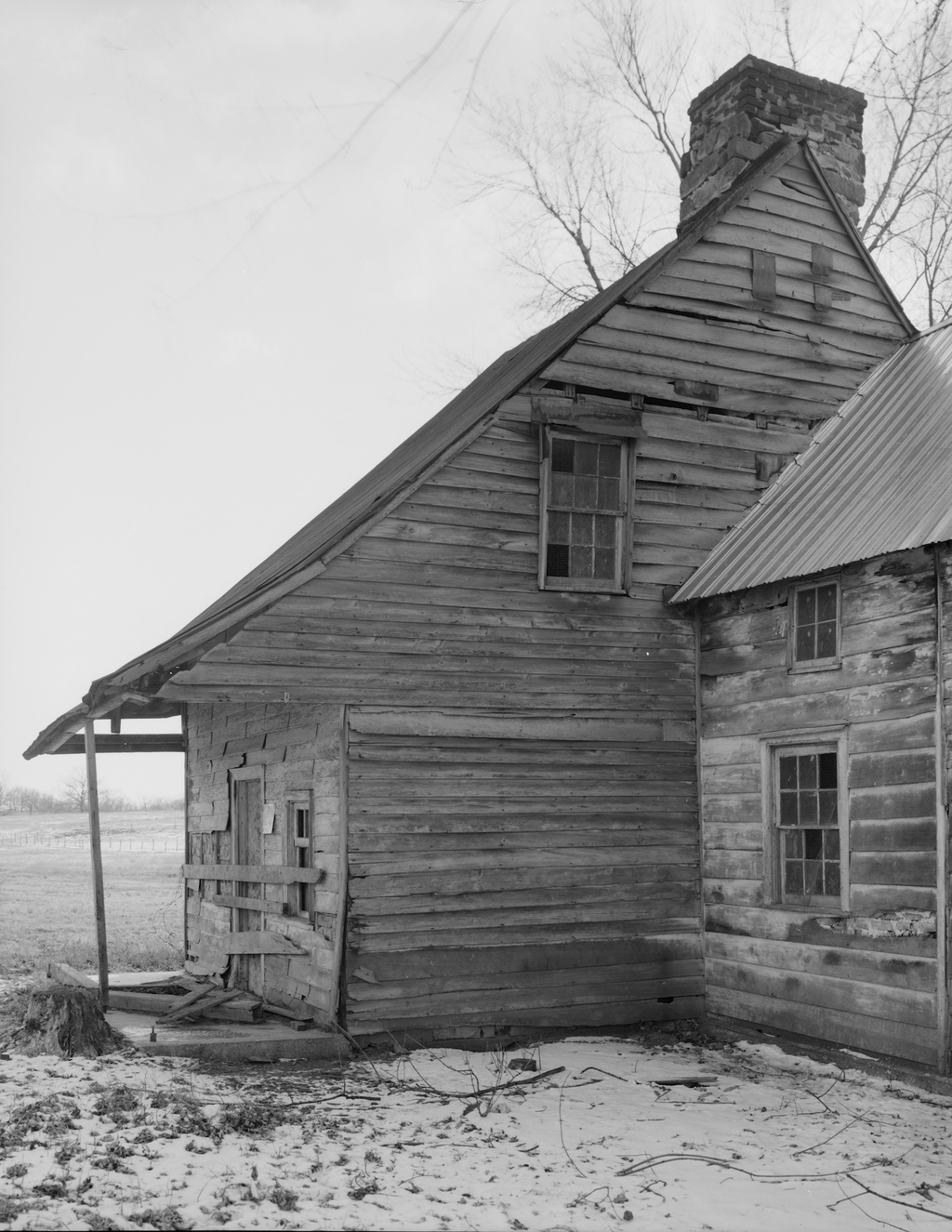
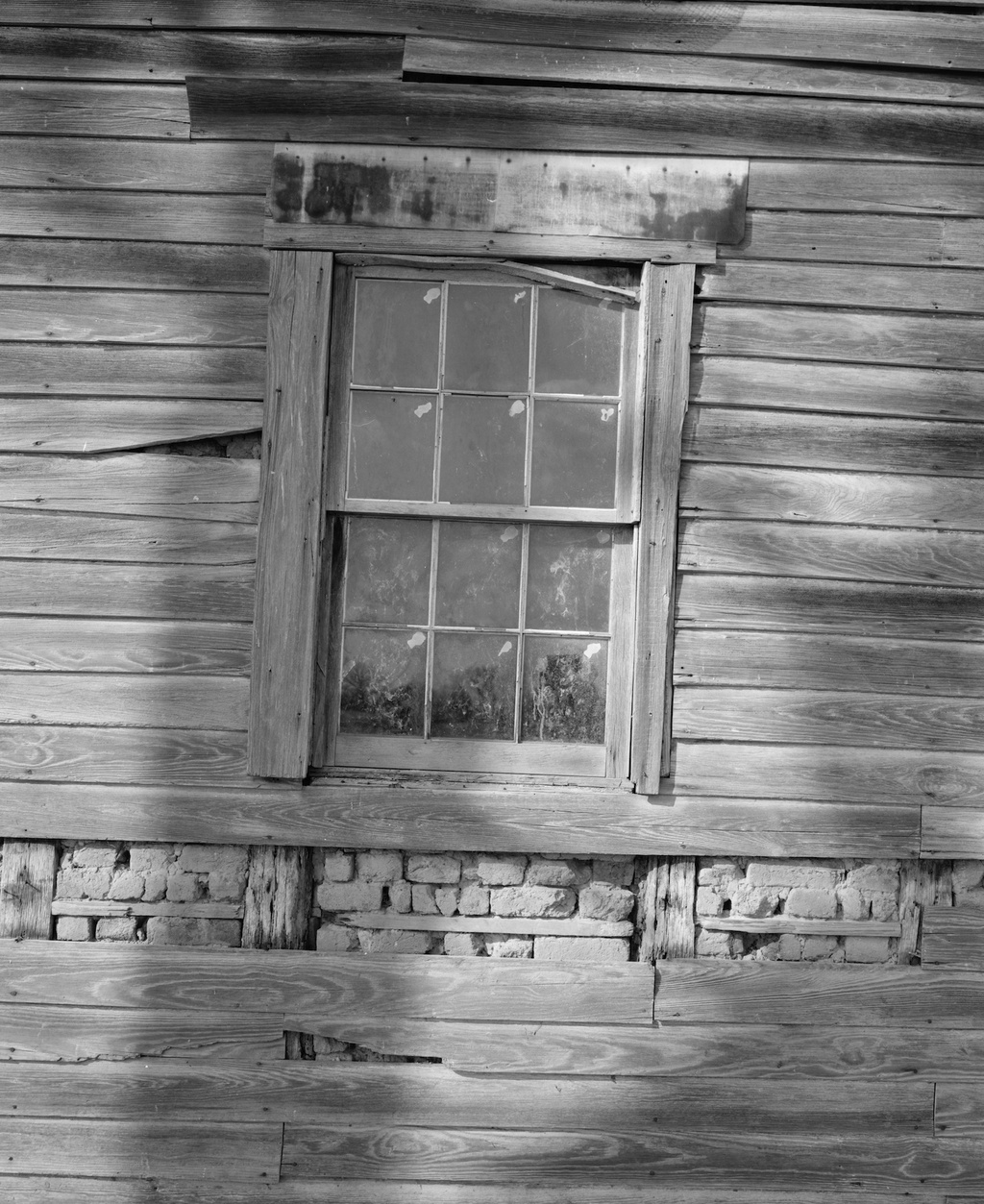
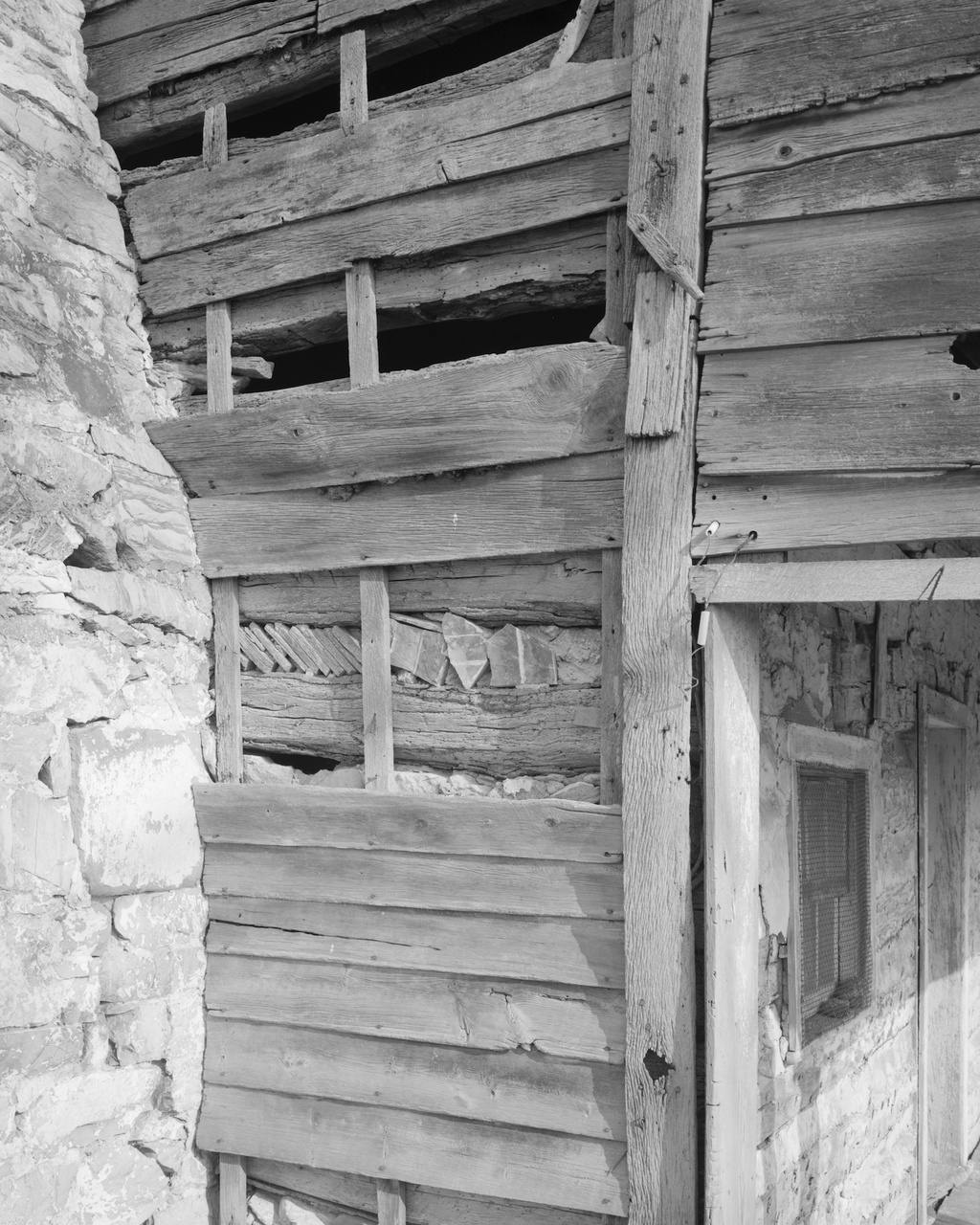
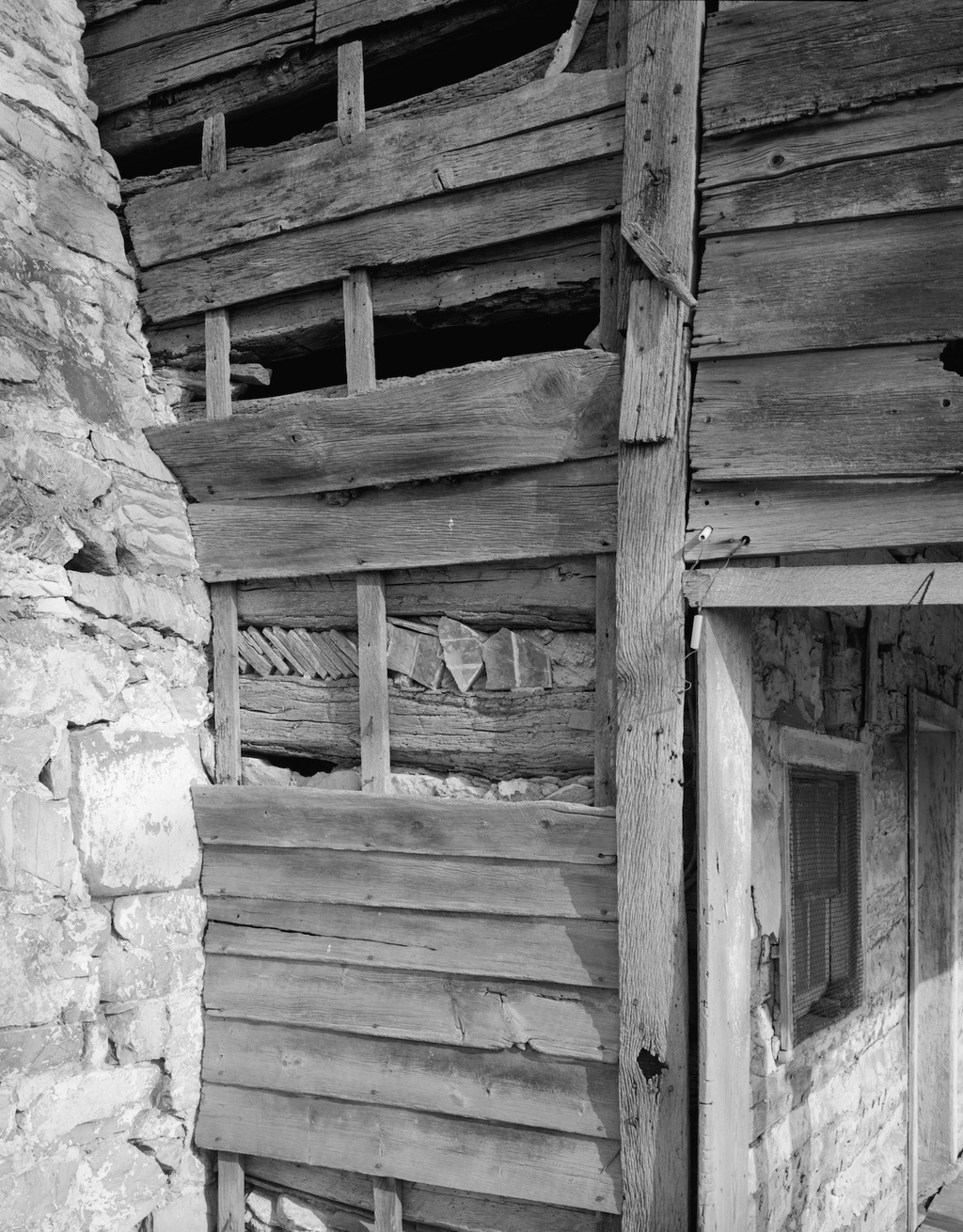
Clapboards of the tall, narrow older section cover log uprights and beams, their interstices filled with brick and mortar. A later, lower wing, also clapboarded, was developed in two parts. The latter, dating from 1804, has a massive limestone chimney. Peter Burr, a native of Connecticut and first cousin of Aaron Burr, acquired a lease on the property from Lord Fairfax in 1751, obligating himself to pay an annual rent of one shilling per acre, due on the feast day of St. Michael the Archangel. The nearby railroad was surveyed in 1839 for the main line of the Baltimore & Ohio. Later owners built farther from the tracks, and the Burr House became a tenant dwelling. In 1941 the Burr House was described in the West Virginia WPA guide as having been built “so stoutly that it has been occupied continuously for almost two centuries, with only a few repairs to the roof.” During the last several decades of the twentieth century, it was unoccupied. Fortunately, just when the house seemed most vulnerable, the Jefferson County Historic Landmarks Commission acquired and stabilized it. Additional restoration is planned as funding becomes available.