

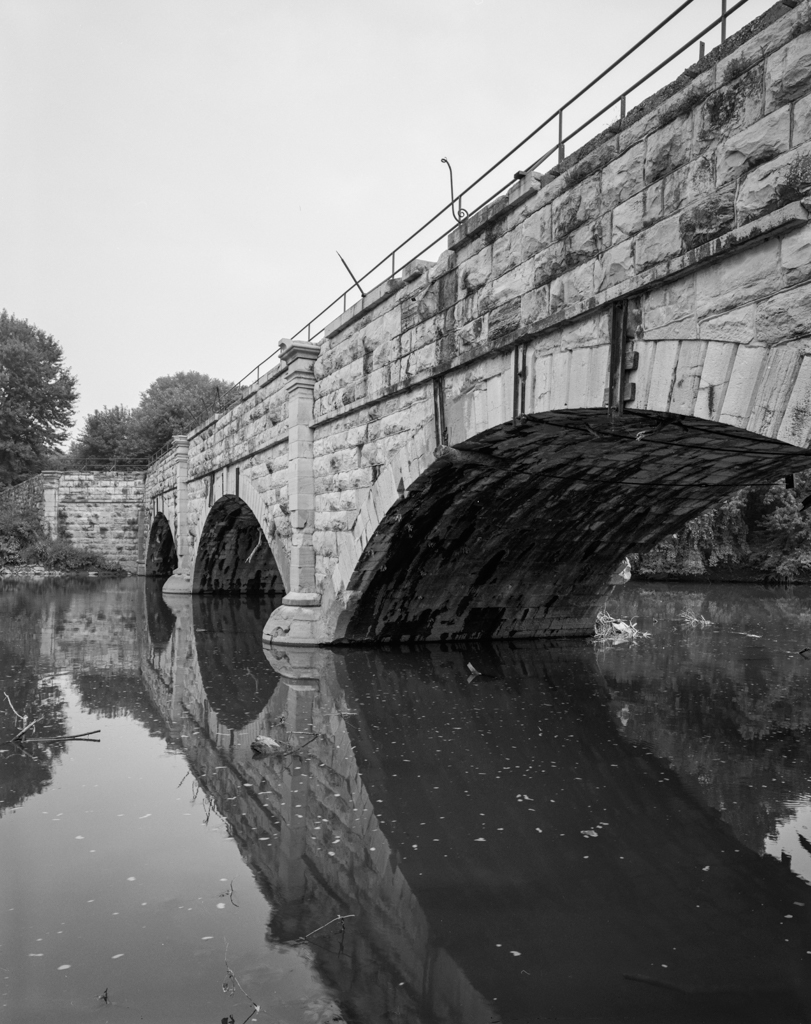
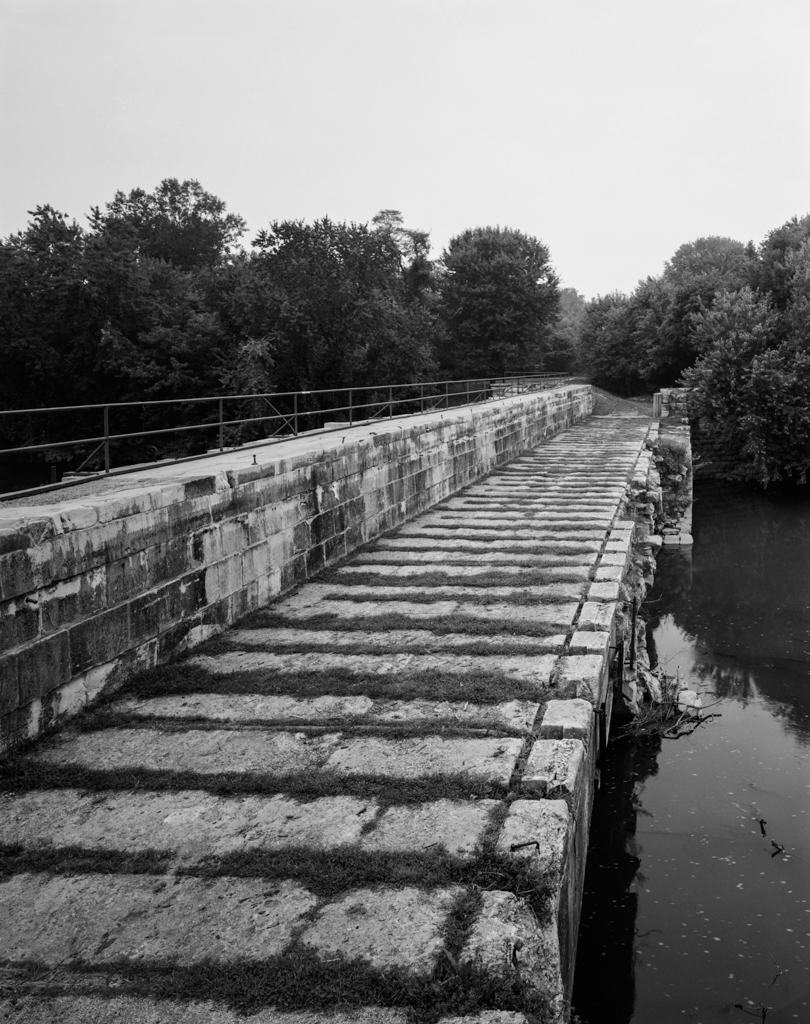
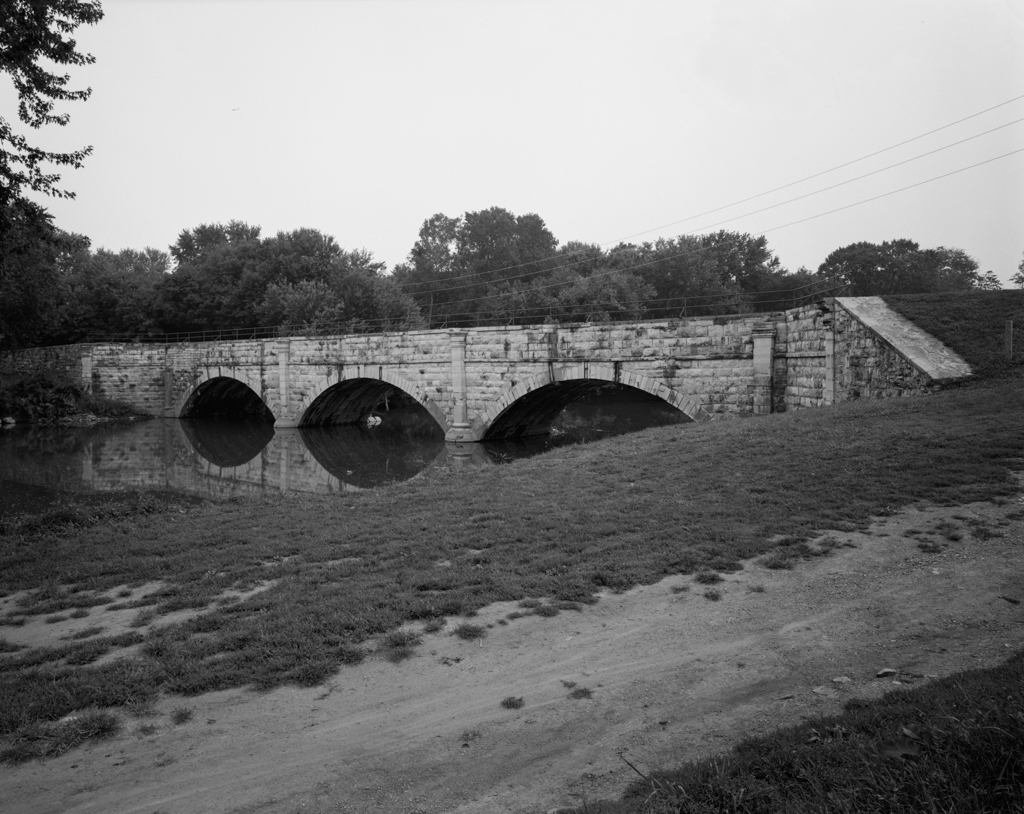
The Conococheague Creek Aqueduct was one of the eleven masonry aqueducts needed to carry the Chesapeake and Ohio Canal over tributaries of the Potomac River. Resident engineer Thomas F. Purcell designed the aqueduct to span the Conococheague Creek, and Michael Byrne and Company built it using limestone from the nearby High Rock Quarry. The main structure was completed in 1834, with a railing installed and additional work done on the embankment and wing walls in 1835. Because it was built near the prominent canal port of Williamsport, this aqueduct was the most ornate. The 210-foot span is achieved with three elegant arches sheathed with ashlar masonry. The downstream face of the aqueduct has a parapet of four courses of ashlar masonry topped with a coping, and there are classical pilasters with capitals still in place at each pier. The upstream elevation has been altered due to flooding. In 1920, the facade collapsed and had to be rebuilt in timber. The wingwalls and abutments remain, but the parapet walls and much of the facing have been lost.
Conococheague Creek Aqueduct
1834–1835, Thomas F. Purcell, engineer; Michael Byrne and Company, contractors. Milepost 99.80 of Chesapeake and Ohio Canal.
References
References
Maddex, Lee R. “Chesapeake & Ohio Canal, Conococheague Creek Aqueduct,” HAER No. MD-123, Historic American Engineering Record, 1996. Prints and Photographs Division, Library of Congress, Washington, D.C.