

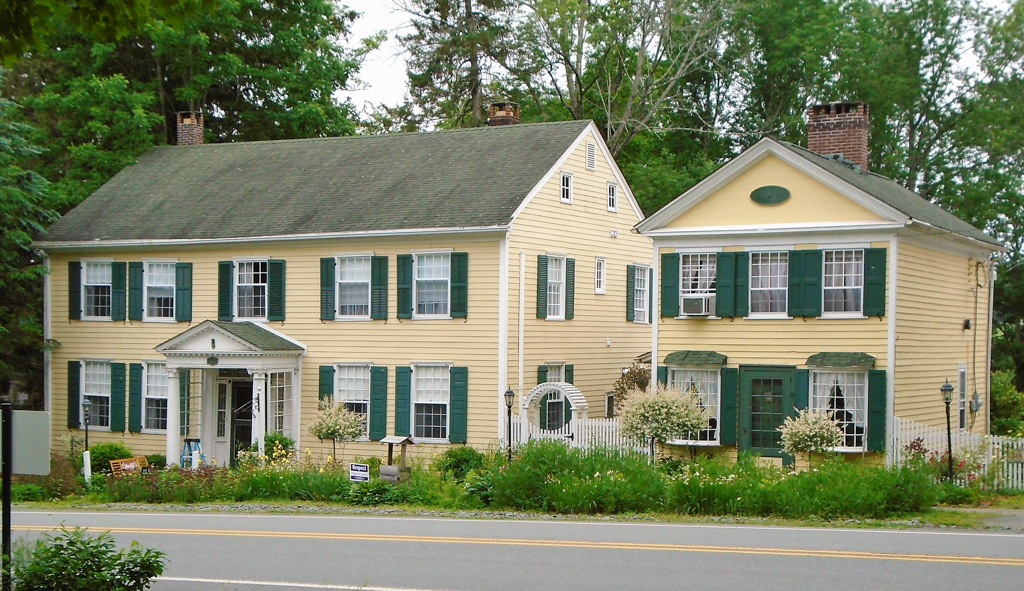
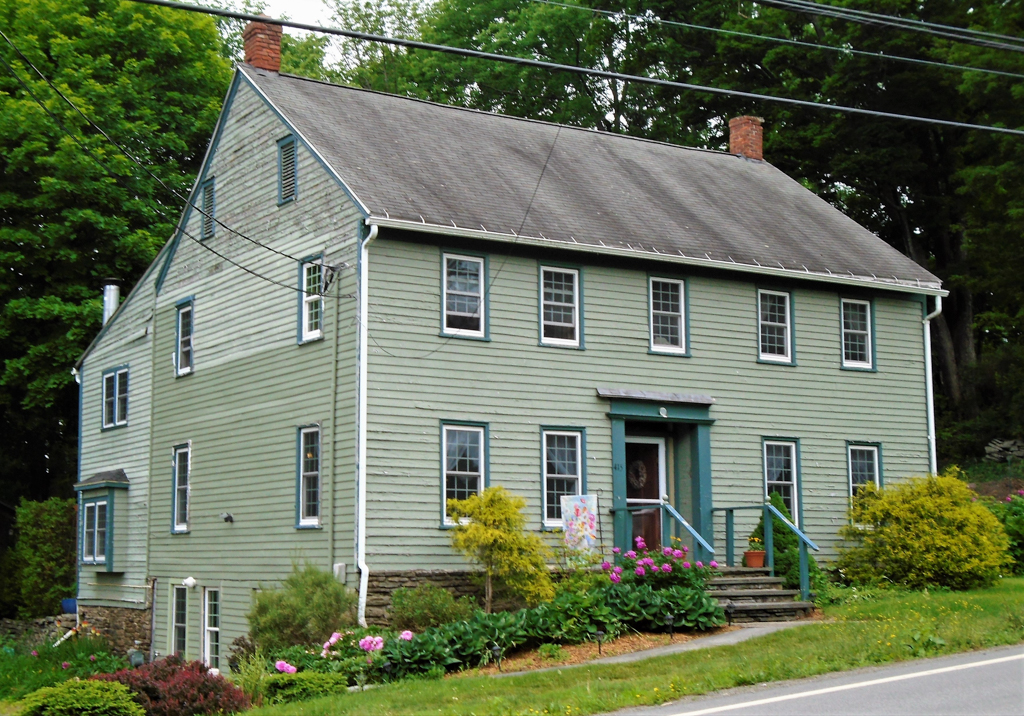
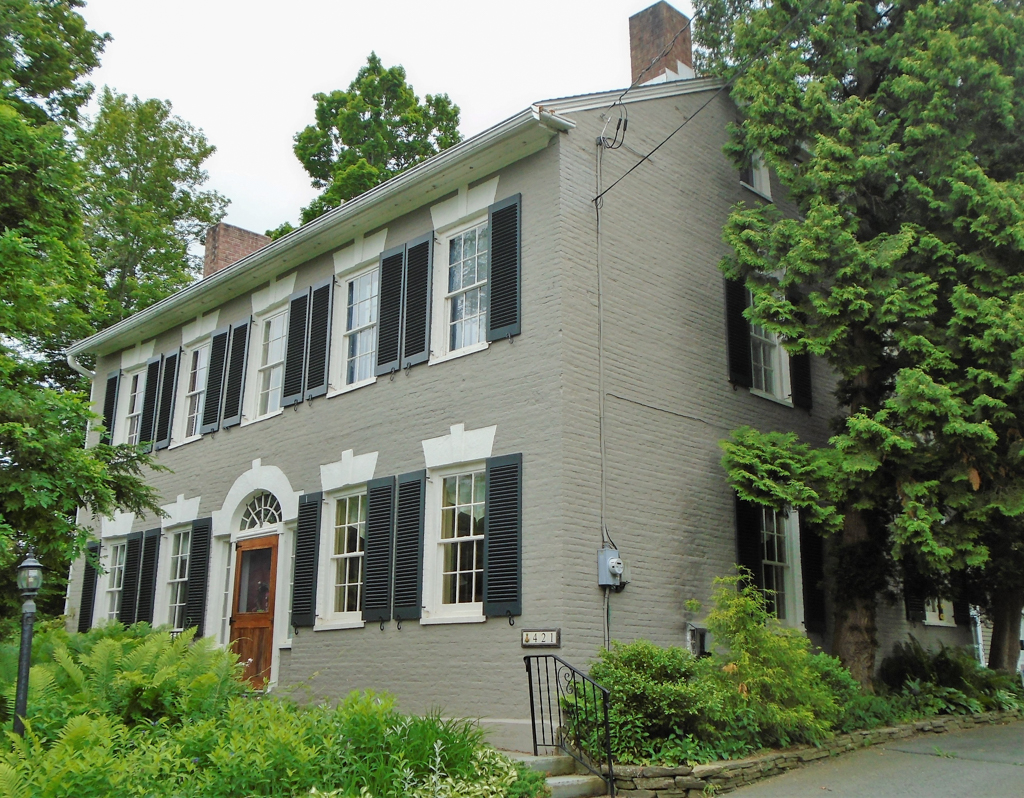
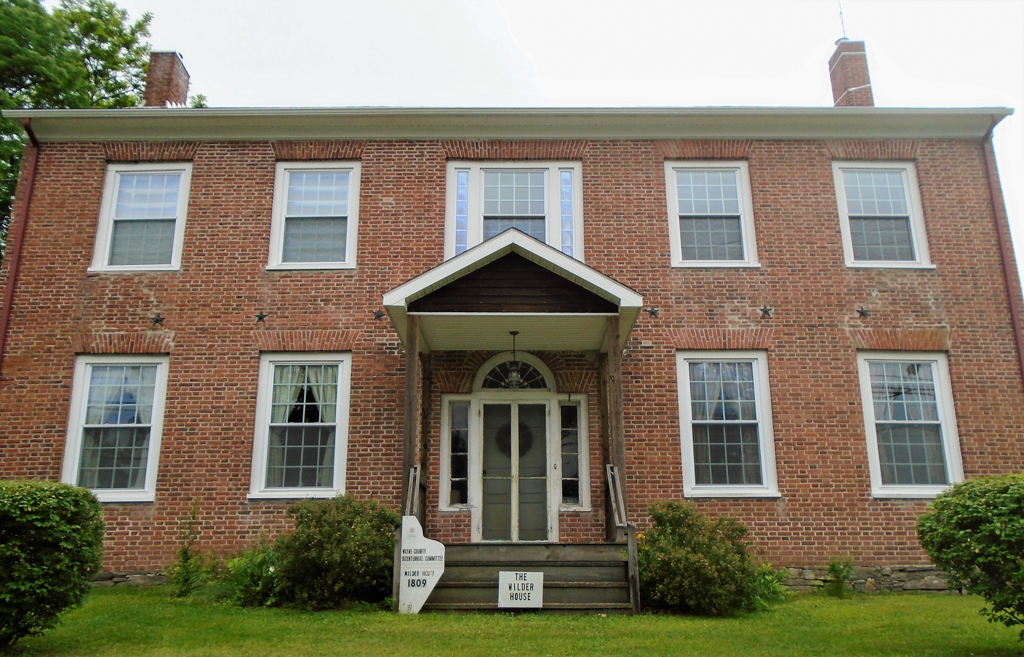
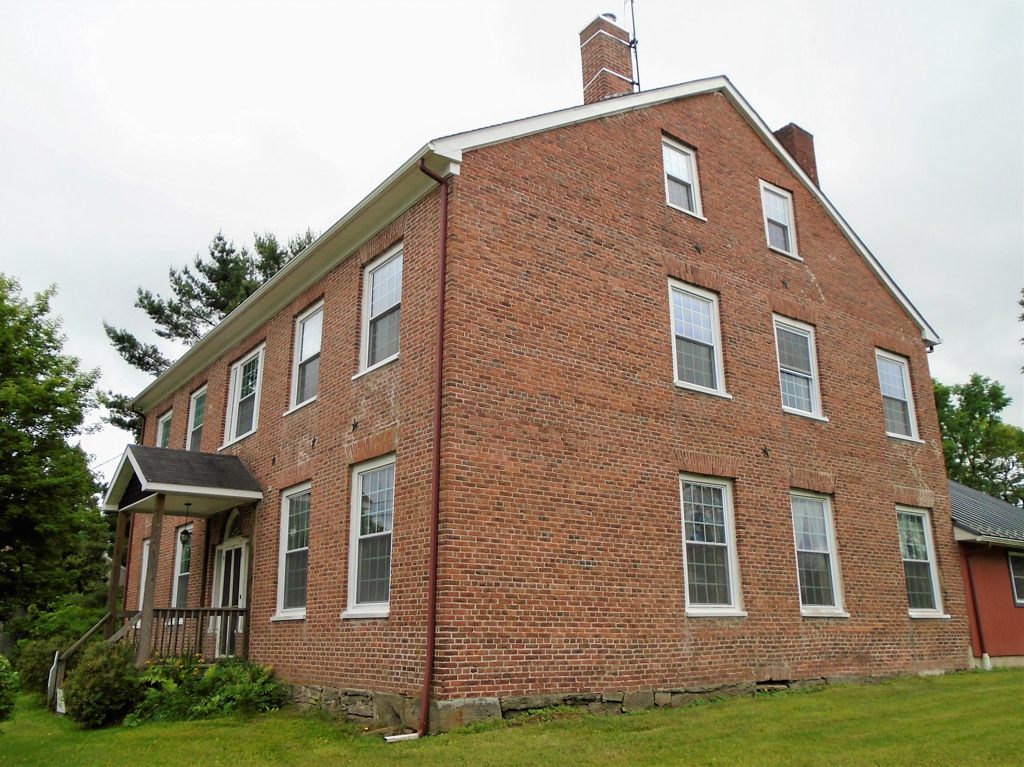
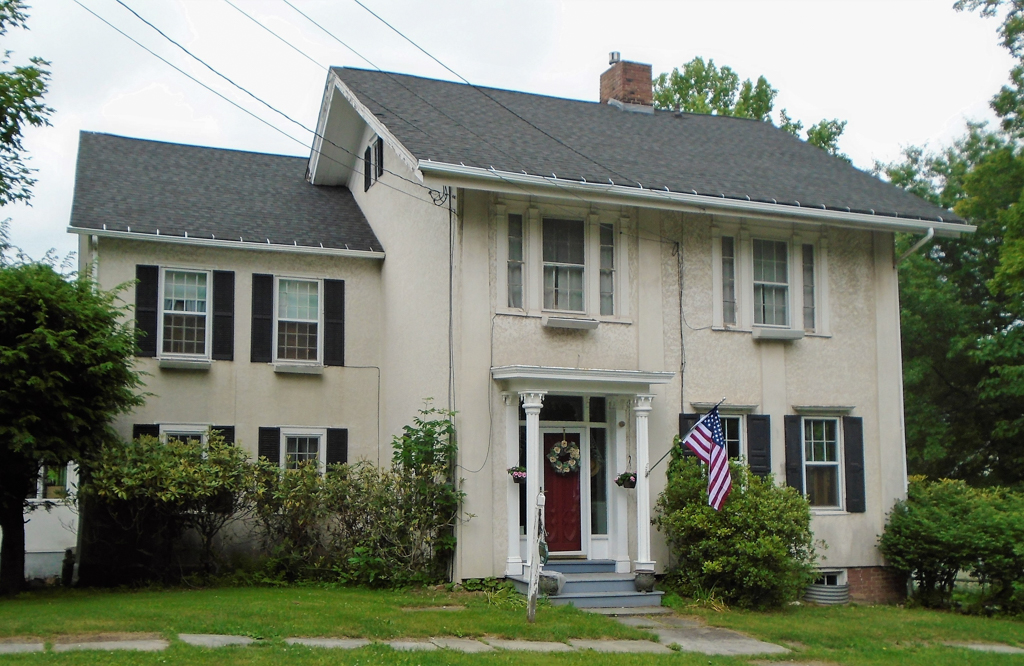
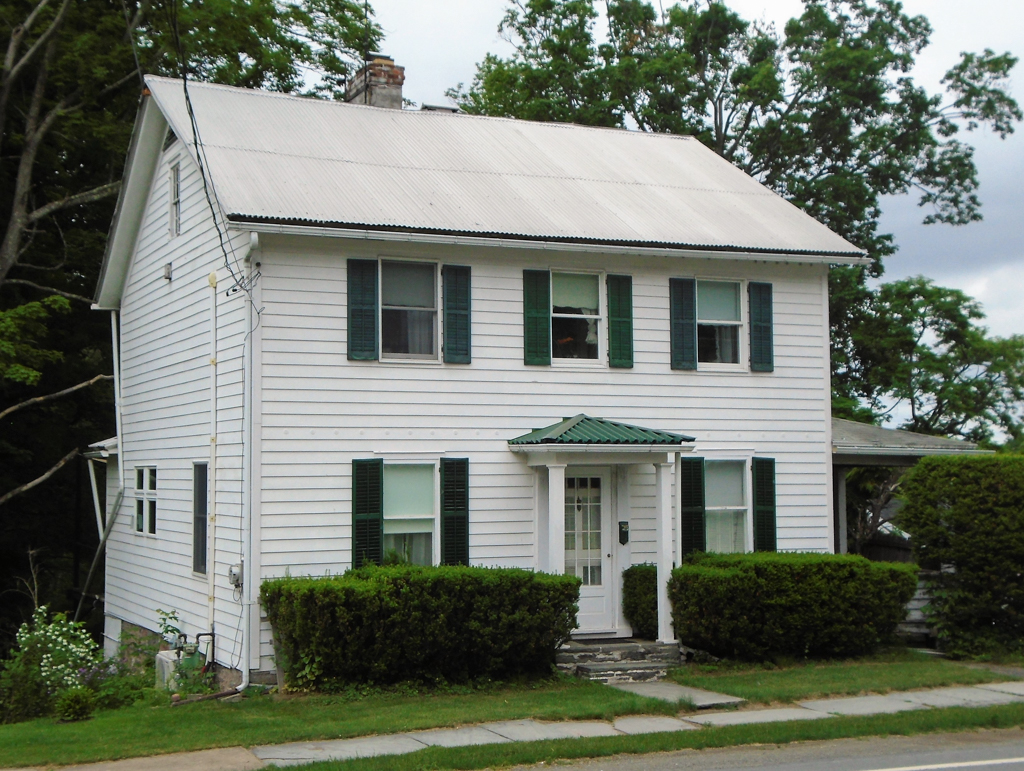
Between Sugar and Beech streets is a handsome row of houses that attests to the early wealth of the former county seat. In sequence from the south they include the Kellogg House (now a bed-and-breakfast, 1805), which began as a log house but is now a central-hall house with an adjacent shop at 403 Wayne Street. With the construction of a new courthouse the original courthouse, a 32 × 36–foot building, was moved across the street and enlarged, producing a second commercial building. Beyond is the handsome frame house (1801) for Philadelphian Henry Drinker that served as the village tavern. With its simple pilastered door frame, it reflects the early republic's affection for the classical world. Two brick houses follow, the first with its fanlighted door was built in 1819 as the home of James Manning, merchant, publisher, and, later, judge. Adjacent is another early-nineteenth-century house, this one for David Wilder, a native of New Hampshire. The opposite side of the street contains more houses of the same vintage, including two facing the Presbyterian Church (
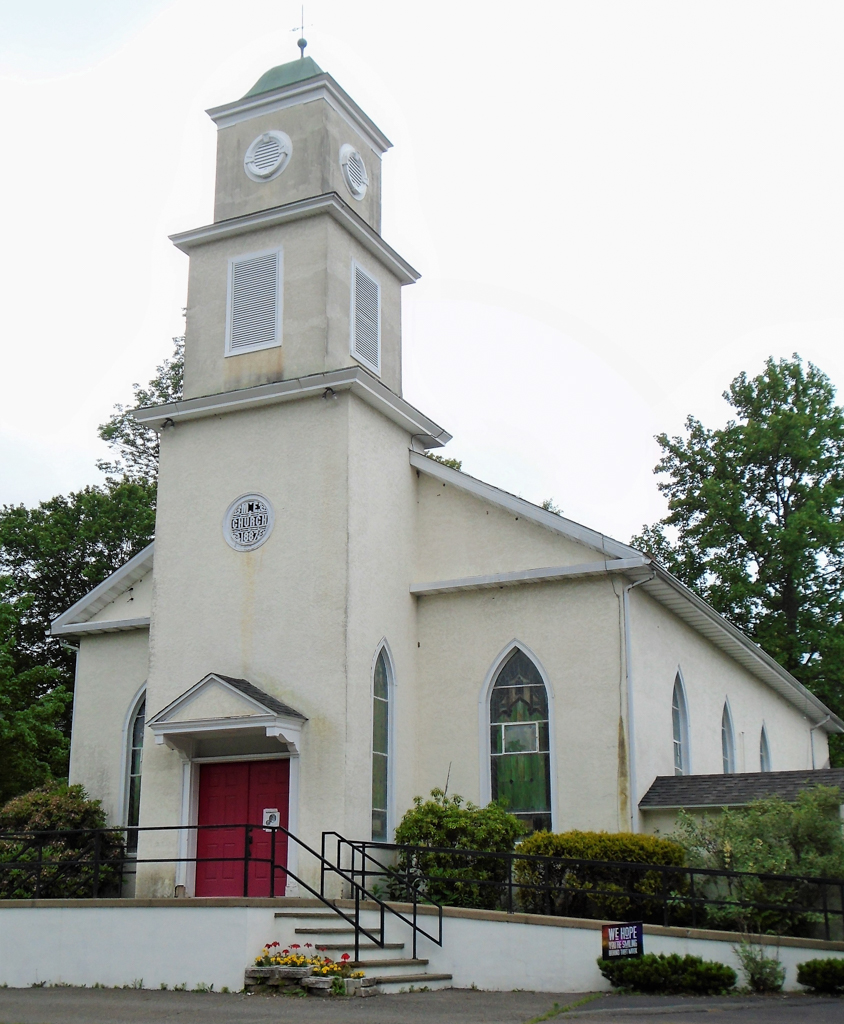
WA14) that were built for Jason Torrey, who laid out the village. The church adjacent to the town green was built in the 1830s by the Baptist congregation, who sold it to the Methodists; they remodeled it in the 1880s to its present simple Gothic Revival design.
Wayne Street Houses
1801–1833. Wayne St. between Sugar and Beech sts.