

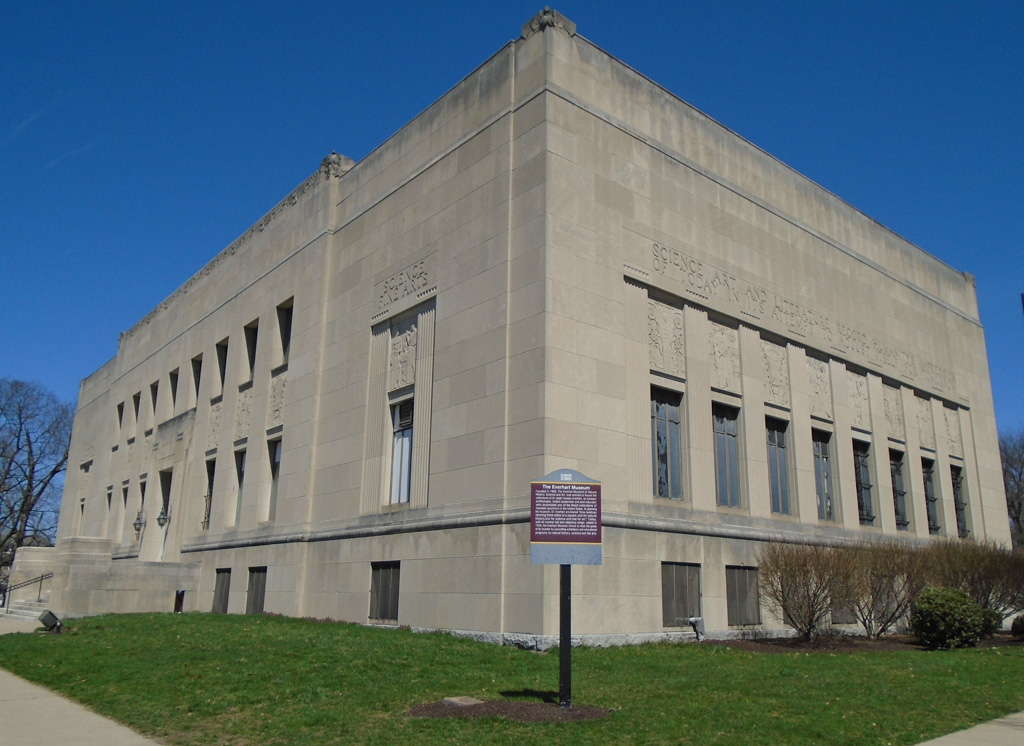
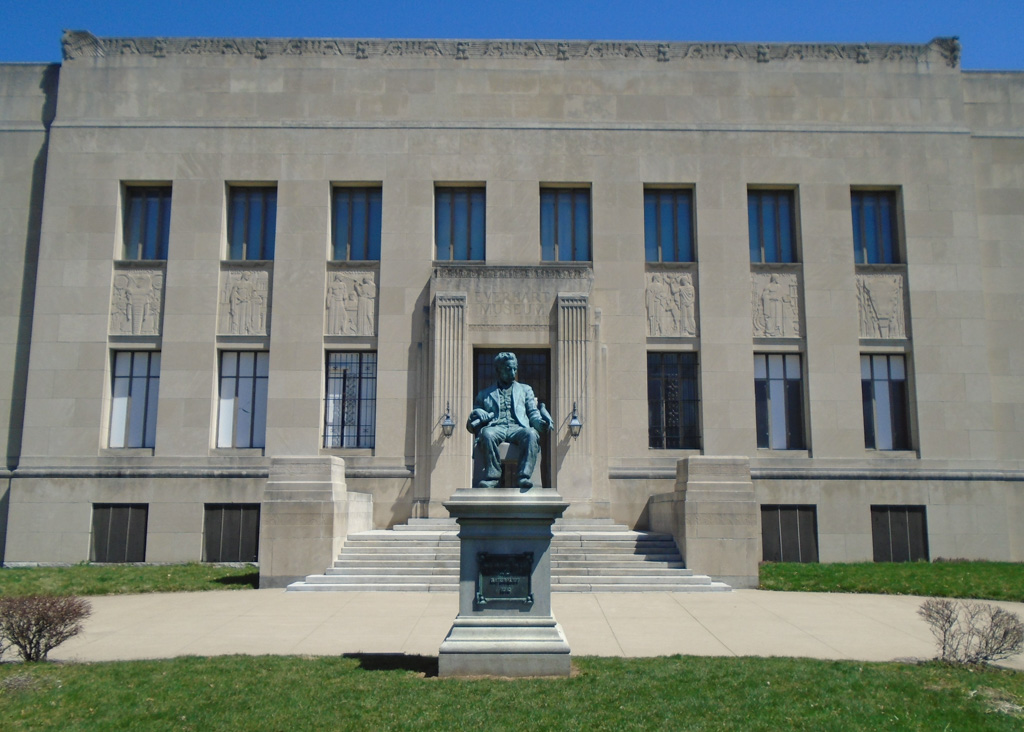
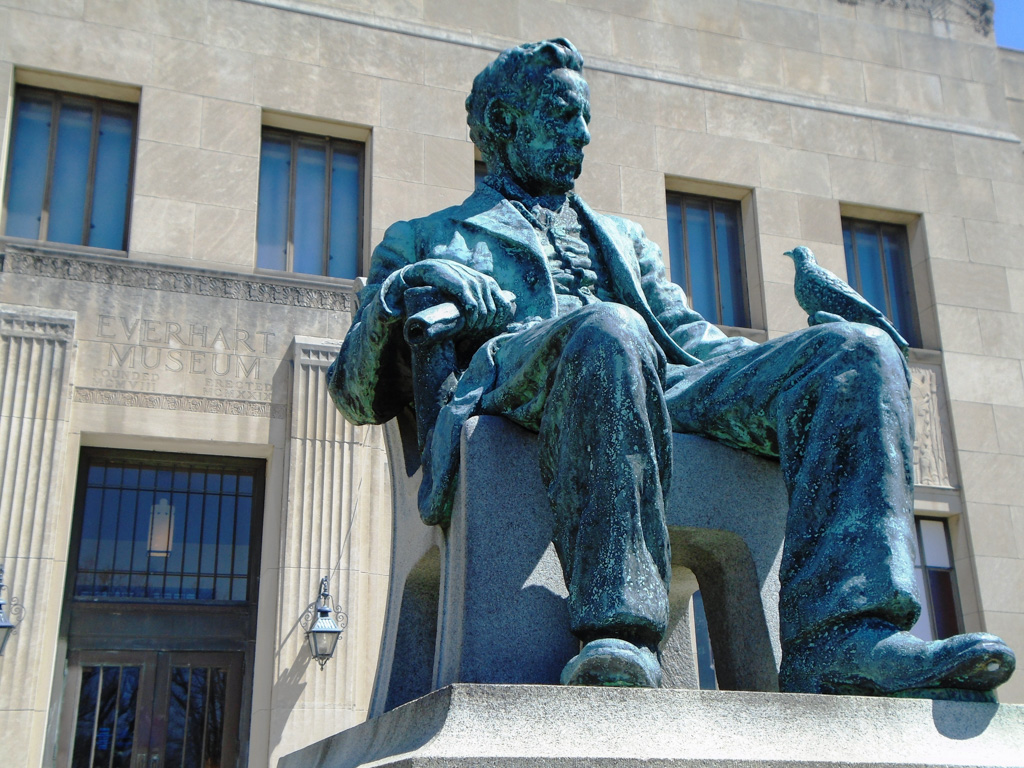
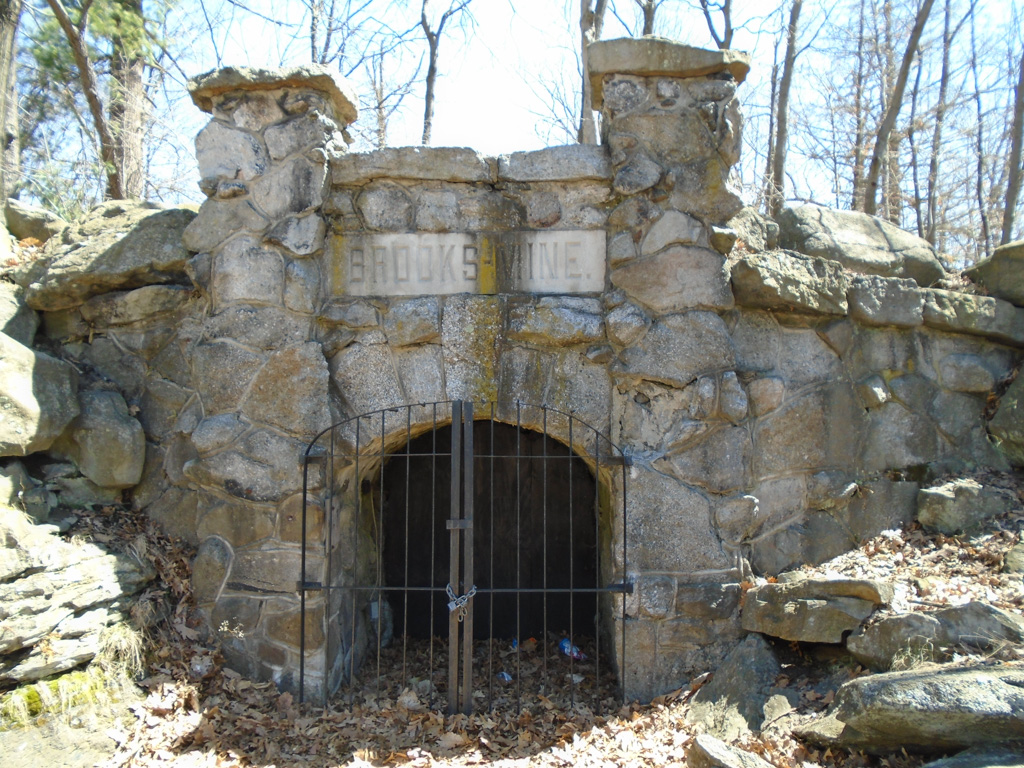
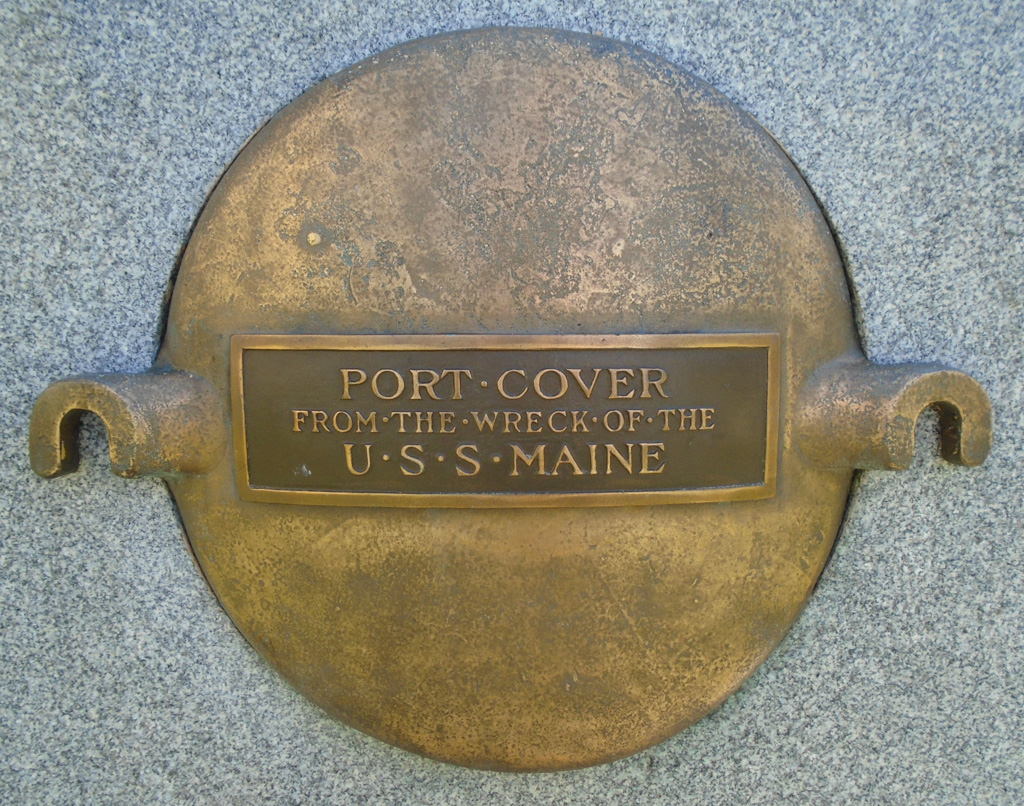
Like so many small-town museums, the Everhart was the product of a singular vision; here it was that of Isaiah Fawkes Everhart, a Scranton physician and amateur ornithologist who donated the funds in his will that led to the creation of the facility. The epigraph on the wall facing the comfortable houses across Arthur Avenue sums up Everhart's motivations: “The culture of a community is measured by its appreciation of natural history, science, literature, music, and the arts.” A statue by I. Carlino of the seated Dr. Everhart, bird in hand, presides over the museum's axial approach. The original 1906 Renaissance Revival building is swaddled in a chilly Moderne addition, but the original red tile hipped roof pops up, incongruously, beyond parapets adorned with a stylized naturalistic frieze. The U-shaped addition came closer to achieving Everhart's original vision for his museum: “three buildings forming three sides of a square, one for natural history, one for science and one for art.” The friezes in the spandrels above the ground-floor windows depict great figures from Everhart's three chosen areas of study—from Praxiteles to Linnaeus to Michelangelo—all depicted in stylized Greek robes. The surrounding Nay Aug Park is adorned with a marvelous array of civic oddities, ranging from a port cover from the USS Maine to the now closed Brooks Model Coal Mine.