

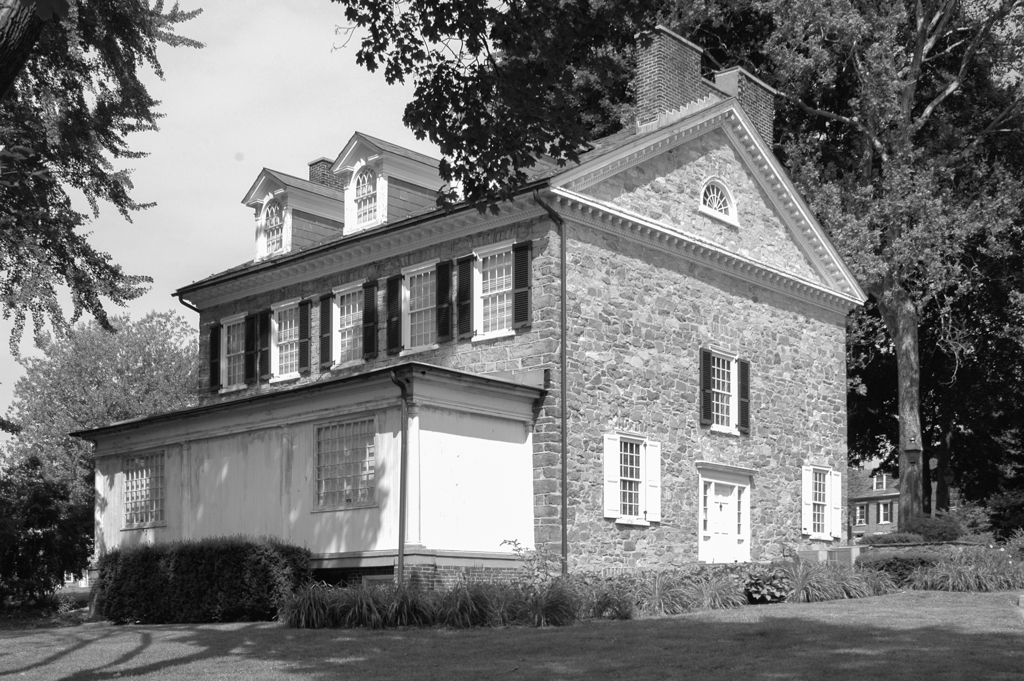
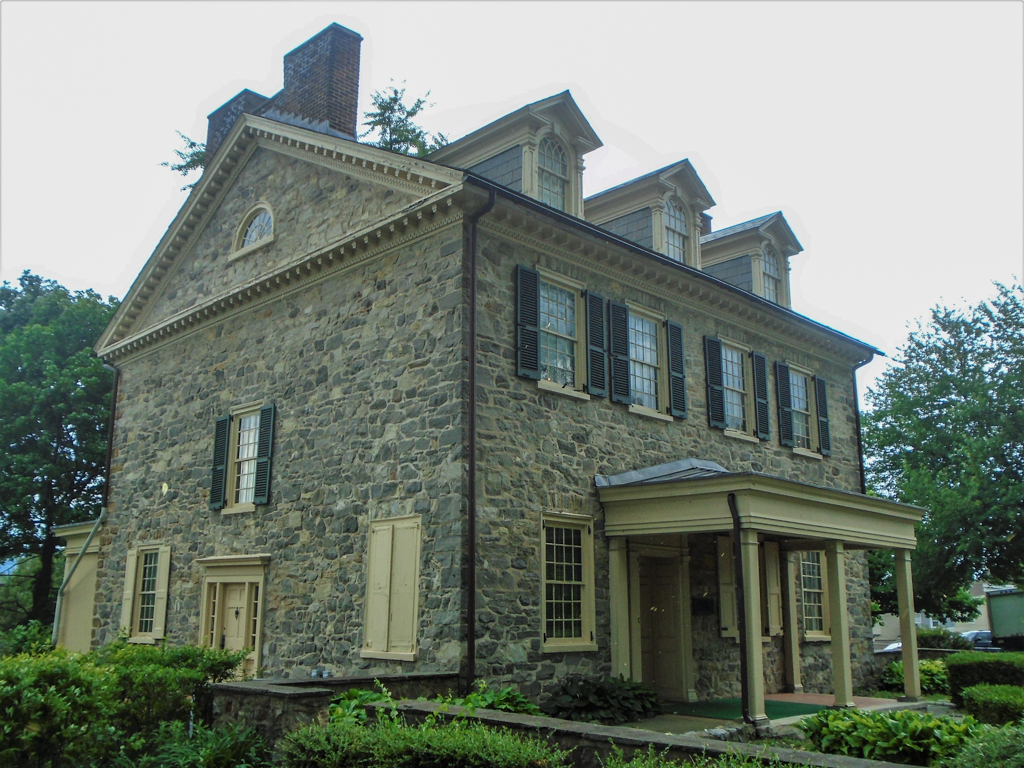
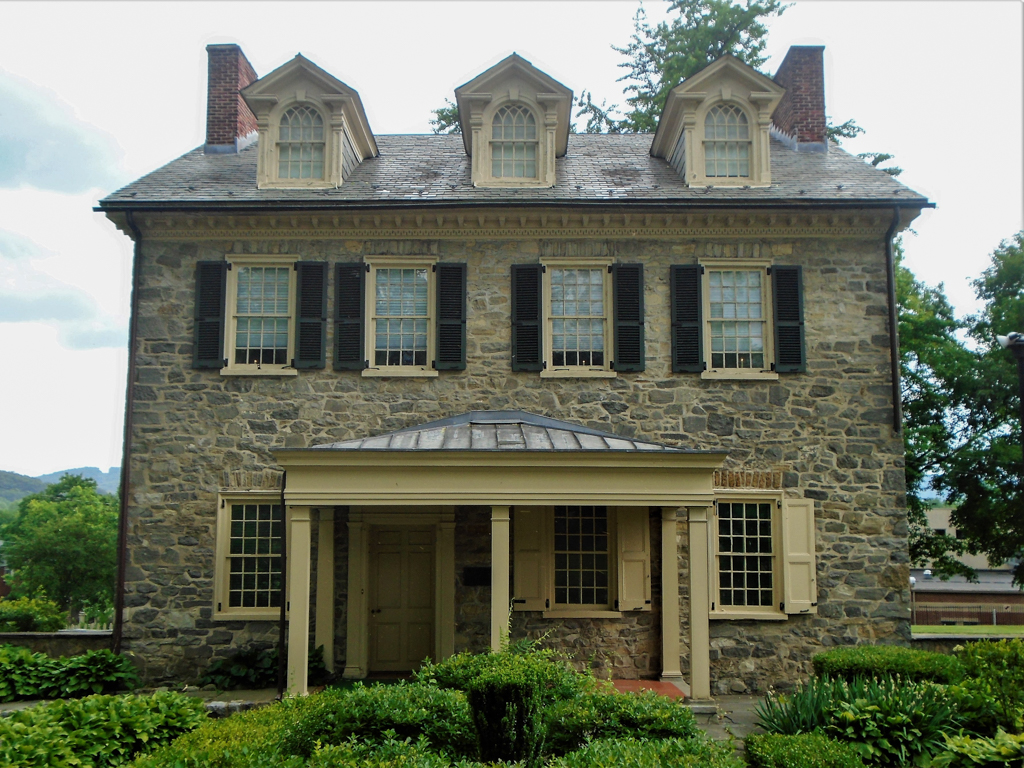
William Allen hunted and fished on his land, camping at the confluence of Little Lehigh and Jordan creeks, just west of the sharp bend in the Lehigh River. But with the Revolution drawing near, the Loyalist Allen returned to England, and thus it was his son, James, who built the first significant building on the site of the future Allentown. Trout Hall was erected, as its name suggests, as a fishing and hunting lodge, but it was no mere rustic cabin in Pennsylvania's north woods. The building's size and materials distinguished it from all structures in the small village nearby and would have been notable even in Philadelphia. Like his father, James's loyalties lay across the ocean and he was exiled to the house during the Revolutionary War. The house is a two-and-one-half-story stone building, four bays wide, with three gabled dormers on the front and rear lighting the attic floor under the gabled roof. In keeping with its use as a lodge, large windows opened to a southern view of the streams. Massing and detailing indicate a Delaware Valley vernacular form of reigning Georgian fashion, probably appropriate considering the family's political leanings. Between 1867 and 1905, Trout Hall became part of Muhlenberg College (
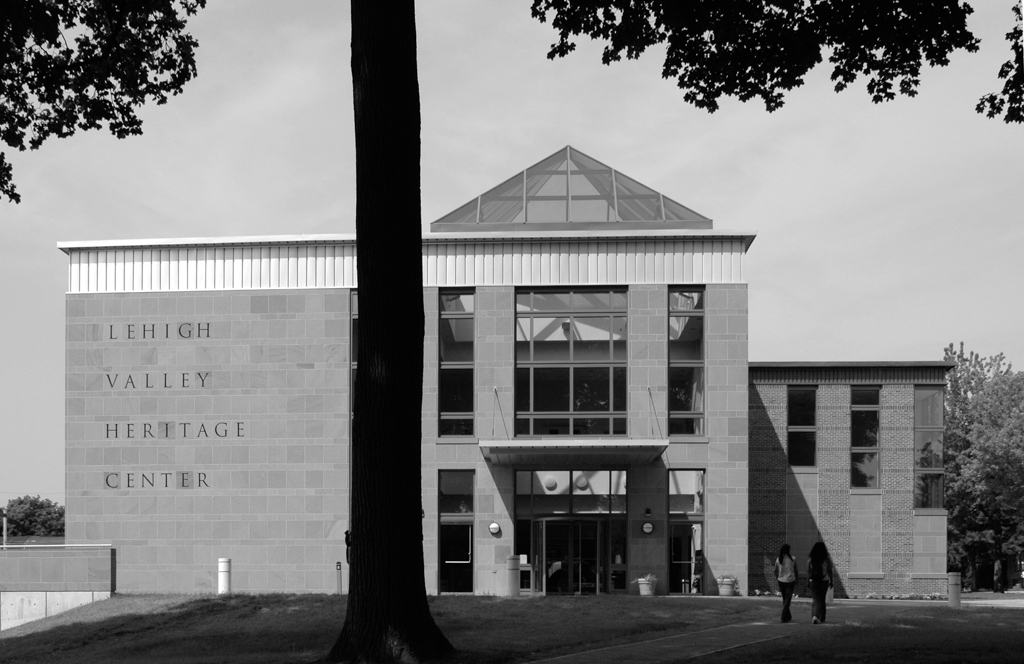
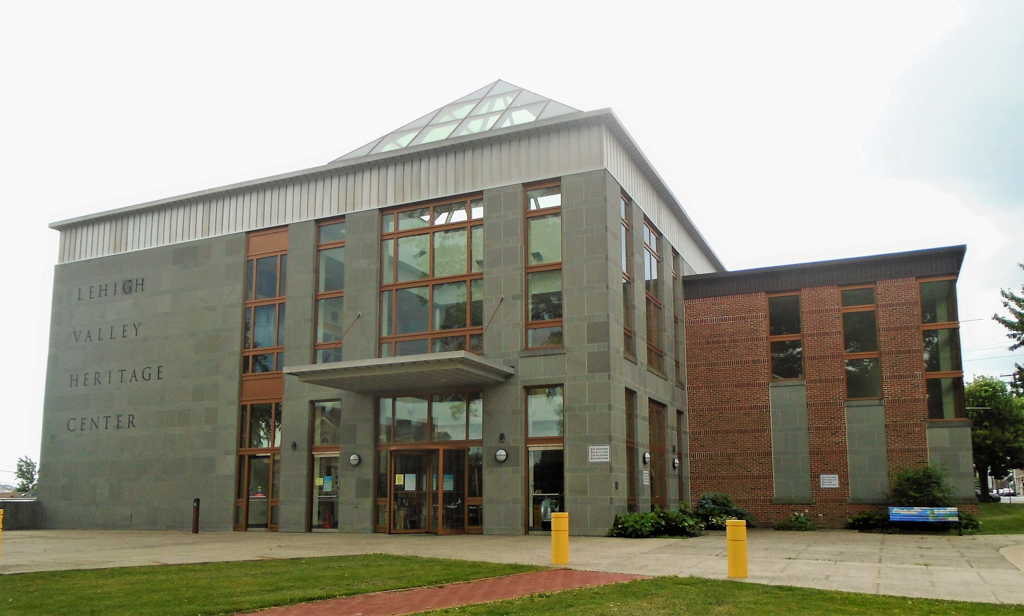
LH15), after which it served as the first home of the Lehigh County Historical Society. Several changes were made to the house in 1825, but these have since been removed and the house restored to its original state. The Lehigh Valley Heritage Museum overlooks Trout Hall from an austere, modern building by Baltimore architect Jonathan Fishman of RCG Architects. It opened in 2004.
Trout Hall
1770. 414 Walnut St., Allen Park