

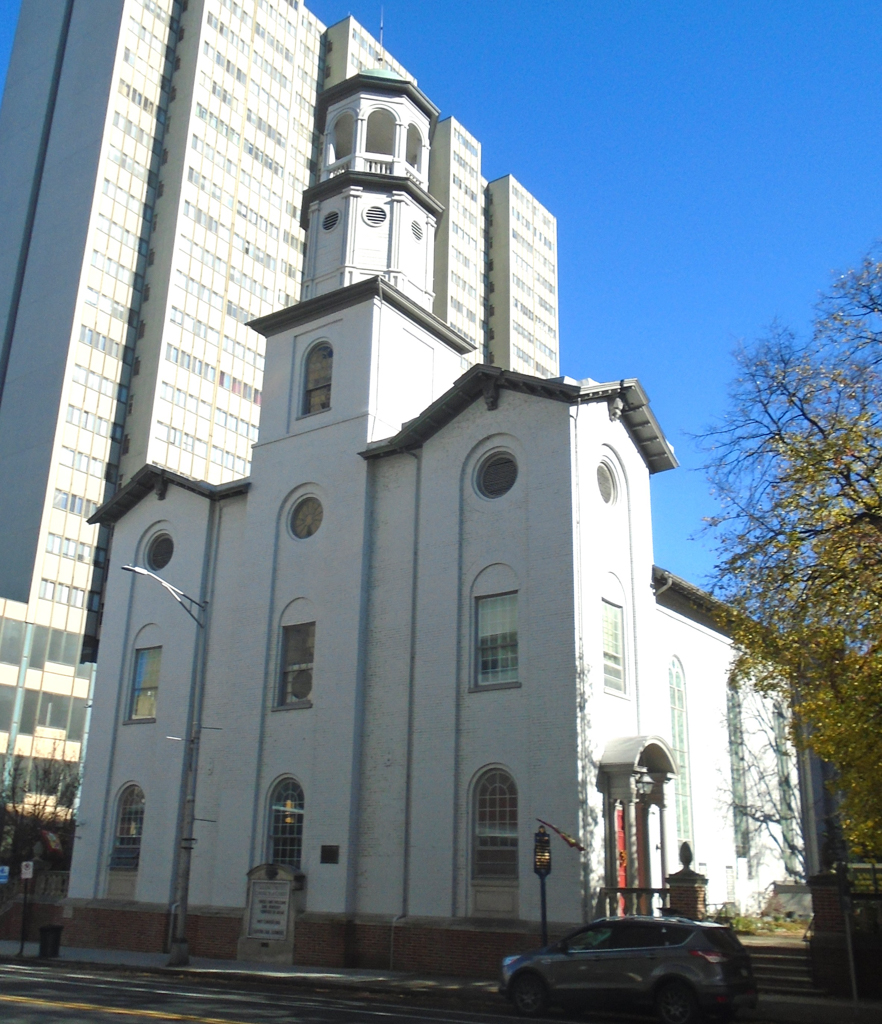
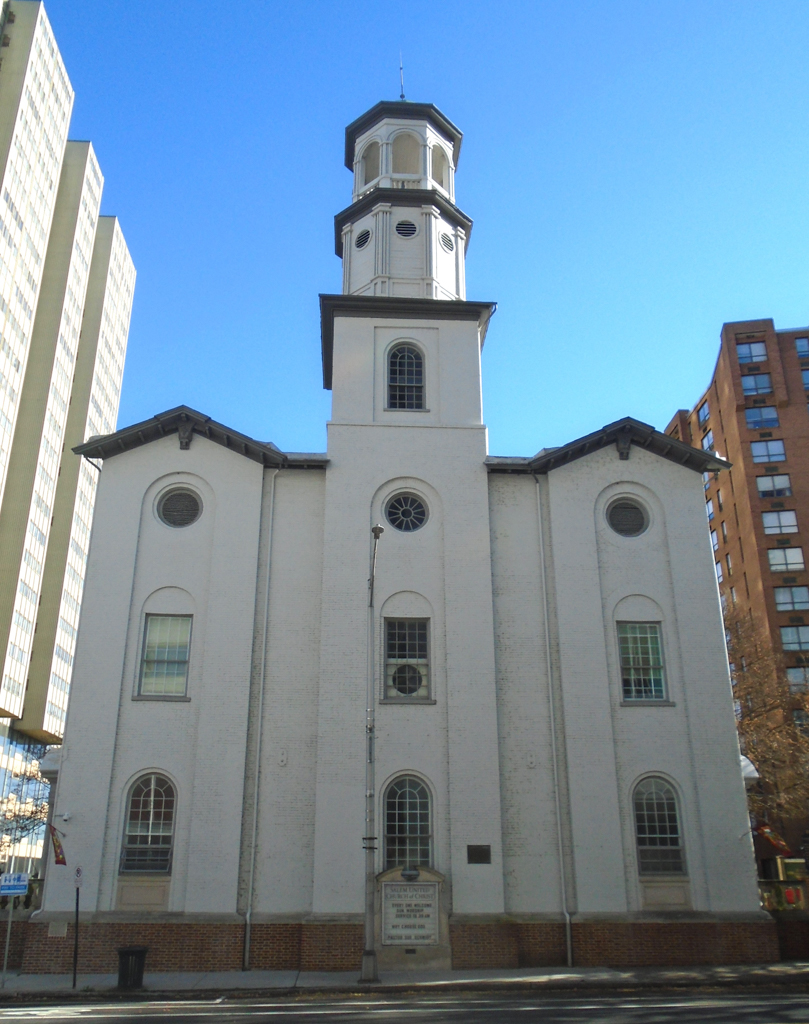
According to George Morgan in The Annals of Harrisburg (1858), “The vestry by their building committee … contracted with Messrs. Samuel Pool and Henry V. Wilson, for the erection of a brick church sixty feet front and seventy-five feet deep with a tower one hundred and ten feet to the top of the wood work … for a sum of $8,000.” This account suggests that Pool and Wilson were builders and not the architects. A generation after the completion of the building, the interior was frescoed by “George Seiling, the celebrated Fresco Painter of Reading,” who later decorated the interior of St. John's Episcopal Church in Carlisle (
CU6). The recessed panels and the simple massing betray an early republic building—more likely by Stephen Hills, recent architect of the capitol—but the odd roof shapes and the Victorian interior provide hints about changes that began with a centennial-era makeover of the interior followed by a significant rebuilding after an arson fire in 1890. Despite those changes, the stepped tower and spire and the proportions
Salem United Church of Christ (Salem Reformed Church)
1821–1823, Stephen Hills(?); 1876; 1890 repairs. 231 Chestnut St.