

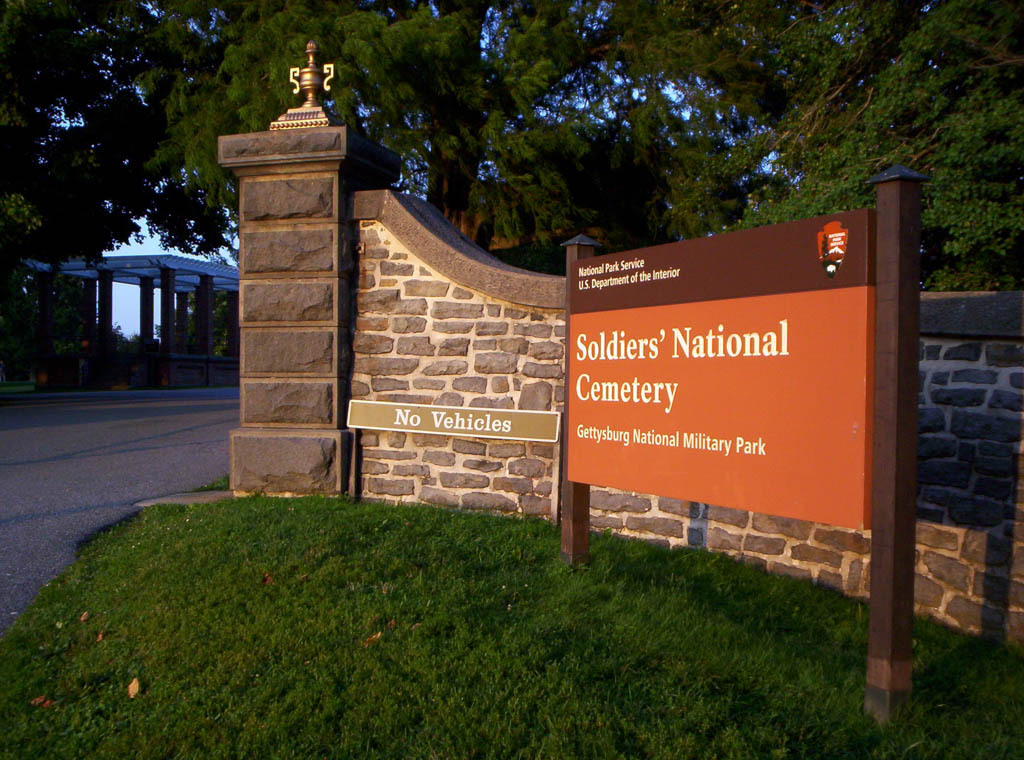
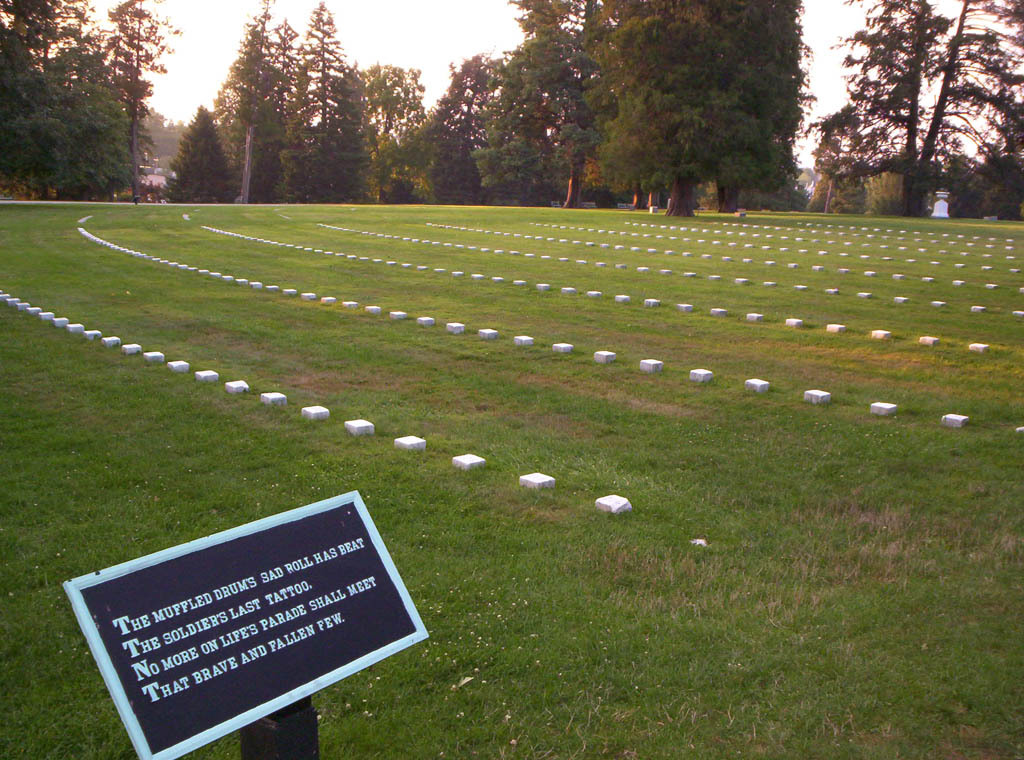
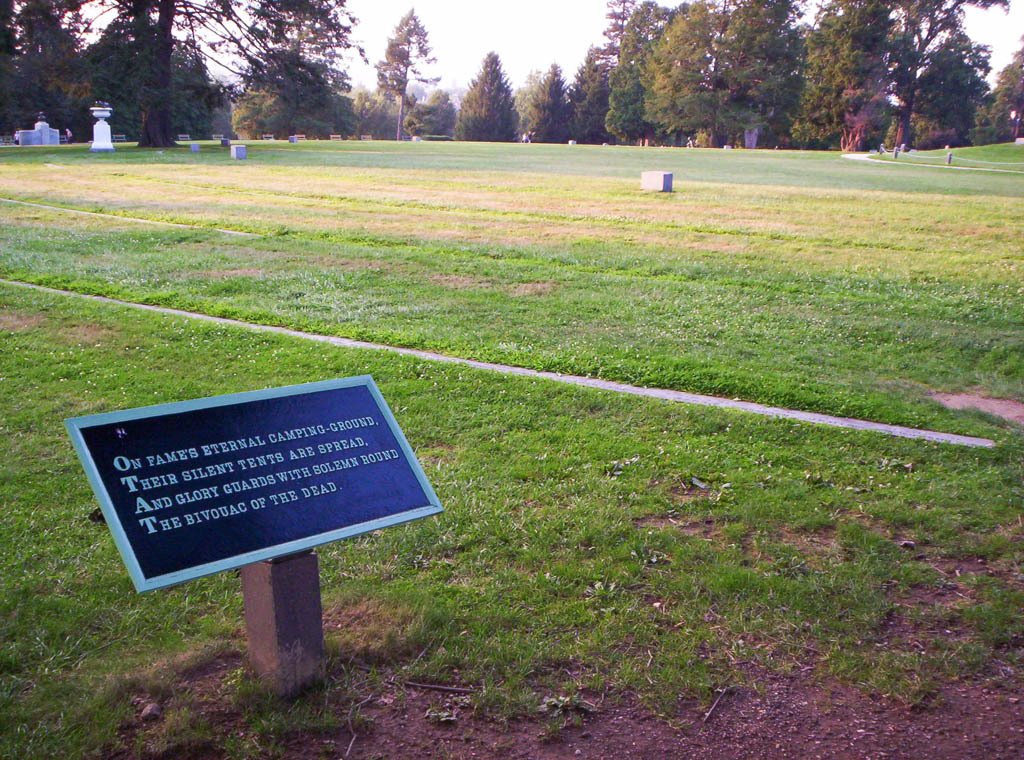
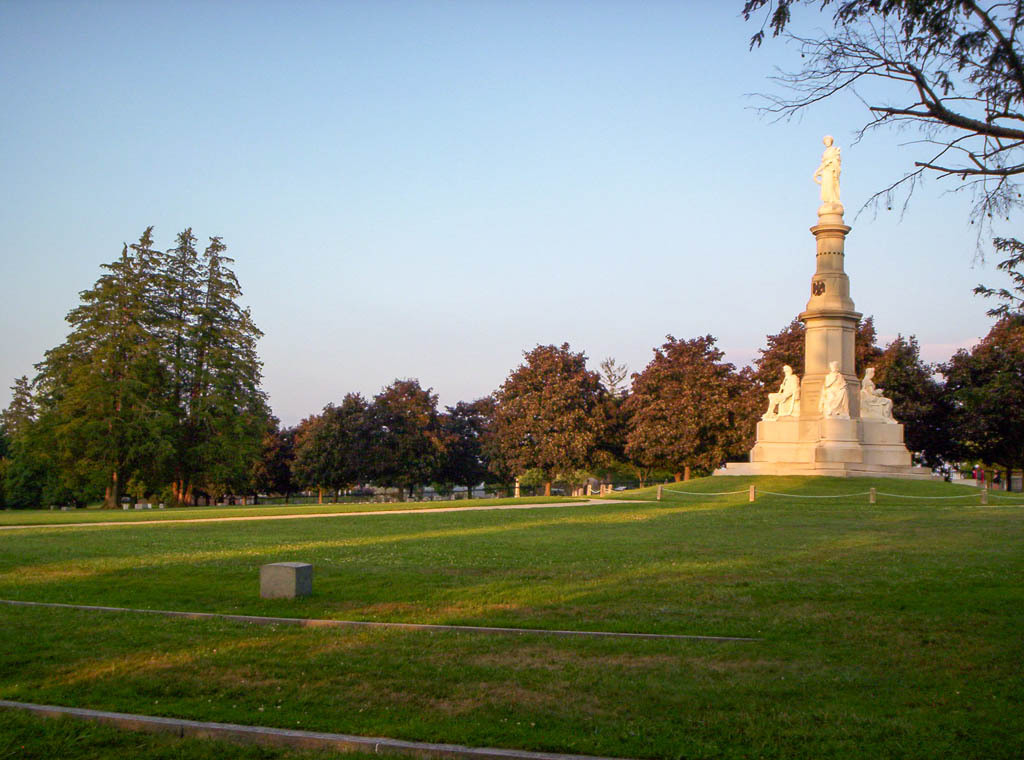
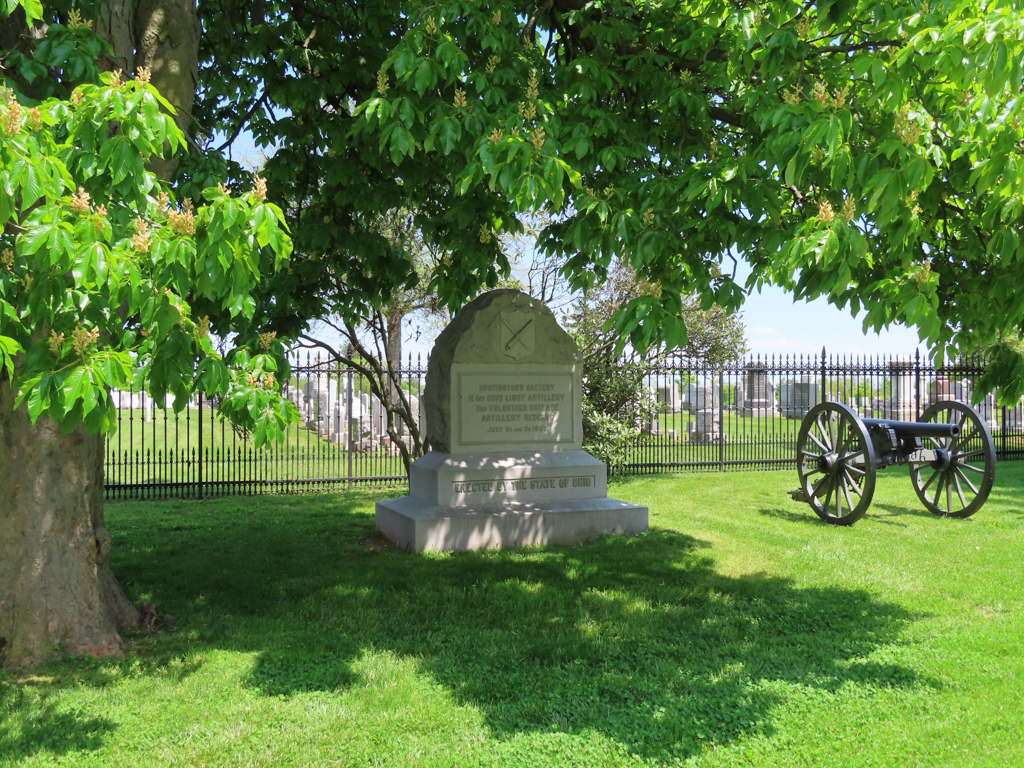
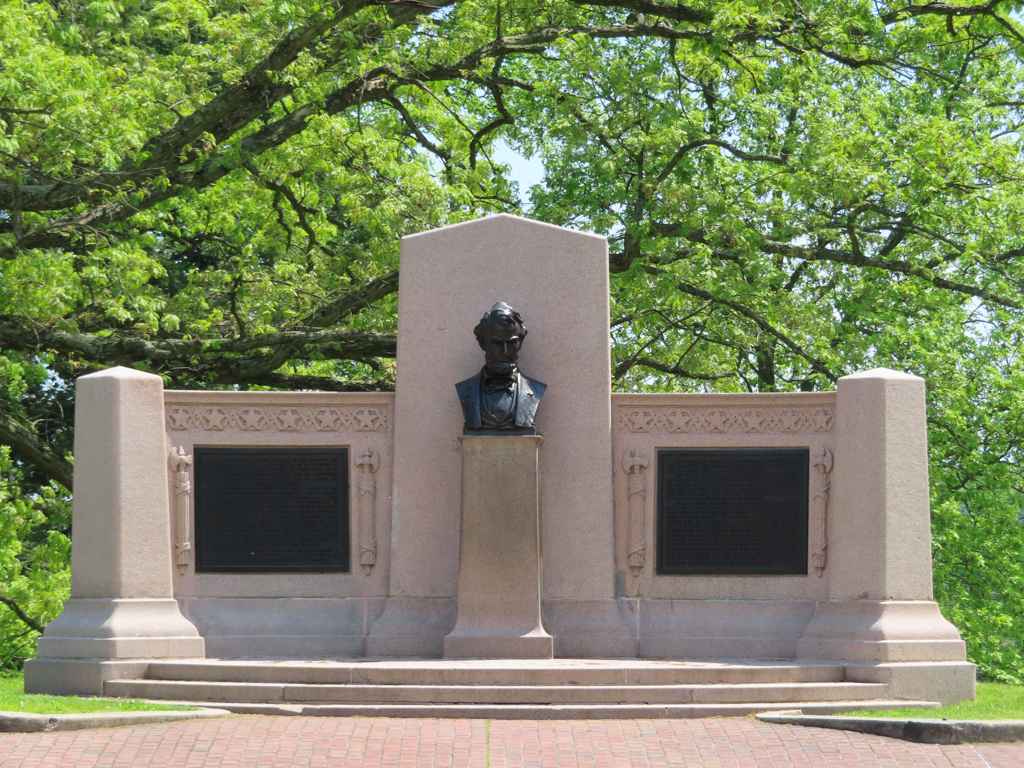
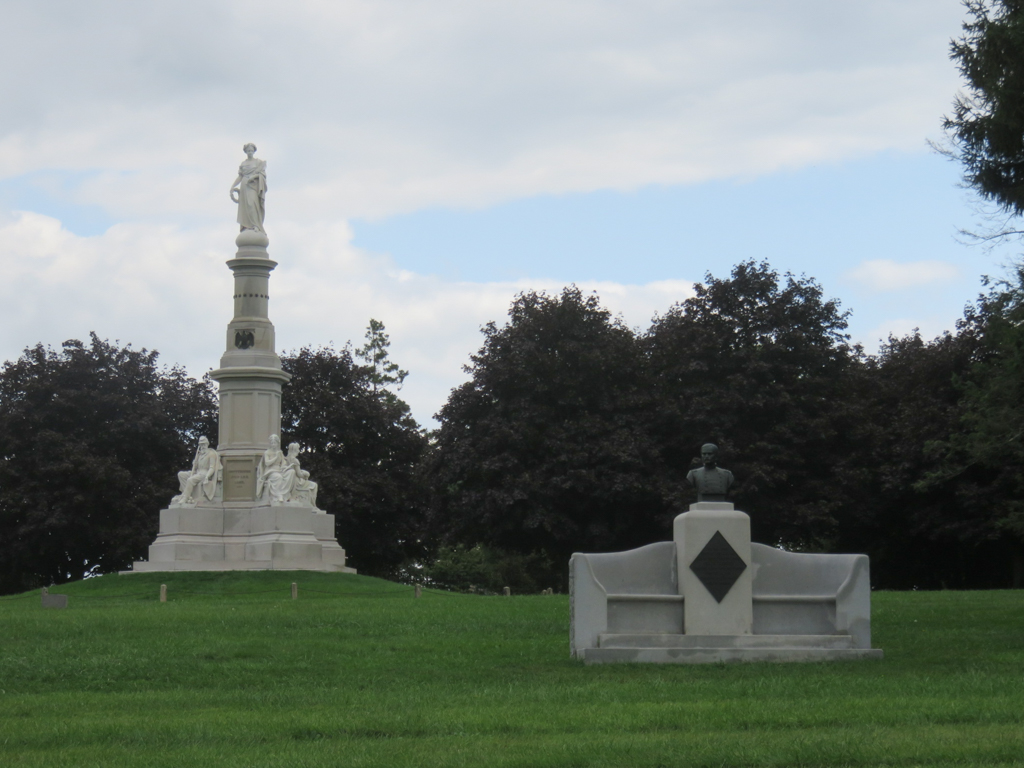
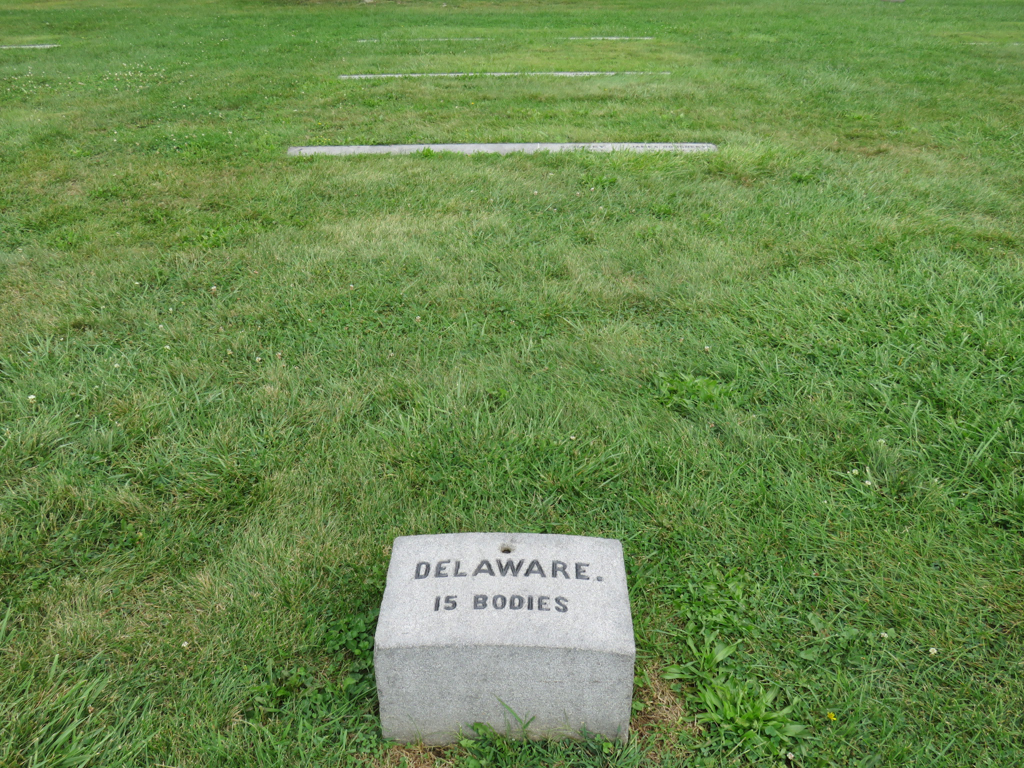
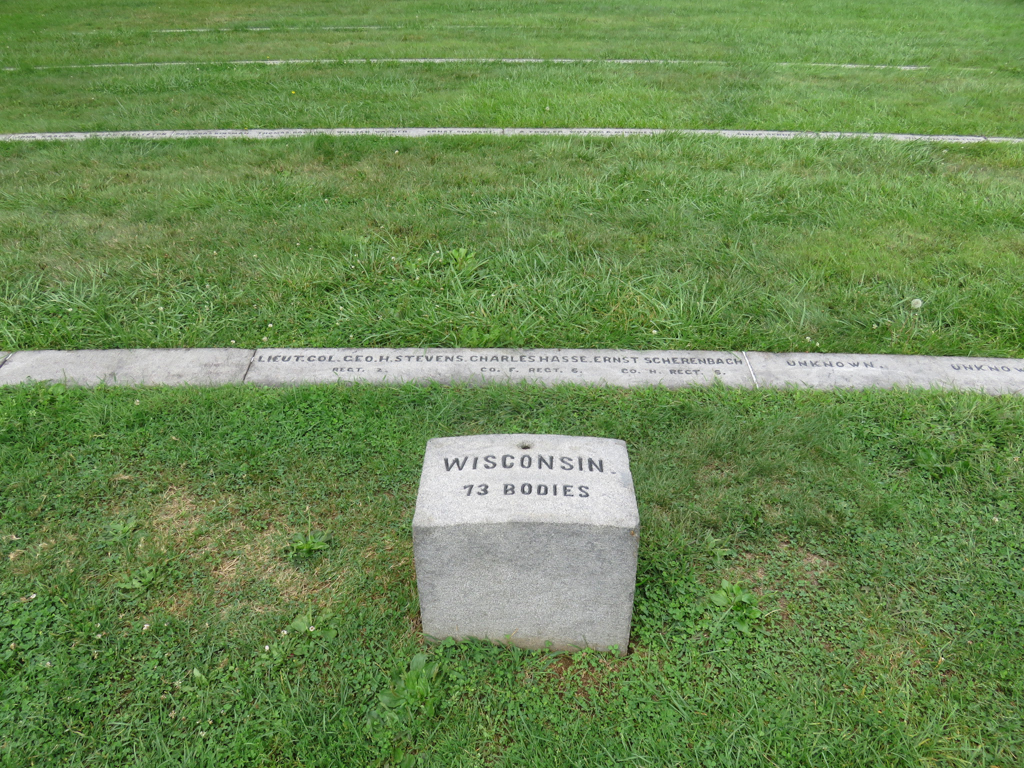
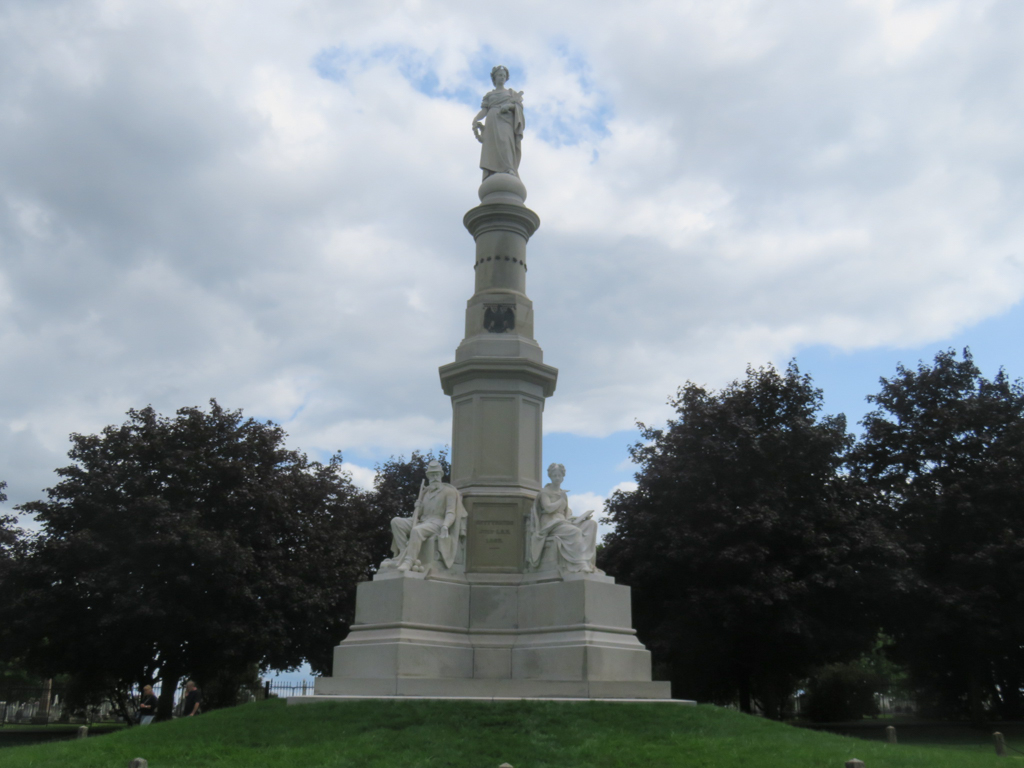
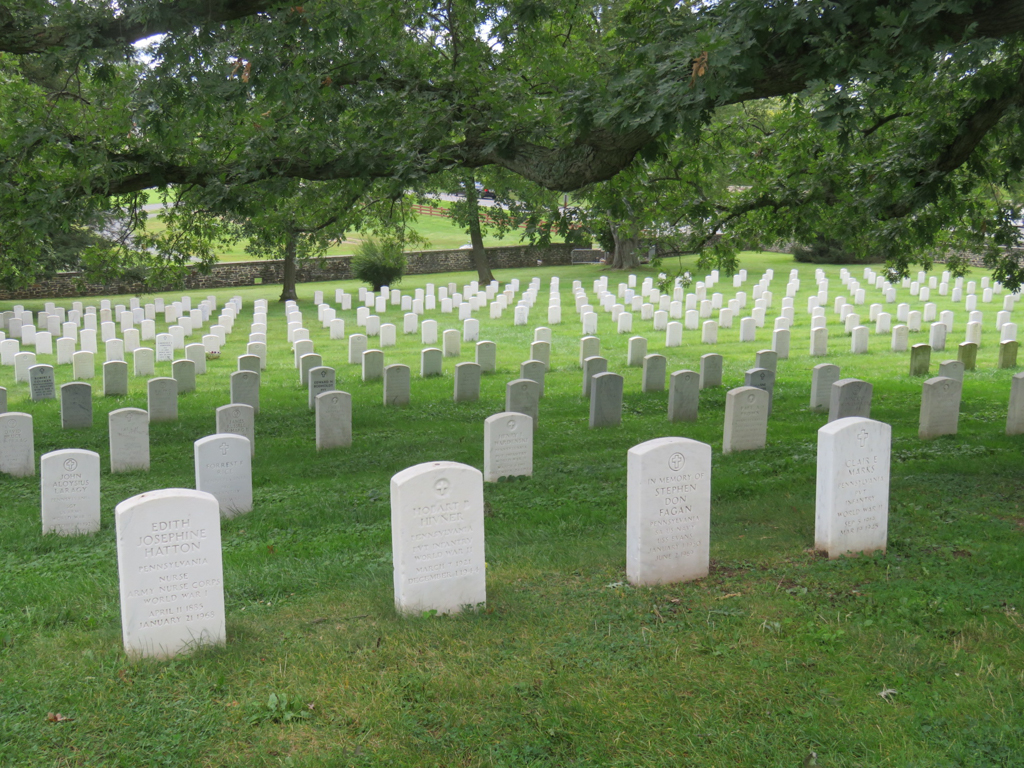
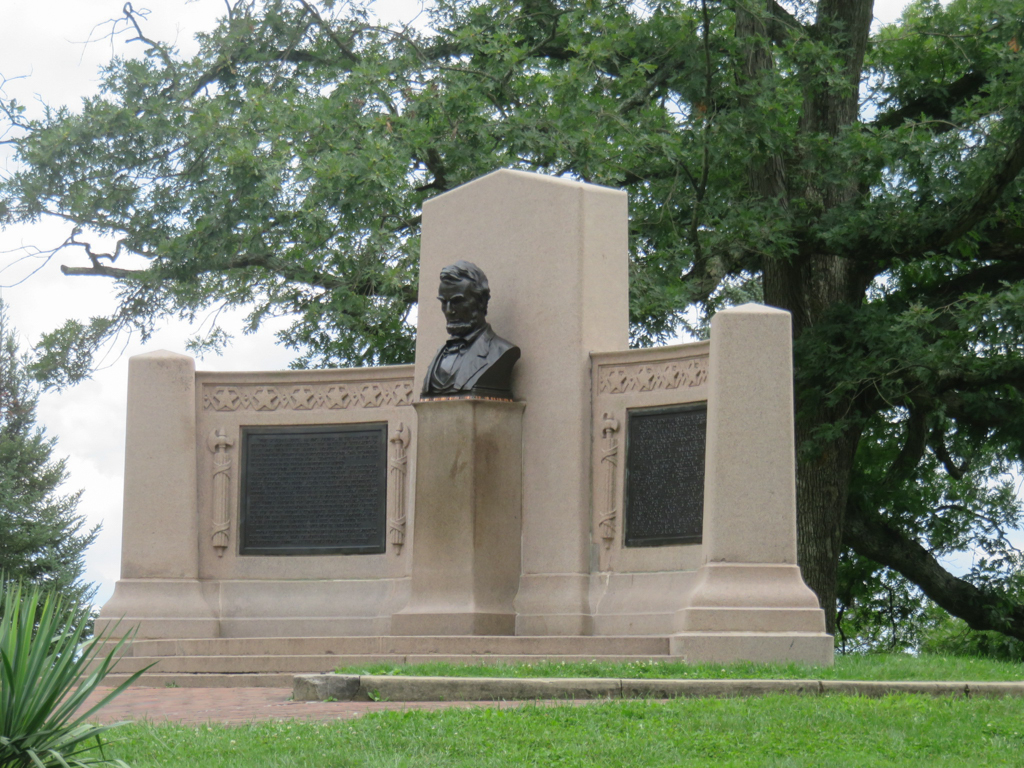
Born in Scotland and trained at Kew Gardens near London, William Saunders became associated with Philadelphia horticulturalist Thomas Meehan in 1854. After Andrew J. Downing's death, Saunders finished the garden plans for the National Mall in Washington, D.C., and in 1862 was appointed botanist and superintendent of horticulture for the U.S. Department of Agriculture. Saunders was given the daunting task of providing a suitable memorial for the thousands of dead left on the battlefield, most of whom were unidentified. His solution merged the national fashion for the picturesque with a military arrangement of the graves, which are arrayed in semicircles around a small hill on the crest of which is the Soldiers National Monument (J. G. Batterson). It stands near where Lincoln spoke at the dedication the following fall. Identity of the buried varies from individual names noted on arcs of stone laid level
DA20
).
Gettysburg National Cemetery
1863, William Saunders. Baltimore Pike