

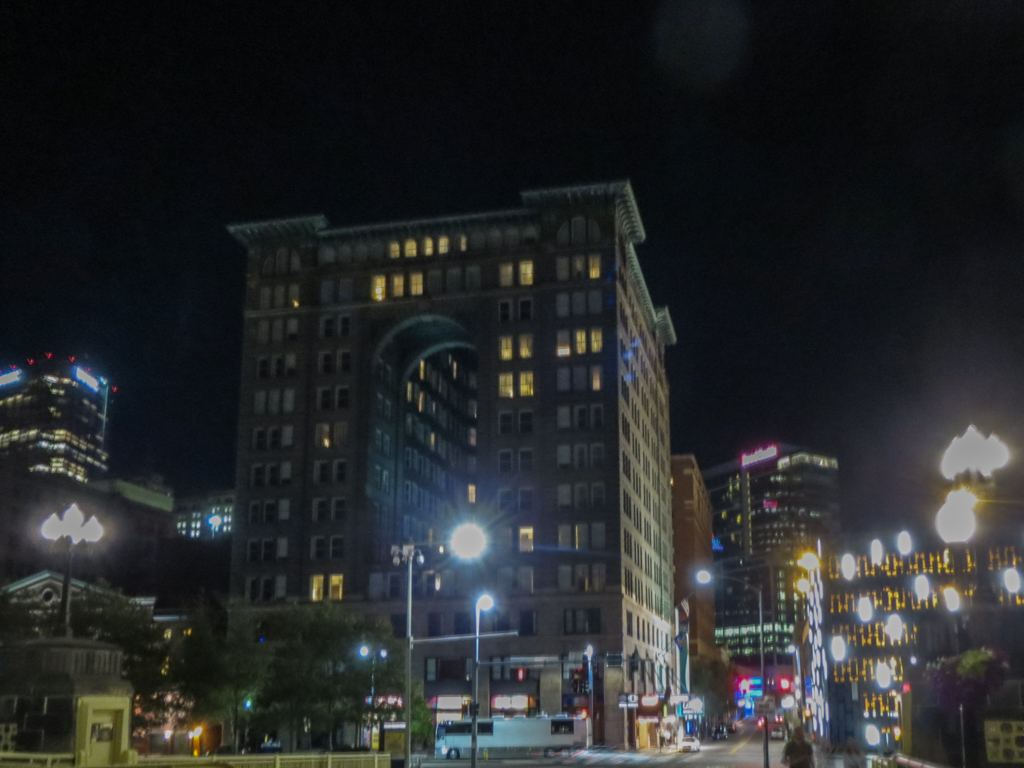
This is the sole survivor of a set of downtown skyscrapers erected by Henry Phipps, the most socially minded of Carnegie's partners, for both profit and social betterment. Grosvenor Atterbury, creator of innovative housing designs in Forest Hills, New York, was as progressive as his patron, although in Pittsburgh only this commercial tower (now a 300-room hotel) survives, and not his Pittsburgh bath houses, swimming pools, or subsidized housing. The Fulton's trademark was its seven-story-high arch fronting the Allegheny, which twenty years later also became the leitmotif for the neighboring Roberto Clemente Bridge (AL13.1). That visual homage to the riverfront—all too rare in Pittsburgh—was made complete around 1990, when trompe l'oeil painter Richard Haas added a bold mural
Renaissance Pittsburgh Hotel
1906, Grosvenor Atterbury; 2000–2001, J. G. Johnson Architects, with CelliFlynnBrennan Architects and Planners. 107 6th St.