

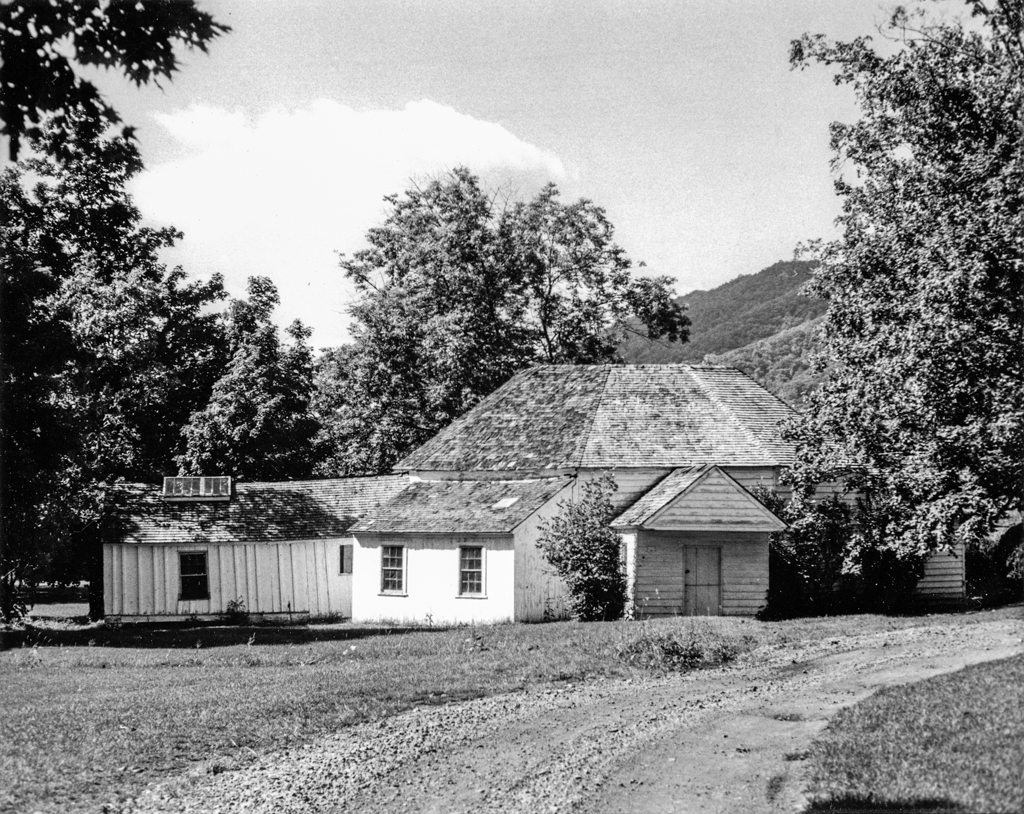
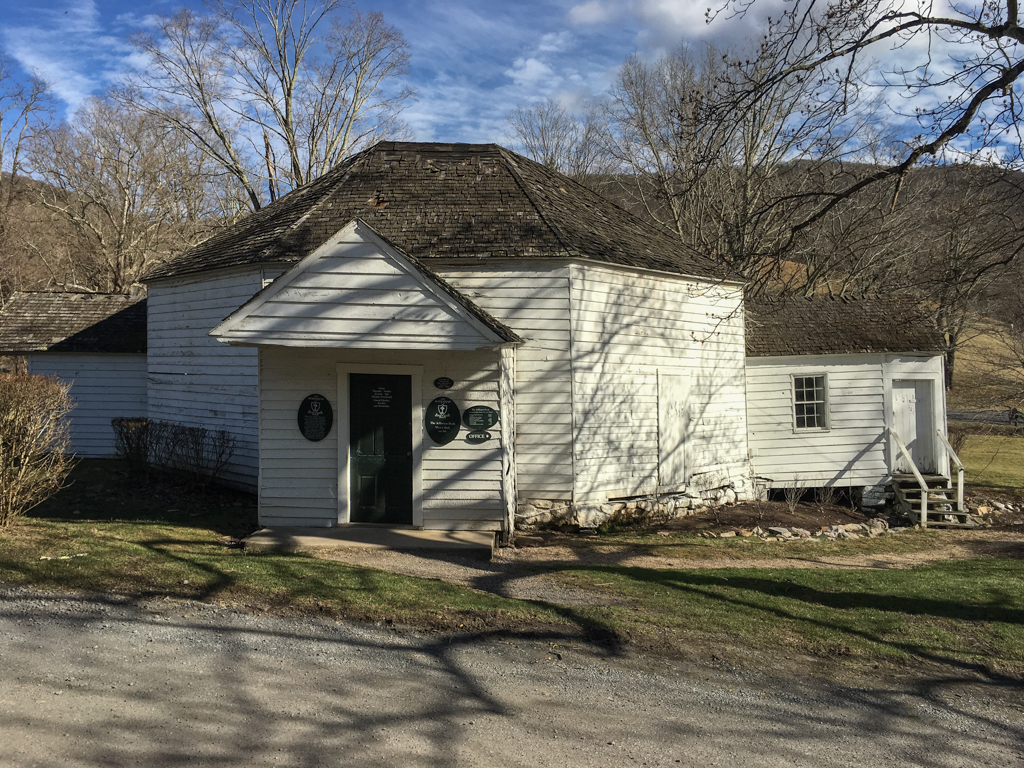
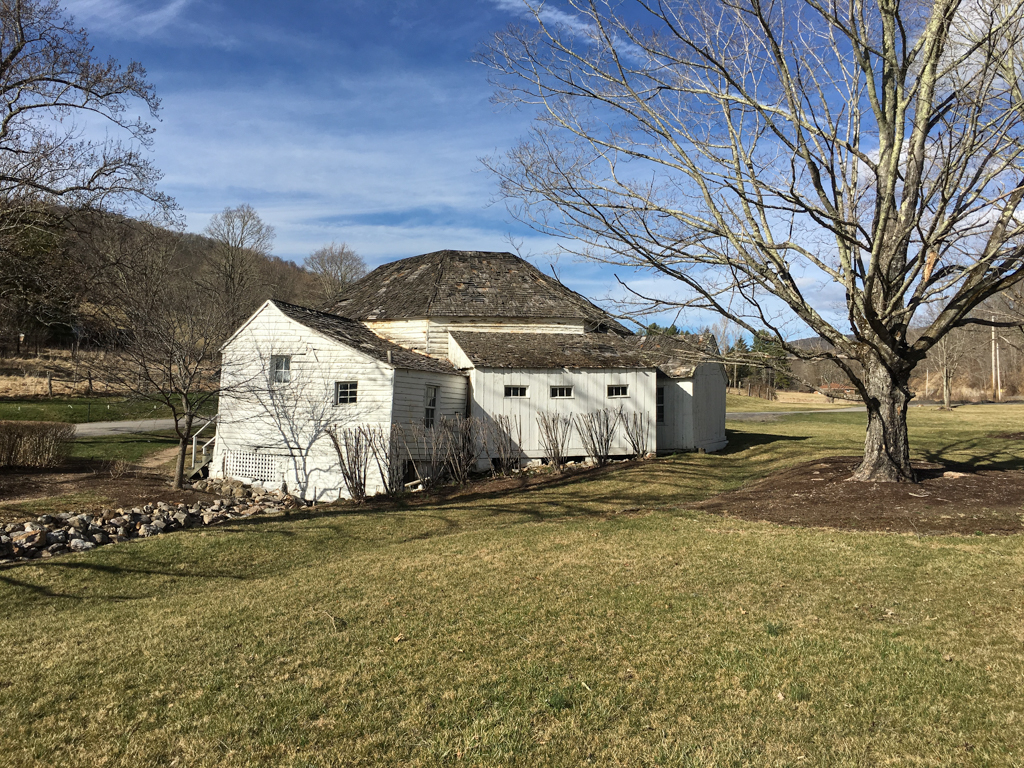
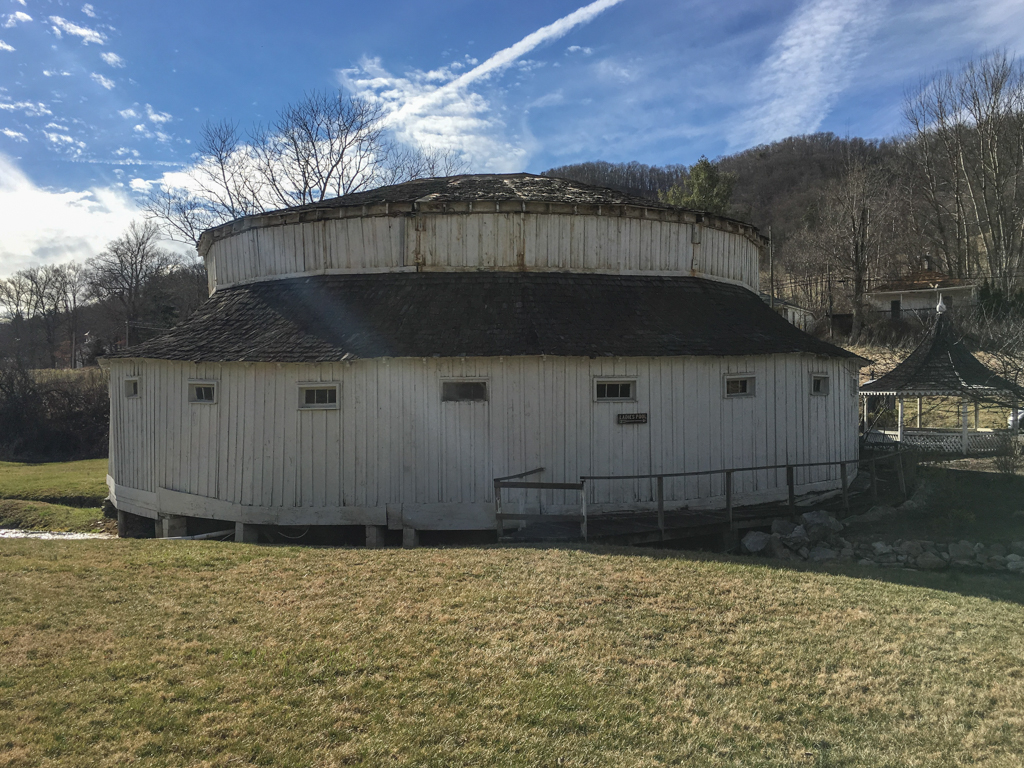
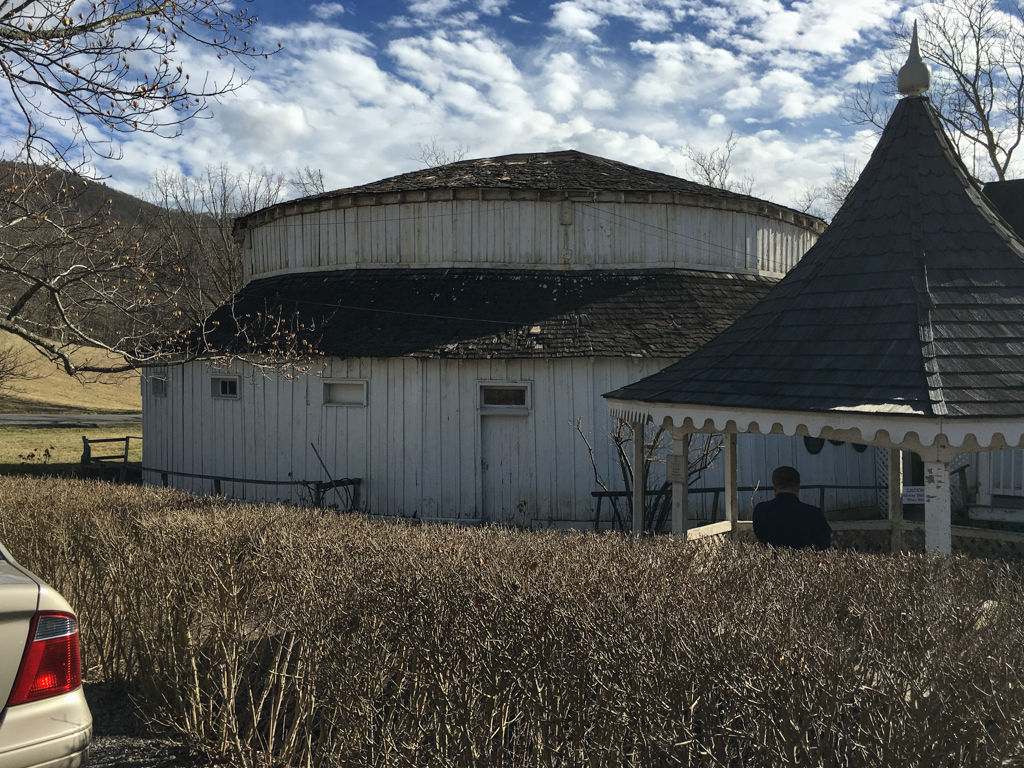
The octagonal wooden men's bathhouse is located nearest U.S. 220. Although it dates to 1761, much of its early framework and materials have been replaced or obscured by later modifications. The building is purely functional with no decorative details. A gable overhangs each of the two entrances and shed-roofed additions serve as dressing rooms. The truncated, octagonal, wood-shingled roof with an oculus is supported by a central post and a network of wooden trusses. A wooden deck surrounds the octagonal bathing pool, which is fed by springs that continuously refresh the thermal pools. At first only serving men, the bathhouse later was reserved for women at specific times until the women's bathhouse was constructed. This large twenty-two-sided structure is clad in vertical wood boards and capped by a polygonal roof with an oculus centered over the bathing pool. The building is encircled by eighteen shed-roofed dressing rooms. One room off the pool contains a dunking chair that was used to lower invalids into the warm waters. Immediately northwest of the women's bathhouse is the bathhouse caretaker's cottage (c. 1890), a one-story wooden dwelling featuring a porch with decorative woodwork. In front of the cottage, an octagonal gazebo (c. 1890), enclosed by latticed screens, shelters a potable spring. The complex was rehabilitated by 3North and Lionberger Construction, working with The Omni Homestead Resort and the Virginia Department of Historic Resources, in 2020–2022.
Jefferson Pools
1761 Men's Bathhouse; 1836 Women's Bathhouse; 2020–2022 rehabilitation, 3North and Lionberger Construction. 11 Bath St.