

Once part of an eighteenth-century road between Charlestown and Cambridge, Bow Street originally curved to avoid marshland. Here stand a cluster of architecturally distinctive buildings that date from the late nineteenth century. Prospect Hill Congregational Church of 1887–1888 (17 Bow Street) remains one of the most architecturally distinguished buildings in Somerville. Described at the time as having a “bold and massive exterior,” the brick and granite Romanesque-style church by Henry S. McKay incorporates a great round-arched entrance portal and rock-faced granite trim, almost sculptural in its effect, particularly on the tower with its two-stage pyramidal roof.
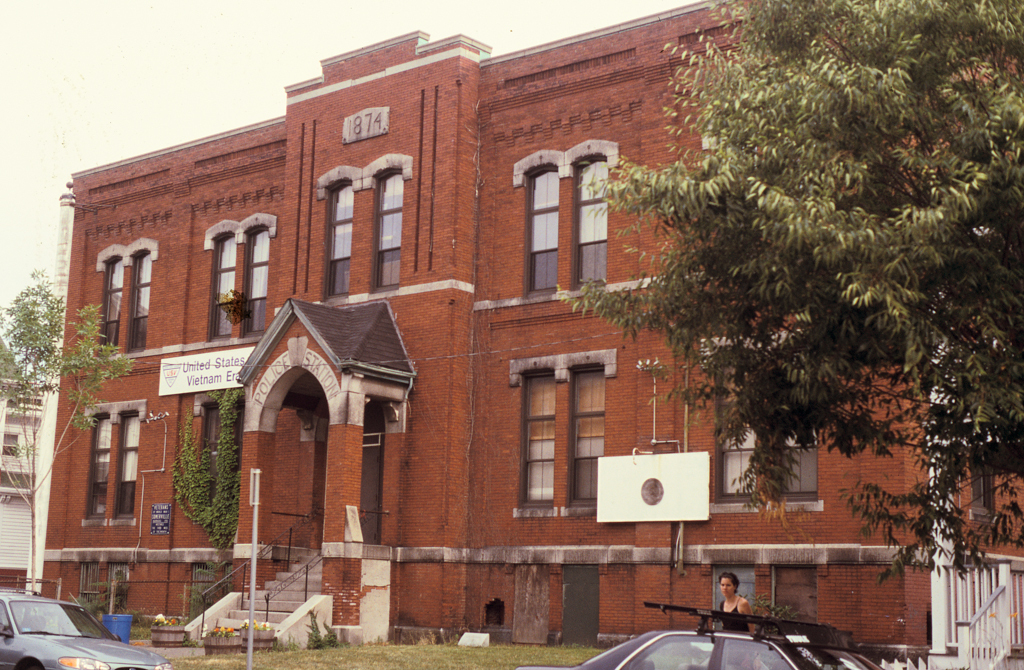
At the other end of Bow Street, the former Somerville Police Station (now an American Legion Hall, 50 Bow Street,), an 1874 High Victorian Gothic structure with lively brickwork and a striking entrance porch designed by George A. Clough, has lost its