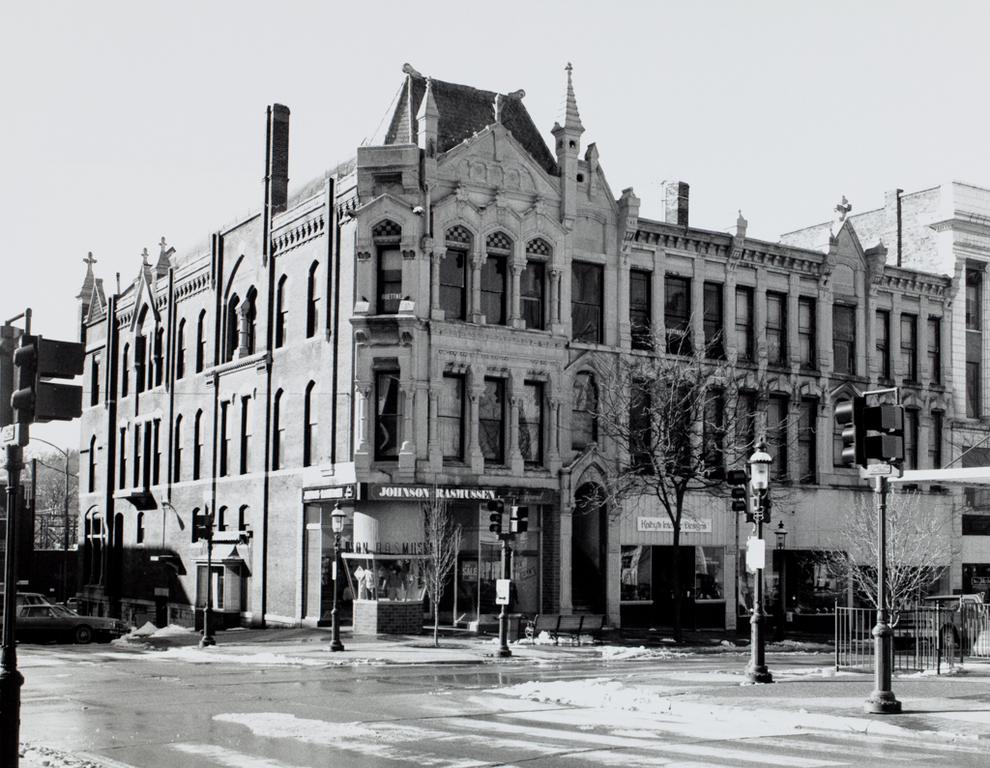
Here we have one of those instances of vigorous, brittle angularity of design that so troubled both traditionalists and modernists of the first decades of this century. We associate this mode with such nineteenth-century figures as William Butterfield and Charles Eastlake in England; in America it reached its height in the Philadelphia work of Frank Furness. In the three-story Hedges building, the Burlington architect Charles A. Dunham introduced this hefty primitive quality primarily in the cut-stone detailing on cornices, entablatures, pediments, and around windows and doors. Characteristic of the mode are squat columns, V-shaped arches, and small roof pinnacles. The general flavor is medieval, somewhat Romanesque as well as Gothic; but designs such as these are so original in their uses of precedent that they can be treated as pure nineteenth-century architecture.


 David Gebhard and Gerald Mansheim