

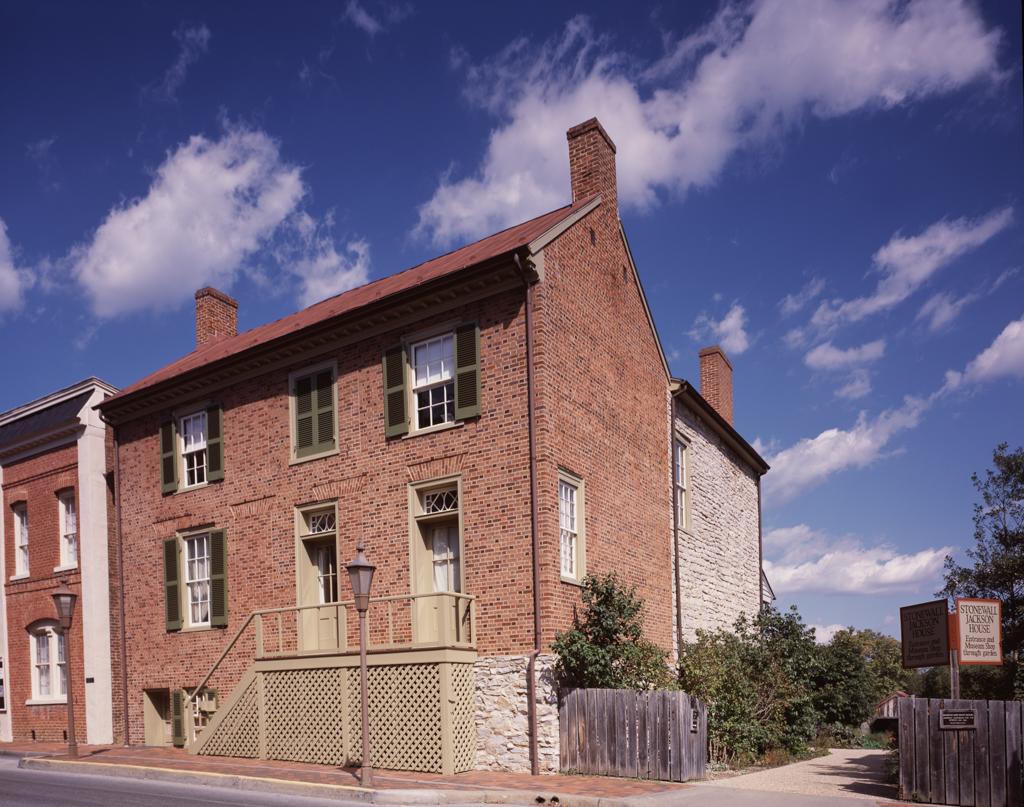
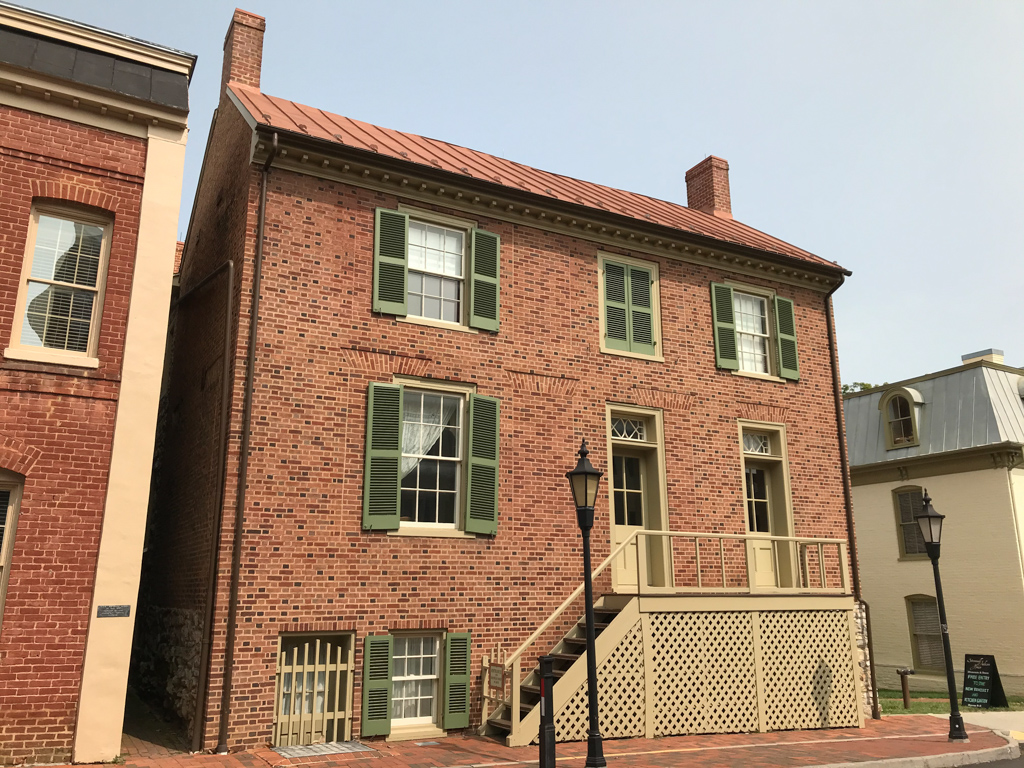
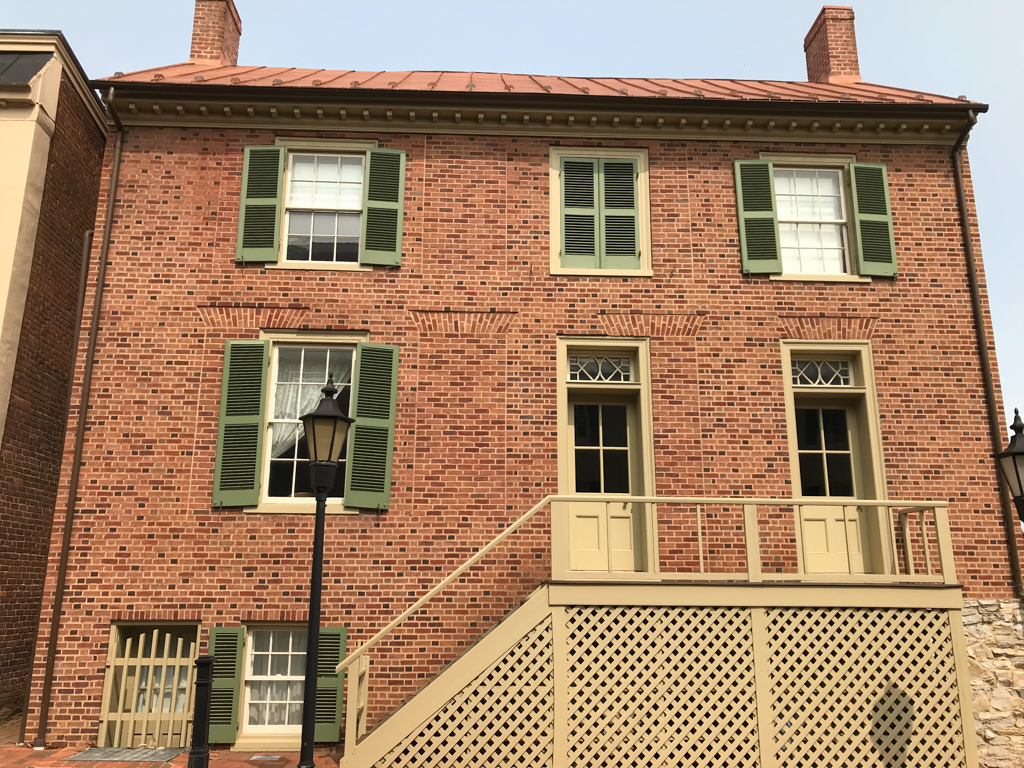
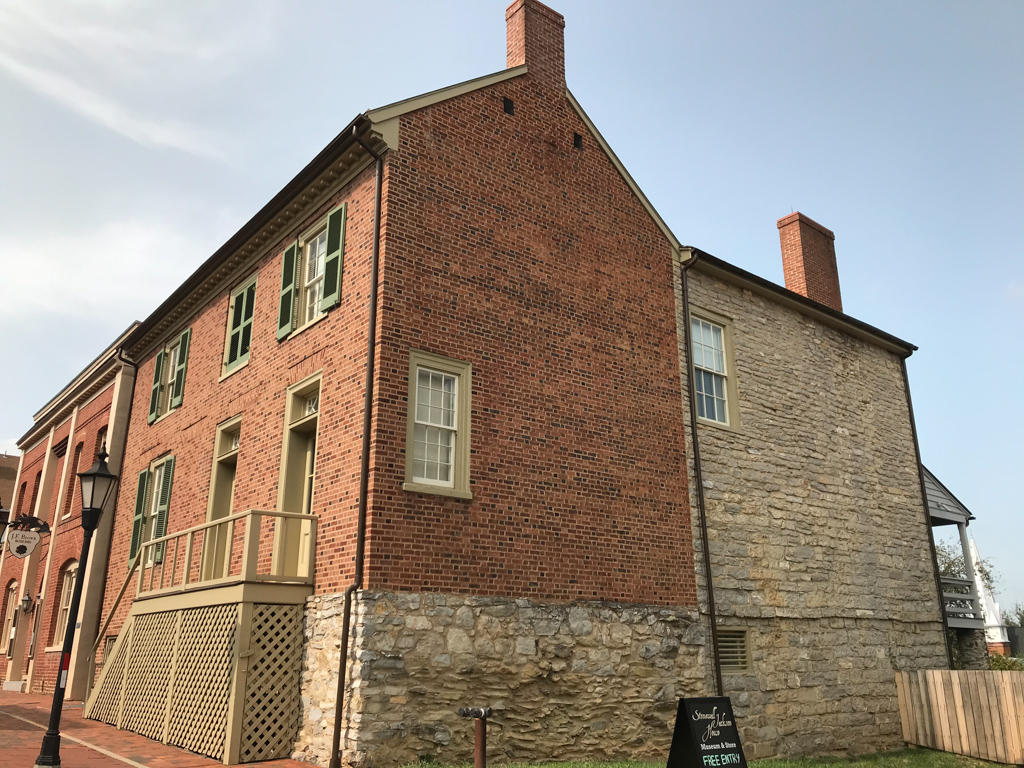
In 1858, VMI professor Thomas J. “Stonewall” Jackson and his wife purchased this house and lived here until 1861 when he was called to greater fame with the Confederate army. The oldest part of this house is the brick front section of 1801. The stone addition at the rear was added in the 1850s. It is thought that the second front door was added by a doctor who saw his patients here. The house reflects the 1851 street lowering in the exposed basement and elevated stairs. After Jackson's death, his widow and her family continued to own the property until 1904, when it was sold to the United Daughters of the Confederacy and made into the Stonewall Jackson Memorial Hospital. Extensive alterations were made for the hospital including a new facade. The house served as the community hospital until 1954, when it was purchased by the Lee-Jackson Memorial Association and converted into a museum. It had fallen into disrepair by 1975 when the Historic Lexington Foundation received the property and had it restored to the period of Jackson's occupancy. The present facade is a re-creation based on period photographs. Charlottesville architect Grigg led the restoration. The Stonewall Jackson House Museum opened to the public in 1979. The 2003–2004 restoration updated mechanicals and stabilized the structure.
Stonewall Jackson House Museum
1801; 1850s addition; 1975–1979 restoration, Milton Grigg; 2003–2004 restoration, Watson and Henry Associates. 8 E. Washington St.