

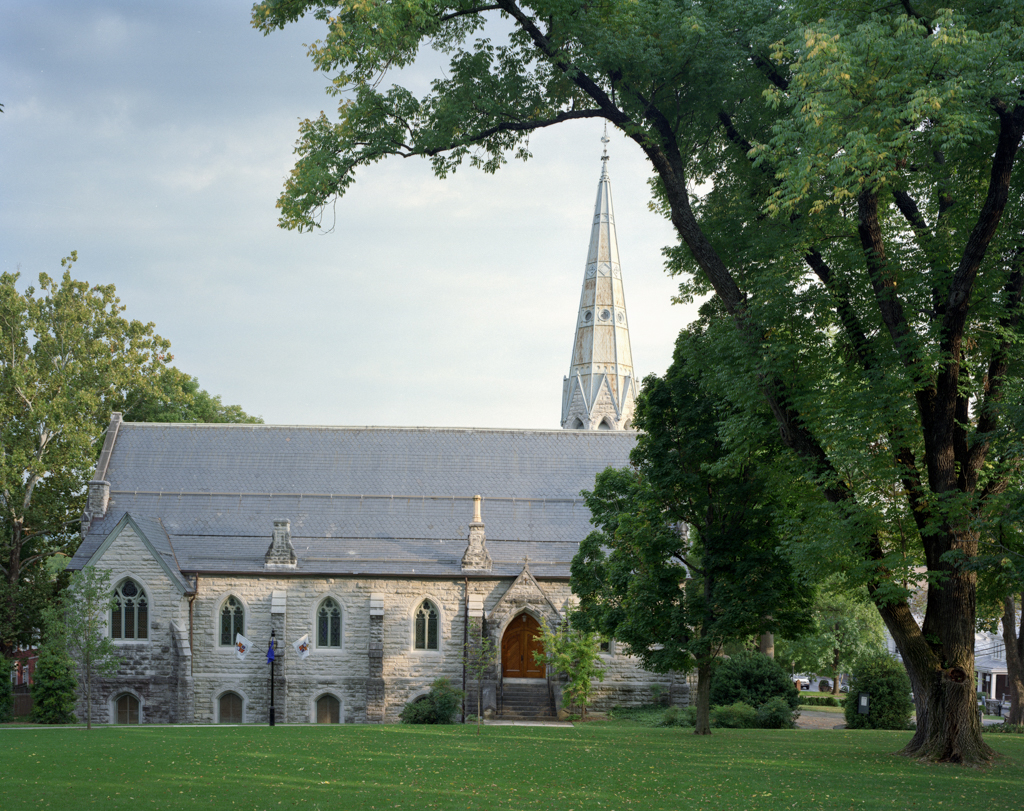
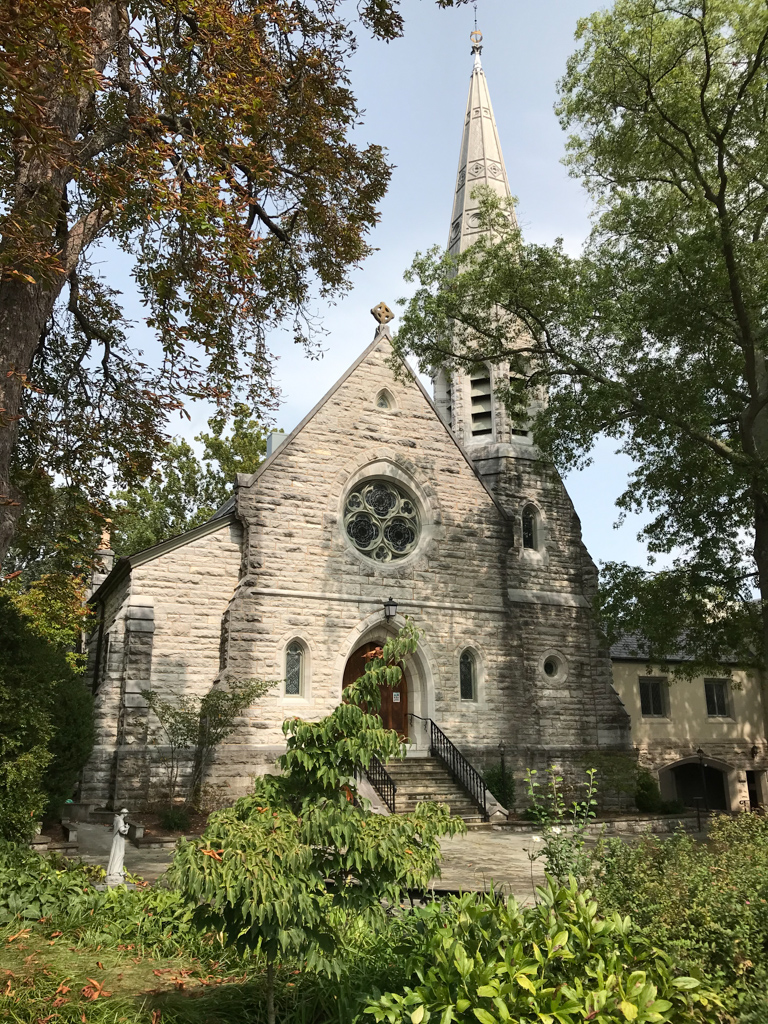
The congregation replaced a Greek Revival church with this, one of Lexington's finest examples of Gothic Revival, a style especially popular among Episcopal congregations. The rusticated stone church has side buttresses, traceried stained glass windows, and a side tower with a soaring spire. The interior, central-aisled nave has impressive hammer-beam roof trusses. The most famous member of the congregation was Robert E. Lee, who was an active parishioner, serving on the vestry from his arrival in Lexington in 1865 to his death in 1870. The church, which was named in his honor in 1903, was renamed in 2017. One distinctive feature is the High Victorian Gothic interior painting that survives over the altar area. Paid for in 1883 by Lee's son, G. W. Custis Lee, the decorative scheme originally covered all the walls, but that proved to be too much for the congregation's twentieth-century sensibilities, and in the 1930s it was painted over. Besides the altar area, one fragment of the original work has also been preserved on the west wall.
Grace Episcopal Church
1872–1886, Baldwin and Price. 123 W. Washington St.