

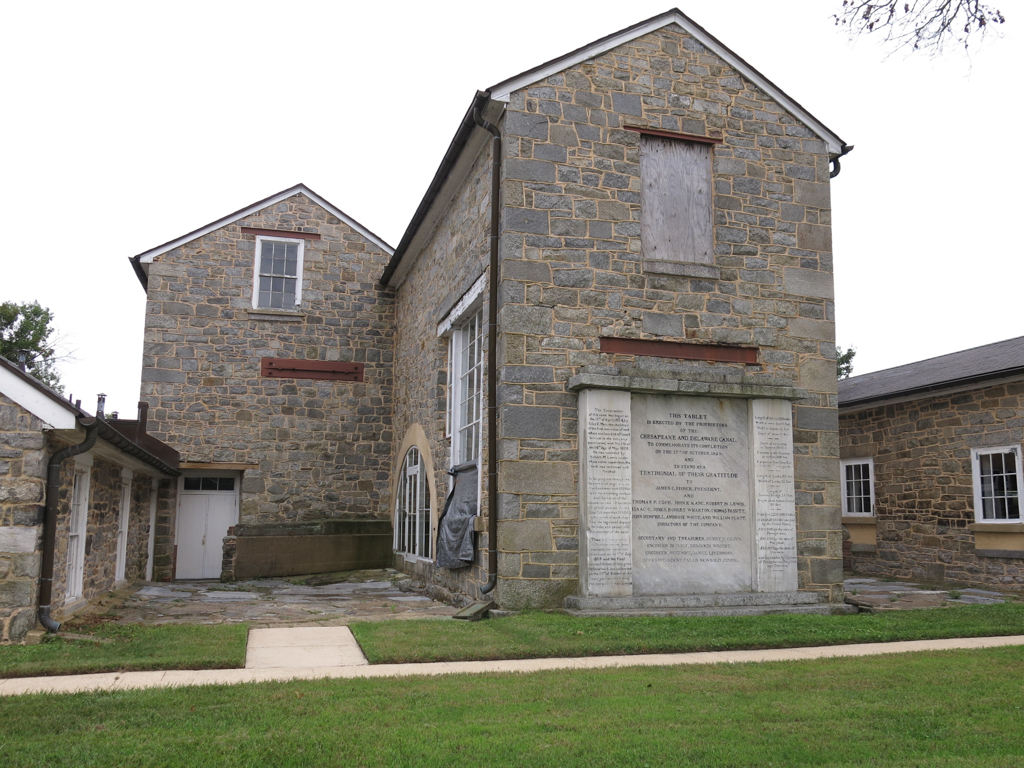
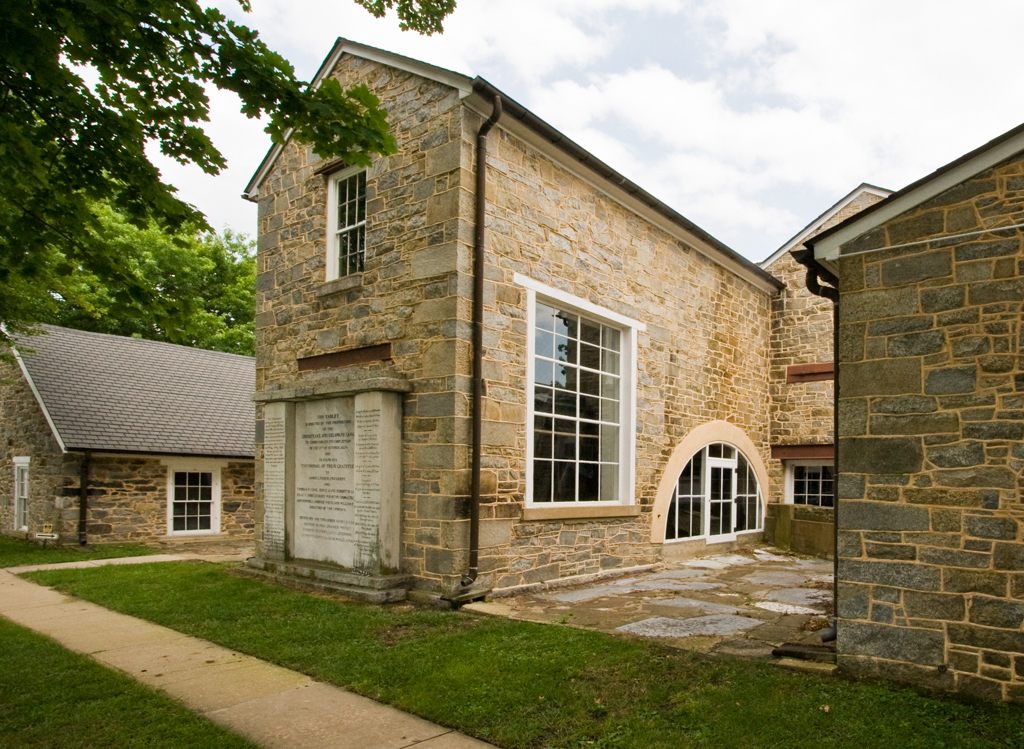
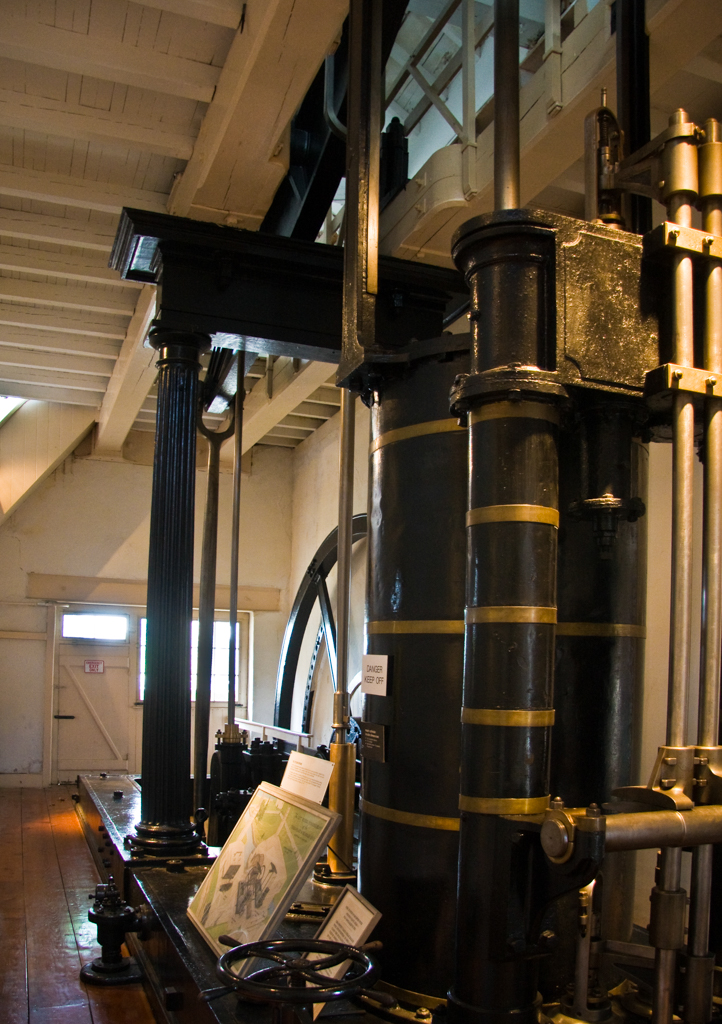
The Merrick and Towne steam engines and the pumphouse that encases them represent an innovative nineteenth-century design and the earliest intact pumping station in the nation. It formed an integral part of the functioning of the Chesapeake and Delaware Canal, pumping water into the canal at Chesapeake City to ensure an operational water supply. The 14-mile-long canal created a direct link between the Delaware and Chesapeake bays, reducing the previous water route by 296 miles. While its planning dates to 1764, it was 1803 before Benjamin Henry Latrobe was hired as chief engineer to determine the route, 1824 when construction began, and 1829 when the first ship passed through. The irregularly coursed stone pumphouse encompasses the 39-foot-diameter lift, able to pump 20,000 gallons of water per minute into the canal from nearby Back Creek. Although it ceased operations in the early 1920s, it was designated a National Historic Landmark in 1975, one of the first engineering sites to be so recognized. It is preserved by the Army Corps of Engineers as a public museum.
CHESAPEAKE AND DELAWARE CANAL PUMPHOUSE MUSEUM
1854, Samuel V. Merrick and John T. Towne. 815 Bethel Rd.