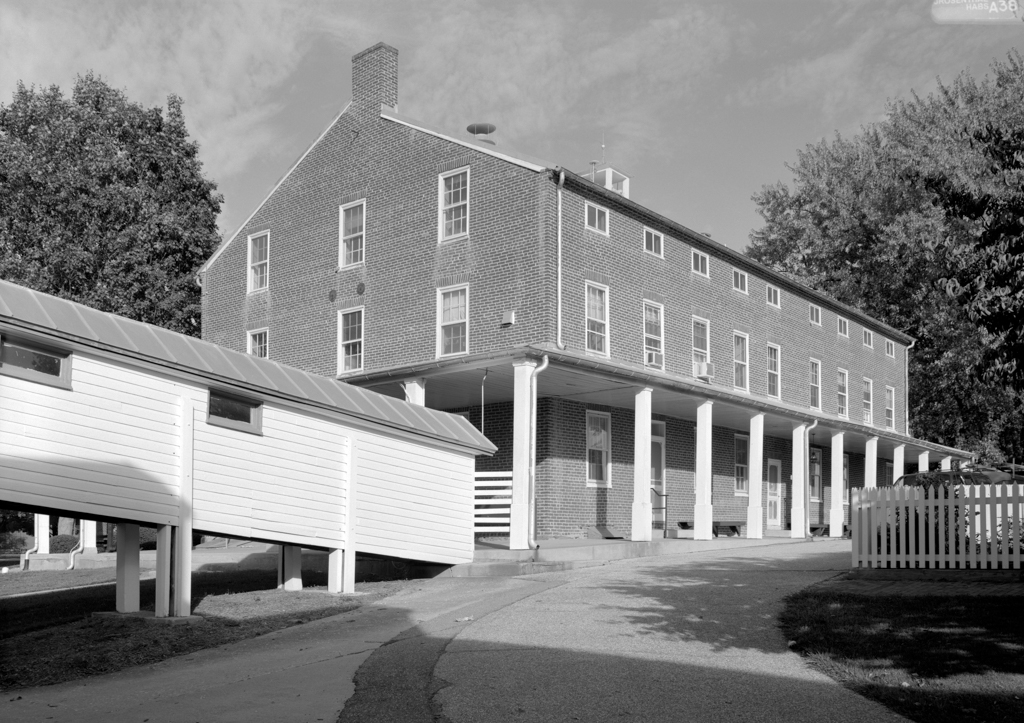
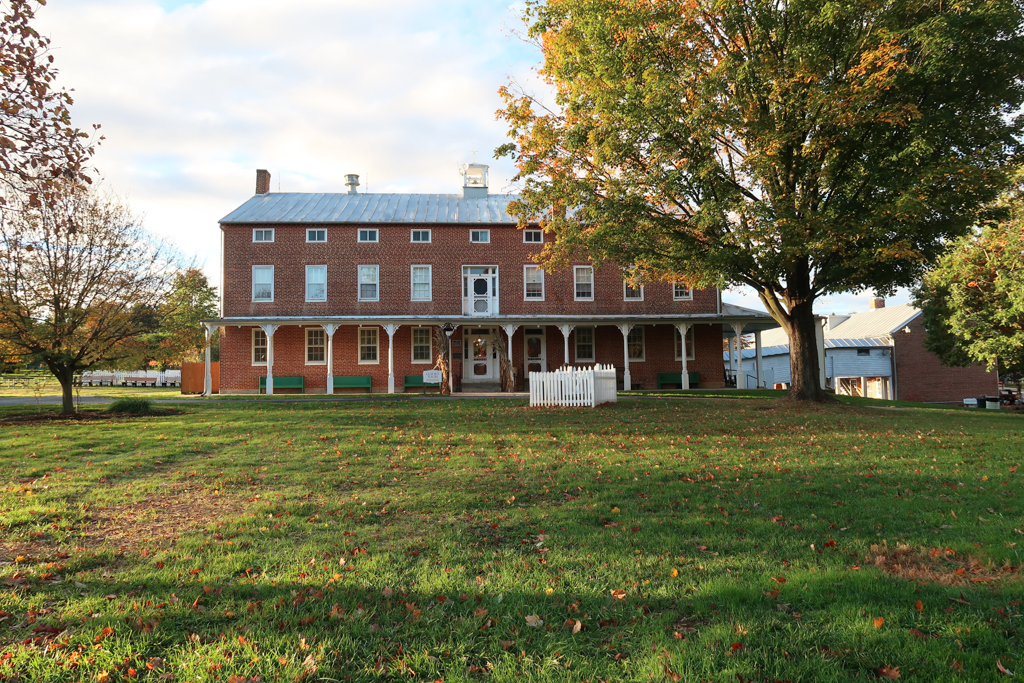
In 1965, Carroll County opened the first public farm museum in Maryland to celebrate the agricultural history of the region and in the process preserved the recently closed historic county almshouse. The county’s tax commissioners were empowered in 1840 to borrow money “to be applied to the purchase of farm, and the creation of suitable buildings for the use of the poor.” Finally erected in 1852, the Almshouse provided board and lodging for impoverished residents who, if able-bodied, were expected to work to earn their keep. The long brick almshouse forms the centerpiece of a complex of historic, reconstructed, and new buildings on approximately 140 acres on the outskirts of Westminster. The small casement windows in the attic story reveal the use of that space for living quarters, and a bell sits in a modest cupola on the ridge line. An additional two-story brick building perpendicular to the almshouse contained a summer kitchen, washhouse, bakehouse, and additional quarters. A steward and other staff lived on-site to supervise the residents. Other noteworthy buildings include a bank barn and a dairy ornamented by jigsawn bargeboards and an oversized finial at the peak of its pyramidal roof. Currently many of the buildings are used for demonstrations of historic crafts and trades.

