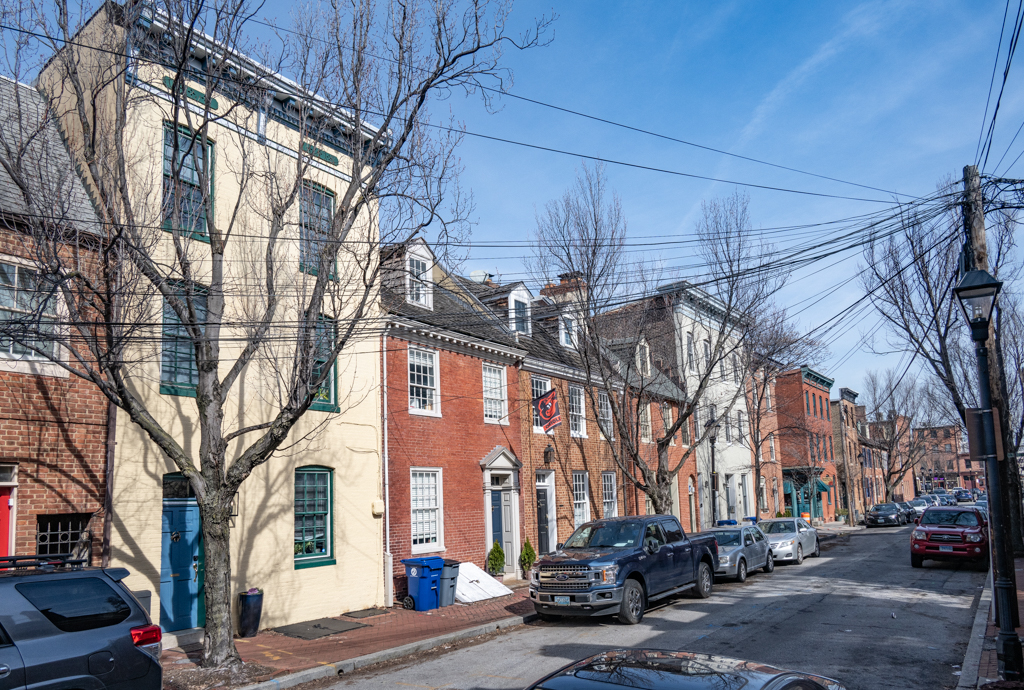
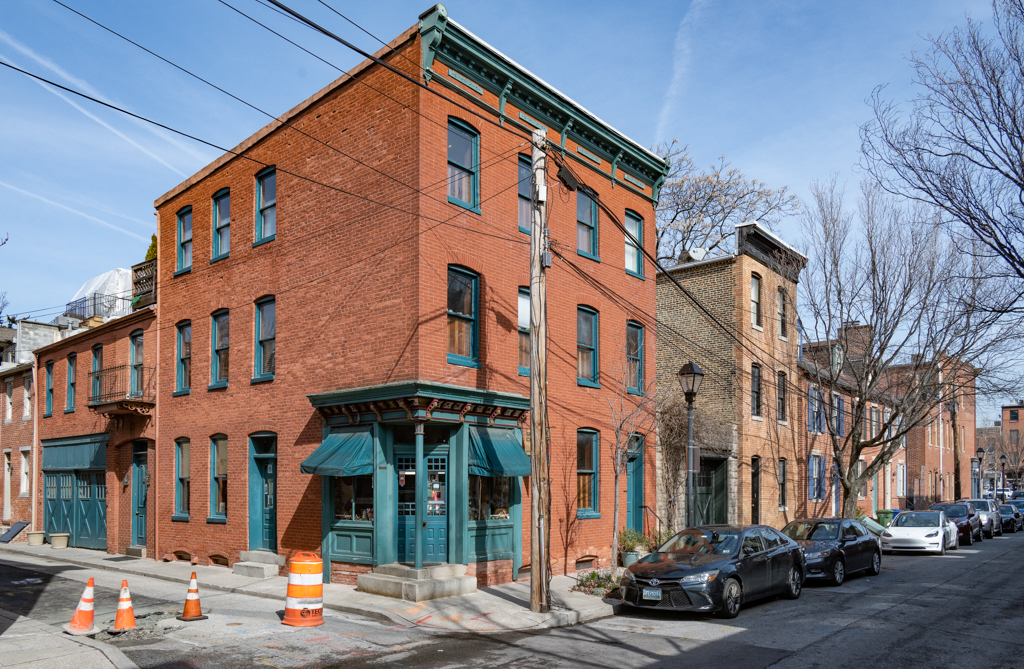
Typical of the row houses that were home to average Baltimoreans from the late eighteenth century through the 1840s was the two-story design with a single dormer and either two or three bays across. They appeared on side streets and alleys, depending on size, providing housing to workers, artisans, shopkeepers, and those involved in the maritime trade. Early examples such as this row of three exhibit such Federal detailing as Flemish-bond brick with stone jack-arch lintels, entrance with transom, corbeled cornice, and slab chimney. Most were two rooms deep (although the more modest examples were only a single room) with no hall and a tight winder stair between the two rooms; only the larger three-bay-wide examples included a side hall. The earliest were of frame construction, only a few of which survive, such as 809 S. Bond Street.

