

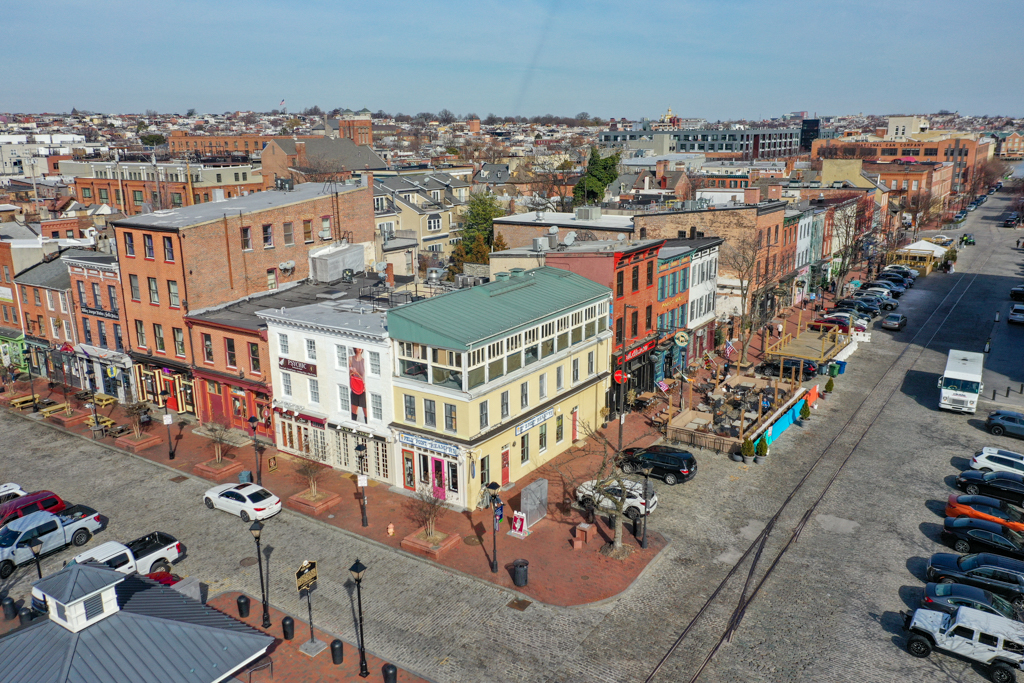
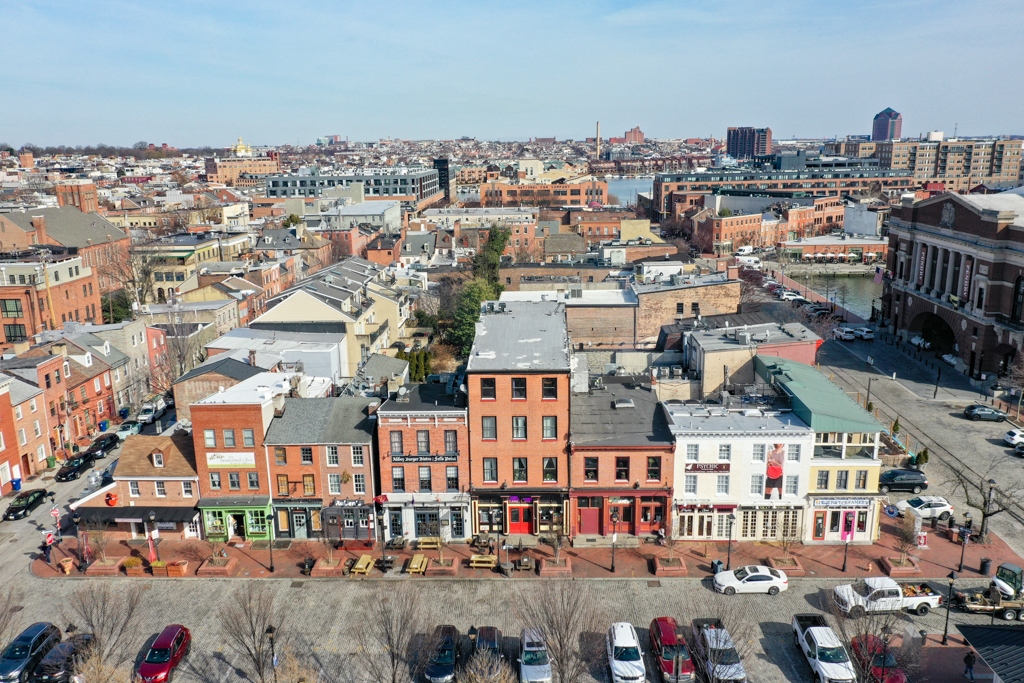
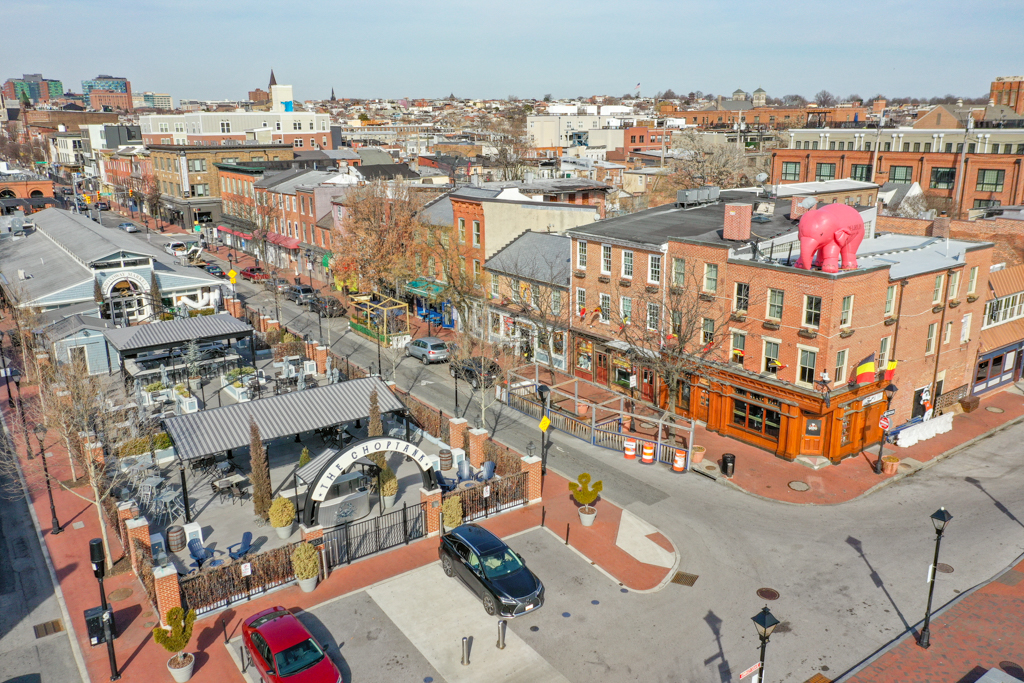
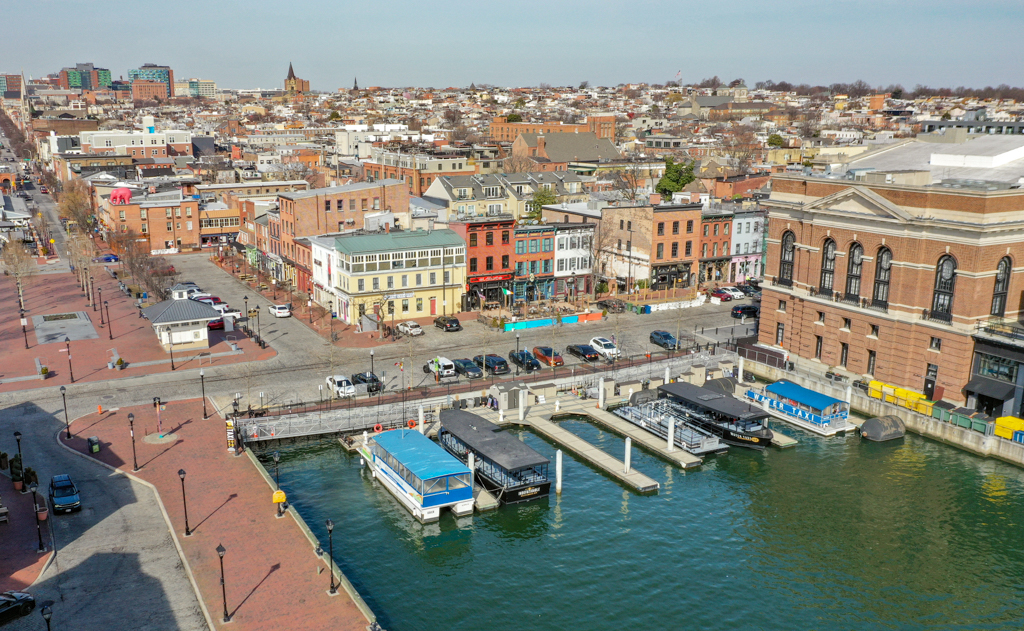
Developed separately from early Baltimore Town is Fell’s Point, a once thriving port town annexed in 1773 to become the epicenter of the city’s eighteenth- and nineteenth-century maritime and shipping industries. Fell’s Point dates to its c. 1726 settlement by English Quakers Edward and William Fell, and it was here that William, a ship carpenter, established the area’s first shipyard. A gridded town plan concentrated around the waterfront was laid out in 1761 by William’s son Edward and his wife Ann. Possessing the deepest harbor, Fell’s Point was key to Baltimore’s rise as an important industrial center, including the manufacture of its sailing schooners and the famed Baltimore clipper. Baltimore’s shipping industry declined in the 1830s with the development of canals and railroads. Steam-powered industries replaced shipbuilding, including machine shops and iron foundries, oyster-packing plants, and canneries. Fell’s Point includes some of Baltimore’s earliest buildings, encompassing a fine array of late-eighteenth- and nineteenth-century row houses representing many of the city’s quintessential forms, as well as commercial and industrial structures and warehouses that reflect the important role it played in Baltimore’s economic development.
FELL’S POINT HISTORIC DISTRICT
c. 1726 established; 1761 town plan, Edward Fell. Bounded roughly by the Patapsco River and Castle, Gough, and Caroline sts.