

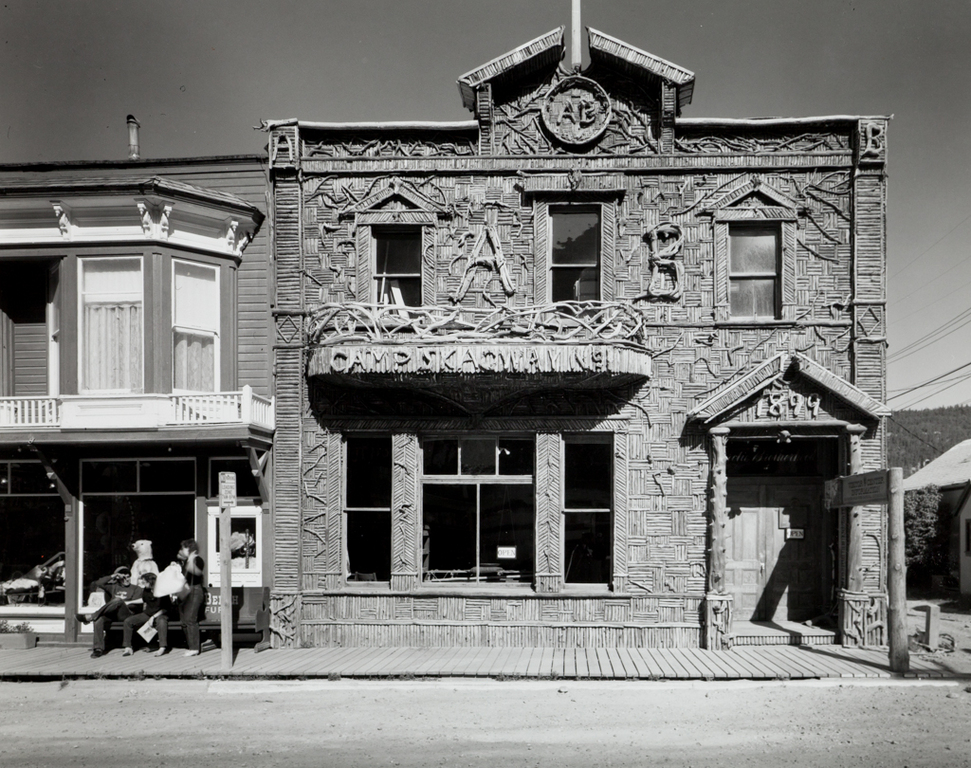
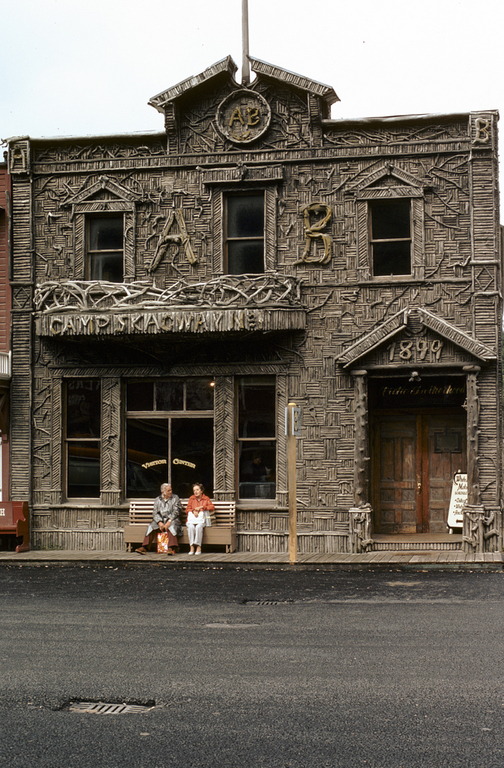
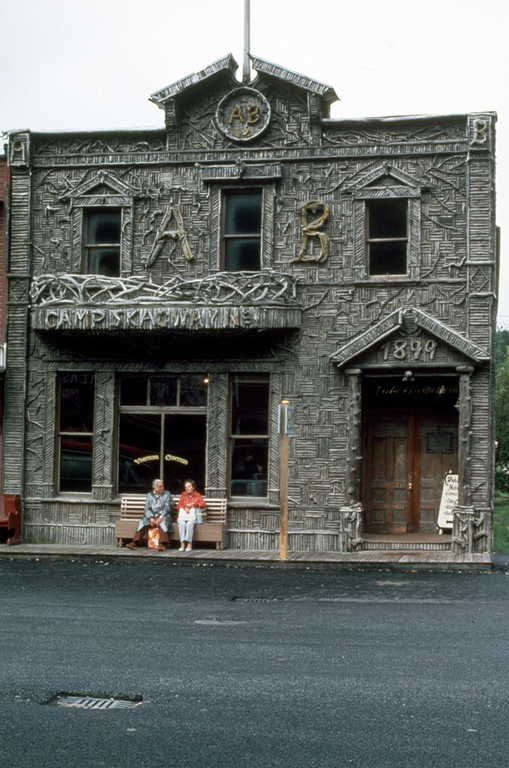
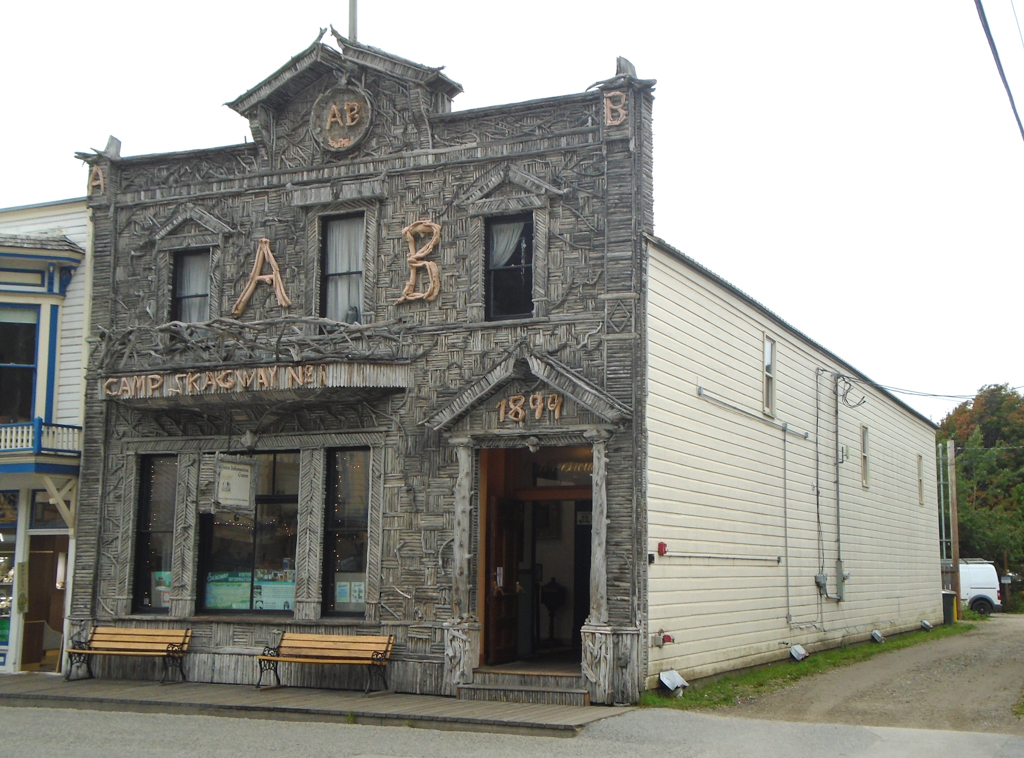
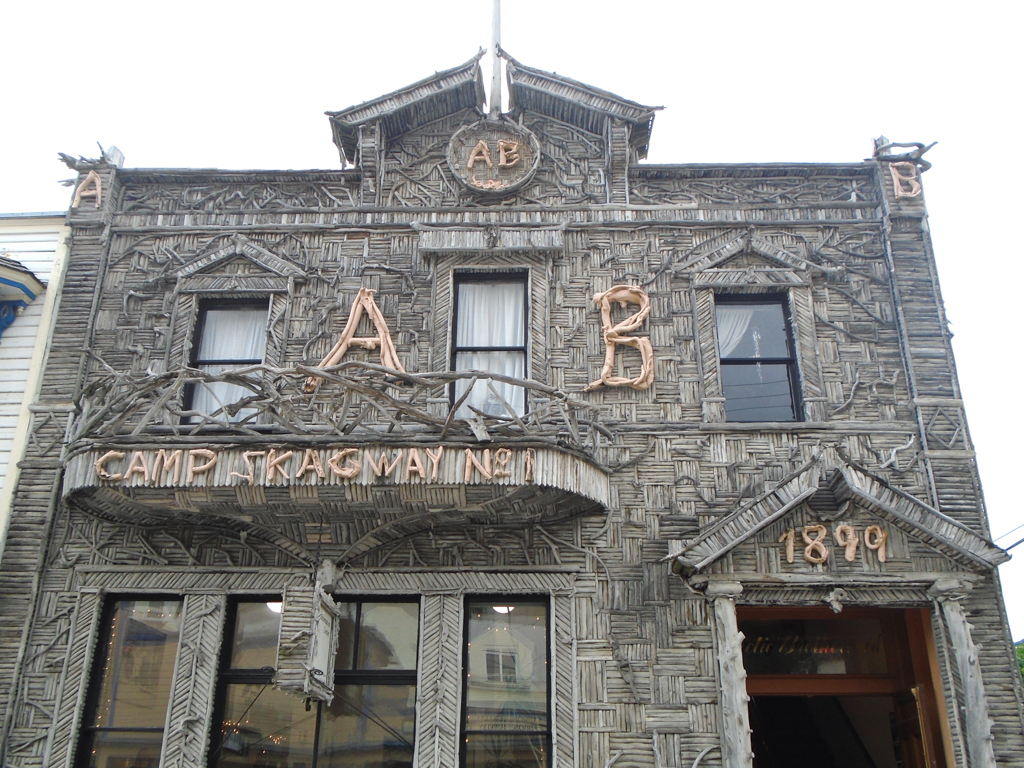
An extraordinary example of Rustic architecture, the facade of the Arctic Brotherhood Hall is composed of driftwood sticks arranged in various patterns and constructions. The second-level balcony, pediments over the windows, parapeted cornice, and hood over the doorway are all constructed of these sticks. The wall is faced with them as well; tiny sticks arranged in a basket-weave pattern give an interesting texture to the wall. Behind this false front is a gable-roofed, wood-framed building covered with novelty siding on the sides and rear.
On the interior, most of the structure was devoted to a two-story hall, 30 feet by 50 feet, with a balcony at the second level. Stick and driftwood furniture lined the walls; some of it can be seen today in the city museum.
The Arctic Brotherhood was a fraternal organization founded by a group of gold seekers on board a steamer bound for Skagway in 1899. Once on land they formalized the arrangement, making Skagway the first