

The construction of a railroad over the White Pass to the Klondike in 1898–1899 ensured Skagway's survival as a town and doomed Dyea, the entry point for the Chilkoot Trail, to oblivion. The first railroad in Alaska, this line connected to the upper Yukon, by which interior Alaska could be reached. Although other, all-Alaska routes were soon developed, the White Pass and Yukon Route was an important early gold-rush era transportation route.
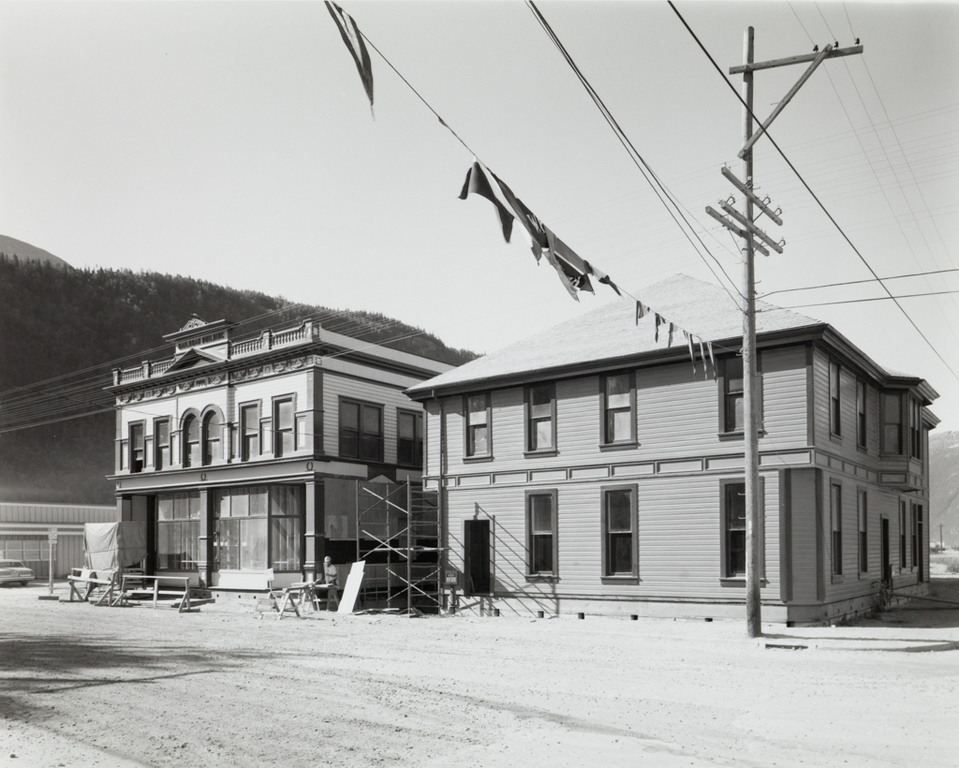
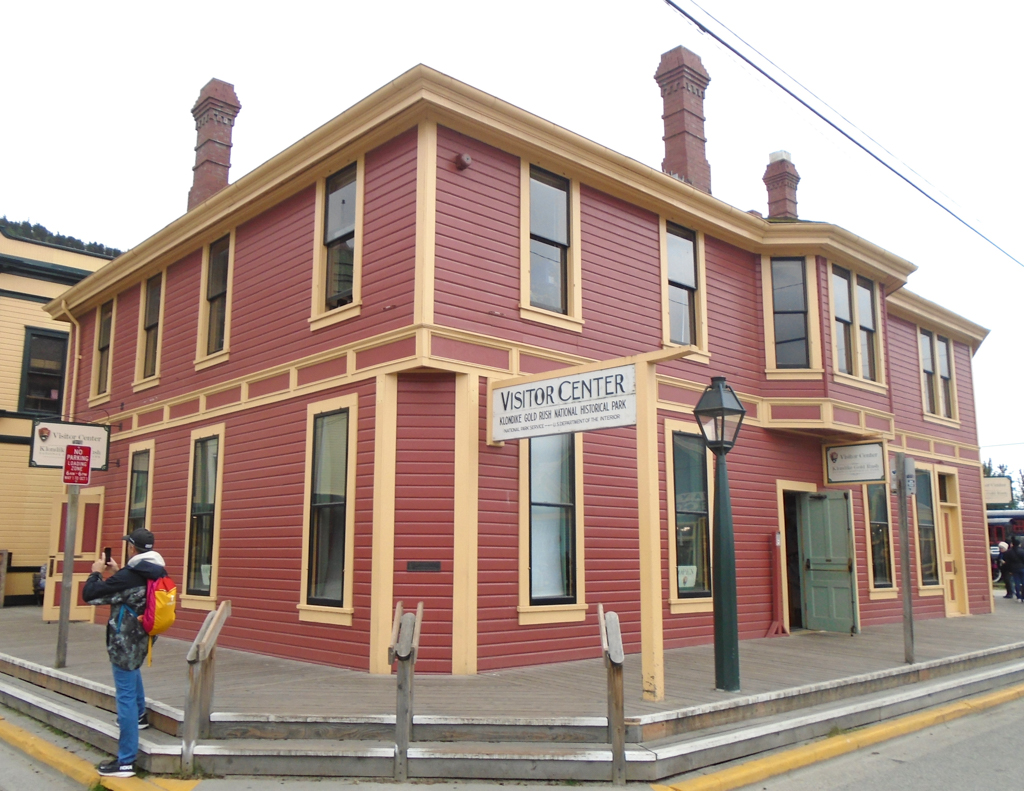
In Skagway, the railroad ran from Moore's Wharf, curved over to Broadway, and ran straight out Broadway. The White Pass and Yukon Route Depot was built in 1898 on the south corner of Broadway and Second Avenue; the west corner of the building was clipped to accommodate the tracks, forming a five-sided building. The two-story, wood-framed depot was constructed hurriedly, evidenced by packing crates and other secondhand lumber used in the construction. The exterior was finished with beveled siding, with paneling dividing the first and second stories. Elaborate brick chimneys pierce the hipped roof, which originally had wider eaves, cut back in 1907, probably to allow more light to the upper stories.
On the interior, the ticket office was located in the Broadway and Second Avenue corner, surrounded by the waiting room. The Canadian Customs Office occupied the west corner room, while the baggage room was in the rear corner. The second floor housed offices; the dispatcher's is marked by an oriel on the Broadway side of the building, affording a view of the trains. Throughout the building, there is a high wainscot of vertical boards, which was originally painted; the walls above were covered with cloth.
Upon construction of a new depot and office building in 1969, this depot was vacated and sold to the National Park Service. The building now serves as a visitors' center for Klondike Gold Rush National Historical Park.