

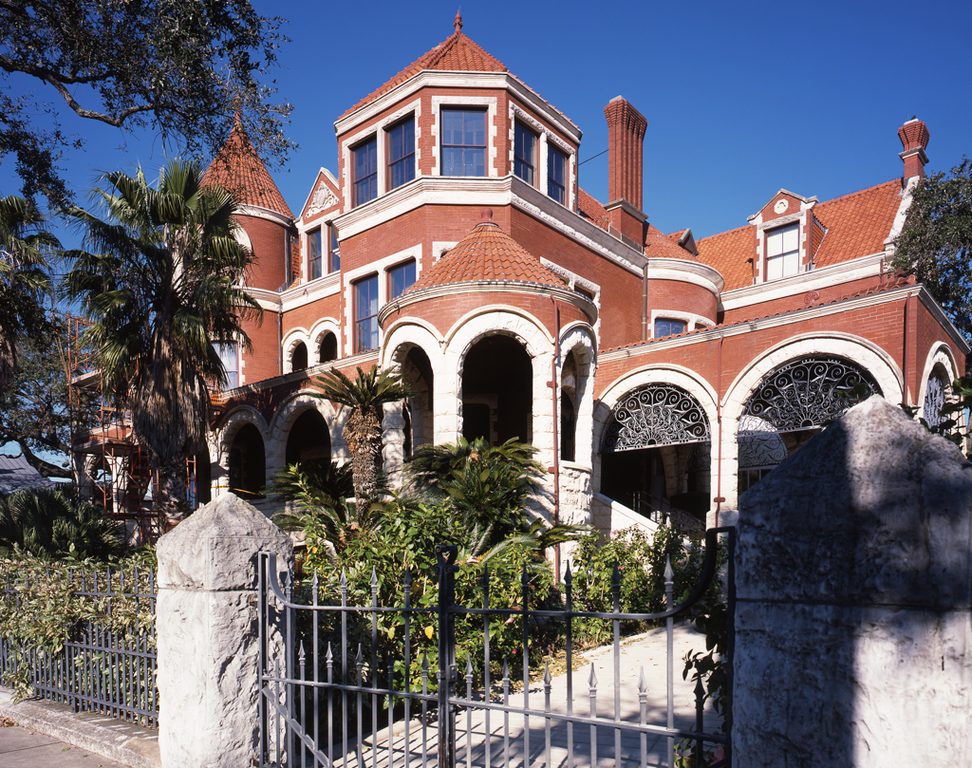
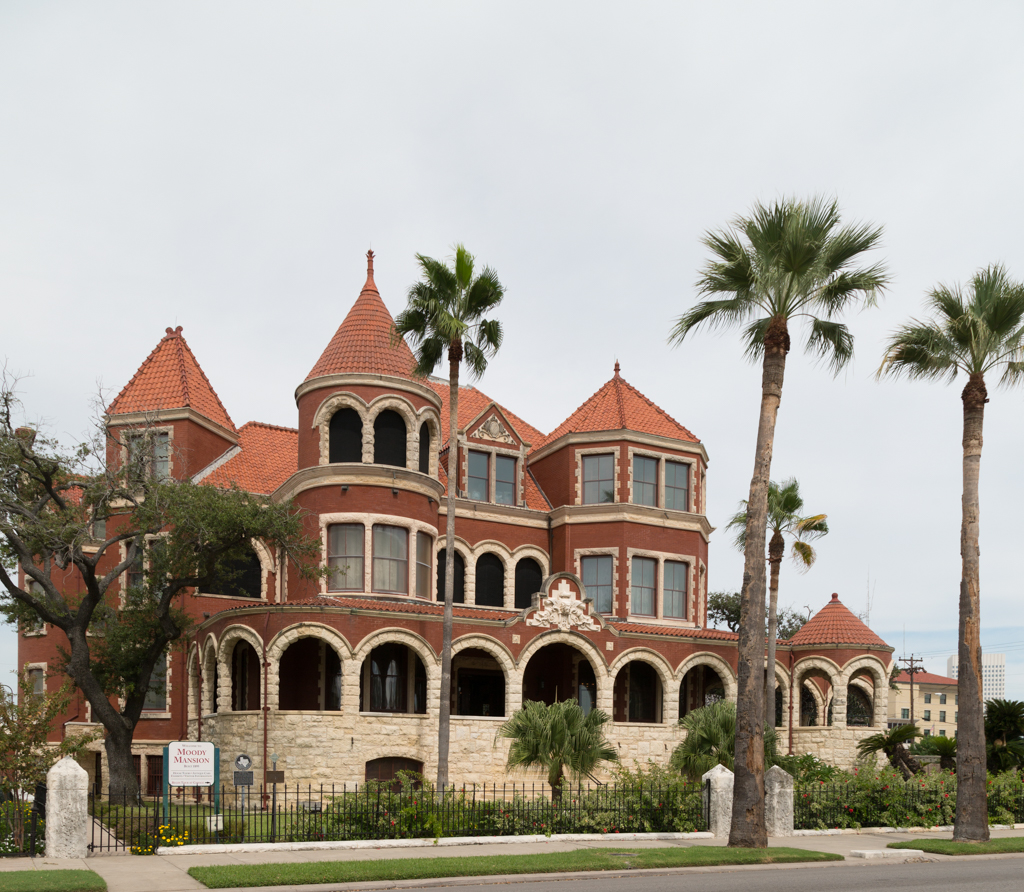
The house that Magnolia Willis Sealy's widowed aunt, Narcissa Worsham Willis, built just after Narcissa Willis's husband's death in 1892 speaks of the phenomenon of competitive mansion-building along the nineteenth-century grand avenues of American cities. Designed by an obscure Galveston architect, William H. Tyndall, an English immigrant who advertised himself as having been a pupil of British architect E. Welby Pugin, Willis's house betrayed a careful scrutiny of then-extant grand Galveston houses and a determination to duplicate if not exceed their high-status features. It incorporates a porte-cochere, a glazed conservatory, English Bolton limestone construction, and sumptuously detailed interiors. Willis followed her niece's lead by retaining New York City decorators Pottier and Stymus to detail and furnish the major reception rooms of the house.
Narcissa Willis died four years after completing her house and her heirs sold it to Libbie Shearn and W. L. Moody Jr. in 1900. Moody, the son of a Galveston cotton broker and banker, was founder of the American National Insurance Company, the Moody National Bank, and the Moody Foundation. His eldest daughter and heir, Mary Moody Northen, occupied the house until her death in 1986. Northen, whose financial support of the Galveston Historical Foundation in the 1970s enabled it to transform itself from a local history society into a nationally recognized preservation advocacy group, established a foundation that carried out a restoration of the house. Opening in 1991 as a historical house museum, it interprets the contributions of the Moody family to the economic and social history of Galveston.