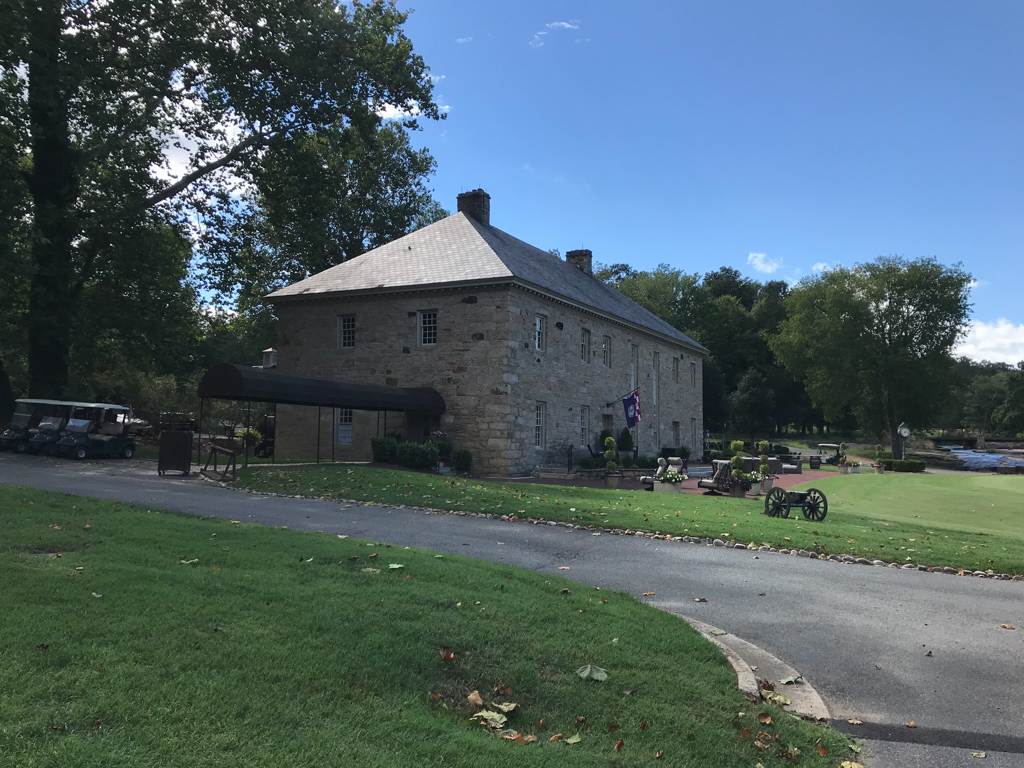
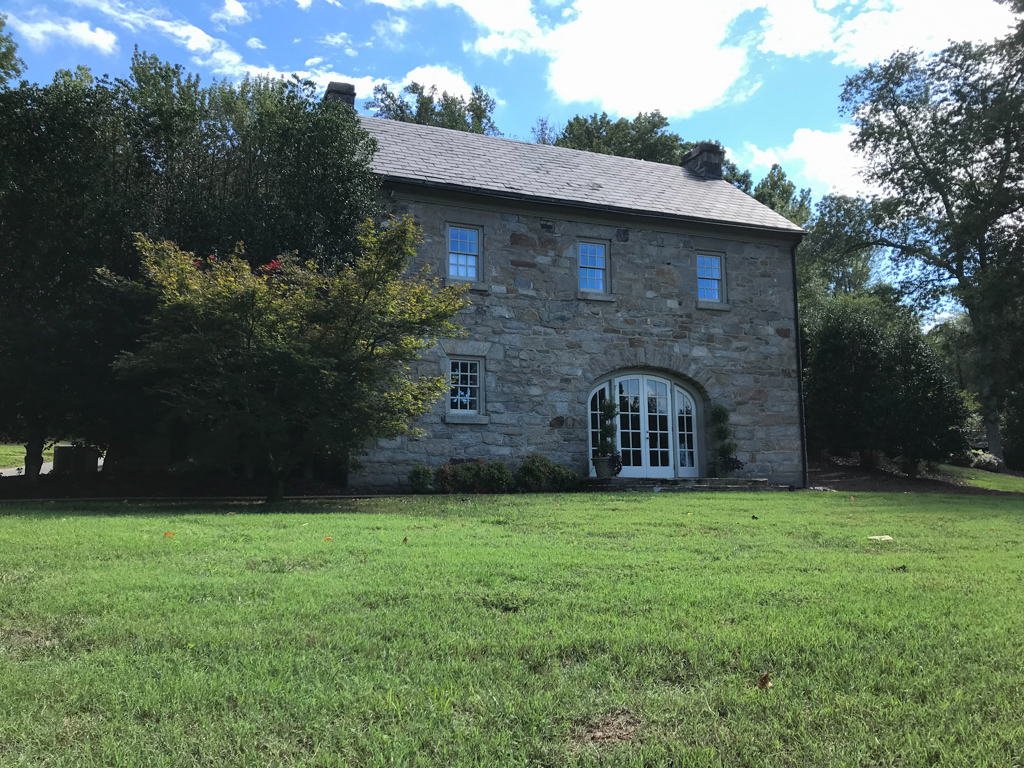
In 1817, Alexander McRae, Zachariah Brooks, William Archer, and Branch Archer contracted with the U.S. War Department to produce ten thousand stands of arms—musket, bayonet, and ramrod. Toward this end, they built a manager's house and spillways and partially completed the large stone foundry with granite quarried on the property. The project was never completed, and the property fell into ruins until it was purchased in the 1940s by Virginia artist Julian Binford. He rebuilt the walls and installed narrow windows extending from the first floor through the second to light what was then his two-story studio. Around the old foundry, he built a romantic moat that is no longer filled. Interior chimneys rise up at each end of the ridgeline of the hipped roof above the dentil cornice that Binford added. The old stone sluiceway was filled to form an entrance to the second story, and the nearby manager's house was rebuilt to incorporate a large arched entrance. In the 1990s, the property was sold and is now being used as a clubhouse for the Foundry Golf Club.

