

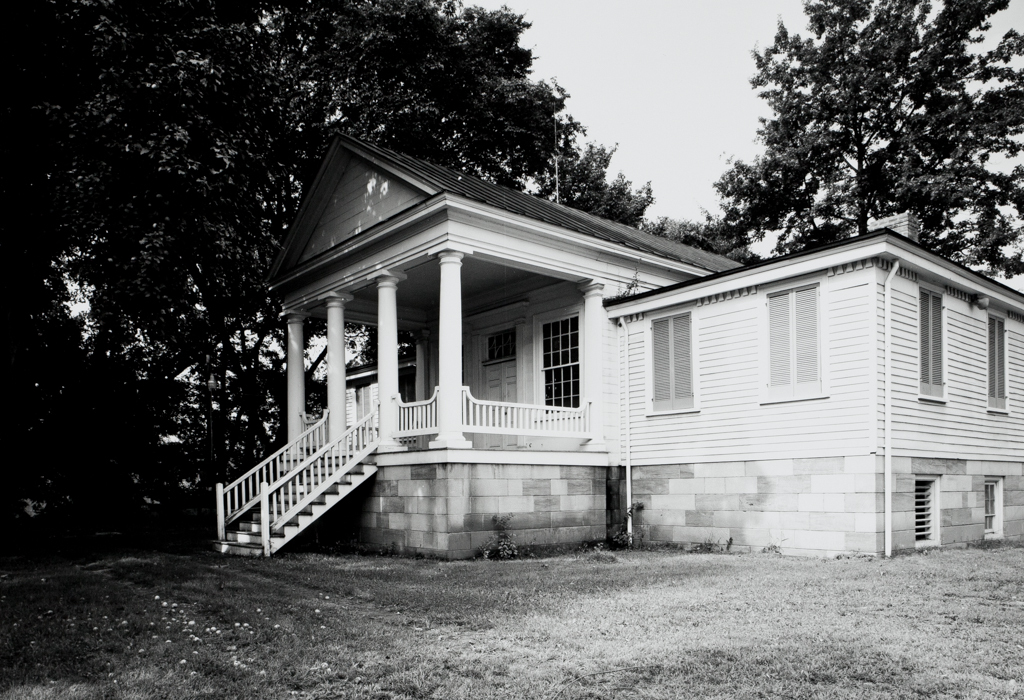
This raised frame cottage, one of Charleston's most distinguished early houses, is far larger than it appears. Standing high on a cut sandstone foundation, it is fronted by a handsome four-column Tuscan portico with a full entablature and pediment. One of the earliest houses in the Kanawha Valley to display such architectural refinement, it brought a glimpse of emerging classicism at a time when log and stone construction were still the norm.
James Craik, a lawyer who later became rector of St. John's Episcopal Church, built the house on Virginia Street. George S. Patton I, a Confederate colonel and grandfather of General Patton of World War II fame, bought it in 1858. The house was first moved in 1906, when a new street was cut through its site. When it was again threatened in the 1960s, the National Society of Colonial Dames of America in West Virginia spearheaded a drive to save the house. With support from the U.S. Department of Housing and Urban Development, it was relocated to its present riverbank setting east of Charleston, on a site provided by the State Department of Highways in 1973. The Colonial Dames have subsequently restored and furnished it to reflect the period of original construction.