

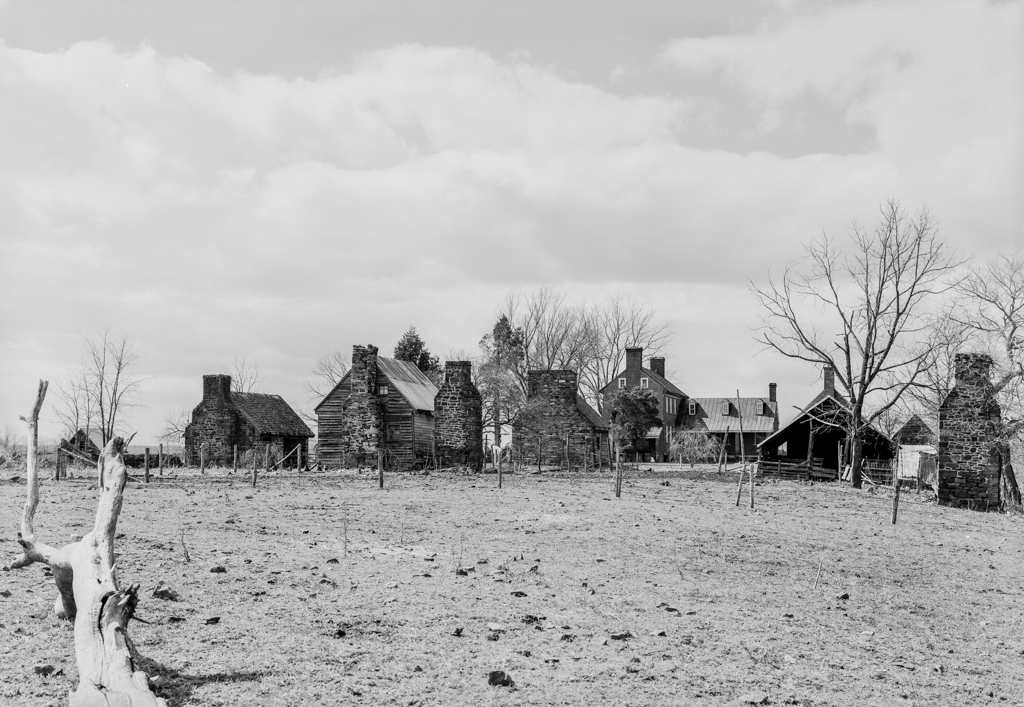
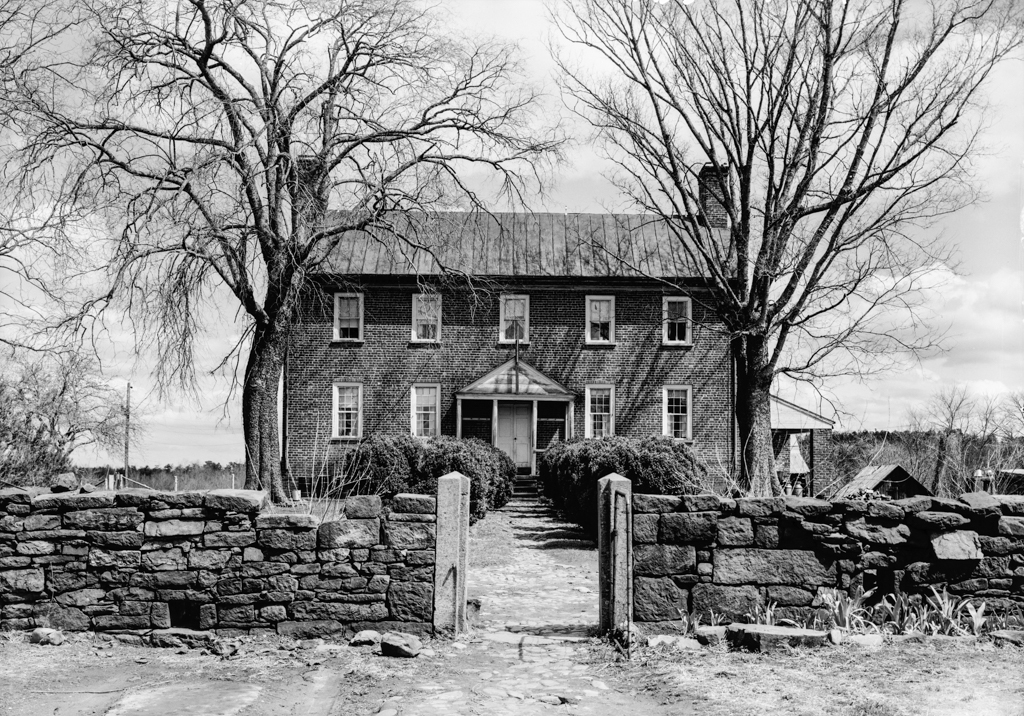
Although many of Green Hill's outbuildings are long gone, those remaining make up one of the most extensive early plantation groupings in Virginia. Samuel Pannill purchased six hundred acres beside the Staunton River in 1797 and probably then built the one-and-a-half-story brick structure that now forms an ell behind the two-story brick I-house of c. 1800. By the time of his death in 1864, Pannill owned almost five thousand acres that produced mostly tobacco and wheat. The federal census of 1860 recorded that he owned eighty-one enslaved persons who lived in seventeen houses. One of the houses had three rooms rather than one. The plantation was organized in two areas. At the top of the bluff was Pannill's house and several subsidiary buildings organized around a rectangular boxwood garden. As important as the number and variety is the level of specialization that the buildings embody. They include laundry buildings with stone sinks and drying rooms, a kitchen with triple cooking fireplaces, a workshop with evidence of storage bins in the attic, a brick duck house, a carriage house, a granary, and a large (75
×
60 feet) stone tobacco barn with hanging devices for drying tobacco. Near the river's edge was a group of slave cabins and workshops. Only Prestwould (MC17) in Mecklenburg County and Shirley in Charles City County are comparable in scale. Green Hill must have seemed nearly as architecturally impressive when it was built as it is today.
Green Hill
c. 1797, c. 1800; later additions. Pannills Rd., 0.3 miles south of VA 633