

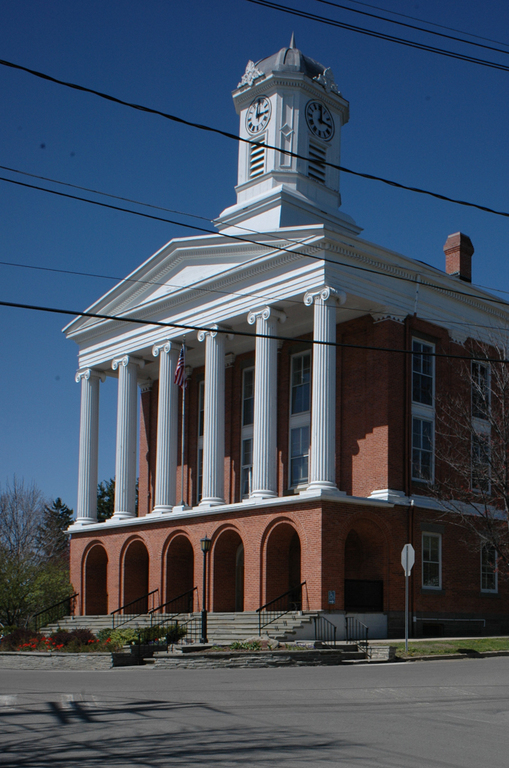
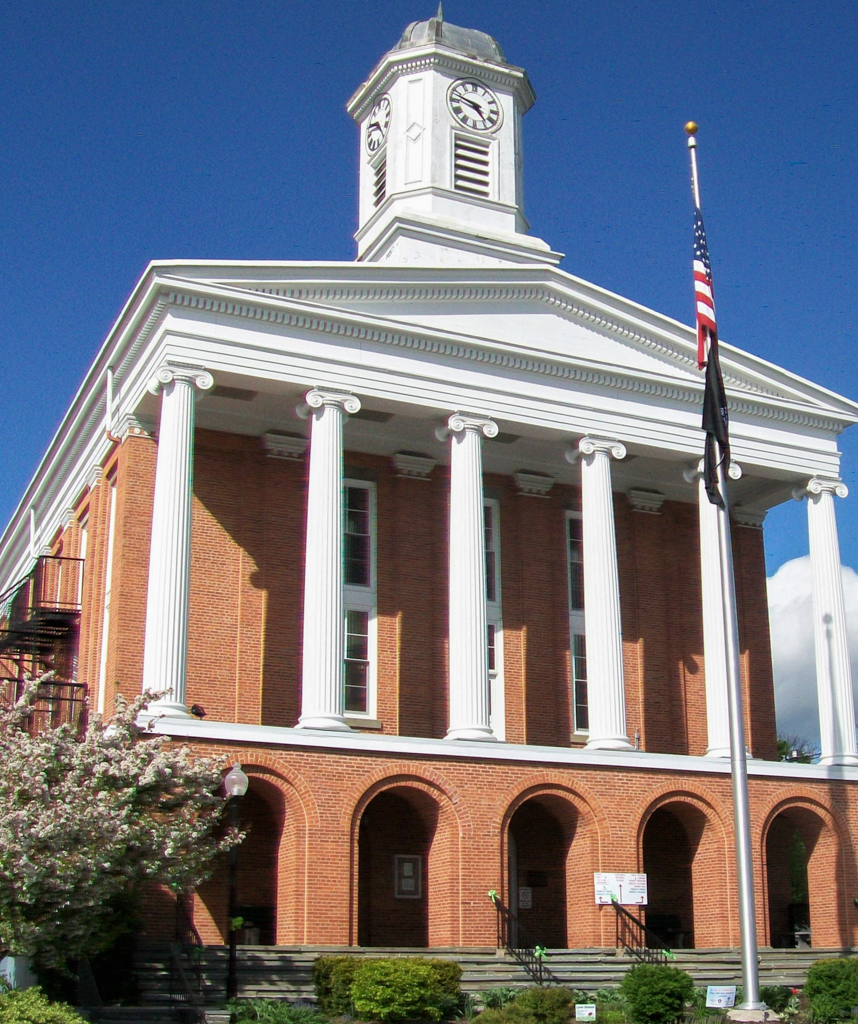
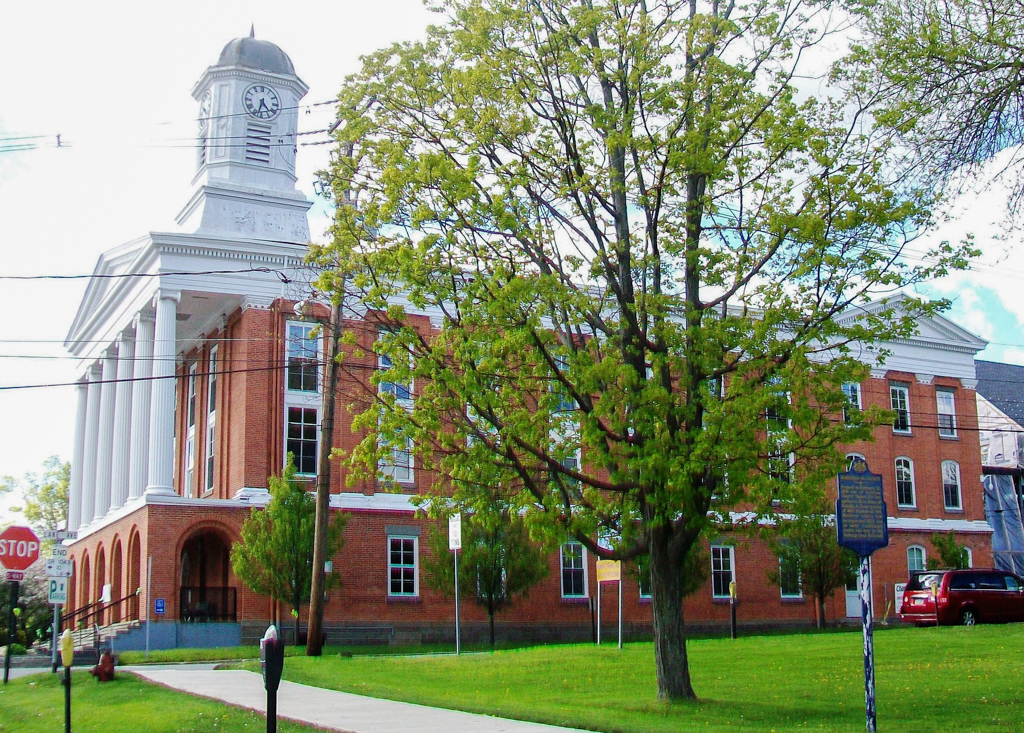
Sitting atop the knoll at the north end of Public Avenue, the Susquehanna County Courthouse dominates Montrose's skyline. The courthouse's mixed classical elements—a
SQ16
]) painted in 1920 by the Andrews Company of Chicago. Avery Frink, son of a Connecticut-born stonemason who moved to Montrose in 1806, was trained as a carpenter. He became a prominent citizen, serving on Montrose's council, and appears to have been the town's leading builder-architect, constructing more than fifty houses and other buildings in Montrose and its environs. His own house (1840) stands at 37 Lake Avenue; when his family outgrew that house, he built their next one at 35 Lake Avenue. William H. Boyd, a native of West Chester, Chester County, moved to Montrose with his family in 1823. In addition to building approximately forty houses and eight stores in the Montrose area, he was briefly in the tin and sheet iron business before the Civil War.
Across Lake Avenue from the courthouse is the green, a two-block-long rectangular greensward. Its many monuments include an 1877 Civil War monument, whose base was designed by Jerome R. Lyons of Montrose, the sole survivor of four Lyons brothers who served in that conflict; a 1903 monument to Galusha Grow, congressman and author of the 1862 Homestead Act; and a 1991 monument to Mary Borthwick, the county's first public health nurse, who died in 1976.