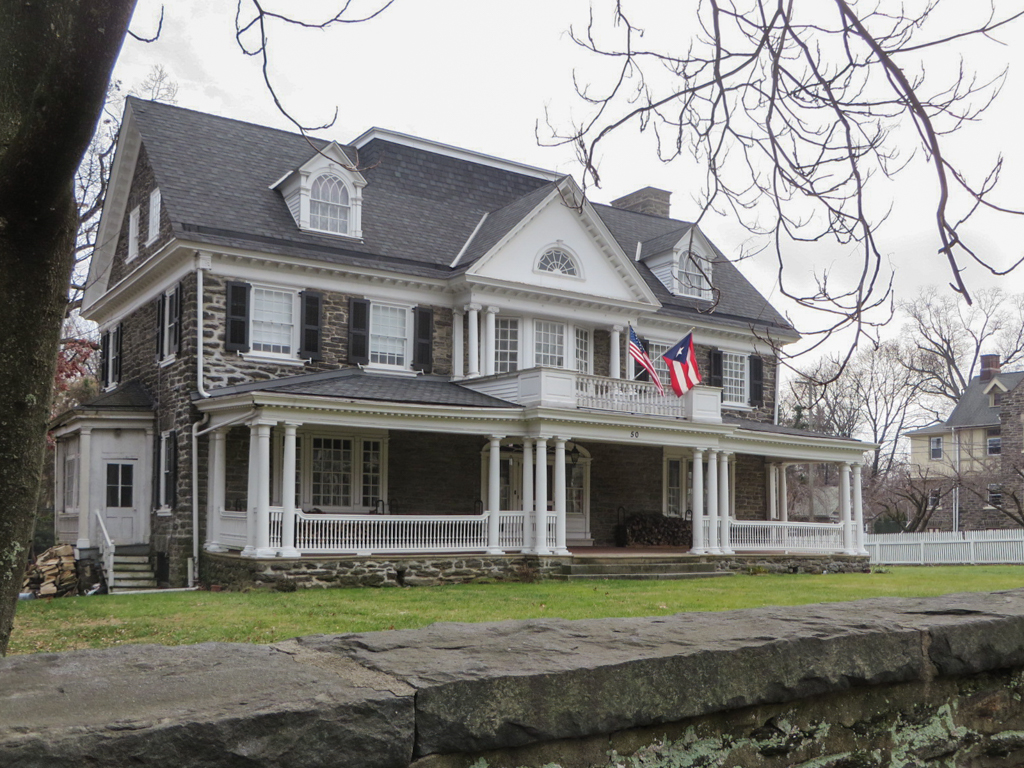
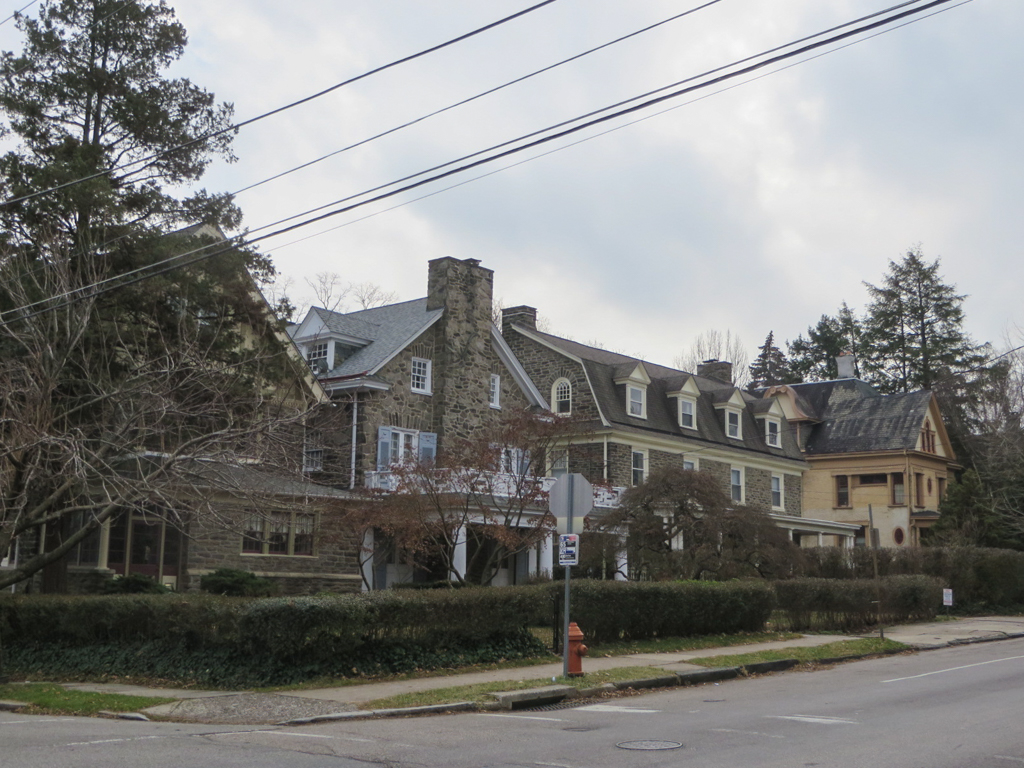
In the 1830s the Philadelphia, Germantown and Norristown Railroad, later part of the Philadelphia and Reading Railroad, transformed the old German village into a vital part of the industrial city of the nineteenth century. Northwest of the old center, at W. Walnut Lane, and Greene and W. Tulpehocken streets, is an important cluster of pre–Civil War houses with others of the period on surrounding streets. The most important include 50 W. Walnut Lane (c. 1859), probably by Samuel Sloan and altered c. 1910 by Mellor and Meigs; 200 W. Walnut Lane (c. 1859), attributed to Thomas Ustick Walter; and the Ebenezer Maxwell Mansion (c. 1859) at 200 W. Tulpehocken Street, usually attributed to Joseph Hoxie but with little basis. All three houses share central entrance towers, large parlors to the side, and grassy settings behind cast-iron fences, features that reflected pride of ownership in the newly developing railroad suburb. The Maxwell Mansion has additional interest as the first Victorian-era building to be preserved and restored in the heretofore colonial-mad city.