

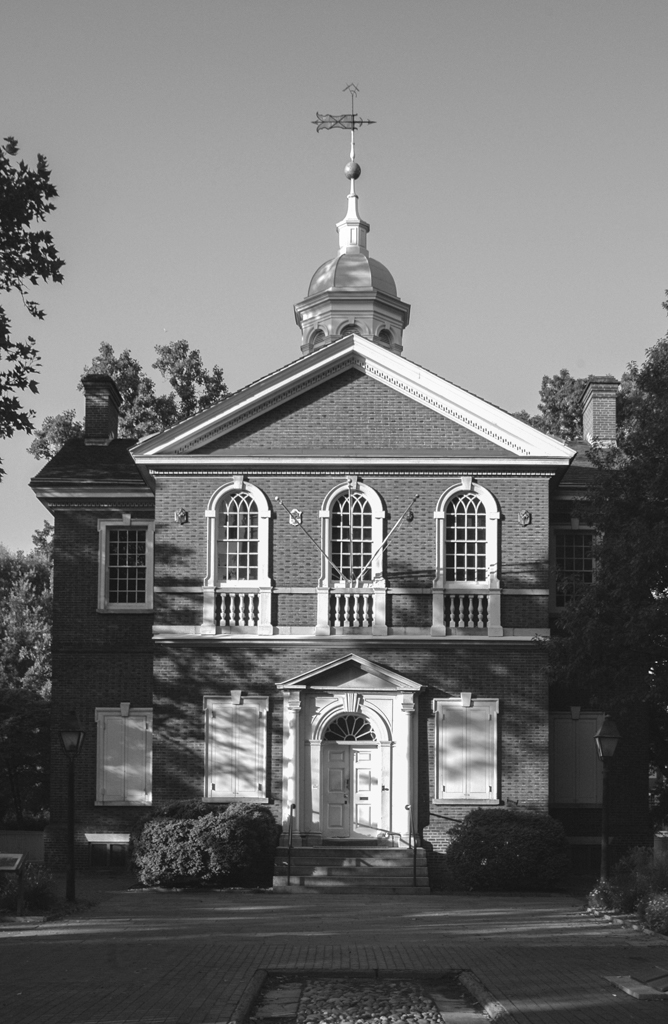
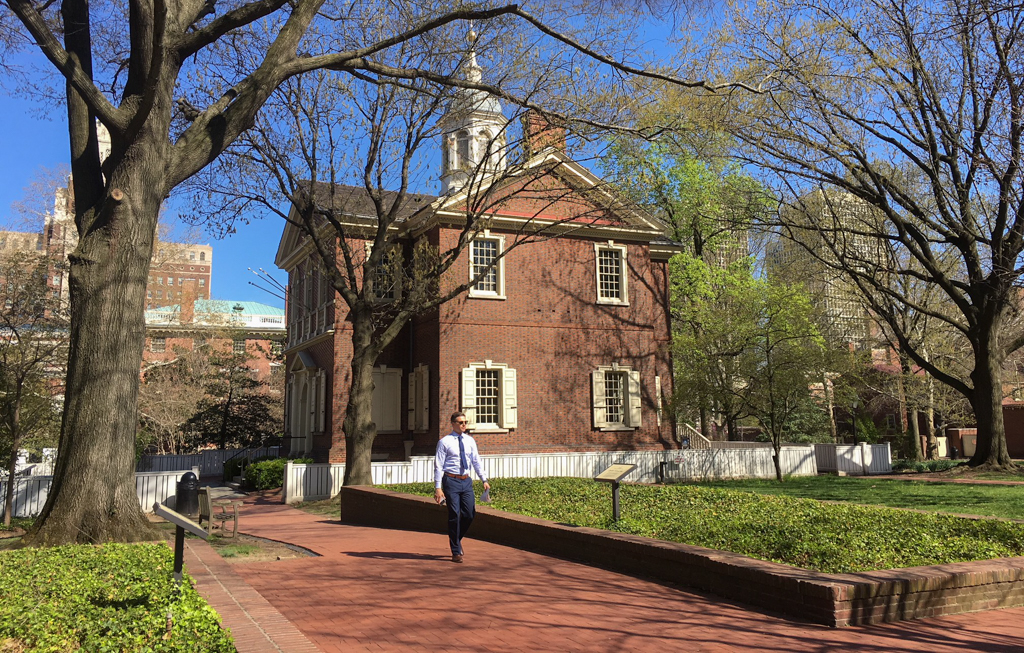
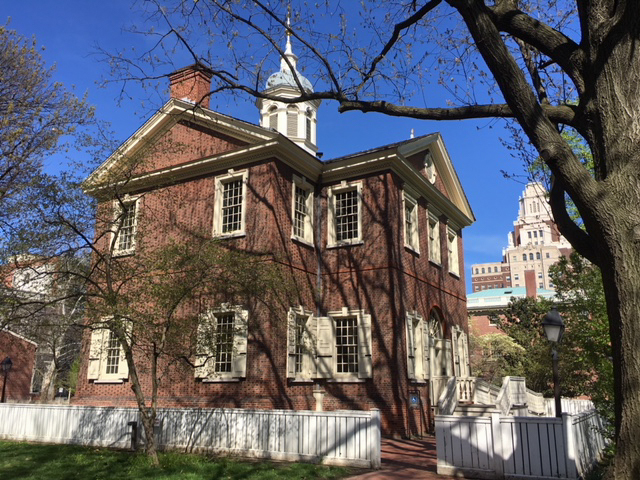
Built in a mid-block court to take advantage of cheaper land, the cruciform plan of Carpenters’ Hall maximized interior light, while the richly detailed cupola, wood cornices, and Tuscan-columned entrances with fanlights advertised the building skills of its members. Evidence of Victorian interior alterations was largely removed in a restoration in 1967, but the handsome nineteenth-century tile floor survives. The Carpenters’ Company of Philadelphia, established in 1724, continues as an active organization of those in the building trades, making it the oldest trade organization in the country. In the eighteenth century, guilds regulated work practice and functioned as both a protective society and a price-fixing cabal. Such rights and privileges, dating back to the Middle Ages in Britain, characterized the guilds that established regular courses of apprenticeship and practice. Because the hall was available for other uses, it was the site selected over the State House for the First Continental Congress in 1774 and is one of the central icons of the American Revolution. The decision of the Carpenters’ Company to preserve and restore their building in 1857, contemporary with the preservation of George Washington's Mount Vernon, makes it central in the history of the American preservation movement.
Carpenters' Hall
1770–1774, Robert Smith; c. 1897 restoration, Frank Miles Day and others. Carpenters' Court, 320 Chestnut St.